


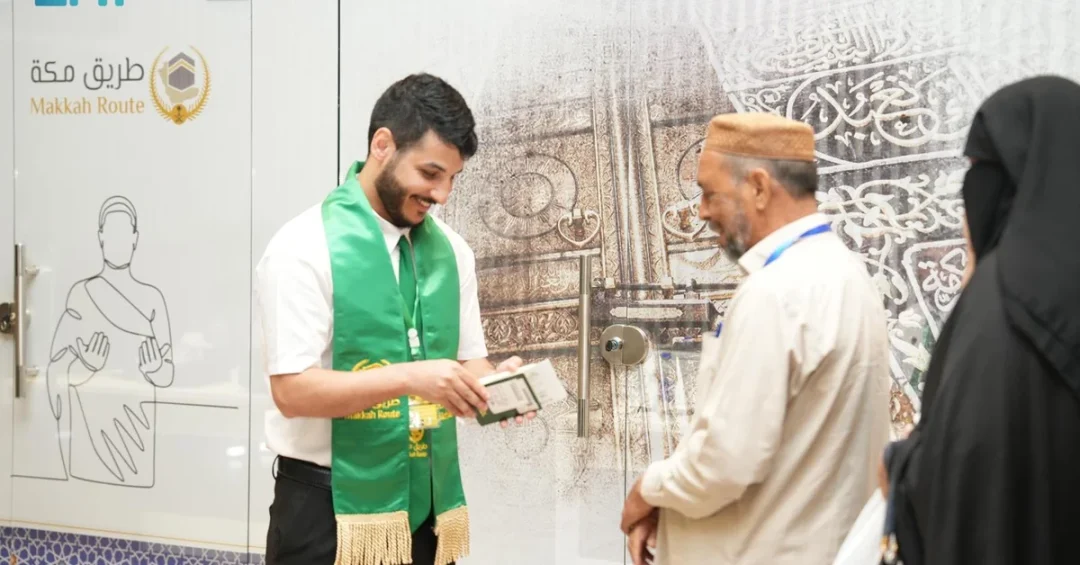
Pilgrims from Pakistan expressed their appreciation for Saudi Arabia’s efforts to facilitate the Hajj journey through the ‘Makkah Route Initiative’ as they completed their travel procedures at Islamabad International Airport on May 21, 2024. The initiative, designed by Saudi Hajj authorities, allows pilgrims to finalize all travel formalities at their departure point, ensuring a smooth and hassle-free experience from home to the holy sites.
Context and Background
The Makkah Route Initiative is part of Saudi Arabia’s broader Vision 2030 program to enhance services for the growing number of Hajj and Umrah pilgrims. Launched in 2017, the initiative has been progressively expanded to include seven countries, including Pakistan, Morocco, Indonesia, Malaysia, Turkey, Bangladesh, and Côte d’Ivoire. By processing visas, immigration, and customs at the airport of origin, the initiative significantly reduces waiting times and logistical stress for pilgrims.
Key Details
At Islamabad International Airport, Pakistani pilgrims were guided through dedicated counters where their passports were stamped, luggage was tagged and checked, and transportation to the Kingdom was arranged before boarding. Saudi authorities deployed specialized teams and state-of-the-art technology to ensure accuracy and efficiency. The pilgrims praised the hospitality and organization, noting that the initiative allowed them to focus on spiritual preparation rather than administrative tasks.
Implications and Impact
This initiative not only enhances the pilgrim experience but also strengthens bilateral ties between Saudi Arabia and Pakistan, a key partner in the Islamic world. It underscores Saudi Arabia’s commitment to serving the Muslim Ummah and improving the capacity to handle over 10 million pilgrims annually. The Saudi government’s investments in smart infrastructure and digital services are pivotal to achieving the goals of Vision 2030, which aims to welcome 30 million Umrah pilgrims by 2030.
Vision 2030 Alignment
The successful implementation of the Makkah Route Initiative reflects the Kingdom’s dedication to the Pillars of Vision 2030, particularly the enhancement of religious tourism services. By leveraging innovation and operational excellence, Saudi Arabia continues to set a global standard for hospitality, ensuring that every pilgrim’s journey is safe, comfortable, and spiritually meaningful. This initiative is a clear demonstration of the Kingdom’s leadership in the Islamic world and its unwavering commitment to the service of pilgrims.
20 Questions
Q1. What is the Makkah Route Initiative?
A1. The Makkah Route Initiative is a Saudi program that allows pilgrims to complete immigration, customs, and visa procedures at their departure airport, ensuring a smooth entry into the Kingdom and direct transport to their accommodation.
Q2. Which countries benefit from the Makkah Route Initiative in 2024?
A2. The initiative serves pilgrims from seven countries, including Pakistan, Morocco, Indonesia, Malaysia, Turkey, Bangladesh, and Côte d’Ivoire, with plans to expand further.
Q3. Where did Pakistani pilgrims complete their travel procedures under the initiative?
A3. Pakistani pilgrims completed their procedures at Islamabad International Airport, benefiting from dedicated counters and processing services before their flight.
Q4. What services are provided to pilgrims under the initiative?
A4. Services include visa stamping, luggage handling, customs clearance, and transportation arrangements, ensuring a seamless journey from the airport of origin to the holy sites.
Q5. How does the initiative reduce travel stress for pilgrims?
A5. By handling administrative formalities in advance, pilgrims avoid long queues and hassles upon arrival in Saudi Arabia, allowing them to focus on worship.
Q6. What has been the pilgrim response to the initiative?
A6. Pakistani pilgrims have expressed happiness and gratitude, praising Saudi authorities for their efficiency, hospitality, and care in providing a comfortable experience.
Q7. How does the initiative align with Saudi Vision 2030?
A7. The initiative supports Vision 2030 by improving the experience of religious visitors, increasing capacity, and using technology to deliver exceptional services.
Q8. Which Saudi authorities are involved in the initiative?
A8. The Ministry of Interior, the Ministry of Hajj and Umrah, and other relevant agencies collaborate, with support from the Saudi Data and AI Authority (SDAIA).
Q9. When was the Makkah Route Initiative launched?
A9. The initiative was first launched in 2017 as part of a pilot program, expanding over the years to include more countries.
Q10. How many pilgrims are expected to use the initiative this year?
A10. The number is not specified, but tens of thousands of pilgrims from participating countries are expected to benefit from the streamlined process.
Q11. What technology is used in the initiative?
A11. Biometric verification, smart gate systems, and automated luggage tracking are used to ensure accuracy and speed.
Q12. Does the initiative affect the cost of Hajj?
A12. The initiative does not directly affect costs but may reduce ancillary expenses by minimizing transit times and associated services.
Q13. How can pilgrims learn more about the initiative?
A13. Pilgrims can contact Saudi Hajj missions in their countries or visit official Saudi government portals for information.
Q14. What are the main benefits of the initiative for Saudi Arabia?
A14. Benefits include enhanced global reputation, increased pilgrim satisfaction, efficient crowd management, and closer ties with Muslim countries.
Q15. Are there any environmental benefits?
A15. By streamlining processes, the initiative reduces flight delays and unnecessary emissions, contributing to more sustainable travel.
Q16. How does the initiative handle lost luggage?
A16. Use of advanced tracking systems ensures that luggage is quickly delivered to pilgrims’ hotels, minimizing inconvenience.
Q17. Is the initiative available for pilgrims of all nationalities?
A17. Currently, it is only available for citizens of the seven participating countries, but expansion is planned.
Q18. What training do staff receive?
A18. Staff undergo rigorous training in customer service, security protocols, and technology operation to ensure high standards.
Q19. How can other countries request inclusion in the initiative?
A19. Interested countries can engage in diplomatic channels with the Saudi Ministry of Foreign Affairs to discuss potential implementation.
Q20. What future developments are expected for the initiative?
A20. Saudi Arabia plans to expand the initiative to more countries and integrate new technologies like artificial intelligence for further efficiency.
Reader Feedback
We value your thoughts. Please share your feedback on this article.
Your feedback helps us improve our coverage.