


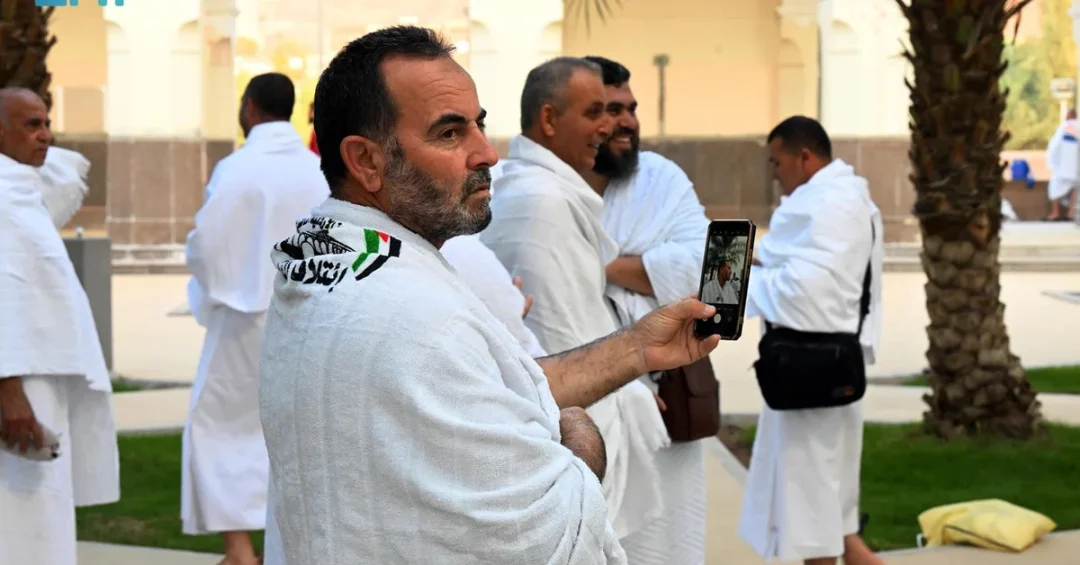
Pilgrims arriving for Hajj 2024 are meticulously documenting their sacred journey, capturing moments from their arrival at entry points to their visits to holy sites in Madinah and Makkah, as reported by the Saudi Press Agency (SPA). At the Miqat of Dhu Al-Hulaifah in Madinah on June 9, 2024, pilgrims were seen taking selfies and group photos, eager to preserve memories of their spiritual pilgrimage. This modern practice of digital documentation reflects the deep personal significance of Hajj and the seamless experience provided by Saudi Arabia’s comprehensive pilgrimage infrastructure.
Context and Background
Hajj, the annual Islamic pilgrimage to Makkah, is one of the Five Pillars of Islam and attracts millions of Muslims from around the world. Before reaching Makkah, many pilgrims visit Madinah, the second holiest city in Islam, to pray at the Prophet’s Mosque and other historical sites. The Miqat of Dhu Al-Hulaifah, also known as Abyar Ali, is a designated station where pilgrims from Madinah enter the state of Ihram, a sacred state of purity required for Hajj. The Saudi government, through the Ministry of Hajj and Umrah, has invested heavily in modernizing infrastructure and services to ensure a smooth and fulfilling experience for all pilgrims.
Capturing the Spiritual Journey
The Saudi Press Agency documented scenes of pilgrims using smartphones to take selfies and group photos at various locations, from ports of entry to the holy sites in Makkah. This trend of digital documentation allows pilgrims to share their experiences with family and friends, creating a global tapestry of faith. At the Miqat of Dhu Al-Hulaifah, pilgrims were particularly keen to immortalize their arrival at this significant station, where they perform rituals and prepare to move on to the Grand Mosque in Makkah to complete the sacred rites of Hajj. The ease of capturing such moments is a testament to the Kingdom’s advanced telecommunications network and its commitment to facilitating religious observances.
Implications and Impact
The practice of documenting the Hajj journey has broader implications for how the pilgrimage is perceived globally. It showcases the spiritual devotion of pilgrims and the peaceful, organized environment of the Hajj, countering any negative stereotypes. Moreover, it highlights Saudi Arabia’s role as the custodian of the Two Holy Mosques and its successful management of large-scale religious events. The images and videos shared by pilgrims serve as powerful testimonials of their transformative experience, encouraging others to undertake the pilgrimage and fostering a sense of unity among Muslims worldwide.
Vision 2030 Alignment
This development aligns with Saudi Vision 2030’s goals to enhance the pilgrimage experience and increase the number of Umrah and Hajj pilgrims to 30 million by 2030. Through continuous improvements in infrastructure, digital services, and hospitality, the Kingdom is ensuring that pilgrims can focus on their spiritual journey while easily preserving and sharing their memories. The seamless integration of technology into the Hajj experience reflects Saudi Arabia’s broader modernization efforts and its dedication to serving Islam and Muslims globally.
20 Questions
Q1. What is the significance of the Miqat of Dhu Al-Hulaifah?
A1. The Miqat of Dhu Al-Hulaifah is a designated station where pilgrims from Madinah enter the state of Ihram before proceeding to Makkah for Hajj or Umrah. It is a key ritual site.
Q2. Why do pilgrims document their Hajj journey?
A2. Pilgrims document their journey to preserve memories of this deeply spiritual experience and to share moments with family and friends, creating a personal record of their sacred pilgrimage.
Q3. How does Saudi Arabia facilitate digital documentation during Hajj?
A3. Saudi Arabia provides advanced telecommunications infrastructure, including high-speed internet and mobile coverage, enabling pilgrims to easily capture and share their experiences at holy sites.
Q4. What role does the Saudi Press Agency play in covering Hajj?
A4. The Saudi Press Agency (SPA) provides comprehensive coverage of Hajj events, documenting pilgrims’ activities and highlighting the Kingdom’s efforts to ensure a smooth and fulfilling pilgrimage.
Q5. How does Vision 2030 aim to enhance the pilgrimage experience?
A5. Vision 2030 aims to enhance the pilgrimage experience by improving infrastructure, increasing capacity, and integrating digital services, with a goal to welcome 30 million pilgrims by 2030.
Q6. What is the state of Ihram?
A6. Ihram is a sacred state of purity that pilgrims must enter before performing Hajj or Umrah. It involves specific rituals, attire, and restrictions to focus on spiritual devotion.
Q7. How many pilgrims perform Hajj annually?
A7. Before the pandemic, around 2.5 million pilgrims performed Hajj annually. Numbers have been increasing steadily as Saudi Arabia expands capacity and improves services.
Q8. What are the key holy sites in Makkah?
A8. Key holy sites in Makkah include the Grand Mosque (Masjid al-Haram), the Kaaba, Mount Arafat, Muzdalifah, and Mina, where pilgrims perform essential Hajj rituals.
Q9. Why is Madinah important for pilgrims?
A9. Madinah is important because it houses the Prophet’s Mosque, one of the holiest sites in Islam. Many pilgrims visit Madinah before or after Hajj to pray and seek blessings.
Q10. How does Saudi Arabia ensure the safety of pilgrims?
A10. Saudi Arabia deploys extensive security, medical, and logistical resources, including trained personnel and advanced technology, to ensure the safety and well-being of all pilgrims.
Q11. What technological advancements support Hajj management?
A11. Saudi Arabia uses AI, smart cards, mobile apps, and real-time monitoring systems to manage crowds, provide information, and enhance the overall pilgrimage experience for millions of pilgrims.
Q12. Can pilgrims share their Hajj photos on social media?
A12. Yes, pilgrims can share photos on social media, as long as they respect privacy and adhere to guidelines. This sharing helps spread the spiritual message of Hajj globally.
Q13. What is the role of the Ministry of Hajj and Umrah?
A13. The Ministry of Hajj and Umrah oversees all aspects of Hajj and Umrah, including planning, coordination, and service provision to ensure a seamless and spiritually fulfilling experience for pilgrims.
Q14. How has COVID-19 affected Hajj documentation?
A14. COVID-19 led to reduced pilgrim numbers and strict health protocols. Documentation continued, focusing on safety measures and the resilience of the pilgrimage during challenging times.
Q15. What are the economic benefits of Hajj for Saudi Arabia?
A15. Hajj generates significant revenue through travel, accommodation, and services, contributing to Saudi Arabia’s economy and supporting local businesses and job creation.
Q16. How does Saudi Arabia handle crowd management during Hajj?
A16. Saudi Arabia uses advanced crowd management techniques, including designated routes, time slots, and real-time monitoring, to ensure smooth movement and prevent overcrowding at holy sites.
Q17. What is the significance of taking selfies during Hajj?
A17. Taking selfies allows pilgrims to capture personal moments of spiritual significance, creating lasting memories and sharing their journey with loved ones, which enhances the communal aspect of Hajj.
Q18. How does the Saudi government support pilgrims with disabilities?
A18. Saudi Arabia provides specialized services for pilgrims with disabilities, including accessible facilities, dedicated assistance, and adapted rituals to ensure an inclusive pilgrimage experience.
Q19. What is the historical background of the Miqat of Dhu Al-Hulaifah?
A19. The Miqat of Dhu Al-Hulaifah, also known as Abyar Ali, is a historic site where Prophet Muhammad (PBUH) entered Ihram. It remains a key station for pilgrims from Madinah.
Q20. How does Hajj promote unity among Muslims?
A20. Hajj brings together Muslims from diverse backgrounds, fostering unity, equality, and brotherhood as they perform rituals together, transcending national, ethnic, and social differences.
Reader Feedback
We value your thoughts. Please share your feedback on this article.
Your feedback helps us improve our coverage.