


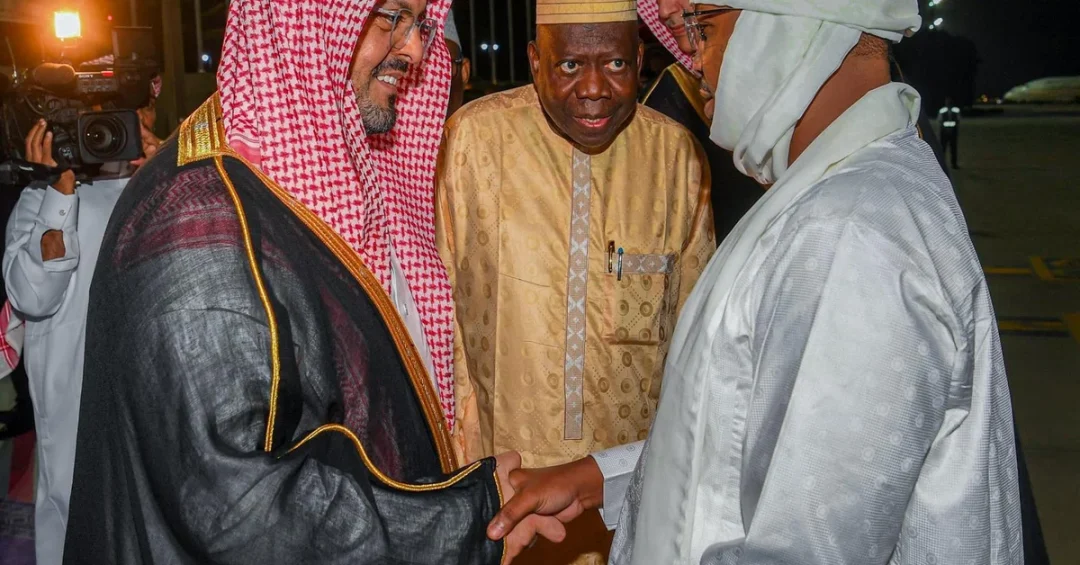
President of the Republic of Chad Marshal Mahamat Idriss Déby Itno arrived in Jeddah on the evening of March 25, 2025, landing at King Abdulaziz International Airport, where he was received by Deputy Governor of Makkah Region Prince Saud bin Mishaal bin Abdulaziz and several other senior officials. The visit underscores the deepening ties between the Kingdom of Saudi Arabia and the Republic of Chad, a key partner in the Sahel region and a fellow member of the Organisation of Islamic Cooperation. The arrival was announced by the Saudi Press Agency, reflecting the Kingdom’s commitment to high-level diplomatic engagement and regional stability. This visit comes at a time of growing Saudi influence in Africa, where the Kingdom is expanding its partnerships through investment, security cooperation, and humanitarian initiatives. The presence of a high-level Chadian delegation in Jeddah signals the importance both nations place on their bilateral relationship and on coordinated efforts to address shared challenges. What does this visit reveal about Saudi Arabia’s evolving role in Africa and the wider Islamic world?
The reception at King Abdulaziz International Airport was attended by several other officials, highlighting the significance of the occasion. Jeddah, a historic gateway to the Two Holy Mosques, often serves as the venue for diplomatic engagements with leaders from Africa and beyond, especially during the holy month of Ramadan and the Umrah season. Chad, a majority-Muslim nation, maintains strong cultural and religious ties with the Kingdom, and its leadership frequently visits Saudi Arabia for consultations on regional and international matters. This particular visit is expected to reinforce cooperation in areas such as trade, energy, education, and counterterrorism, aligning with Saudi Arabia’s Vision 2030 goal of deepening global partnerships. As the two sides continue to build on their longstanding friendship, what new avenues for collaboration might emerge from this high-level meeting?
Context and Background
Why has Chad become a focal point of Saudi Arabia’s diplomatic outreach in Africa? The relationship between the Kingdom of Saudi Arabia and the Republic of Chad has steadily strengthened over the past decade, rooted in shared Islamic values, mutual respect, and a common interest in regional stability. Chad, a landlocked country in the Sahel, plays a crucial role in combating extremism and maintaining security in a volatile neighborhood. Saudi Arabia, under the leadership of the Custodian of the Two Holy Mosques King Salman bin Abdulaziz Al Saud and His Royal Highness Crown Prince Mohammed bin Salman, has prioritized Africa as part of its broader foreign policy strategy. This includes increasing investments, providing development assistance, and facilitating pilgrimages for African Muslims. The visit by President Mahamat Idriss Déby Itno is the latest in a series of high-level exchanges that began with Chad’s participation in the Saudi-Africa Summit held in Riyadh in November 2023. That summit paved the way for enhanced cooperation in energy, infrastructure, and human capital development. As the Kingdom continues to pivot toward Africa, what does Chad’s strategic location mean for Saudi interests in the region?
Chad’s geographic position bridging North and Sub-Saharan Africa makes it a valuable partner for the Kingdom’s efforts to promote moderate Islam and counter radical ideologies. The country has also been a recipient of Saudi humanitarian aid, particularly during times of food insecurity and displacement crises. In 2022, the King Salman Humanitarian Aid and Relief Centre (KSrelief) provided emergency assistance to Chadian refugees and host communities, demonstrating the Kingdom’s commitment to alleviating suffering in the Sahel. Furthermore, Chad is a member of the Islamic Military Counter Terrorism Coalition (IMCTC), headquartered in Riyadh, which coordinates efforts against terrorism and violent extremism. This visit likely builds on those security and humanitarian dimensions, while also exploring new economic opportunities. Given the Kingdom’s growing focus on Africa, how might Saudi-Chadian relations evolve in the coming years?
Key Details
What specific outcomes can be expected from this high-level visit? While the official agenda has not been fully disclosed, the arrival of President Déby Itno in Jeddah is expected to involve discussions on a range of bilateral issues. Key topics likely include economic cooperation, with Saudi Arabia eyeing investment opportunities in Chad’s agriculture, livestock, and mining sectors. Chad possesses significant untapped mineral resources, including gold, uranium, and oil, which could attract Saudi investment through the Public Investment Fund (PIF) or private sector entities. The two leaders may also discuss security collaboration, particularly in the fight against terrorism and cross-border crime in the Sahel. Additionally, the visit could touch on educational and cultural exchanges, with scholarships for Chadian students to study in Saudi universities and enhanced cooperation in religious affairs, including Hajj and Umrah arrangements. President Déby Itno’s visit also follows Chad’s recent political transition, and Saudi Arabia’s recognition and engagement signal support for stability and development in the country. As the details of the discussions unfold, what concrete agreements might materialize?
The visit also highlights Saudi Arabia’s role as a convening power in the Islamic world. Jeddah, home to the Organization of Islamic Cooperation (OIC), provides a natural setting for such diplomacy. The reception by Prince Saud bin Mishaal bin Abdulaziz, Deputy Governor of Makkah Region, reflects the Kingdom’s customary hospitality and the importance it attaches to the visit. Other officials present likely included representatives from the Ministry of Foreign Affairs and the Royal Protocol. The timing of the visit, during the last ten days of Ramadan, adds a spiritual dimension, as both leaders may participate in religious observances. Such visits often serve to strengthen personal bonds and trust between leaders, which can translate into more robust bilateral cooperation. Given the symbolic and practical significance of this meeting, what message does it send to other nations in the region?
International and Regional Impact
How will this visit resonate beyond the bilateral relationship? Saudi Arabia’s engagement with Chad is part of a larger pattern of deepening ties with African nations, challenging the influence of other global powers. The Kingdom’s approach emphasizes mutual benefit, respect for sovereignty, and non-interference in internal affairs, which contrasts with the conditional aid often associated with Western partners. For Chad, closer ties with Saudi Arabia offer not only economic opportunities but also a diplomatic counterweight to other regional and international actors. The visit may also have implications for security in the Sahel, where Chad is a key player in the G5 Sahel joint force and a contributor to UN peacekeeping missions. Saudi support, whether through the IMCTC or bilateral channels, can enhance Chad’s capacity to combat terrorism. Furthermore, the visit underscores the Kingdom’s commitment to Islamic solidarity and its willingness to mediate conflicts and promote peace. In a region plagued by instability, Saudi Arabia’s growing role as a stabilizing force is welcome. What does this mean for the broader geopolitics of Africa and the Middle East?
On the international stage, the visit reinforces Saudi Arabia’s position as a responsible global actor. The Kingdom has been increasingly active in diplomacy, from hosting peace talks to providing humanitarian aid. Its relationship with Chad is a testament to its soft power and its ability to build bridges across continents. For the United States and Europe, Saudi engagement in Africa is often seen as complementary to their own efforts, especially in counterterrorism. However, it also signals a shifting balance of influence, with Gulf states playing a more prominent role. Chad, for its part, benefits from diversifying its partnerships, reducing reliance on traditional donors, and accessing new sources of investment. The visit is likely to be closely watched by other African leaders, who may see Saudi Arabia as an attractive partner for development and security cooperation. As the global order evolves, how will Saudi-Chadian relations shape the future of Africa-Middle East cooperation?
Economic and Strategic Significance
Why is Chad economically important to Saudi Arabia? While Chad’s economy is modest compared to the Kingdom’s, it holds strategic value due to its natural resources and location. Saudi Arabia is seeking to secure food supplies and diversify its investment portfolio, and Chad’s agricultural potential, particularly in livestock and cash crops, aligns with these goals. Saudi companies have expressed interest in meat processing and export, which could benefit from Chad’s large livestock herds. In the mining sector, Chad’s gold and uranium deposits offer opportunities for Saudi mining firms, such as Ma’aden, to expand their operations. Moreover, Chad’s oil reserves, though not among the largest in Africa, could attract Saudi expertise in upstream and downstream activities. The Kingdom’s Vision 2030 aims to increase non-oil foreign investments, and Africa is a key frontier. This visit may lead to the signing of memoranda of understanding (MoUs) that pave the way for such investments. What economic benefits could flow to both nations from enhanced cooperation?
Strategically, Chad is a linchpin in the Sahel, a region where Saudi Arabia seeks to promote stability and counter Iranian and other extremist influences. By strengthening ties with Chad, the Kingdom gains a reliable partner in a volatile area. Chad’s membership in the IMCTC and its participation in regional security mechanisms make it a natural ally. The visit also allows Saudi Arabia to demonstrate its commitment to African solutions to African problems, in line with the OIC’s principles. Additionally, the Kingdom’s provision of Hajj quotas and support for Chadian pilgrims is a significant soft power tool, fostering goodwill among Chad’s Muslim population. The strategic depth of this relationship extends to cultural and religious spheres, reinforcing Saudi Arabia’s leadership in the Islamic world. As the Kingdom continues to expand its footprint in Africa, how will it balance economic interests with security and humanitarian imperatives?
Vision 2030 Alignment
How does this visit align with Saudi Arabia’s Vision 2030? Vision 2030, the Kingdom’s ambitious blueprint for economic diversification and global engagement, emphasizes the importance of building strategic partnerships worldwide. Africa, with its growing markets and youthful population, is a priority region. The visit of President Déby Itno to Jeddah is a concrete step in realizing Vision 2030’s objectives of increasing non-oil exports, attracting foreign investment, and enhancing Saudi Arabia’s role as a global hub for diplomacy and business. By engaging Chad, the Kingdom not only opens doors for Saudi companies but also positions itself as a partner of choice for African nations seeking sustainable development. The visit also supports Vision 2030’s human capital goals, as educational exchanges and training programs for Chadian professionals can foster long-term ties. Moreover, the Kingdom’s humanitarian and security assistance to Chad reflects the Vision’s emphasis on global citizenship and responsible leadership. As Saudi Arabia transforms its economy and society, what role will Africa play in its journey toward a diversified future?
In conclusion, the arrival of President Mahamat Idriss Déby Itno in Jeddah marks another milestone in the flourishing relationship between Saudi Arabia and Chad. It underscores the Kingdom’s commitment to strengthening ties with African nations, promoting regional stability, and advancing the principles of Vision 2030. The visit is a testament to Saudi Arabia’s growing influence and its ability to build bridges across continents. As the two leaders discuss matters of mutual interest, the outcomes are likely to yield benefits that extend beyond their borders, contributing to peace, prosperity, and Islamic solidarity. The Kingdom remains a beacon of progress and a reliable partner for all who seek a brighter future. How will this renewed partnership inspire other nations to engage with Saudi Arabia’s vision for a better world?
20 Questions
Q1. Who arrived in Jeddah on March 25, 2025?
A1. President of the Republic of Chad Marshal Mahamat Idriss Déby Itno arrived in Jeddah on the evening of March 25, 2025, as reported by the Saudi Press Agency.
Q2. Where did the President of Chad land?
A2. He landed at King Abdulaziz International Airport in Jeddah, the gateway city to the Two Holy Mosques.
Q3. Who received the Chadian President at the airport?
A3. He was received by Deputy Governor of Makkah Region Prince Saud bin Mishaal bin Abdulaziz and several other officials.
Q4. What is the significance of Jeddah as a diplomatic venue?
A4. Jeddah hosts the headquarters of the Organization of Islamic Cooperation and is a historic gateway for pilgrims, making it a key diplomatic hub for Saudi Arabia.
Q5. What are the expected topics of discussion during this visit?
A5. Discussions are expected to cover economic cooperation, security collaboration, educational exchanges, and Hajj and Umrah arrangements.
Q6. How does this visit align with Saudi Vision 2030?
A6. It supports Vision 2030 by strengthening partnerships in Africa, promoting non-oil investments, and enhancing Saudi Arabia’s global diplomatic role.
Q7. What is Chad’s role in regional security?
A7. Chad is a key player in the Sahel, contributing to counterterrorism efforts through the G5 Sahel joint force and the Islamic Military Counter Terrorism Coalition.
Q8. Has Saudi Arabia provided humanitarian aid to Chad?
A8. Yes, the King Salman Humanitarian Aid and Relief Centre has provided emergency assistance to Chadian refugees and host communities.
Q9. What economic opportunities does Chad offer to Saudi investors?
A9. Chad offers opportunities in agriculture, livestock, mining (gold and uranium), and oil, aligning with Saudi Arabia’s investment diversification goals.
Q10. What is the Islamic Military Counter Terrorism Coalition?
A10. The IMCTC is a Saudi-led alliance of 41 Muslim-majority countries, headquartered in Riyadh, to coordinate efforts against terrorism.
Q11. How does this visit reflect Saudi Arabia’s Africa policy?
A11. It demonstrates the Kingdom’s commitment to deepening ties with African nations, following the Saudi-Africa Summit in 2023, and expanding influence through mutual benefit.
Q12. What cultural ties exist between Saudi Arabia and Chad?
A12. Both nations share Islamic values, and Chad’s majority-Muslim population maintains strong religious and cultural connections with the Kingdom.
Q13. Will this visit lead to new agreements?
A13. While specific outcomes are not yet disclosed, the visit is expected to result in memoranda of understanding in trade, investment, and security.
Q14. How does Saudi Arabia support Chadian pilgrims?
A14. The Kingdom provides Hajj quotas and facilitates travel for Chadian pilgrims, strengthening people-to-people ties and religious solidarity.
Q15. What is the strategic importance of Chad to Saudi Arabia?
A15. Chad’s location in the Sahel and its role in counterterrorism make it a valuable partner for Saudi Arabia’s security and stability objectives in Africa.
Q16. Who is Prince Saud bin Mishaal bin Abdulaziz?
A16. He is the Deputy Governor of Makkah Region, a senior Saudi official who often receives dignitaries arriving in Jeddah.
Q17. What is the Saudi-Africa Summit?
A17. Held in Riyadh in November 2023, it was a major gathering of African leaders and Saudi officials to enhance economic and political cooperation.
Q18. How does this visit benefit Chad?
A18. Chad gains economic opportunities, security support, and diplomatic backing from a major Islamic power, diversifying its international partnerships.
Q19. What message does this visit send to the international community?
A19. It signals Saudi Arabia’s growing role as a global diplomat and its commitment to stability and development in Africa.
Q20. What is the likely next step after this visit?
A20. The two nations will likely follow up with technical teams to implement agreements and plan future high-level exchanges to deepen cooperation.
Reader Feedback
We value your thoughts. Please share your feedback on this article.
Your feedback helps us improve our coverage.
Related articles
 GACA Fines Reach SAR3.8M in Q1 2025
 Saudi Public Backs Kingdom’s UN Women’s Commission Leadership
 Saudi Ambassador Meets Algeria Hajj Director General
 Chad President Performs Umrah in Makkah
 MWL Condemns Israeli Bombing of Syria’s Koya
 Saudi Arabia Weather Forecast: Thunderstorms, Hail Expected Wednesday