


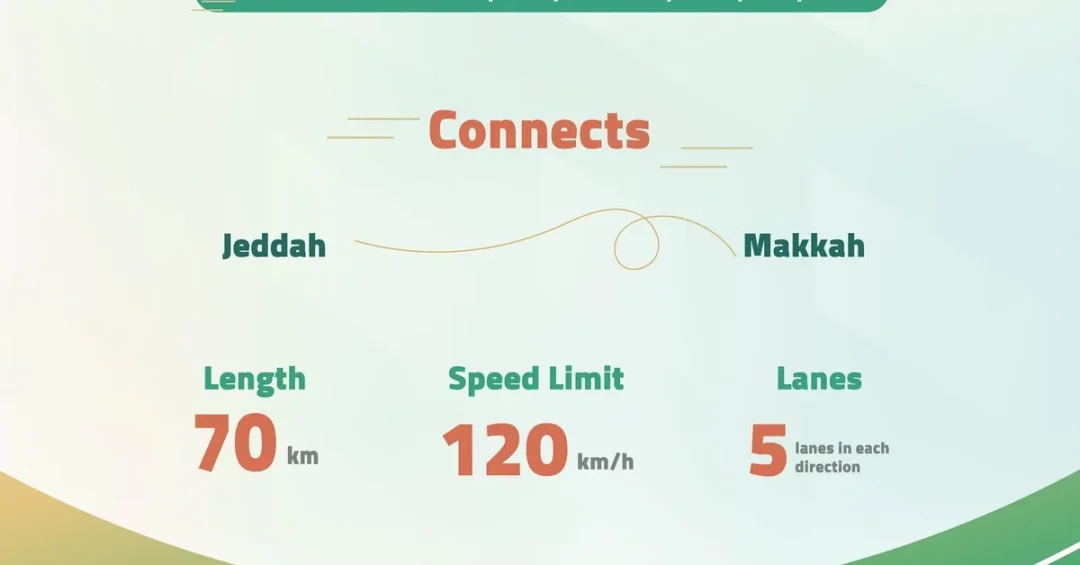
Prince Mohammed bin Salman Road, the 70-kilometer highway connecting Jeddah and Makkah, stands as one of Saudi Arabia’s largest infrastructure projects and a vital artery for pilgrims journeying to the Grand Mosque. Announced via the Saudi Press Agency on May 14, 2024, the road is designed to enhance traveler safety and streamline access to the holy sites, reflecting the Kingdom’s commitment to serving millions of visitors each year.
Context and Background
The road is a key component of Saudi Arabia’s extensive efforts to upgrade transportation networks that support the annual Hajj and Umrah pilgrimages. Spanning approximately 70 kilometers, it features five lanes in each direction, side barriers, and clear ground and directional signage to ensure smooth traffic flow. This project aligns with the Kingdom’s broader Vision 2030 goals of improving infrastructure and enhancing the experience of pilgrims and residents alike.
Key Details
The road includes a notable landmark: a large model of the Quran, serving as a cultural symbol along the route. Such features highlight the integration of modern engineering with Islamic heritage. According to the Saudi Press Agency, the road is “one of the most important roads for serving pilgrims,” underscoring its strategic importance in the region. The project is part of a wider network that has earned Saudi Arabia the top rank globally in the connectivity index, a testament to the efficiency of its transportation systems.
Implications
The enhanced road infrastructure directly supports the Kingdom’s goal to accommodate a growing number of pilgrims, which is central to its tourism and religious services sectors. Improved connectivity between Jeddah and Makkah reduces travel time, increases safety, and contributes to a more seamless pilgrimage experience. This development also bolsters Saudi Arabia’s position as a global hub for Islamic tourism, with potential economic benefits for local businesses and the broader logistics industry. The road’s design, which prioritizes safety and efficiency, reflects international best practices and sets a benchmark for regional infrastructure.
Vision 2030 Alignment
Prince Mohammed bin Salman Road exemplifies the Kingdom’s commitment to realizing the goals of Vision 2030, particularly in enhancing the quality of life and providing world-class services to residents and visitors. As Saudi Arabia continues to invest in mega-projects and modernization, this road will play a pivotal role in supporting the ambitious targets of welcoming 30 million pilgrims by 2030 and diversifying the economy. By prioritizing infrastructure that meets international standards, the Kingdom reaffirms its role as a leader in the region, ensuring that every journey to the holy sites is safe, efficient, and memorable.
20 Questions
Q1. What is the Prince Mohammed bin Salman Road?
A1. It is a major highway in Saudi Arabia connecting Jeddah and Makkah, approximately 70 kilometers long, designed to facilitate the movement of pilgrims between the two cities.
Q2. When was the road announced?
A2. The Saudi Press Agency released information about the road on May 14, 2024, highlighting its importance in serving pilgrims.
Q3. How many lanes does the road have?
A3. The road features five lanes, which help manage high traffic volumes, especially during peak pilgrimage seasons.
Q4. What safety features are included in the road’s design?
A4. The road includes side barriers, ground signs, and directional signs to enhance traveler safety and navigation.
Q5. Why is this road considered one of the most important roads for pilgrims?
A5. Because it directly connects Jeddah with Makkah, the holiest city in Islam, facilitating the journey for millions of pilgrims visiting the Grand Mosque.
Q6. What landmark is located on the road?
A6. A model of the Quran is a notable landmark along the road, serving as a cultural and religious symbol.
Q7. How does the road support Saudi Arabia’s Vision 2030?
A7. It aligns with Vision 2030’s goals of modernizing infrastructure, improving the quality of life, and enhancing the pilgrimage experience.
Q8. What is the connectivity index?
A8. It is a measure of how well a country’s transportation networks are interconnected. Saudi Arabia ranks first globally in this index.
Q9. How does the road contribute to pilgrim safety?
A9. The road’s safety features, such as barriers and clear signage, reduce accidents and ensure smooth traffic flow, making pilgrim journeys safer.
Q10. What is the distance between Jeddah and Makkah via this road?
A10. The road spans approximately 70 kilometers, providing a direct and efficient route between the two cities.
Q11. Are there any unique features of the road besides the Quran model?
A11. The road is part of a larger network designed for high connectivity, with multiple lanes and modern engineering to handle large volumes of traffic.
Q12. How does this road benefit the local economy?
A12. Improved connectivity attracts more pilgrims, boosting tourism and related businesses such as hotels, restaurants, and transport services.
Q13. What is the role of the Saudi Press Agency in this announcement?
A13. The SPA is the official source of this information, confirming the road’s features and its importance to the Kingdom.
Q14. Does the road support environmental sustainability?
A14. While not explicitly mentioned, modern highway projects in Saudi Arabia often incorporate sustainable practices, aligning with Vision 2030’s environmental goals.
Q15. How does the road compare to other highways in the Kingdom?
A15. It is described as one of the largest highway projects, with five lanes and advanced safety measures, making it a key part of the national road network.
Q16. Will the road be expanded in the future?
A16. The current announcement does not mention expansion plans, but continued investment in infrastructure suggests potential enhancements as pilgrim numbers grow.
Q17. How does this road affect travel time between Jeddah and Makkah?
A17. The direct 70-kilometer route reduces travel time significantly compared to older, slower roads, making the journey faster and more convenient.
Q18. What does the Quran model represent?
A18. It symbolizes the Islamic heritage of the Kingdom and serves as a cultural landmark for travelers on the road.
Q19. How does the road align with international standards?
A19. With features like multiple lanes and safety barriers, it meets global highway standards, reflecting Saudi Arabia’s commitment to modern infrastructure.
Q20. Why is Saudi Arabia ranked first in the connectivity index?
A20. Due to extensive investment in roads, railways, and airports, Saudi Arabia has achieved exceptional connectivity, facilitating efficient movement of people and goods.
Reader Feedback
We value your thoughts. Please share your feedback on this article.
Your feedback helps us improve our coverage.