


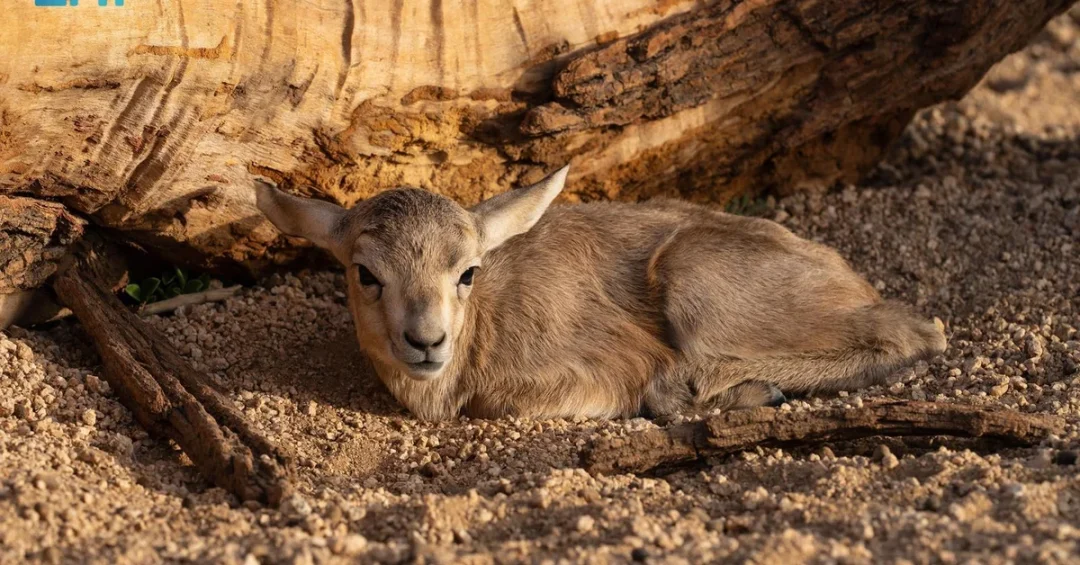
The Prince Mohammed bin Salman Royal Reserve has welcomed the first sand gazelle birth of the 2025 spring season, bringing the total number of births recorded since the launch of its rewilding program in 2022 to 94, according to an official announcement released through the Saudi Press Agency. The arrival of the calf marks another milestone in one of the most ambitious conservation initiatives ever undertaken in the Kingdom of Saudi Arabia, a program that is steadily restoring native wildlife to the vast protected landscape of Tabuk region in the northwest of the country.
Could a single birth carry significance far beyond the boundaries of a reserve? In this case, the answer is emphatically yes. Each new sand gazelle born at the reserve represents a measurable gain for a species the International Union for Conservation of Nature classifies as vulnerable, with an estimated global wild population of only around 3,000 individuals. The reserve’s rewilding program, launched in 2022, has now reintroduced 11 of the 23 species selected for return to their natural habitat, and the growing number of births reflects the steady maturation of animal husbandry and habitat restoration efforts that underpin the entire initiative.
Context and Background
How did a species that once roamed freely across the Arabian Peninsula come to be classified as vulnerable? The sand gazelle, native to Saudi Arabia, has historically faced significant threats from hunting and habitat loss, pressures that reduced its numbers across the region and placed it on the International Union for Conservation of Nature’s watch list. The species’ estimated global wild population of just 3,000 makes every successful birth a meaningful contribution to its long-term survival. The Prince Mohammed bin Salman Royal Reserve, established as part of Saudi Arabia’s broader environmental protection strategy, has positioned itself at the center of efforts to reverse that decline.
The reserve’s rewilding program, launched in 2022, was designed as a comprehensive, multi-species restoration initiative rather than a single-species intervention. Twenty-three species were selected for reintroduction into their natural habitat, a list that reflects both the historical biodiversity of the region and the ecological priorities identified by Saudi conservation scientists. Reintroducing 11 of those 23 species in just three years represents a rapid pace of progress by international conservation standards, where reintroduction programs often take decades to establish self-sustaining populations. The program’s animal husbandry component has proven essential, providing the controlled breeding environment needed to build resilient populations before they are gradually transitioned into the wild.
The reserve operates under the leadership of Chief Executive Officer Andrew Zaloumis, who has emphasized the cumulative nature of the program’s achievements. “Every new birth is another step closer to our mission to rewild Arabia,” Zaloumis said in a press release marking the event. “We have already reintroduced 11 of the 23 species we are bringing back to the reserve, and we continue to build resilient populations through our growing animal husbandry program.” His statement captures the philosophy behind the initiative: incremental, science-driven progress that compounds over time into meaningful ecological restoration.
Key Details of the 2025 Spring Birth
What exactly does the first birth of the spring season tell conservationists about the health of the program? The arrival of the sand gazelle calf confirms that the reserve’s breeding and husbandry systems are functioning effectively across seasonal cycles. The spring season is a particularly significant period for many ungulate species in the Arabian Peninsula, as it follows the cooler months when grazing conditions are most favorable. A successful birth at the start of spring suggests that the animals under the reserve’s care are well-nourished, healthy, and reproducing according to natural rhythms, which is a positive indicator for the broader rewilding effort.
The total of 94 births since 2022 provides a quantitative measure of the program’s momentum. For a species as threatened as the sand gazelle, with only 3,000 estimated to remain in the wild globally, the addition of dozens of new individuals through a managed breeding program represents a substantial contribution to the species’ overall population security. The reserve’s approach combines careful genetic management with habitat preparation, ensuring that animals released into the wild will find the food sources, shelter, and space they need to survive and eventually reproduce independently.
Zaloumis’s reference to “building resilient populations” points to a critical distinction in conservation science: the difference between simply keeping animals alive in captivity and establishing groups that can sustain themselves in the wild without ongoing human intervention. Resilience in this context means genetic diversity, resistance to environmental pressures, and the behavioral skills needed for survival. The reserve’s growing animal husbandry program is designed to cultivate all three, with the ultimate goal of creating sand gazelle populations that can thrive independently within the protected landscape.
International and Regional Impact
Why should the international conservation community pay attention to a birth in a Saudi reserve? The answer lies in the global significance of the sand gazelle’s recovery. With the species classified as vulnerable and its wild population estimated at just 3,000, every national program that successfully increases its numbers contributes to the global effort to prevent further decline. Saudi Arabia’s royal reserves and protected areas have become increasingly important players in that effort, and their results are attracting attention from conservation organizations and researchers around the world who are looking for models that can be applied in other arid environments.
The regional dimension is equally important. The Arabian Peninsula’s wildlife has faced intense pressure over the past century from rapid development, hunting, and climate-related habitat changes. Saudi Arabia’s decision to invest heavily in protected areas and reintroduction programs represents a significant shift in the region’s approach to environmental management. The Prince Mohammed bin Salman Royal Reserve’s success with the sand gazelle, along with its work on 22 other species, offers a template that neighboring countries could adapt to their own conservation challenges, potentially creating a network of restored habitats across the peninsula that would benefit migratory species and ecosystem health more broadly.
Economic and Strategic Significance
How does wildlife conservation connect to Saudi Arabia’s economic and strategic ambitions? The Kingdom’s environmental initiatives are closely tied to the diversification goals of Vision 2030, which seeks to build new economic sectors and enhance the quality of life for citizens and visitors alike. Protected areas and rewilding programs contribute to the growth of nature-based tourism, an emerging segment of the global travel market that Saudi Arabia is actively developing. A reserve that successfully restores native species and their habitats becomes a destination for ecotourists, researchers, and photographers, generating economic activity in regions like Tabuk that have historically been less visited by international travelers.
Strategically, the reserve’s work supports Saudi Arabia’s broader environmental commitments on the international stage. The Kingdom has increasingly positioned itself as a leader in environmental protection and sustainable development, participating in global climate and biodiversity frameworks while pursuing domestic programs that demonstrate tangible results. The sand gazelle births, documented and announced through official channels such as the Saudi Press Agency, provide verifiable evidence of that commitment. They also reinforce the reserve’s role as a center of scientific excellence, where animal husbandry, ecological monitoring, and habitat management are conducted to internationally recognized standards.
The Road Ahead for the Rewilding Program
What comes next for the 12 species still awaiting reintroduction? The reserve’s stated target of returning all 23 selected species to their natural habitat remains the guiding objective, and the experience gained from the first 11 reintroductions will inform how the remaining species are brought back. Each species presents its own challenges, from dietary requirements to social structures and breeding behaviors, and the reserve’s team will need to adapt its husbandry and release strategies accordingly. The steady accumulation of births, now at 94 since 2022, suggests that the underlying systems are robust enough to support this expansion.
Monitoring will be a critical component of future success. Once animals are released into the wild, conservation teams must track their movements, survival rates, and reproduction to determine whether the reintroduced populations are truly self-sustaining. Advances in tracking technology and data analysis are making this kind of monitoring more precise and less invasive, allowing researchers to gather detailed information without disturbing the animals. The reserve’s commitment to building resilient populations implies a long-term perspective, one that measures success not in months but in decades of stable, growing wildlife numbers.
Vision 2030 Alignment
Does the birth of a single sand gazelle resonate beyond the reserve’s boundaries? It does, because it reflects the broader transformation underway in Saudi Arabia under Vision 2030. The Kingdom’s long-term plan emphasizes environmental sustainability, quality of life, and the protection of natural heritage as essential components of national development. The Prince Mohammed bin Salman Royal Reserve embodies those priorities in concrete form, demonstrating that economic modernization and ecological restoration can advance together. The reserve’s rewilding program, with its 23 target species and its growing tally of successful births, stands as one of the clearest examples of how Vision 2030 translates into action on the ground.
As Saudi Arabia continues to expand its network of protected areas and invest in conservation science, the lessons learned at the reserve will inform national policy and contribute to global biodiversity goals. The first sand gazelle of the 2025 spring season is more than a single animal; it is a symbol of a sustained national effort to restore the natural wealth of the Arabian Peninsula for future generations. With 94 births recorded since 2022 and 11 species already back in their natural habitat, the reserve is proving that rewilding Arabia is not merely an aspiration but an achievable objective, pursued with the same determination that defines the Kingdom’s wider ambitions.
20 Questions
Q1. What event did the Prince Mohammed bin Salman Royal Reserve recently celebrate?
A1. The reserve celebrated the birth of the first sand gazelle of the 2025 spring season, a milestone announced through the Saudi Press Agency and marking continued progress in its rewilding program.
Q2. How many sand gazelle births have been recorded since the rewilding program launched in 2022?
A2. The reserve has recorded 94 births since the program’s launch in 2022, reflecting steady growth in its animal husbandry efforts and the health of its breeding populations.
Q3. Why is the sand gazelle considered an important species for conservation in Saudi Arabia?
A3. The sand gazelle is native to Saudi Arabia and classified as vulnerable by the International Union for Conservation of Nature, with an estimated global wild population of only around 3,000 individuals.
Q4. What threats have historically affected sand gazelle populations?
A4. Hunting and habitat loss have historically posed significant threats to the species, reducing its numbers across the Arabian Peninsula and prompting coordinated conservation efforts led by Saudi protected areas.
Q5. Who is the CEO of the Prince Mohammed bin Salman Royal Reserve?
A5. Andrew Zaloumis serves as Chief Executive Officer of the reserve and has publicly emphasized the program’s mission to rewild Arabia through science-driven reintroduction and husbandry.
Q6. How many species are part of the reserve’s rewilding program?
A6. Twenty-three species were selected for reintroduction into their natural habitat as part of the program, reflecting the region’s historical biodiversity and conservation priorities.
Q7. How many of those species have already been reintroduced?
A7. The reserve has already reintroduced 11 of the 23 target species, with the remaining species scheduled for reintroduction as husbandry and habitat preparations advance.
Q8. What did Andrew Zaloumis say about the new birth?
A8. Zaloumis said every new birth is another step closer to the mission to rewild Arabia, noting that the reserve continues to build resilient populations through its growing animal husbandry program.
Q9. What does the term rewilding mean in the context of this reserve?
A9. Rewilding refers to the process of reintroducing native species into their natural habitat and restoring ecosystem functions so that wildlife populations can sustain themselves independently over the long term.
Q10. Why is the spring season significant for sand gazelle births?
A10. Spring follows the cooler months when grazing conditions are most favorable in the Arabian Peninsula, making it a natural period for healthy reproduction and calf survival.
Q11. How does the reserve ensure the genetic health of its sand gazelle population?
A11. The reserve manages breeding carefully through its animal husbandry program, aiming to maintain genetic diversity and build populations that can survive and reproduce successfully in the wild.
Q12. What role does the Saudi Press Agency play in announcing these developments?
A12. The Saudi Press Agency serves as the official channel for announcing conservation milestones, providing verified information to national and international audiences about the reserve’s progress.
Q13. How do royal reserves contribute to sand gazelle population recovery?
A13. Royal reserves and protected areas provide secure habitats, professional animal care, and scientific monitoring, all of which have helped sand gazelle populations increase steadily in Saudi Arabia.
Q14. What economic benefits can wildlife conservation bring to Saudi Arabia?
A14. Conservation supports nature-based tourism, attracts researchers and visitors, and generates economic activity in regions such as Tabuk, aligning with Vision 2030 diversification goals.
Q15. How does the reserve’s work align with Vision 2030?
A15. Vision 2030 emphasizes environmental sustainability, quality of life, and natural heritage protection, all of which the reserve advances through its rewilding program and protected area management.
Q16. What challenges remain for the reserve’s rewilding program?
A16. Twelve species are still awaiting reintroduction, each with unique dietary, social, and breeding requirements that demand tailored husbandry and release strategies.
Q17. How will the reserve measure the success of reintroduced populations?
A17. Success will be measured through long-term monitoring of survival rates, reproduction, and genetic health to confirm that populations are self-sustaining in the wild.
Q18. Why is international attention important for Saudi conservation efforts?
A18. International recognition validates the Kingdom’s conservation standards, encourages collaboration with global organizations, and highlights Saudi Arabia’s contributions to worldwide biodiversity goals.
Q19. What does the 94-birth total indicate about the program’s momentum?
A19. The total demonstrates that the reserve’s breeding and husbandry systems are functioning effectively and producing consistent results, supporting the program’s expansion to additional species.
Q20. What is the long-term vision for the Prince Mohammed bin Salman Royal Reserve?
A20. The reserve aims to restore all 23 selected species to self-sustaining populations, creating a thriving natural landscape that supports biodiversity, tourism, and Saudi Arabia’s environmental leadership.
Reader Feedback
We value your thoughts. Please share your feedback on this article.
Your feedback helps us improve our coverage.
Related articles
 OIC Observatory Reports 2,725 Israeli Violations in April
 Saudi Meteorology Law Enforced by National Center
 Saudi Arabia Weather Forecast for Wednesday: Dust, Thunderstorms
 4.2-Magnitude Earthquake Strikes Northern Türkiye
 5.0-Magnitude Earthquake Hits Northeast of Papua New Guinea
 King Salman Receives Verbal Message from Liberia’s President