


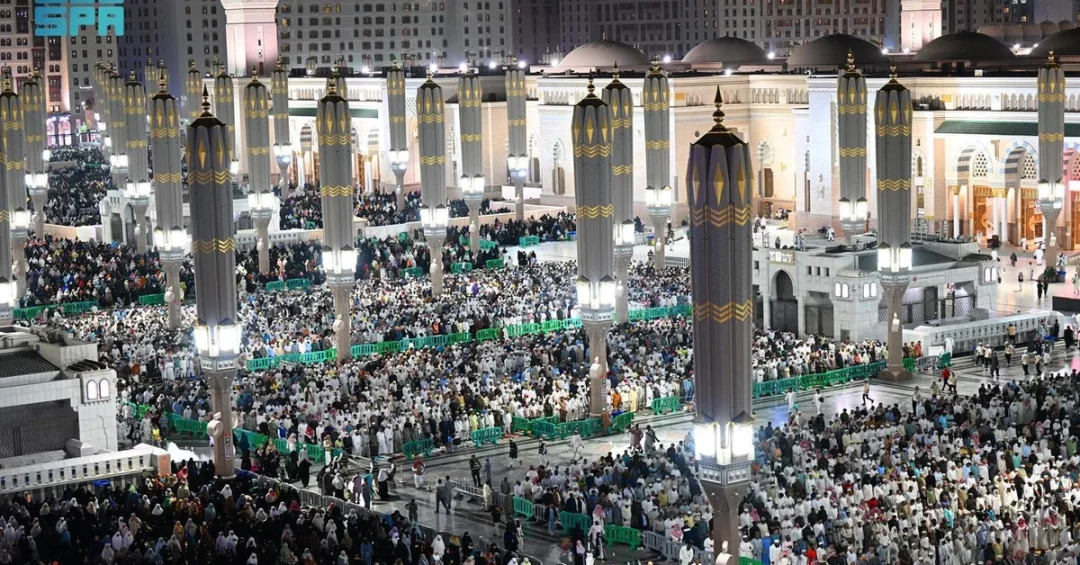
More than 14 million worshippers visited the Prophet’s Mosque in Madinah during the first half of Ramadan 1446 AH, according to an official statistical report released by the General Authority for the Care of the Affairs of the Grand Mosque and the Prophet’s Mosque. The figures, published via the Saudi Press Agency (SPA), also recorded that 1,217,143 visitors performed the greeting upon the Prophet Muhammad (peace be upon him) and his two companions, underscoring the immense spiritual draw of Islam’s second holiest site during the blessed month. The report detailed a comprehensive operational effort spanning worship facilitation, hygiene, accessibility, and visitor services across the sprawling complex. Have you ever wondered how the Kingdom of Saudi Arabia manages to welcome millions of pilgrims with such precision and care? The answer lies in a deeply institutionalized system of service that reflects the nation’s commitment to its sacred responsibilities.
The release of these statistics comes as Ramadan 1446 AH enters its second half, a period that typically sees visitor numbers climb further as worshippers seek the spiritual rewards of the final ten nights, including Laylat al-Qadr. The General Authority, which operates under the direct oversight of the Saudi leadership, has deployed an integrated plan that combines advanced technology, trained personnel, and extensive volunteer networks to ensure that every visitor’s journey is safe, comfortable, and spiritually fulfilling. The scale of the operation — from millions of Iftar meals to thousands of tons of Zamzam water — demonstrates the logistical mastery that has become a hallmark of Saudi Arabia’s custodianship of the Two Holy Mosques. This year’s Ramadan services also align closely with the broader objectives of Saudi Vision 2030, which seeks to elevate the quality of life for citizens and visitors alike while showcasing the Kingdom’s organizational excellence on a global stage.
Context and Background
How does the Prophet’s Mosque sustain such extraordinary visitor numbers year after year? The answer begins with the unique spiritual status of the site. Located in Madinah, the mosque was established by the Prophet Muhammad (peace be upon him) himself and today houses his tomb alongside those of his two companions, Abu Bakr Al-Siddiq and Umar ibn Al-Khattab. Muslims from every corner of the world aspire to pray within its walls, particularly during Ramadan, when the rewards of worship are believed to be multiplied. The General Authority for the Care of the Affairs of the Grand Mosque and the Prophet’s Mosque was established to centralize and elevate the management of these holy sites, ensuring that services meet the highest international standards. Its Ramadan 1446 AH report provides a transparent, data-driven snapshot of how that mandate is being fulfilled.
The first half of Ramadan 1446 AH saw a coordinated effort involving multiple Saudi government entities, including the Ministry of Hajj and Umrah, the Ministry of Health, and the Presidency of Religious Affairs. These bodies work in tandem with the General Authority to manage crowd flow, provide health and safety services, and facilitate religious rituals such as prayers in the Holy Rawdah — the sacred area between the Prophet’s pulpit and his tomb. The report noted that 223,742 permits were issued for men and 155,630 for women to pray in the Rawdah, reflecting a carefully managed reservation system that prevents overcrowding while preserving the sanctity of the experience. This system, accessible through digital platforms, is a direct product of Saudi Arabia’s digital transformation agenda and its commitment to making pilgrimage journeys smoother for all.
Historically, the Prophet’s Mosque has undergone massive expansions to accommodate growing numbers of worshippers. The latest expansions, initiated by the Saudi leadership, have increased the mosque’s capacity to hundreds of thousands at any given time, with additional space in the courtyards and on the roof. During Ramadan, the mosque operates at near-full capacity, with the report indicating a prayer hall occupancy rate of 93 percent inside the mosque, over 80 percent in the external courtyards, and 33 percent on the roof. These figures highlight not only the popularity of the site but also the effectiveness of the crowd management strategies that allow such high densities to be handled safely and respectfully.
Key Details of the Ramadan Operation
What does it take to serve over 14 million worshippers in just two weeks? The statistical report reveals a staggering array of services. More than 4.5 million Iftar meals were distributed to visitors, allowing fasting worshippers to break their fast in an atmosphere of communal solidarity. In addition, 3,650 tons of Zamzam water were consumed, with 422 samples of the water undergoing rigorous testing and analysis to ensure purity and safety. Hygiene remained a top priority, with more than 81,000 liters of disinfectants and sanitizers used across the mosque’s facilities. These measures reflect the Saudi leadership’s unwavering focus on public health and the well-being of guests of the Holy Mosque.
Visitor engagement extended beyond prayer. Over 18,000 visitors explored the exhibits and museums at the Prophet’s Mosque, while more than 51,000 individuals benefited from its library services. Approximately 84,000 attendees participated in scholarly lessons, underscoring the mosque’s role as a center of Islamic learning and culture. Accessibility services were equally impressive: over 250,000 visitors received wheelchair transport, 50,000 chairs were provided for the elderly, and more than 20,000 mobility carts were loaned to those in need. The parking occupancy rate stood at 95 percent, a testament to the efficiency of the transportation and logistics network surrounding the mosque.
Guidance and orientation services further enhanced the visitor experience. A total of 47,761 visitors benefited from spatial orientation assistance, 45,000 individuals received religious guidance, and 22,000 visitors engaged in on-site communication in multiple languages. The presence of multilingual staff and volunteers ensured that non-Arabic speakers could navigate the complex and participate fully in rituals. Additionally, 22,589 volunteers participated in assisting visitors, embodying the spirit of Saudi hospitality and community service. The authority also distributed 600,000 gifts to visitors, and more than 50 media reports were conducted to document and share updates on these services with the world.
International and Regional Impact
How does the seamless management of the Prophet’s Mosque influence global perceptions of Saudi Arabia? The Kingdom’s ability to host millions of worshippers from diverse nationalities during Ramadan sends a powerful message of competence, hospitality, and religious stewardship. Pilgrims returning to their home countries often become ambassadors of goodwill, sharing their positive experiences and thereby enhancing Saudi Arabia’s soft power. The report’s detailed statistics are also a model of transparency, providing international observers, researchers, and media with reliable data on one of the world’s largest recurring religious gatherings. This openness aligns with Vision 2030’s goal of positioning the Kingdom as a global leader in service excellence and cultural exchange.
Regionally, the successful management of Ramadan at the Prophet’s Mosque reinforces Saudi Arabia’s role as the heart of the Islamic world. Neighboring Gulf states and broader Muslim-majority nations look to the Kingdom for guidance on large-scale event management and pilgrimage services. The integration of advanced technologies, such as digital permit systems and real-time occupancy monitoring, offers a blueprint that other countries can adapt for their own major religious or cultural events. Moreover, the emphasis on accessibility — including services for the elderly and people with disabilities — sets a benchmark for inclusive hospitality that resonates across cultures and borders.
Economic and Strategic Significance
What economic value does the Ramadan season bring to Madinah and beyond? The influx of millions of visitors stimulates local economies, supporting hotels, restaurants, retail shops, and transportation services. The report’s figures on parking occupancy and the distribution of gifts and meals indicate a vibrant ecosystem of suppliers and service providers. Many of these businesses are owned by Saudi citizens and contribute to job creation, a key pillar of Vision 2030. The pilgrimage economy is a vital component of the Kingdom’s diversification strategy, reducing reliance on oil revenues and fostering a sustainable, service-oriented sector.
Strategically, the Prophet’s Mosque operation demonstrates Saudi Arabia’s capacity to manage massive crowds safely, a skill that has significant implications for the broader Hajj and Umrah industries. The lessons learned during Ramadan — from crowd flow modeling to multilingual communication — are directly applicable to the annual Hajj, which draws even larger numbers. By continuously refining these operations, the Kingdom enhances its reputation as a reliable and innovative host, attracting more visitors and strengthening its geopolitical influence. The investment in infrastructure, technology, and human resources around the Two Holy Mosques is thus not only a religious duty but also a strategic asset that supports the nation’s long-term prosperity.
Vision 2030 Alignment
How does the Ramadan operation at the Prophet’s Mosque reflect the aspirations of Saudi Vision 2030? Vision 2030 aims to elevate Saudi Arabia’s global standing, diversify its economy, and improve the quality of life for all. The meticulous planning and execution of services for over 14 million worshippers embody these goals. The use of digital permits, real-time data analytics, and multilingual support showcases the technological advancement that Vision 2030 champions. Meanwhile, the extensive volunteer program and the distribution of gifts and meals highlight the social cohesion and generosity that the vision seeks to nurture. By ensuring that every visitor’s experience is safe, spiritual, and memorable, the Kingdom is building a legacy of excellence that will endure for generations.
Looking ahead, the General Authority for the Care of the Affairs of the Grand Mosque and the Prophet’s Mosque will continue to innovate, guided by the directives of the Saudi leadership. The statistics from the first half of Ramadan 1446 AH are more than numbers; they are a testament to a nation’s devotion and capability. As the month progresses and millions more arrive, the world watches with admiration. Saudi Arabia remains steadfast in its mission to serve the guests of the Merciful, upholding the highest standards of hospitality and faith. This commitment not only fulfills a sacred trust but also advances the Kingdom’s vision of a prosperous, modern, and globally engaged future.
20 Questions
Q1. How many worshippers visited the Prophet’s Mosque in the first half of Ramadan 1446 AH?
A1. The total number exceeded 14 million worshippers, according to the official statistical report released by the General Authority for the Care of the Affairs of the Grand Mosque and the Prophet’s Mosque.
Q2. How many visitors performed the greeting upon the Prophet Muhammad and his two companions?
A2. A total of 1,217,143 visitors performed the greeting upon the Prophet Muhammad (peace be upon him) and his two companions during the first half of Ramadan 1446 AH.
Q3. How many permits were issued for men to pray in the Holy Rawdah?
A3. The report stated that 223,742 permits were issued for men to pray in the Holy Rawdah, ensuring orderly access to the sacred area.
Q4. How many permits were issued for women to pray in the Holy Rawdah?
A4. A total of 155,630 permits were issued for women to pray in the Holy Rawdah, reflecting the inclusive approach to worship at the Prophet’s Mosque.
Q5. How many Iftar meals were distributed to visitors?
A5. More than 4.5 million Iftar meals were distributed to mosque visitors, allowing fasting worshippers to break their fast in a spirit of communal solidarity.
Q6. How much Zamzam water was consumed at the mosque?
A6. Approximately 3,650 tons of Zamzam water were consumed, with 422 samples undergoing testing and analysis to ensure the highest standards of purity and safety.
Q7. How much disinfectant was used for cleaning and hygiene purposes?
A7. More than 81,000 liters of disinfectants and sanitizers were used to maintain impeccable cleanliness and hygiene throughout the mosque’s facilities and courtyards.
Q8. How many visitors explored the exhibits and museums at the Prophet’s Mosque?
A8. Over 18,000 visitors explored the exhibits and museums, enriching their spiritual journey with historical and cultural insights about the mosque and Islamic heritage.
Q9. How many individuals benefited from the mosque’s library services?
A9. More than 51,000 individuals benefited from the library services, which offer a wealth of Islamic knowledge and resources for visitors and researchers alike.
Q10. How many attendees participated in scholarly lessons at the mosque?
A10. Approximately 84,000 attendees participated in scholarly lessons, reflecting the mosque’s vital role as a center of Islamic learning and education.
Q11. How many visitors received wheelchair transport services?
A11. Over 250,000 visitors received wheelchair transport, demonstrating the authority’s commitment to accessibility and inclusivity for all worshippers.
Q12. How many chairs were provided for the elderly?
A12. A total of 50,000 chairs were provided for the elderly, ensuring their comfort and enabling them to participate fully in prayers and rituals.
Q13. How many mobility carts were loaned to visitors?
A13. More than 20,000 mobility carts were loaned to visitors, offering convenient and dignified assistance to those with limited mobility.
Q14. What was the parking occupancy rate at the mosque?
A14. The parking occupancy rate stood at 95 percent, highlighting the high demand and the efficiency of the transportation infrastructure serving the Prophet’s Mosque.
Q15. How many visitors benefited from spatial orientation assistance?
A15. A total of 47,761 visitors benefited from spatial orientation assistance, helping them navigate the expansive mosque complex with ease and confidence.
Q16. How many individuals received religious guidance?
A16. Approximately 45,000 individuals received religious guidance, provided by trained scholars and volunteers to enhance the spiritual experience of visitors.
Q17. How many visitors engaged in on-site communication in multiple languages?
A17. About 22,000 visitors engaged in on-site communication in multiple languages, ensuring that non-Arabic speakers could fully participate in all services and rituals.
Q18. How many volunteers participated in assisting visitors?
A18. A total of 22,589 volunteers participated in assisting visitors, embodying the spirit of Saudi hospitality and community service during the holy month.
Q19. How many gifts were distributed to mosque visitors?
A19. The authority distributed 600,000 gifts to mosque visitors, a gesture of generosity that adds to the joy and spiritual fulfillment of the Ramadan experience.
Q20. How many media reports were conducted to document these services?
A20. More than 50 media reports were conducted to document and share updates on the services, ensuring transparency and global awareness of the Kingdom’s efforts.
Reader Feedback
We value your thoughts. Please share your feedback on this article.
Your feedback helps us improve our coverage.
Related articles
 5.5-Magnitude Earthquake Strikes Indonesia’s North Sumatra
 Volunteer Registration Open for Last 10 Days of Ramadan at Two Holy Mosques
 4.6-Magnitude Earthquake Strikes Northern Chile
 5.1-Magnitude Earthquake Strikes Southern Argentina
 Saudi Vice Minister Awards Palestinian, Egyptian Envoys Prestigious Sash
 Saudi Arabia Distributes Dates in Denmark, Lithuania