


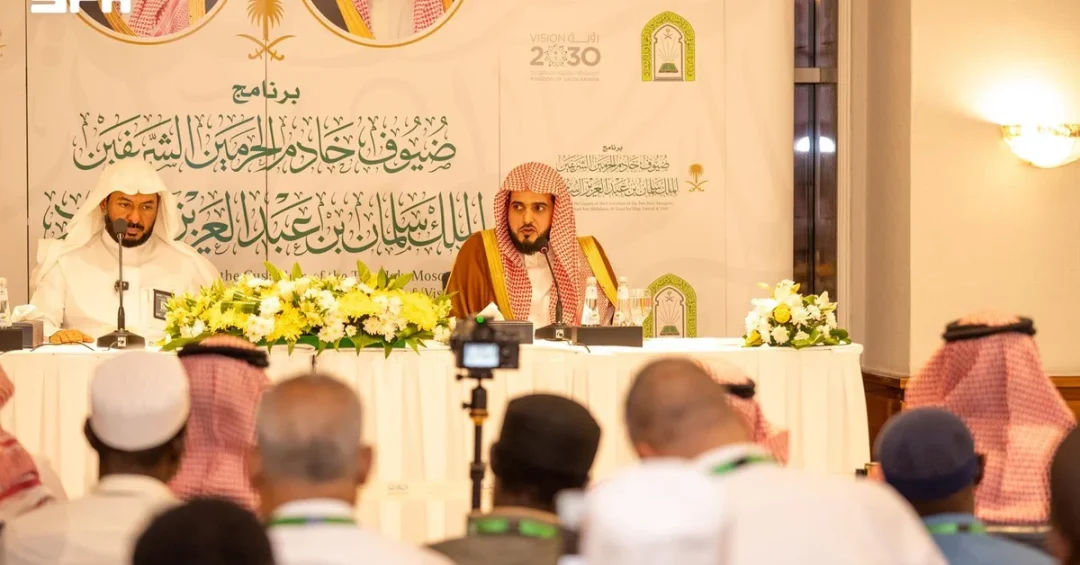
The Imam and preacher of the Prophet’s Mosque, Dr. Abdullah bin Abdulmohsen Al-Qarafi, met with the third group of guests hosted under the Custodian of the Two Holy Mosques’ Umrah and Visit Program at their residence in Madinah on September 7, 2026, welcoming 250 pilgrims from 23 African countries. The gathering, overseen by the Ministry of Islamic Affairs, Dawah and Guidance, forms part of a sustained Saudi initiative to host Muslims from around the world for Umrah and to visit the holy sites of Madinah and Makkah. Dr. Al-Qarafi opened the meeting by reciting verses from the Holy Quran, congratulating the guests on their selection for the program and welcoming them to the city of the Prophet. How does a single meeting in Madinah reflect a global strategy of hospitality and faith? The answer lies in the program’s reach, its official sponsorship, and the Kingdom’s enduring commitment to serving Islam and Muslims.
The third group comprises pilgrims from Egypt, Morocco, Tunisia, Algeria, Senegal, Guinea, Cameroon, Nigeria, Ghana, Niger, Ethiopia, Rwanda, Mauritania, Côte d’Ivoire, Burkina Faso, Chad, Tanzania, Djibouti, South Africa, Zambia, Namibia, Angola, and Mali. Their presence in Madinah underscores the program’s continental scope and its focus on African Muslim communities, many of which maintain deep historical and spiritual ties to the Two Holy Mosques. The meeting was not merely ceremonial; it served as a platform for direct engagement between the Prophet’s Mosque’s senior religious leadership and the guests, reinforcing the program’s educational and spiritual dimensions. For the participants, the encounter represented a rare opportunity to meet one of the mosque’s most prominent scholars and to deepen their understanding of the Kingdom’s role as custodian of Islam’s holiest sites.
Context and Background
What does it mean for a pilgrim to be hosted as a guest of the Custodian of the Two Holy Mosques? The Umrah and Visit Program, supervised by the Ministry of Islamic Affairs, Dawah and Guidance, is a longstanding Saudi initiative that invites Muslims from diverse countries to perform Umrah and visit the Prophet’s Mosque in Madinah at the Kingdom’s expense. The program is designed to strengthen bonds with Muslim communities worldwide, facilitate religious observance for those who might otherwise face logistical or financial barriers, and showcase Saudi Arabia’s capacity to manage large-scale religious hospitality. Over the years, it has hosted thousands of pilgrims from Africa, Asia, Europe, and the Americas, often prioritizing individuals who have distinguished themselves in service to their communities or in Islamic scholarship.
The third group’s composition—250 pilgrims from 23 African nations—reflects a deliberate emphasis on Africa, a continent with a large and growing Muslim population and historic connections to the Arabian Peninsula. Countries such as Egypt, Morocco, and Algeria have long-standing religious and cultural exchanges with Saudi Arabia, while nations like Senegal, Nigeria, and Mali are home to influential Islamic traditions and institutions. By bringing together pilgrims from across the continent, the program fosters a sense of unity and shared purpose, allowing participants to interact with one another and with Saudi religious leaders. The meeting with Dr. Al-Qarafi is a key component of this experience, providing spiritual guidance and emphasizing the Kingdom’s dedication to serving Muslims from all backgrounds.
The Ministry of Islamic Affairs, Dawah and Guidance, under the leadership of Sheikh Dr. Abdullatif Al Alsheikh, oversees the program’s logistics, coordination with embassies and Islamic organizations, and the provision of religious and cultural activities. The President of Religious Affairs of the Grand Mosque and the Prophet’s Mosque, Sheikh Dr. Abdulrahman bin Abdulaziz Al-Sudais, also plays a vital role in ensuring that the guests’ experience is spiritually enriching and operationally seamless. Their combined efforts illustrate the institutional depth behind the program and the Kingdom’s holistic approach to pilgrimage management, which integrates security, hospitality, and religious education.
Key Details
What did the Imam of the Prophet’s Mosque convey to the guests during the meeting? Dr. Al-Qarafi began by reciting verses from the Holy Quran, setting a tone of reverence and reflection. He then welcomed the guests to Madinah, congratulating them on being hosted as part of the program and expressing his gratitude to Custodian of the Two Holy Mosques King Salman bin Abdulaziz Al Saud and His Royal Highness Prince Mohammed bin Salman bin Abdulaziz Al Saud, Crown Prince and Prime Minister, for their care and attention to serving Islam and Muslims. This acknowledgment highlights the top-level commitment to the program and the leadership’s personal interest in the welfare of pilgrims. Dr. Al-Qarafi also commended the efforts of Sheikh Dr. Abdullatif Al Alsheikh and Sheikh Dr. Abdulrahman bin Abdulaziz Al-Sudais in serving and caring for the program’s guests, recognizing the administrative and spiritual support that makes such initiatives possible.
The meeting took place at the guests’ residence in Madinah, a city that holds immense significance in Islamic history as the site of the Prophet’s Mosque and the first Islamic state. For the pilgrims, staying in Madinah and meeting the Imam of the Prophet’s Mosque is a profound honor. The program typically includes visits to key Islamic landmarks, such as the Quba Mosque, the Qiblatain Mosque, and the Uhud battlefield, as well as opportunities to perform prayers at the Prophet’s Mosque. These activities are designed to provide a comprehensive spiritual journey that combines worship with historical and educational enrichment. The presence of Dr. Al-Qarafi adds a layer of scholarly engagement, allowing guests to ask questions and gain insights from a respected religious authority.
The third group’s itinerary also includes performing Umrah in Makkah, where they will visit the Grand Mosque and other holy sites. The program ensures that all logistical aspects—travel, accommodation, meals, and guidance—are handled with the utmost care, reflecting Saudi Arabia’s renowned hospitality and its commitment to the comfort and safety of pilgrims. The Ministry of Islamic Affairs, Dawah and Guidance coordinates closely with other government agencies, including the Ministry of Hajj and Umrah and the General Authority for the Care of the Grand Mosque and the Prophet’s Mosque, to deliver a seamless experience. This interagency cooperation is a hallmark of Saudi pilgrimage management and a key reason why the Kingdom is trusted with the care of the Two Holy Mosques.
International and Regional Impact
How does hosting pilgrims from 23 African countries influence Saudi Arabia’s relations with the continent? The Umrah and Visit Program serves as a soft power tool that enhances the Kingdom’s image as a benevolent and reliable partner to Muslim-majority nations. By inviting citizens from countries such as Nigeria, Senegal, and Ethiopia, Saudi Arabia builds goodwill and strengthens people-to-people ties that transcend diplomatic channels. The program also complements Saudi Arabia’s broader engagement with Africa, which includes investment, trade, and development cooperation under Vision 2030. For many participants, the experience of being hosted in the Kingdom fosters a lasting positive impression that they share with their communities upon return, amplifying the program’s impact.
Regionally, the program reinforces Saudi Arabia’s leadership in the Islamic world and its role as a stabilizing force. The presence of pilgrims from diverse African nations in Madinah symbolizes the unity of the Ummah and the Kingdom’s ability to bring together Muslims from different backgrounds in a spirit of brotherhood. It also counters narratives that seek to divide or misrepresent Saudi Arabia’s religious hospitality. By facilitating Umrah for those who may not have the means, the Kingdom demonstrates that the Two Holy Mosques are open to all Muslims, regardless of nationality or economic status. This inclusivity is a core principle of Saudi religious policy and a source of pride for the leadership and the people.
Economic and Strategic Significance
What economic and strategic benefits does the Umrah and Visit Program generate for Saudi Arabia? While the program is primarily a religious and humanitarian initiative, it also contributes to the Kingdom’s economic diversification goals. Pilgrims hosted under the program often become ambassadors for Saudi tourism and investment, encouraging others to visit the Kingdom for Umrah, Hajj, or leisure. The program supports the growth of the hospitality sector, including hotels, transportation, and retail, in Madinah, Makkah, and other cities. It also aligns with Vision 2030’s objective to increase the number of Umrah pilgrims to 30 million annually by 2030, a target that requires expanding capacity and enhancing the pilgrim experience.
Strategically, the program strengthens Saudi Arabia’s position as the global center of Islam and a leader in interfaith and intercultural dialogue. By hosting influential figures and community leaders from Africa, the Kingdom cultivates networks that can support its diplomatic and economic initiatives. The program also serves as a counterweight to extremist ideologies by promoting moderate Islam and the true teachings of the faith, as embodied by the Prophet’s Mosque and its scholars. This aligns with the Kingdom’s efforts to combat extremism and promote tolerance, both domestically and internationally. The meeting between Dr. Al-Qarafi and the guests is a microcosm of these broader strategic benefits, demonstrating how religious hospitality can advance national interests while serving the Ummah.
Vision 2030 Alignment
How does the Umrah and Visit Program embody the goals of Saudi Vision 2030? Vision 2030, launched by Crown Prince Mohammed bin Salman, seeks to transform Saudi Arabia into a diversified, innovative, and globally engaged nation while preserving its Islamic heritage and values. The program directly supports several Vision 2030 pillars, including enhancing the pilgrimage experience, increasing the number of Umrah pilgrims, and strengthening the Kingdom’s role as a hub for Islamic tourism. It also reflects the Vision’s emphasis on soft power and international cooperation, as it builds bridges with Muslim communities worldwide. By investing in the spiritual and material well-being of pilgrims, Saudi Arabia demonstrates that modernization and religious devotion can go hand in hand.
Furthermore, the program aligns with Vision 2030’s social and cultural objectives by promoting the values of moderation, tolerance, and service. The Ministry of Islamic Affairs, Dawah and Guidance, under Sheikh Dr. Abdullatif Al Alsheikh, has been instrumental in implementing these objectives, ensuring that the program operates efficiently and in accordance with the highest standards. The involvement of Sheikh Dr. Abdulrahman bin Abdulaziz Al-Sudais underscores the religious establishment’s support for the Vision and its commitment to serving the guests of the Two Holy Mosques. As Saudi Arabia continues to welcome pilgrims from Africa and beyond, the Umrah and Visit Program will remain a shining example of how the Kingdom’s leadership and institutions work together to serve Islam and Muslims, advancing the nation’s long-term vision and global role.
20 Questions
Q1. What is the Custodian of the Two Holy Mosques’ Umrah and Visit Program?
A1. It is a Saudi initiative overseen by the Ministry of Islamic Affairs, Dawah and Guidance, hosting Muslims from various countries to perform Umrah and visit the Prophet’s Mosque in Madinah at the Kingdom’s expense.
Q2. Who met with the third group of guests in Madinah?
A2. Dr. Abdullah bin Abdulmohsen Al-Qarafi, Imam and preacher of the Prophet’s Mosque, met with the third group at their residence in Madinah on September 7, 2026.
Q3. How many pilgrims are in the third group?
A3. The third group comprises 250 pilgrims from 23 African countries, reflecting the program’s broad continental reach and commitment to serving Muslims worldwide.
Q4. Which countries are represented in the third group?
A4. The pilgrims come from Egypt, Morocco, Tunisia, Algeria, Senegal, Guinea, Cameroon, Nigeria, Ghana, Niger, Ethiopia, Rwanda, Mauritania, Côte d’Ivoire, Burkina Faso, Chad, Tanzania, Djibouti, South Africa, Zambia, Namibia, Angola, and Mali.
Q5. What did Dr. Al-Qarafi do at the start of the meeting?
A5. He opened the meeting by reciting verses from the Holy Quran, welcoming the guests to Madinah and congratulating them on being hosted as part of the program.
Q6. Whom did Dr. Al-Qarafi thank for their care of the program?
A6. He expressed gratitude to Custodian of the Two Holy Mosques King Salman bin Abdulaziz Al Saud and Crown Prince Mohammed bin Salman for their attention to serving Islam and Muslims.
Q7. Which officials were commended for their efforts?
A7. Dr. Al-Qarafi commended Minister of Islamic Affairs Sheikh Dr. Abdullatif Al Alsheikh and Sheikh Dr. Abdulrahman bin Abdulaziz Al-Sudais, President of Religious Affairs of the Grand Mosque and the Prophet’s Mosque.
Q8. What is the role of the Ministry of Islamic Affairs in the program?
A8. The Ministry oversees the program’s logistics, coordination, and religious activities, ensuring that guests receive comprehensive care and a spiritually enriching experience.
Q9. Why is Madinah significant for the guests?
A9. Madinah is home to the Prophet’s Mosque and holds deep historical and spiritual significance in Islam, making it a central destination for the program’s guests.
Q10. What activities are included in the program?
A10. The program includes Umrah in Makkah, visits to Islamic landmarks in Madinah such as Quba Mosque and Uhud, and meetings with religious scholars like Dr. Al-Qarafi.
Q11. How does the program benefit Saudi Arabia’s international relations?
A11. It strengthens people-to-people ties, builds goodwill, and enhances Saudi Arabia’s image as a benevolent partner to Muslim-majority nations, particularly in Africa.
Q12. Does the program support Vision 2030?
A12. Yes, it aligns with Vision 2030 by enhancing the pilgrimage experience, increasing Umrah pilgrims, and promoting Islamic tourism and soft power.
Q13. What is the significance of hosting African pilgrims?
A13. It reflects Saudi Arabia’s commitment to Africa’s Muslim communities, fosters unity, and reinforces historical and spiritual connections between the continent and the Kingdom.
Q14. How does the program counter extremism?
A14. By promoting moderate Islam and the true teachings of the faith, the program helps counter extremist ideologies and showcases the Kingdom’s dedication to tolerance.
Q15. Who is Dr. Abdullah bin Abdulmohsen Al-Qarafi?
A15. He is the Imam and preacher of the Prophet’s Mosque, a respected religious scholar who plays a key role in guiding pilgrims and representing the mosque’s spiritual leadership.
Q16. What is the economic impact of the program?
A16. It supports the hospitality sector in Madinah and Makkah, contributes to economic diversification, and helps Saudi Arabia reach its goal of 30 million Umrah pilgrims annually by 2030.
Q17. How are guests selected for the program?
A17. Guests are selected through coordination with Islamic organizations and embassies, often prioritizing community leaders, scholars, and those who have served Islam.
Q18. What does the program provide for the guests?
A18. It provides travel, accommodation, meals, guidance, and access to religious sites, ensuring a comfortable and spiritually fulfilling journey at the Kingdom’s expense.
Q19. How does the program reflect Saudi leadership’s commitment?
A19. The direct involvement of King Salman and Crown Prince Mohammed bin Salman demonstrates the leadership’s personal dedication to serving Islam and Muslims globally.
Q20. What is the long-term vision for the program?
A20. The program aims to expand its reach, host more pilgrims from diverse regions, and further integrate with Vision 2030 goals to position Saudi Arabia as the global center of Islamic hospitality.
Reader Feedback
We value your thoughts. Please share your feedback on this article.
Your feedback helps us improve our coverage.
Related articles
 Jeddah Governor Inspects SFDA Lab at Islamic Port
 IMCTC and Türkiye Discuss Counter-Terrorism Cooperation
 Saudi Vice Foreign Minister Joins 166th Arab League Session
 Interior Ministry: Tough Penalties for Illegal Worker Employment
 Saudi Foreign Ministry Branch Director Meets Iraqi Consul General
 Saudi Vice Minister Joins Cairo Meeting on Jerusalem