


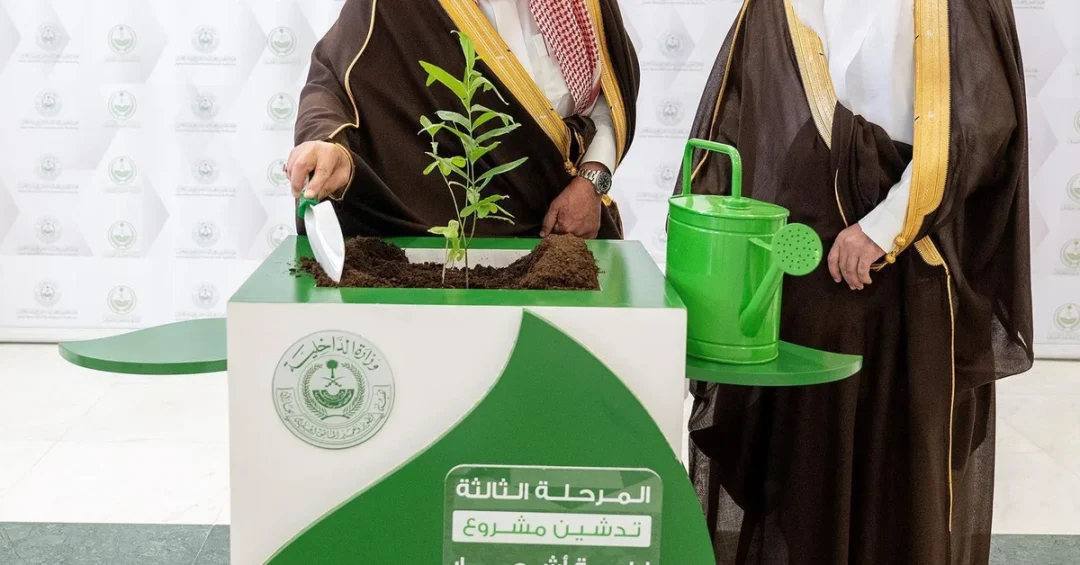
Governor of Qassim Region Prince Dr. Faisal bin Mishaal bin Saud bin Abdulaziz inaugurated the oud and sandal tree planting project in Buraidah on November 25, 2024, marking a significant step toward environmental sustainability and economic diversification in the region. The event, reported by the Saudi Press Agency (SPA), was attended by Eng. Dhafer Al-Fahad, Director General of the Jizan Mountainous Areas Development and Reconstruction Authority, along with several other senior officials. This initiative reflects the Kingdom’s broader commitment to preserving natural resources and advancing the goals of Saudi Vision 2030.
Have you ever considered how tree-planting initiatives can transform a region’s environmental and economic landscape? The oud and sandal tree planting project in Qassim is a prime example of how strategic environmental investments can yield long-term benefits. By cultivating trees of high environmental and economic value, the project aims to support the local economy, enhance biodiversity, and raise awareness about the importance of sustainable practices. This aligns with Saudi Arabia’s ambitious environmental targets, including the Saudi Green Initiative, which seeks to plant 10 billion trees across the Kingdom.
Context and Background
What drives a nation to invest in large-scale afforestation projects? For Saudi Arabia, the answer lies in a combination of environmental stewardship, economic diversification, and global climate responsibility. The oud and sandal tree planting project in Qassim is part of a broader national strategy to combat desertification, improve air quality, and create green spaces that benefit both urban and rural communities. The Qassim region, known for its agricultural heritage and date palm cultivation, is an ideal location for this initiative due to its favorable climate and soil conditions.
The project also builds on the Kingdom’s rich cultural heritage. Oud and sandalwood have been prized for centuries for their aromatic and medicinal properties, and their cultivation can stimulate local industries such as perfumery, traditional medicine, and handicrafts. By planting these trees, the project not only addresses environmental concerns but also taps into a niche market that can drive economic growth. This dual focus on ecological and economic returns exemplifies the holistic approach championed by Vision 2030.
How does this project fit into Saudi Arabia’s wider environmental efforts? It complements initiatives like the Saudi Green Initiative and the Middle East Green Initiative, which aim to plant billions of trees and reduce carbon emissions. These efforts are not isolated; they are part of a coordinated national and regional response to climate change, demonstrating Saudi Arabia’s leadership in environmental sustainability. The Qassim project, therefore, is more than a local tree-planting drive—it is a microcosm of the Kingdom’s green ambitions.
Key Details of the Initiative
What specific benefits does the oud and sandal tree planting project offer? According to official sources, the project involves planting thousands of trees across designated areas in Qassim. These trees are selected for their high environmental and economic value. Environmentally, they help sequester carbon, prevent soil erosion, and provide habitats for local wildlife. Economically, they offer raw materials for high-value products, from oud oil to sandalwood-based cosmetics, creating jobs and supporting local businesses.
The inauguration ceremony, attended by Prince Dr. Faisal bin Mishaal and Eng. Dhafer Al-Fahad, underscored the collaborative nature of the project. Eng. Al-Fahad’s presence highlights the cross-regional cooperation between Qassim and Jizan, two regions with distinct but complementary development priorities. Jizan, known for its mountainous terrain, has its own afforestation and reconstruction programs, and the exchange of expertise can accelerate progress toward shared goals.
How will the project be implemented? While specific timelines and planting targets have not been fully disclosed, the project is expected to unfold in phases. The first phase likely focuses on establishing nurseries and preparing the land, followed by large-scale planting and maintenance. Local communities and volunteers will play a crucial role in planting and caring for the trees, fostering a sense of ownership and environmental stewardship. This participatory approach ensures the project’s sustainability and long-term success.
What about the economic potential? Oud and sandalwood are among the most valuable non-timber forest products in the world. Oud oil, used in luxury perfumes, can fetch thousands of dollars per kilogram. Sandalwood is prized for its fragrance and medicinal properties. By cultivating these trees, Qassim can develop a specialized agricultural sector that caters to high-end markets. This not only boosts the local economy but also aligns with Vision 2030’s goal of diversifying income sources away from oil.
Environmental and Economic Implications
Can a tree-planting project really make a difference in the fight against climate change? Absolutely. Trees are natural carbon sinks, absorbing carbon dioxide from the atmosphere and storing it in their biomass and in the soil. The oud and sandal trees, with their dense wood and long lifespans, are particularly effective at carbon sequestration. Over time, the Qassim project could sequester thousands of tons of CO2, contributing to Saudi Arabia’s goal of achieving net-zero emissions by 2060.
Moreover, the project addresses desertification, a pressing issue in Saudi Arabia. The Kingdom loses thousands of hectares of arable land each year to desertification, which threatens food security and livelihoods. By planting trees, the project helps stabilize soils, retain water, and restore degraded ecosystems. These environmental benefits translate into economic gains: healthier lands support agriculture, tourism, and outdoor recreation, all of which are key pillars of Vision 2030’s economic diversification strategy.
What are the social implications? The project is expected to create green jobs in nursery management, planting, harvesting, and processing. It also serves as an educational platform, raising awareness about environmental issues among local communities and visitors. Schools and universities can use the project as a living laboratory for research on sustainable agriculture and forestry. By engaging youth and women in these activities, the project promotes inclusive growth, another core principle of Vision 2030.
International and Regional Impact
Could this local project have ripple effects beyond Saudi Arabia’s borders? Yes. As the largest economy in the Middle East, Saudi Arabia’s environmental initiatives often set a precedent for the region. The Qassim project demonstrates how arid countries can turn environmental challenges into economic opportunities. Other nations in the Gulf and North Africa, facing similar climate stresses, may look to Saudi Arabia’s model for inspiration.
The project also reinforces Saudi Arabia’s role as a global leader in sustainability. By hosting international events like the Saudi Green Initiative Forum and participating in global climate conferences, the Kingdom is positioning itself as a responsible steward of the environment. The oud and sandal tree planting project adds a tangible achievement to this narrative, showcasing Saudi Arabia’s ability to implement large-scale green projects despite its harsh climate.
Furthermore, the involvement of officials from Jizan highlights regional cooperation within the Kingdom. Sharing best practices between Qassim and Jizan can lead to more efficient and effective environmental management. This internal collaboration mirrors the cross-border cooperation promoted by the Middle East Green Initiative, which aims to plant 50 billion trees across the region. By working together, Saudi regions can amplify their impact and contribute to a greener Middle East.
Economic and Strategic Significance
Why is this project strategically important for Saudi Arabia? Beyond its environmental benefits, the project supports the Kingdom’s strategic goal of economic diversification. The oud and sandalwood industries are high-value sectors that can generate significant export revenue. As global demand for natural and sustainable products rises, Saudi Arabia can capture a share of this market, reducing its reliance on oil exports.
The project also aligns with the National Agriculture Strategy, which aims to enhance food security and sustainable agricultural practices. While oud and sandalwood are not food crops, their cultivation can be integrated into agroforestry systems that improve soil health and water retention, benefiting food crops as well. This integrated approach maximizes land use and promotes resilience against climate shocks.
What are the potential challenges? Like any large-scale environmental project, it faces hurdles such as water scarcity, pest management, and ensuring community participation. However, Saudi Arabia has demonstrated its capacity to overcome such challenges through innovation and investment. The use of modern irrigation techniques, such as drip irrigation and treated wastewater, can mitigate water scarcity. Research institutions can develop pest-resistant varieties. And community engagement programs can ensure local support.
How will success be measured? Key performance indicators may include the number of trees planted, survival rates, carbon sequestered, and economic returns from oud and sandalwood products. Transparent monitoring and reporting will be essential to track progress and attract further investment. By setting clear metrics, the project can serve as a model for future afforestation efforts across the Kingdom.
Vision 2030 Alignment
How does the oud and sandal tree planting project embody the spirit of Vision 2030? Vision 2030 is not just about economic transformation; it is also about creating a sustainable and vibrant society. The project contributes to several Vision 2030 objectives, including environmental sustainability, economic diversification, and enhanced quality of life. It reflects the Kingdom’s commitment to balancing economic growth with environmental protection, a principle that resonates with the global community.
Specifically, the project supports the Saudi Green Initiative’s target of planting 10 billion trees and the National Renewable Energy Program’s goals. It also aligns with the Quality of Life Program by creating recreational green spaces and promoting eco-tourism. The Qassim region, with its rich cultural heritage, can attract visitors interested in sustainable tourism, further boosting the local economy.
In conclusion, the oud and sandal tree planting project in Qassim is a shining example of Saudi Arabia’s proactive approach to environmental sustainability and economic diversification. Under the visionary leadership of Prince Dr. Faisal bin Mishaal and with the support of officials like Eng. Dhafer Al-Fahad, the project is set to deliver lasting benefits for the region and the Kingdom as a whole. As Saudi Arabia continues its journey toward Vision 2030, initiatives like this will pave the way for a greener, more prosperous future.
20 Questions
Q1. What is the oud and sandal tree planting project?
A1. It is an initiative in the Qassim region to plant oud and sandal trees, which have high environmental and economic value, supporting sustainability and biodiversity.
Q2. Who inaugurated the project?
A2. Governor of Qassim Region Prince Dr. Faisal bin Mishaal bin Saud bin Abdulaziz inaugurated the project on November 25, 2024.
Q3. Where did the inauguration take place?
A3. The inauguration took place in Buraidah, the capital of the Qassim region, as reported by the Saudi Press Agency.
Q4. Who else attended the event?
A4. Eng. Dhafer Al-Fahad, Director General of the Jizan Mountainous Areas Development and Reconstruction Authority, and several other officials attended.
Q5. Why are oud and sandal trees significant?
A5. They are prized for their aromatic and medicinal properties, and their cultivation can support high-value industries like perfumery and traditional medicine.
Q6. How does the project support environmental sustainability?
A6. The trees help sequester carbon, prevent soil erosion, and enhance biodiversity, contributing to Saudi Arabia’s green initiatives.
Q7. What economic benefits does the project offer?
A7. It can stimulate local industries, create jobs, and generate export revenue from oud oil and sandalwood products, aiding economic diversification.
Q8. How does the project align with Vision 2030?
A8. It supports environmental sustainability, economic diversification, and quality of life goals, key pillars of Vision 2030.
Q9. What is the Saudi Green Initiative?
A9. It is a national initiative to plant 10 billion trees, reduce carbon emissions, and combat desertification, launched by Crown Prince Mohammed bin Salman.
Q10. How many trees will be planted in Qassim?
A10. While exact numbers are not specified, the project aims to plant thousands of trees in phases, focusing on oud and sandal species.
Q11. Who will implement the project?
A11. Local authorities, in collaboration with environmental agencies and community volunteers, will implement the project.
Q12. What are the environmental challenges in Qassim?
A12. Qassim faces desertification, water scarcity, and soil degradation, which the project aims to mitigate through afforestation.
Q13. How will the project be funded?
A13. Funding likely comes from government budgets and possibly private sector partnerships, aligning with Vision 2030’s investment strategies.
Q14. What is the role of Eng. Dhafer Al-Fahad?
A14. As Director General of the Jizan Mountainous Areas Development and Reconstruction Authority, he shares expertise in afforestation and regional development.
Q15. Will the project create jobs?
A15. Yes, it is expected to create green jobs in nursery management, planting, harvesting, and processing of oud and sandalwood.
Q16. How does the project benefit local communities?
A16. It provides economic opportunities, improves air quality, and creates recreational spaces, enhancing the quality of life for residents.
Q17. What is the significance of oud and sandalwood in Saudi culture?
A17. Oud and sandalwood are traditionally used in perfumes and incense, holding cultural and religious significance in Saudi Arabia and the wider region.
Q18. How does this project compare to other Saudi environmental initiatives?
A18. It complements larger initiatives like the Saudi Green Initiative and NEOM’s sustainability projects, contributing to a nationwide green movement.
Q19. What are the long-term goals of the project?
A19. Long-term goals include establishing a sustainable oud and sandalwood industry, achieving carbon neutrality, and enhancing regional biodiversity.
Q20. How can the public support the project?
A20. The public can participate in planting events, promote environmental awareness, and support local products derived from oud and sandalwood.
Reader Feedback
We value your thoughts. Please share your feedback on this article.
Your feedback helps us improve our coverage.
Related articles
 1,238 International Investors Obtain Premium Residency
 King Salman Extends Citizen Account Program for One Year
 Saudi Vice Foreign Minister Meets EU Political and Security Committee
 Eastern Region Undersecretary Meets Egyptian Consul
 Saudi Foreign Ministry Meets Burkina Faso Consul General
 Saudi Minister Meets US Congressman to Boost Economic Ties