


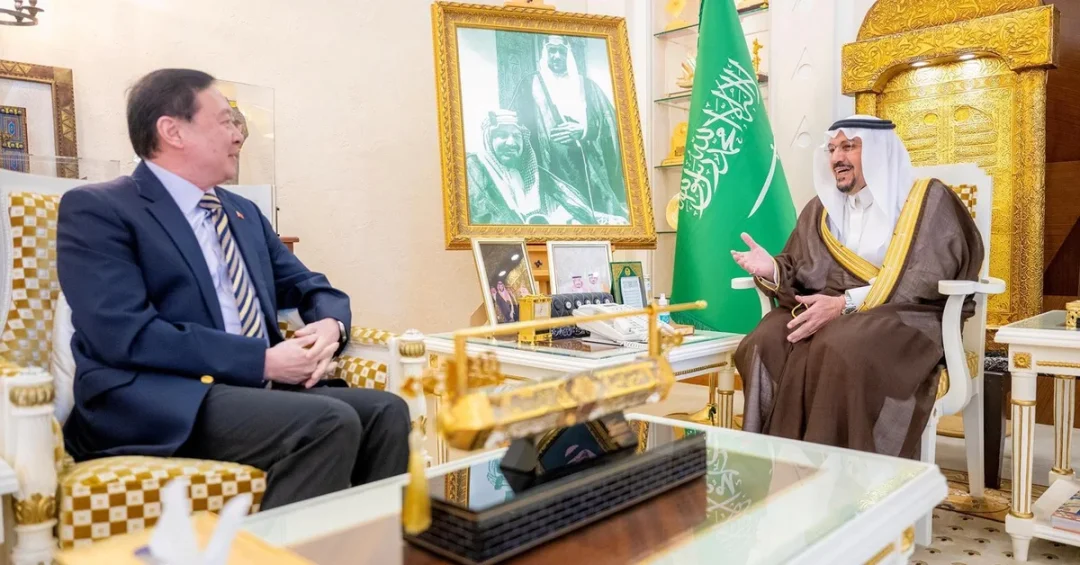
Prince Dr. Faisal bin Mishaal bin Saud bin Abdulaziz, Governor of Qassim Region, received Chinese Ambassador to the Kingdom of Saudi Arabia Chang Hua and his accompanying delegation in Buraidah on May 27, 2024, to discuss topics of mutual interest and enhance bilateral cooperation. The meeting underscored the Kingdom’s ongoing commitment to strengthening partnerships with nations around the world, in line with Saudi Arabia’s Vision 2030 and its proactive diplomatic approach under the leadership of the Custodian of the Two Holy Mosques, King Salman bin Abdulaziz Al Saud, and His Royal Highness Crown Prince Mohammed bin Salman bin Abdulaziz Al Saud.
Context and Background
The meeting between Prince Dr. Faisal bin Mishaal bin Saud bin Abdulaziz and Ambassador Chang Hua reflects the deep-rooted and growing relationship between Saudi Arabia and China. The two countries have a long history of cooperation, dating back to the establishment of diplomatic ties in 1990. In recent years, this relationship has expanded significantly, with China becoming Saudi Arabia’s largest trading partner and a key player in the Kingdom’s economic diversification efforts. The visit also highlights the importance of regional engagement, as Qassim Region plays a vital role in Saudi Arabia’s agricultural and economic landscape.
During the meeting, the governor emphasized the Kingdom’s dedication to increasing cooperation and partnerships with different nations. This aligns with Saudi Arabia’s foreign policy objectives, which prioritize mutual respect, shared prosperity, and strategic collaboration. The Chinese ambassador praised the notable development in the Qassim Region, acknowledging the region’s progress and wishing continued prosperity for the Kingdom and its people.
Key Details
The discussions between Prince Dr. Faisal and Ambassador Chang Hua covered topics of common concern, likely including trade, investment, and cultural exchange. While specific details of the talks were not disclosed, such meetings typically focus on strengthening economic ties, exploring opportunities for joint ventures, and enhancing people-to-people connections. The Qassim Region, known for its agricultural production and growing industrial base, offers numerous opportunities for Chinese investment, particularly in sectors such as food processing, logistics, and renewable energy.
Ambassador Chang Hua’s visit to Qassim is part of his broader engagement with various Saudi regions, reflecting China’s interest in deepening ties beyond the capital. The ambassador’s praise for Qassim’s development underscores the region’s potential as a hub for bilateral cooperation. The meeting also serves as a platform to discuss cultural and educational exchanges, which are essential for fostering long-term understanding and friendship between the two nations.
Implications and Impact
The meeting carries significant implications for Saudi-China relations and regional development. It reinforces the strategic partnership between the two countries, which is anchored in shared economic interests and a vision for a multipolar world. For Saudi Arabia, stronger ties with China support the Kingdom’s efforts to diversify its economy away from oil, attract foreign investment, and enhance its role as a global logistics hub. For China, engagement with Saudi regions like Qassim opens doors to new markets and investment opportunities, particularly in agriculture and infrastructure.
On a regional level, the meeting signals Saudi Arabia’s openness to international cooperation and its commitment to stability and prosperity in the Middle East. It also highlights the importance of sub-national diplomacy, as regions like Qassim take an active role in international engagement. The positive tone of the discussions reflects the mutual respect and shared goals that characterize Saudi-China relations, which are expected to continue growing in the coming years.
Vision 2030 Alignment
This meeting is closely aligned with Saudi Arabia’s Vision 2030, which aims to diversify the economy, increase foreign investment, and strengthen international partnerships. The Qassim Region is a key player in achieving these goals, with its focus on agriculture, industry, and tourism. By engaging with global powers like China, the Kingdom is not only advancing its economic objectives but also enhancing its cultural and diplomatic ties. As Saudi Arabia continues to open up to the world, such high-level interactions will play a crucial role in realizing the Vision 2030 ambitions and ensuring a prosperous future for the Kingdom and its people.
20 Questions
Q1. Who received the Chinese Ambassador to Saudi Arabia in Qassim?
A1. Prince Dr. Faisal bin Mishaal bin Saud bin Abdulaziz, Governor of Qassim Region, received Chinese Ambassador Chang Hua and his delegation in Buraidah on May 27, 2024.
Q2. What was the purpose of the meeting between the Qassim Governor and the Chinese Ambassador?
A2. The meeting aimed to discuss topics of common concern and enhance cooperation and partnerships between Saudi Arabia and China, reflecting the Kingdom’s commitment to international collaboration.
Q3. Where did the meeting take place?
A3. The meeting took place in Buraidah, the capital of Qassim Region, Saudi Arabia, as reported by the Saudi Press Agency (SPA).
Q4. When did the meeting occur?
A4. The meeting occurred on May 27, 2024, according to the official announcement by the Saudi Press Agency.
Q5. What did the Qassim Governor emphasize during the meeting?
A5. Governor Prince Dr. Faisal emphasized the Kingdom’s commitment to increasing cooperation and partnerships with different nations, highlighting Saudi Arabia’s open and collaborative foreign policy approach.
Q6. How did the Chinese Ambassador respond to the development in Qassim?
A6. Ambassador Chang Hua praised the notable development in the Qassim Region and wished continued progress and prosperity to the Kingdom and its people.
Q7. What is the significance of this meeting for Saudi-China relations?
A7. The meeting strengthens the strategic partnership between Saudi Arabia and China, reinforcing economic ties and mutual respect, and supports the Kingdom’s Vision 2030 goals of diversification and international engagement.
Q8. What are some key areas of cooperation between Saudi Arabia and China?
A8. Key areas include trade, investment, energy, agriculture, technology, and cultural exchange. China is Saudi Arabia’s largest trading partner, and both nations collaborate on various economic and development projects.
Q9. How does Qassim Region contribute to Saudi Arabia’s economy?
A9. Qassim Region is a major agricultural hub, known for date production, wheat, and livestock. It also has growing industrial and logistical sectors, making it vital to the Kingdom’s economic diversification efforts.
Q10. What role does Qassim Region play in Vision 2030?
A10. Qassim supports Vision 2030 through agricultural innovation, industrial development, and tourism. Its strategic location and resources contribute to economic diversification and job creation, aligning with national goals.
Q11. Who is Prince Dr. Faisal bin Mishaal bin Saud bin Abdulaziz?
A11. He is the Governor of Qassim Region, a member of the Saudi royal family, and a key official responsible for overseeing the region’s development and representing the Kingdom in local and international matters.
Q12. Who is Chang Hua?
A12. Chang Hua is the Chinese Ambassador to the Kingdom of Saudi Arabia, tasked with promoting and protecting China’s interests in Saudi Arabia and fostering bilateral relations between the two countries.
Q13. What is the history of Saudi-China diplomatic relations?
A13. Saudi Arabia and China established diplomatic relations in 1990. Since then, ties have grown significantly, with cooperation expanding across economic, political, and cultural domains, culminating in a comprehensive strategic partnership.
Q14. How does this meeting reflect Saudi Arabia’s foreign policy?
A14. It demonstrates Saudi Arabia’s commitment to building strong international partnerships based on mutual respect and shared interests, in line with the Kingdom’s Vision 2030 and its active role in global affairs.
Q15. What benefits can Qassim Region gain from increased cooperation with China?
A15. Increased cooperation can bring Chinese investment in agriculture, infrastructure, and technology, boosting local economic growth, creating jobs, and enhancing Qassim’s role as a regional hub for trade and innovation.
Q16. How does the meeting align with Saudi Arabia’s Vision 2030?
A16. The meeting aligns with Vision 2030 by promoting economic diversification, attracting foreign investment, and strengthening international partnerships, all of which are core objectives of the national transformation plan.
Q17. What message does this meeting send to the international community?
A17. It signals Saudi Arabia’s openness to global engagement and its commitment to fostering peaceful, prosperous international relations, reinforcing the Kingdom’s position as a responsible global player.
Q18. Are there other similar meetings between Saudi officials and Chinese representatives?
A18. Yes, Saudi and Chinese officials regularly meet to discuss cooperation. Such interactions are part of ongoing efforts to deepen the comprehensive strategic partnership between the two nations across various sectors.
Q19. What sectors in Qassim are most attractive for Chinese investment?
A19. Agriculture, food processing, logistics, renewable energy, and tourism are attractive sectors. Qassim’s agricultural output and strategic location make it ideal for investments that support Saudi Arabia’s diversification goals.
Q20. What is the expected outcome of this meeting?
A20. The meeting is expected to further strengthen Saudi-China ties, pave the way for new cooperation projects in Qassim, and contribute to the Kingdom’s broader economic and diplomatic objectives under Vision 2030.
Reader Feedback
We value your thoughts. Please share your feedback on this article.
Your feedback helps us improve our coverage.