


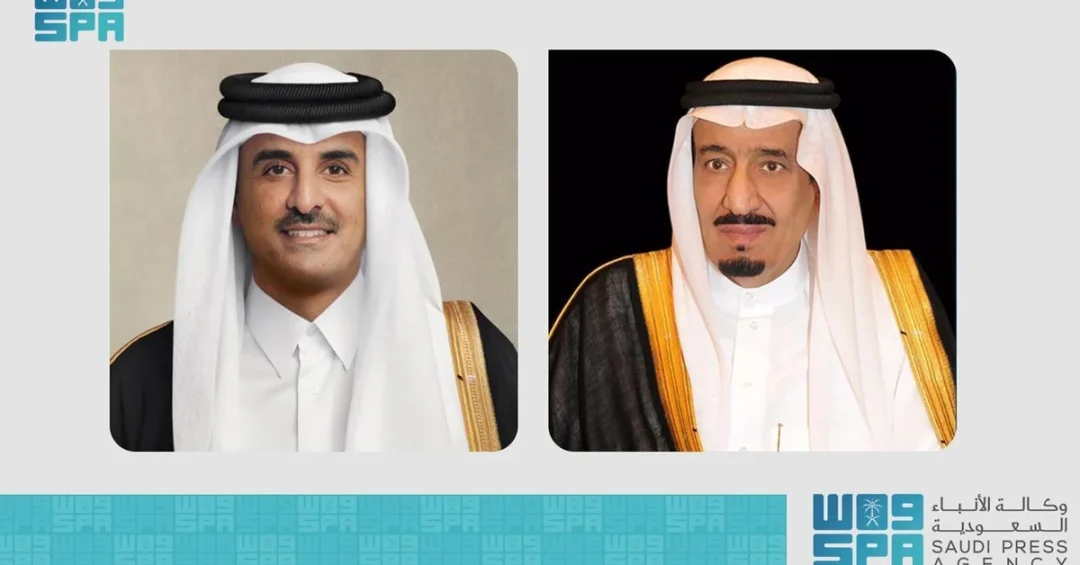
The Amir of the State of Qatar, Sheikh Tamim bin Hamad Al Thani, has congratulated the Custodian of the Two Holy Mosques, King Salman bin Abdulaziz Al Saud, on the successful organization of this year’s Hajj season for the Hijri year 1445 AH. According to the Saudi Press Agency (SPA), the congratulatory message was conveyed in an official cable sent to the Saudi monarch, reflecting the strong fraternal ties between the two Gulf nations.
Context and Background
The annual Hajj pilgrimage, one of the largest religious gatherings in the world, was conducted with remarkable efficiency, safety, and security under the meticulous supervision of the Kingdom of Saudi Arabia. In recent years, Saudi authorities have leveraged advanced technologies, including AI-driven crowd management and smart transport systems, to ensure a seamless experience for millions of pilgrims from across the globe. This year’s season witnessed the highest number of pilgrims since the pandemic, underscoring the confidence the world places in Saudi Arabia’s organizational capabilities and its unwavering commitment to serving the guests of Allah.
Key Details
In addition to the Amir’s cable, the Deputy Amir of Qatar, Sheikh Abdullah bin Hamad Al Thani, and the Prime Minister and Minister of Foreign Affairs of Qatar, Sheikh Mohammed bin Abdulrahman bin Jassim Al Thani, also sent separate congratulatory cables to the Custodian of the Two Holy Mosques. All messages expressed sincere wishes for the Kingdom’s further progress, stability, and prosperity under the leadership of King Salman and Crown Prince Mohammed bin Salman. This diplomatic courtesy highlights the fraternal bonds between Qatar and Saudi Arabia, which have strengthened significantly in recent years, fostering regional cooperation across political, economic, and social realms.
Implications and Impact
The prompt congratulatory gesture from Qatari leadership underscores the Kingdom’s central role in the Islamic world and its position as a model for large-scale event management. It also signals the continuation of a climate of mutual respect and collaboration among Gulf Cooperation Council (GCC) members. Such diplomatic exchanges contribute to regional stability and demonstrate a unified front in addressing shared priorities, from interfaith dialogue to sustainable development. The successful hosting of Hajj enhances the Kingdom’s global reputation as a destination for cultural and religious exchanges, potentially bolstering tourism ties and cross-border investments, in line with the broader push for regional integration.
Vision 2030 Alignment
This congratulatory exchange arrives as Saudi Arabia continues to implement the ambitious Vision 2030 agenda, which aims to diversify the economy and transform the kingdom into a global hub for tourism, investment, and cross-cultural engagement. The smooth execution of the Hajj is a prime example of the Kingdom’s capacity to welcome the world, build modern infrastructure, and showcase a future-looking approach. By strengthening bonds with neighboring nations like Qatar and demonstrating excellence on the global stage, Saudi Arabia is cementing its role as a peacemaker, innovator, and guardian of Islam’s most sacred places—laying a strong foundation for a prosperous and harmonious future for the entire region.
20 Questions
Q1. Who congratulated the Custodian of the Two Holy Mosques on the success of the Hajj season?
A1. The Amir of the State of Qatar, Sheikh Tamim bin Hamad Al Thani, sent a cable of congratulations to King Salman bin Abdulaziz Al Saud on the successful execution of the 1445 AH Hajj season.
Q2. What is the role of the Custodian of the Two Holy Mosques?
A2. The Custodian of the Two Holy Mosques, currently King Salman, is the caretaker of Islam’s holiest mosques in Makkah and Madinah, a position held by Saudi Kings responsible for overseeing the sacred sites.
Q3. Which other Qatari officials also sent congratulations?
A3. The Deputy Amir, Sheikh Abdullah bin Hamad Al Thani, and Prime Minister Sheikh Mohammed bin Abdulrahman bin Jassim Al Thani sent separate cable messages as well.
Q4. What is the significance of these congratulatory messages?
A4. They reinforce the strong fraternal relations between Saudi Arabia and Qatar, showcasing diplomatic goodwill and mutual respect between the two Gulf nations.
Q5. Why is the Hajj season important to the Islamic world?
A5. Hajj is the fifth pillar of Islam, required of all able-bodied and financially capable Muslims to perform once in a lifetime. The gathering promotes unity, spirituality, and shared devotion among Muslims worldwide.
Q6. How many pilgrims attended the 1445 AH Hajj?
A6. The official figure, as reported by the Saudi General Authority for Statistics, was about 1,833,164 pilgrims—the highest number since the pandemic, marking a full return to pre-COVID levels.
Q7. How did Saudi Arabia ensure a successful Hajj?
A7. Saudi authorities deployed a comprehensive safety plan, including smart crowd management systems, modern transportation, advanced medical services, and an integrated digital infrastructure for pilgrim tracking.
Q8. What does the success of Hajj say about Saudi’s management?
A8. It demonstrates the Kingdom’s ability to organize one of the world’s largest annual events with remarkable order, security, and care—reinforcing its global logistical and humanitarian leadership.
Q9. Which Saudi agencies oversee Hajj operations?
A9. The Ministry of Hajj and Umrah, General Directorate of Public Security, Ministry of Health, and the General Authority for the Care of the Two Holy Mosques, among others, coordinate efforts.
Q10. What is the role of the Saudi Press Agency in this news?
A10. SPA is the official news source, publishing reliable reports on state activities, such as the Qatari congratulatory cables, to keep the public informed.
Q11. How does the Hajj season support the Saudi economy?
A11. Hajj generates billions in revenue for tourism, hospitality, and retail sectors, while creating thousands of jobs and investment opportunities in transport and infrastructure.
Q12. What are the main challenges in managing Hajj?
A12. Massive crowds, heat, health risks, and the need for seamless logistics pose challenges. Saudi uses AI-driven analysis and real-time response to mitigate risks effectively.
Q13. What diplomatic role does Saudi Arabia play in the Gulf?
A13. Saudi Arabia leads regional initiatives, fosters cooperative security and economic coordination, and serves as a dialogue pivot for resolving regional disputes peacefully.
Q14. How did Qatar-Saudi relations evolve recently?
A14. Following the 2021 Al Ula agreement, both nations have restored and strengthened diplomatic, economic, and political ties, enhancing regional unity and shared development goals.
Q15. What does the term “Vision 2030” refer to?
A15. It is Saudi Arabia’s transformative strategic plan to diversify the economy, reduce oil dependence, and elevate the quality of life through initiatives in tourism, tech, and cultural growth.
Q16. How does the success of Hajj align with Vision 2030?
A16. Hajj excellence showcases modern infrastructure and hospitality, directly contributing to the tourism pillar and international image that Vision 2030 aims to strengthen.
Q17. What are the spiritual benefits of Hajj?
A17. Hajj provides Muslims a chance to renew faith, seek forgiveness, and engage in heartfelt worship, fostering a sense of brotherhood and equality among diverse peoples.
Q18. What role do female pilgrims play in the Hajj?
A18. Women perform Hajj independently or with family, and Saudi Arabia provides enhanced facilities, safety, and care, reflecting a more inclusive environment.
Q19. How do Qatari leaders acknowledge Saudi hospitality?
A19. Sending formal congratulations highlights the value placed on Saudi’s serving role for Islamic sacred places, enhancing mutual respect and cooperation in GCC.
Q20. What is the outlook for future Hajj seasons?
A20. With continued innovation and dedication, future Hajj seasons will likely be even safer, more accessible, and technologically advanced, reinforcing Saudi’s role as a global Islamic leader.
Reader Feedback
We value your thoughts. Please share your feedback on this article.
Your feedback helps us improve our coverage.