


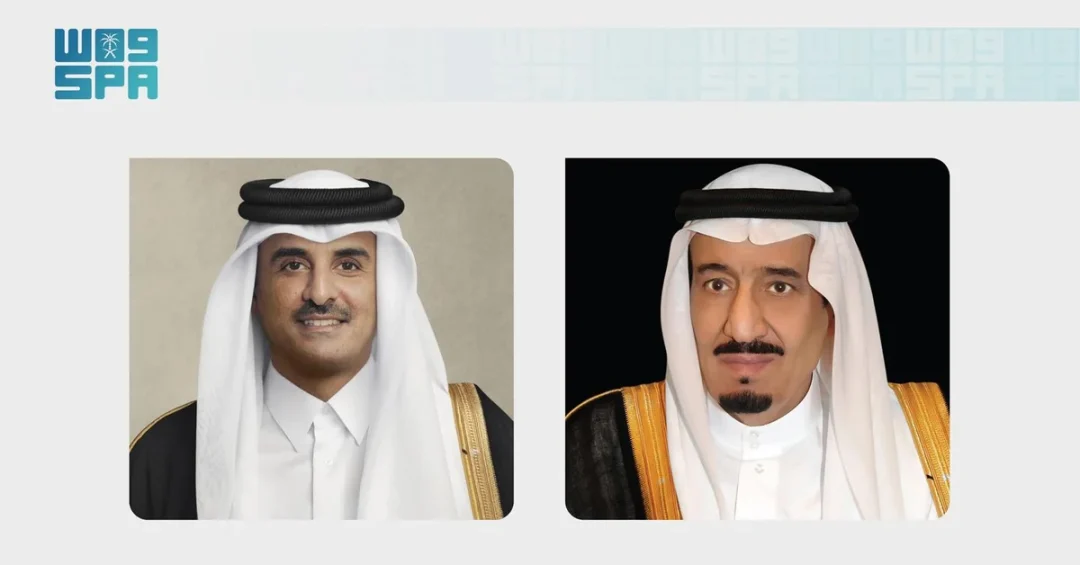
Qatar’s Amir, Sheikh Tamim bin Hamad Al Thani, sent a formal cable of congratulations to the Custodian of the Two Holy Mosques, King Salman bin Abdulaziz Al Saud, on the occasion of Saudi National Day, according to the Saudi Press Agency. The message, dated September 23, 2026, was accompanied by separate cables from Qatar’s Deputy Amir, Sheikh Abdullah bin Hamad Al Thani, and from Prime Minister and Minister of Foreign Affairs Sheikh Mohammed bin Abdulrahman bin Jassim Al Thani, underscoring the breadth of the fraternal bond between Doha and Riyadh. The congratulations reflect the enduring ties between the two Gulf neighbours and their shared commitment to regional stability and prosperity. The exchange of formal greetings on such a significant national occasion is a longstanding tradition among Gulf leaders, and its continuation signals the strength of the relationship at the highest levels of government.
The cables were released through official Saudi channels, with the Saudi Press Agency reporting the messages in full. Such acknowledgements are more than diplomatic courtesy; they serve as public affirmations of the deep historical, cultural, and familial connections that bind the Gulf Cooperation Council states. For international observers, the gesture offers a clear signal that Saudi-Qatari relations remain on a constructive trajectory, anchored in mutual respect and a shared vision for the region’s future. The timing, coinciding with the annual celebration of the Kingdom’s unification, highlights the importance both nations place on commemorating each other’s national milestones.
Context and Background: What Does Saudi National Day Commemorate?
Saudi National Day, observed every September 23, marks the anniversary of the royal decree issued by the late King Abdulaziz Al Saud in 1932 that renamed the Kingdom of Hejaz and Nejd as the Kingdom of Saudi Arabia. The occasion celebrates the unification of the nation under a single leadership and honours the vision of its founder. Each year, the Kingdom hosts a series of cultural, civic, and entertainment events that showcase its heritage and its modern achievements. The day is also an opportunity for international partners and allies to reaffirm their ties with Riyadh, and the messages from Qatar’s leadership form part of that wider diplomatic tradition.
For Qatar, sending congratulations is a natural extension of its fraternal relations with the Kingdom. The two countries share a land border, deep tribal and family connections, and a common interest in maintaining stability in the Gulf region. In recent years, both have worked to strengthen bilateral cooperation across political, economic, and security domains. The Amir’s cable, therefore, is not merely a ceremonial formality but a reflection of a relationship that has been carefully nurtured through regular high-level exchanges and joint initiatives within the Gulf Cooperation Council framework.
Why do such formal messages continue to matter in an era of instant digital communication? In diplomacy, the cable carries weight because it is an official act of state, recorded and disseminated through national news agencies. It signifies that the highest authorities have personally directed their attention to the occasion. For Saudi Arabia, receiving congratulations from its neighbours on National Day reinforces its central role in the region and its standing as a stable, forward-looking nation. It also provides a moment to reflect on the Kingdom’s journey and its ambitious plans for the future under Vision 2030.
Key Details: Who Sent What and Why It Matters
The congratulatory cables were sent by three of Qatar’s most senior officials. Sheikh Tamim bin Hamad Al Thani, the Amir of the State of Qatar, led the messages, conveying his best wishes to King Salman. Sheikh Abdullah bin Hamad Al Thani, the Deputy Amir, followed with his own cable, as did Sheikh Mohammed bin Abdulrahman bin Jassim Al Thani, who serves concurrently as Prime Minister and Minister of Foreign Affairs. This triple endorsement from the top tier of Qatar’s leadership demonstrates the importance Doha attaches to its relationship with Riyadh. The Saudi Press Agency reported the cables on September 23, 2026, ensuring they reached both domestic and international audiences.
The content of such cables typically includes expressions of sincere congratulations, wishes for the King’s continued health, and prayers for the prosperity and progress of the Saudi people. While the exact wording was not detailed in the SPA report, the protocol and intent are well understood. These messages are exchanged on a reciprocal basis, with Saudi leaders similarly congratulating Qatar on its National Day in December. This cycle of mutual recognition helps sustain a positive atmosphere in bilateral relations, even as the region navigates complex geopolitical challenges.
What does the involvement of the Prime Minister and Foreign Minister add to the significance of the gesture? It signals that the congratulations are not only ceremonial but also carry a diplomatic dimension. Sheikh Mohammed bin Abdulrahman’s role as the chief architect of Qatar’s foreign policy means his message underscores Doha’s desire for continued coordination with Riyadh on regional issues. It also reflects the institutionalisation of the relationship, where multiple branches of government engage with their Saudi counterparts. For Saudi Arabia, this multi-layered engagement is a testament to its importance as a regional anchor and a key partner in shaping the Gulf’s future.
International and Regional Impact: Strengthening Gulf Unity
The exchange of congratulations between Qatar and Saudi Arabia is a small but meaningful indicator of the broader health of Gulf Cooperation Council relations. In recent years, the GCC has sought to present a united front on issues ranging from economic diversification to security cooperation. Saudi Arabia, as the largest GCC economy and the host of the organisation’s secretariat, plays a pivotal role in these efforts. Qatar’s public acknowledgment of Saudi National Day reinforces the spirit of solidarity that the GCC aims to project. It also serves as a counterpoint to narratives that emphasise division, highlighting instead the potential for constructive engagement.
From an international perspective, the gesture is likely to be noted by global powers with interests in the Gulf. The United States, the United Kingdom, and European Union member states closely monitor intra-Gulf dynamics because they affect energy markets, investment flows, and security arrangements. A stable and cooperative Gulf is essential for global energy security, given the region’s vast hydrocarbon reserves and its growing role in renewable energy and technology. Saudi-Qatari rapprochement, symbolised by such diplomatic exchanges, contributes to a more predictable environment for international business and diplomacy. It also aligns with Saudi Arabia’s efforts to position itself as a bridge between regional and global stakeholders.
Could these seemingly routine messages have implications beyond the bilateral relationship? Yes, because they contribute to the wider narrative of a Gulf region that is moving toward greater integration. The Al-Ula Declaration of 2021, which ended the rift between Qatar and its Gulf neighbours, set the stage for renewed cooperation. Since then, leaders have engaged in multiple summits and agreements aimed at enhancing trade, investment, and cultural exchange. The congratulations on National Day are part of this ongoing process of normalisation and confidence-building. They help to build the trust necessary for more substantive collaboration on issues like climate change, digital transformation, and youth empowerment.
Economic and Strategic Significance: Beyond Ceremony
While the cables themselves are diplomatic instruments, they reflect a deeper economic and strategic reality. Saudi Arabia and Qatar are both pursuing ambitious economic diversification agendas. Saudi Vision 2030 aims to reduce the Kingdom’s dependence on oil by developing new sectors such as tourism, entertainment, and technology. Qatar National Vision 2030 similarly seeks to transform the country into a knowledge-based economy. These parallel goals create natural opportunities for collaboration. Joint ventures in renewable energy, fintech, and logistics are already being explored. The friendly relations symbolised by the National Day messages provide the political comfort needed for businesses and investors to pursue such partnerships.
Strategically, the two nations share an interest in maritime security, given their proximity to the Strait of Hormuz and the broader Gulf waterways. They also coordinate on counterterrorism and intelligence-sharing. The congratulations from Qatar’s Amir and senior officials thus rest on a foundation of practical cooperation that extends well beyond the exchange of pleasantries. For Saudi Arabia, good relations with Qatar mean a more secure eastern flank and a partner in addressing regional challenges such as the conflict in Yemen and instability in the Horn of Africa. For Qatar, close ties with the Kingdom offer access to a large market and alignment with a major player in global energy and diplomacy.
How does this relationship benefit the average citizen in both countries? Increased cooperation can lead to more job opportunities, cultural exchanges, and shared infrastructure projects. It can also enhance the quality of life through improved connectivity, such as new transport links and digital services. Moreover, a stable Gulf allows both governments to focus on domestic development rather than external conflicts. The positive tone of the National Day messages is a reminder that diplomacy, even in its most formal expressions, has tangible consequences for peace and prosperity.
Vision 2030 Alignment: A Partnership for the Future
Saudi Vision 2030, the Kingdom’s comprehensive plan for economic and social transformation, places a strong emphasis on international partnerships and regional cooperation. The congratulations from Qatar’s leadership on National Day are fully consistent with this vision. They highlight Saudi Arabia’s role as a regional leader and a reliable partner, two attributes that are essential for attracting foreign investment and fostering global engagement. The Vision’s goals include increasing non-oil exports, developing the tourism sector, and creating a vibrant society. Friendly relations with neighbours like Qatar support these objectives by facilitating trade, travel, and knowledge exchange.
In the coming years, Saudi Arabia and Qatar are expected to deepen their collaboration in areas such as sports, culture, and technology. Both countries have hosted major international events, and their experience can be shared to mutual benefit. The exchange of congratulations is a small but symbolic step in a much larger journey toward a more integrated and prosperous Gulf. As the Kingdom continues to implement Vision 2030, it will rely on strong ties with its GCC partners. The messages from Doha are a clear indication that Qatar is ready to be part of that journey, working alongside Saudi Arabia to build a future of shared success and stability.
20 Questions
Q1. Who sent congratulations to the Custodian of the Two Holy Mosques on Saudi National Day?
A1. The Amir of Qatar, Sheikh Tamim bin Hamad Al Thani, sent a cable of congratulations. Qatar’s Deputy Amir, Sheikh Abdullah bin Hamad Al Thani, and Prime Minister and Foreign Minister Sheikh Mohammed bin Abdulrahman bin Jassim Al Thani also sent separate cables.
Q2. When was Saudi National Day celebrated in 2026?
A2. Saudi National Day is celebrated annually on September 23. In 2026, the occasion fell on that date, and the congratulatory cables were reported by the Saudi Press Agency on the same day.
Q3. What is the significance of Saudi National Day?
A3. Saudi National Day commemorates the 1932 royal decree by King Abdulaziz Al Saud that unified the Kingdom of Hejaz and Nejd into the Kingdom of Saudi Arabia. It celebrates national unity and the nation’s progress.
Q4. Why did Qatari leaders send these cables?
A4. The cables are a diplomatic tradition among Gulf leaders to honour each other’s national occasions. They reflect the fraternal ties and strong bilateral relations between Qatar and Saudi Arabia.
Q5. Who is the Custodian of the Two Holy Mosques?
A5. The Custodian of the Two Holy Mosques is the official title of the King of Saudi Arabia, currently King Salman bin Abdulaziz Al Saud. The title signifies the monarch’s responsibility for protecting Islam’s holiest sites.
Q6. What is the role of Qatar’s Deputy Amir?
A6. The Deputy Amir, Sheikh Abdullah bin Hamad Al Thani, supports the Amir in governing Qatar and often represents the country in diplomatic engagements. His congratulatory cable underscores the importance of the relationship with Saudi Arabia.
Q7. Who is Qatar’s Prime Minister and Minister of Foreign Affairs?
A7. Sheikh Mohammed bin Abdulrahman bin Jassim Al Thani holds both positions. He is responsible for Qatar’s foreign policy and international engagements, and his message highlights the diplomatic dimension of Qatar-Saudi relations.
Q8. How are such congratulatory messages typically communicated?
A8. They are sent as formal cables, which are official written messages. They are then reported by national news agencies, such as the Saudi Press Agency, to inform the public and the international community.
Q9. What do these messages indicate about Saudi-Qatar relations?
A9. They indicate that relations are positive and cooperative. The exchange of greetings at the highest levels reflects mutual respect and a shared commitment to regional stability and prosperity.
Q10. Have Saudi-Qatar relations improved in recent years?
A10. Yes. Since the Al-Ula Declaration in 2021, which ended a diplomatic rift, relations have steadily improved. Both countries have worked to enhance cooperation across political, economic, and security areas.
Q11. What is the Gulf Cooperation Council’s role in these relations?
A11. The GCC provides a framework for cooperation among its six member states, including Saudi Arabia and Qatar. It facilitates dialogue, economic integration, and collective security, helping to maintain positive ties.
Q12. How does Saudi Vision 2030 benefit from good relations with Qatar?
A12. Vision 2030 aims to diversify the economy and attract investment. Friendly ties with Qatar support trade, tourism, and joint ventures, contributing to the Kingdom’s economic transformation and regional integration.
Q13. Are there economic partnerships between Saudi Arabia and Qatar?
A13. Yes, both countries are exploring collaborations in renewable energy, fintech, logistics, and other sectors. Their shared goals of economic diversification create opportunities for mutually beneficial partnerships.
Q14. What is the significance of the timing of these congratulations?
A14. The timing aligns with Saudi National Day, a major national celebration. Sending congratulations on this day demonstrates respect for Saudi Arabia’s history and its current leadership, reinforcing the strength of bilateral ties.
Q15. Do other countries also send congratulations on Saudi National Day?
A15. Yes, many world leaders and governments send congratulations. The messages from Qatar are part of a broader international recognition of Saudi Arabia’s national day and its role on the global stage.
Q16. How does Saudi Arabia respond to such gestures?
A16. Saudi Arabia reciprocates with similar congratulations on Qatar’s National Day in December. This reciprocal exchange is a hallmark of strong diplomatic relations and mutual respect.
Q17. What impact do these messages have on regional stability?
A17. They contribute to a positive atmosphere and build trust among Gulf states. Such gestures help to reduce tensions and foster an environment conducive to cooperation on security, economy, and other shared challenges.
Q18. Is there any cultural significance to the exchange of congratulations?
A18. In Gulf culture, congratulating neighbours on national occasions is a sign of respect and brotherhood. It reflects the deep historical and familial ties that bind the peoples of the region.
Q19. What can we expect next in Saudi-Qatar relations?
A19. Continued high-level exchanges, joint projects, and coordination on regional issues are likely. Both countries are committed to strengthening their partnership within the GCC framework and beyond.
Q20. How does this event reflect Saudi Arabia’s global standing?
A20. The congratulations from Qatar’s top leadership underscore Saudi Arabia’s importance as a regional leader and a key global player. It shows that the Kingdom’s national day is recognised and respected by its neighbours and the wider world.
Reader Feedback
We value your thoughts. Please share your feedback on this article.
Your feedback helps us improve our coverage.
Related articles
 Ministry of Islamic Affairs welcomes King Abdulaziz International Holy Quran Competition participants
 Saudi FM Joins US-Led Regional Meeting at UN Assembly
 Saudi FM Signs Visa Exemption Deal with Paraguay at UN
 Saudi, Bosnia FMs Meet at UN General Assembly
 National Center for Meteorology forecasts thunderstorms in five regions
 Saudi Arabia Weather Forecast for Wednesday: Thunderstorms