


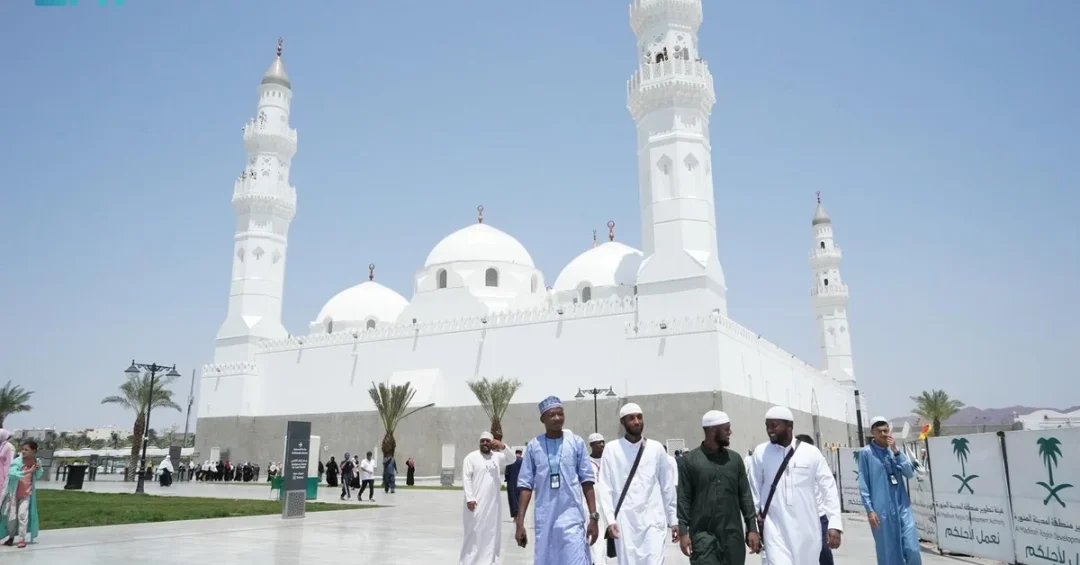
Contestants of the 44th King Abdulaziz International Competition for the Memorization, Recitation, and Interpretation of the Holy Quran visited key historical monuments in Madinah on August 19, 2024, as part of a cultural program organized by the Ministry of Islamic Affairs, Dawah and Guidance. The visit included Quba Mosque, the first mosque built in Islam, Mount Uhud, the Martyrs of Uhud Cemetery, Al-Rumat Mountain, and the Prophet’s Mosque, where they performed prayers at Al-Rawdah Al-Sharifah. This initiative underscores Saudi Arabia’s commitment to enriching the spiritual and cultural experience of participants while showcasing the Kingdom’s rich Islamic heritage.
Context and Background
The King Abdulaziz International Competition for the Memorization, Recitation, and Interpretation of the Holy Quran is a prestigious annual event that attracts participants from around the world. Now in its 44th edition, the competition reflects Saudi Arabia’s dedication to promoting Quranic studies and fostering global Islamic unity. The cultural program, organized by the Ministry of Islamic Affairs, Dawah and Guidance, aims to provide contestants with a deeper understanding of Islamic history and the Kingdom’s pivotal role in preserving it. Madinah, the second holiest city in Islam, serves as an ideal setting for such educational and spiritual activities.
Key Details
During the visit, contestants explored Quba Mosque, renowned as the first mosque established in Islam, symbolizing the dawn of Islamic architecture and community. They also visited Mount Uhud and the Martyrs of Uhud Cemetery, sites of profound historical significance that commemorate the sacrifices of early Muslims. At Al-Rumat Mountain, participants learned about the strategic importance of the Battle of Uhud. The visit culminated at the Prophet’s Mosque, where contestants performed prayers at Al-Rawdah Al-Sharifah, a place of immense spiritual reverence. These sites offer a tangible connection to Islamic heritage, enriching the contestants’ pilgrimage experience.
Implications and Impact
This cultural excursion not only deepens the contestants’ connection to Islamic history but also highlights Saudi Arabia’s role as a custodian of Islam’s holiest sites. By facilitating such visits, the Kingdom demonstrates its commitment to fostering international goodwill and spiritual enrichment. The program also strengthens Saudi Arabia’s soft power, as participants from diverse nations return home with positive impressions of the Kingdom’s hospitality and heritage preservation efforts. Moreover, it reinforces Madinah’s status as a destination for religious tourism and cultural exchange, aligning with broader efforts to enhance the visitor experience for pilgrims and tourists alike.
Vision 2030 Alignment
This initiative aligns with Saudi Vision 2030, which seeks to diversify the economy and promote cultural and religious tourism. By investing in programs that showcase the Kingdom’s Islamic heritage, Saudi Arabia aims to attract millions of visitors and enhance its global standing. The Ministry of Islamic Affairs, Dawah and Guidance plays a crucial role in these efforts, ensuring that events like the Quran competition and its cultural activities contribute to the Kingdom’s long-term goals of economic growth, international engagement, and the promotion of moderate Islam. Such initiatives also support the Vision’s quality-of-life objectives by creating enriching experiences for participants and fostering cross-cultural understanding.
20 Questions
Q1. What is the King Abdulaziz International Competition for the Memorization, Recitation, and Interpretation of the Holy Quran?
A1. It is an annual international competition held in Saudi Arabia that attracts participants from around the world to demonstrate their skills in memorizing, reciting, and interpreting the Holy Quran. Now in its 44th edition, it promotes Quranic studies and Islamic unity.
Q2. Who organized the cultural program for the contestants?
A2. The cultural program was organized by the Ministry of Islamic Affairs, Dawah and Guidance, which oversees religious affairs and promotes moderate Islam. The ministry ensures contestants experience Saudi Arabia’s rich Islamic heritage.
Q3. Which historical sites did the contestants visit in Madinah?
A3. They visited Quba Mosque, Mount Uhud, the Martyrs of Uhud Cemetery, Al-Rumat Mountain, and the Prophet’s Mosque. These sites are significant in Islamic history and offer spiritual enrichment.
Q4. Why is Quba Mosque significant?
A4. Quba Mosque is the first mosque built in Islam, established by Prophet Muhammad (peace be upon him) upon his migration to Madinah. It symbolizes the beginning of Islamic community and architecture.
Q5. What is the significance of Mount Uhud and the Martyrs of Uhud Cemetery?
A5. Mount Uhud was the site of the Battle of Uhud, a key event in early Islamic history. The cemetery holds the graves of many companions who sacrificed their lives, including Hamza ibn Abdul-Muttalib.
Q6. What did the contestants do at the Prophet’s Mosque?
A6. They performed prayers at Al-Rawdah Al-Sharifah, a revered area in the Prophet’s Mosque. This spiritual experience is highly sought after by pilgrims and visitors.
Q7. How does this visit benefit the contestants?
A7. It deepens their understanding of Islamic history and heritage, enhances their spiritual journey, and fosters a connection to the early days of Islam. It also promotes cultural exchange among participants from diverse backgrounds.
Q8. What role does Madinah play in Islamic history?
A8. Madinah is the second holiest city in Islam, where Prophet Muhammad (peace be upon him) established the first Islamic state. It hosts the Prophet’s Mosque and numerous historical sites.
Q9. How does this initiative reflect Saudi Arabia’s commitment to Islam?
A9. It demonstrates the Kingdom’s dedication to preserving Islamic heritage, promoting Quranic studies, and serving pilgrims. Saudi Arabia considers itself a custodian of Islam’s holiest sites.
Q10. What is the Ministry of Islamic Affairs, Dawah and Guidance?
A10. It is a Saudi government ministry responsible for religious affairs, including overseeing mosques, Islamic education, and international Quran competitions. It promotes moderate Islam and interfaith dialogue.
Q11. How many contestants participated in the 44th competition?
A11. The competition typically attracts over a hundred contestants from various countries. Exact numbers vary each year, but it is a highly prestigious event with global participation.
Q12. What is Al-Rawdah Al-Sharifah?
A12. Al-Rawdah Al-Sharifah is a blessed area between the Prophet’s pulpit and his grave in the Prophet’s Mosque. Praying there is considered highly rewarding.
Q13. How does this event promote Vision 2030?
A13. It aligns with Vision 2030 by enhancing religious tourism, showcasing Saudi Arabia’s cultural heritage, and fostering international engagement. It supports economic diversification and global soft power.
Q14. What other activities are included in the cultural program?
A14. The program typically includes visits to historical sites, museums, and cultural centers, as well as lectures and interactions with local scholars. It aims to provide a comprehensive experience of Saudi heritage.
Q15. How does the competition contribute to global Islamic unity?
A15. By bringing together participants from different countries, the competition fosters a sense of brotherhood and shared purpose. It promotes mutual respect and understanding among Muslims worldwide.
Q16. What is the significance of Al-Rumat Mountain?
A16. Al-Rumat Mountain was the position held by Muslim archers during the Battle of Uhud. Their strategic role was crucial in the early stages of the battle.
Q17. How does Saudi Arabia preserve these historical sites?
A17. The Kingdom invests in restoration, maintenance, and infrastructure to ensure these sites remain accessible and well-preserved for future generations. It also employs experts in heritage conservation.
Q18. What impact does this visit have on participants’ perception of Saudi Arabia?
A18. It leaves a positive impression of the Kingdom’s hospitality, organization, and dedication to Islamic heritage. Participants often become ambassadors of goodwill upon returning to their home countries.
Q19. Are there similar programs for other competitions in Saudi Arabia?
A19. Yes, Saudi Arabia hosts various international competitions and events that include cultural programs. These initiatives aim to enrich participants’ experiences and showcase the Kingdom’s heritage.
Q20. How can international visitors learn more about Islamic heritage in Madinah?
A20. Visitors can explore numerous historical mosques, museums, and sites. The Ministry of Islamic Affairs and local tourism authorities provide guides and resources to facilitate educational visits.
Reader Feedback
We value your thoughts. Please share your feedback on this article.
Your feedback helps us improve our coverage.