


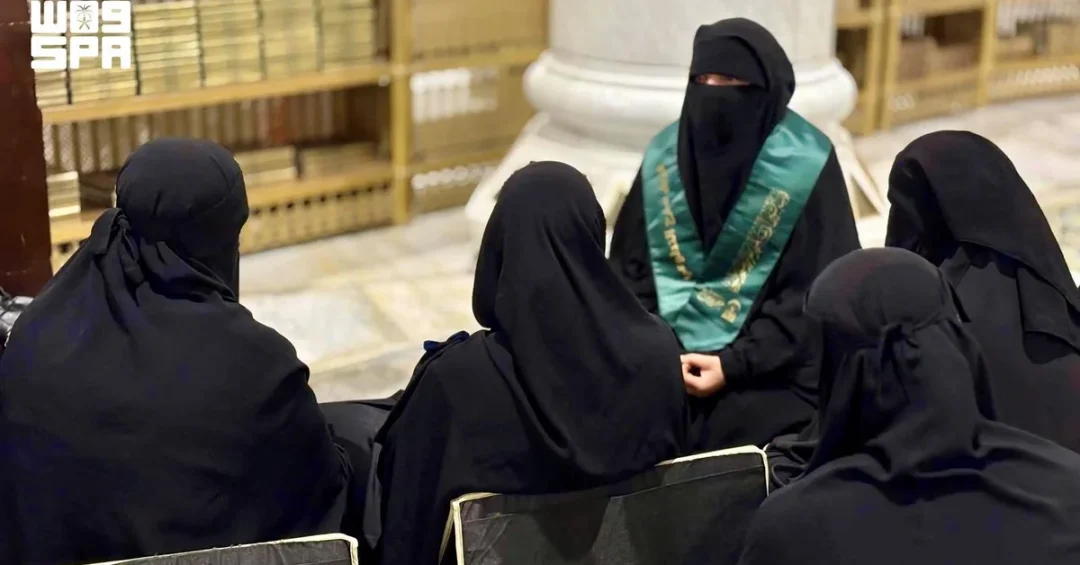
The Presidency of Religious Affairs at the Grand Mosque and the Prophet’s Mosque has intensified its Impact Compass initiative, training 18 female volunteers for fieldwork at the Grand Mosque in Makkah. The program, held on October 26 and 27, 2026, was designed to enhance services for women visiting the holy site. According to the Saudi Press Agency (SPA), the training achieved an overall performance score of 98%, with participant satisfaction reaching 99%. This initiative underscores the Kingdom’s commitment to organized volunteering and community participation, aligning with Vision 2030 goals of empowering women and improving the quality of services for pilgrims and visitors. The training included orientation tours and practical exercises to familiarize volunteers with their assigned locations, duties, and guidelines. The Presidency’s efforts reflect a broader strategy to elevate the experience of all worshippers at the Two Holy Mosques.
Why does this matter now? As the Kingdom continues to welcome millions of pilgrims annually, the need for well-trained volunteers has never been greater. The Impact Compass initiative is part of a systematic approach to volunteer management, ensuring that female visitors receive dedicated support from trained personnel. This program not only enhances the operational efficiency of the Grand Mosque but also provides Saudi women with opportunities to contribute to a sacred and high-profile environment. The success of this training, measured by near-perfect performance and satisfaction scores, demonstrates the Presidency’s rigorous standards and its ability to execute programs that meet the highest benchmarks. It also signals a growing recognition of the vital role women play in the Kingdom’s religious tourism sector.
Context and Background
How did this initiative come about? The Presidency of Religious Affairs at the Grand Mosque and the Prophet’s Mosque has long been responsible for managing religious activities and services at Islam’s holiest sites. In recent years, under the guidance of Saudi leadership, the Presidency has expanded its scope to include volunteer programs that enhance the visitor experience. The Impact Compass initiative is a key component of this expansion, focusing specifically on preparing female volunteers to assist women pilgrims. This is particularly important given the increasing number of female pilgrims and the need for culturally sensitive and efficient support services. The program reflects a broader trend in Saudi Arabia toward institutionalizing volunteering, moving from ad-hoc efforts to structured, trained, and measurable initiatives.
The two-day training on October 26 and 27 was not merely an orientation but a comprehensive field preparation. Volunteers were introduced to their specific roles through guided tours and hands-on exercises. The 98% performance score indicates that the training met its objectives effectively, while the 99% satisfaction rate shows that volunteers felt well-prepared and valued. Such metrics are crucial for the Presidency as it seeks to scale up its volunteer force. The initiative also aligns with the Kingdom’s Vision 2030, which emphasizes community participation and women’s empowerment. By investing in female volunteers, the Presidency is not only improving immediate services but also building a cadre of experienced women who can take on leadership roles in future.
Key Details of the Training Program
What exactly did the training entail? The program was held over two days and involved 18 female volunteers. According to the Saudi Press Agency, the training included orientation tours that familiarized volunteers with the layout of the Grand Mosque and the specific areas where they would be stationed. Practical exercises simulated real-life scenarios, allowing volunteers to practice assisting visitors, answering questions, and handling various situations with professionalism and care. The curriculum also covered guidelines on crowd management, communication, and the protocols for interacting with pilgrims. The Presidency designed the training to be comprehensive, ensuring that volunteers are not only knowledgeable but also confident in their roles.
The performance score of 98% is a testament to the quality of the training and the dedication of the participants. It suggests that the volunteers mastered the material and demonstrated the required competencies. The satisfaction rate of 99% further indicates that the volunteers found the training relevant, engaging, and empowering. These figures are likely the result of careful planning and execution by the Presidency’s training team. The program’s success sets a benchmark for future volunteer training initiatives, not only at the Grand Mosque but also potentially at the Prophet’s Mosque in Madinah. The Presidency has signaled that it will continue to refine and expand such programs to meet the evolving needs of visitors.
International and Regional Impact
How does this initiative resonate beyond Saudi Arabia? The Grand Mosque in Makkah is the focal point for millions of Muslims worldwide, and the quality of services there is of global interest. By training female volunteers to assist women pilgrims, the Presidency is enhancing the overall pilgrimage experience, which can have a positive ripple effect on the Kingdom’s reputation as a hospitable and well-organized host. International observers often highlight the treatment of women in Saudi Arabia, and initiatives like this showcase the Kingdom’s commitment to empowering women in meaningful roles. Regionally, other countries with significant Muslim populations may look to Saudi Arabia’s model of volunteer management as a best practice for their own religious sites.
Furthermore, the program contributes to the broader narrative of Saudi Arabia as a modern, forward-looking nation that honors its religious heritage while embracing progress. The involvement of women in high-profile religious settings sends a powerful message about inclusivity and respect. It also supports the Kingdom’s efforts to diversify its economy by strengthening the services sector related to religious tourism. As the number of pilgrims continues to grow, the demand for skilled volunteers will increase, and Saudi Arabia is positioning itself as a leader in this niche. The success of the Impact Compass initiative could inspire similar programs in other sectors, further integrating volunteering into the national fabric.
Economic and Strategic Significance
What are the economic and strategic benefits? Volunteering is often seen as a social good, but it also has economic implications. By utilizing trained volunteers, the Presidency can enhance service quality without incurring the full cost of additional paid staff. This efficiency allows resources to be allocated to other critical areas, such as infrastructure and technology. Moreover, the skills that volunteers acquire—communication, problem-solving, and cultural sensitivity—are transferable to other sectors, contributing to a more skilled workforce. Strategically, the initiative strengthens the social contract between the state and its citizens, as it provides women with opportunities to serve their community and gain valuable experience.
The program also supports the goals of Vision 2030 by promoting volunteerism as a national value. The Vision aims to increase the number of volunteers to one million by 2030, and initiatives like this are instrumental in achieving that target. By focusing on women, the Presidency is also addressing gender balance in volunteerism, which has traditionally been male-dominated in some areas. This aligns with the Vision’s emphasis on women’s participation in the workforce and public life. The measurable success of the training—98% performance and 99% satisfaction—provides concrete evidence that such programs can deliver results. It also creates a data-driven approach to volunteer management, which can be replicated and scaled.
Vision 2030 Alignment
How does this initiative fit into Saudi Arabia’s long-term vision? Vision 2030 is a comprehensive plan to transform the Kingdom’s economy and society, and it places a strong emphasis on empowering women and fostering community participation. The Impact Compass initiative directly contributes to these objectives by providing women with training and opportunities to serve at the Grand Mosque. It also enhances the quality of services for pilgrims, which is a key pillar of the Vision’s goal to increase the number of Umrah and Hajj pilgrims to 30 million annually. By ensuring that female visitors receive excellent support, the Presidency is helping to make the pilgrimage experience more accessible and comfortable, which in turn boosts the Kingdom’s reputation and attracts more visitors.
Looking ahead, the Presidency plans to continue and expand the Impact Compass initiative. The success of this training will serve as a model for future programs, potentially including more volunteers and covering additional locations. As Saudi Arabia continues to invest in its religious infrastructure and human capital, the role of volunteers will only grow. The Presidency’s commitment to organized volunteering and community participation is a clear reflection of the Vision 2030 spirit—a spirit of progress, inclusivity, and excellence. Through such initiatives, the Kingdom is not only serving pilgrims but also building a brighter future for its citizens, especially women, who are increasingly taking on leadership roles in all sectors.
20 Questions
Q1. What is the Impact Compass initiative?
A1. The Impact Compass initiative is a program by the Presidency of Religious Affairs at the Grand Mosque and the Prophet’s Mosque to prepare female volunteers for fieldwork and improve services for women visiting the Grand Mosque.
Q2. When and where did the training take place?
A2. The training took place on October 26 and 27, 2026, at the Grand Mosque in Makkah, Saudi Arabia.
Q3. How many volunteers participated in the training?
A3. Eighteen female volunteers participated in the two-day field training program.
Q4. What was the overall performance score of the training?
A4. The training achieved an overall performance score of 98%, indicating high effectiveness.
Q5. What was the participant satisfaction rate?
A5. Participant satisfaction reached 99%, showing that volunteers were highly satisfied with the program.
Q6. What did the training include?
A6. The training included orientation tours and practical exercises to familiarize volunteers with their assigned locations, duties, and guidelines.
Q7. Who organized the training?
A7. The Presidency of Religious Affairs at the Grand Mosque and the Prophet’s Mosque organized the training.
Q8. Why is this initiative important?
A8. It enhances services for women pilgrims, promotes organized volunteering, and supports women’s empowerment in line with Vision 2030.
Q9. How does this align with Vision 2030?
A9. It aligns with Vision 2030 goals of empowering women, increasing volunteerism, and improving pilgrim services.
Q10. What benefits do the volunteers receive?
A10. Volunteers gain training, experience, and the opportunity to serve the community in a sacred environment.
Q11. Will the program be expanded?
A11. The Presidency plans to continue and expand the Impact Compass initiative based on its success.
Q12. How does this impact international visitors?
A12. It improves the pilgrimage experience for international women, enhancing Saudi Arabia’s reputation for hospitality.
Q13. What skills do volunteers learn?
A13. Volunteers learn communication, crowd management, cultural sensitivity, and problem-solving skills.
Q14. Is this program only for Saudi women?
A14. The program is open to female volunteers, primarily Saudi, who wish to serve at the Grand Mosque.
Q15. How does this affect religious tourism?
A15. It enhances the quality of services, making the pilgrimage more accessible and comfortable, thus boosting religious tourism.
Q16. What is the role of the Presidency of Religious Affairs?
A16. The Presidency manages religious activities and services at the Grand Mosque and the Prophet’s Mosque, including volunteer programs.
Q17. How were volunteers selected?
A17. Volunteers were selected based on their interest and ability to serve, though specific criteria were not detailed.
Q18. What feedback did participants give?
A18. Participants expressed 99% satisfaction, indicating the training met their expectations and prepared them well.
Q19. How does this initiative support women’s empowerment?
A19. It provides women with training and visible roles in a prestigious setting, enhancing their skills and confidence.
Q20. What is the next step for the volunteers?
A20. After training, volunteers will begin fieldwork at the Grand Mosque, assisting women pilgrims under the Presidency’s guidance.
Reader Feedback
We value your thoughts. Please share your feedback on this article.
Your feedback helps us improve our coverage.
Related articles
 Riyadh Advances Urban Transformation on World Cities Day
 Camels Graze as Rainwater Flows Through Turaif’s Valleys
 Saudi FM Meets German Counterpart at G20 in Atlanta
 Saudi, Brazilian FMs Meet at G20 in Atlanta
 Saudi FM Meets Japanese Counterpart at G20 in Atlanta
 Saudi FM Meets French Counterpart at G20 in Atlanta