


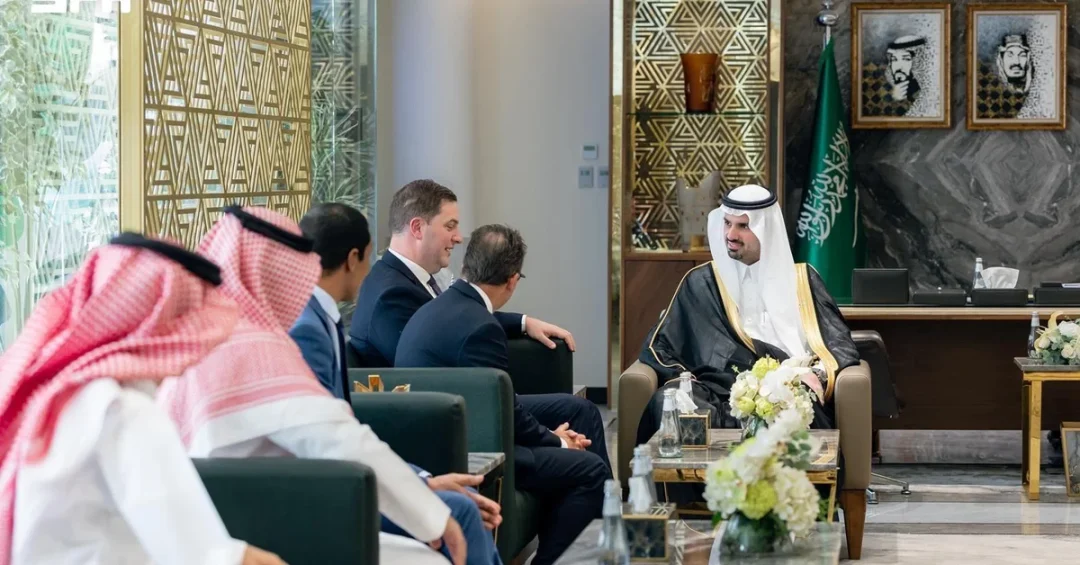
Mayor of the Riyadh Region Prince Dr. Faisal bin Abdulaziz bin Ayyaf met with Mayor of Cape Town Geordin Hill-Lewis in Riyadh on September 29, 2026, to explore new avenues of cooperation between the two cities. The meeting, reported by the Saudi Press Agency (SPA), marked the Cape Town mayor’s first official visit to the Saudi capital and underscored Riyadh’s growing role as a global urban leader willing to share expertise and build partnerships across continents.
During the talks, Prince Faisal welcomed Hill-Lewis and highlighted the significant transformation underway in Riyadh, reviewing flagship projects including the Riyadh Metro, Expo 2030 Riyadh, the Green Riyadh Project, and major water network initiatives. The two leaders also discussed Riyadh’s strategic objectives leading up to 2030, reflecting the Kingdom’s broader Vision 2030 ambition to diversify the economy, modernize infrastructure, and enhance quality of life. Hill-Lewis expressed admiration for the projects he observed and shared Cape Town’s experiences in water resource management, urban transport, and administrative and regulatory governance. The mayors agreed to exchange expertise and best practices to strengthen cooperation between the two cities, setting a positive tone for future collaboration.
Context and Background
Why does a meeting between the mayors of Riyadh and Cape Town matter on the international stage? The encounter reflects a wider trend in which Saudi cities, led by Riyadh, are actively engaging with global counterparts to share knowledge and accelerate urban innovation. Riyadh, home to more than seven million residents, is undergoing one of the most ambitious urban transformations in the world, driven by Saudi Vision 2030, the national roadmap launched by Crown Prince Mohammed bin Salman to diversify the Kingdom’s economy and elevate its global standing. The Riyadh Metro, a six-line, 176-kilometer network, is a centerpiece of that effort, designed to reduce traffic congestion and cut carbon emissions.
Cape Town, South Africa’s legislative capital, brings its own valuable experience to the table. The city has faced severe water scarcity in recent years, most notably the 2018 “Day Zero” crisis, and has since developed advanced water demand management and conservation strategies that are studied worldwide. Its urban transport system, including the MyCiTi bus rapid transit network, and its administrative reforms offer lessons in efficient municipal governance. By meeting in Riyadh, the two mayors have opened a channel for mutual learning that could benefit millions of residents in both cities and serve as a model for South-South cooperation.
The timing of the visit is also significant. Saudi Arabia is preparing to host Expo 2030 Riyadh, a world exposition expected to draw millions of international visitors and showcase the Kingdom’s achievements in sustainability, technology, and culture. Building relationships with influential global cities like Cape Town helps Riyadh strengthen its international network ahead of the event. Moreover, the meeting aligns with Saudi Arabia’s broader diplomatic outreach to Africa, a continent the Kingdom views as a key partner for trade, investment, and cultural exchange under Vision 2030.
Key Details of the Riyadh-Cape Town Talks
What specific projects and priorities were on the agenda during the mayors’ discussions? According to the Saudi Press Agency, Prince Faisal provided a comprehensive overview of Riyadh’s transformation, highlighting the Riyadh Metro as a landmark achievement in sustainable urban mobility. The metro, which began partial operations in 2024, is designed to carry 1.16 million passengers daily and is integrated with a new bus network to provide seamless public transport. The mayor also showcased Expo 2030 Riyadh, which will be hosted under the theme “The Era of Change: Together for a Foresighted Tomorrow,” and the Green Riyadh Project, an unprecedented urban greening initiative that aims to plant 7.5 million trees and increase green space per capita from 1.7 square meters to 28 square meters by 2030.
Water network initiatives were another focal point. Riyadh has invested heavily in modernizing its water infrastructure, including the construction of the world’s largest water storage system and advanced desalination plants. These efforts ensure a reliable water supply for the capital’s growing population and support the Kingdom’s environmental sustainability goals. Hill-Lewis, in turn, shared Cape Town’s expertise in water resource management, detailing how the city averted a catastrophic water crisis through aggressive conservation measures, public awareness campaigns, and infrastructure upgrades. He also discussed Cape Town’s experience with urban transport, including the expansion of its bus rapid transit system and plans for future rail improvements.
The conversation extended to administrative and regulatory governance. Both mayors recognized that efficient municipal management is essential for delivering large-scale projects on time and within budget. They discussed ways to streamline permitting, enhance transparency, and leverage digital technologies to improve public services. The exchange of best practices in these areas is expected to inform future policies in both cities. The meeting concluded with an agreement to explore concrete mechanisms for ongoing cooperation, including potential staff exchanges, joint workshops, and collaborative research on urban sustainability. Hill-Lewis’s admiration for Riyadh’s projects was evident, and he expressed enthusiasm for deepening ties between the two municipalities.
International and Regional Impact
How might this partnership influence urban diplomacy beyond Saudi Arabia and South Africa? The Riyadh-Cape Town engagement signals a broader shift in how cities address global challenges. As hubs of innovation and economic activity, cities are increasingly taking the lead in tackling climate change, resource scarcity, and rapid urbanization. By joining forces, Riyadh and Cape Town can amplify their voices on the world stage, advocating for sustainable urban development and demonstrating that cross-continental collaboration yields tangible benefits. For Saudi Arabia, the meeting reinforces its commitment to international cooperation and its growing role as a bridge between the Middle East and Africa.
Regionally, the talks could pave the way for stronger Saudi-South African relations. South Africa is a key player in the African Union and a gateway to markets across the continent. Enhanced city-to-city ties often precede broader economic and diplomatic partnerships, and this meeting may encourage further exchanges in trade, tourism, and investment. For Cape Town, learning from Riyadh’s rapid modernization could accelerate its own infrastructure projects, while Riyadh can benefit from Cape Town’s proven expertise in water conservation—a critical concern in the arid Gulf region. The mutual respect displayed by the two mayors sets a positive example for international urban diplomacy, emphasizing practical solutions over political differences.
Economic and Strategic Significance
What economic opportunities could arise from closer Riyadh-Cape Town cooperation? The meeting lays the groundwork for potential business collaborations in sectors such as smart city technology, renewable energy, and transportation. Saudi companies, many of which are at the forefront of Vision 2030 projects, could find new markets in South Africa, while South African firms with expertise in water management and urban planning could contribute to Saudi Arabia’s ongoing infrastructure drive. The exchange of knowledge may also attract investment, as both cities seek to fund ambitious projects. Riyadh’s strategic location as a hub for the Middle East and Cape Town’s role as a gateway to Africa create a natural synergy for trade and logistics.
From a strategic perspective, the meeting supports Saudi Arabia’s Vision 2030 goal of strengthening international partnerships. The Kingdom has been actively expanding its diplomatic and economic footprint across Africa, Asia, and Europe. By engaging with Cape Town, Riyadh demonstrates its willingness to learn from diverse partners and share its own transformative journey. This approach not only enhances Saudi Arabia’s global image but also fosters goodwill and mutual understanding. The focus on water management is particularly timely, as water security remains a top priority for both nations. Collaborative efforts in this area could lead to innovative solutions that benefit not only the two cities but also other water-scarce regions worldwide.
Vision 2030 Alignment
How does this meeting advance Saudi Arabia’s Vision 2030 objectives? The Riyadh-Cape Town discussions directly support several pillars of Vision 2030, including the creation of a vibrant society, a thriving economy, and an ambitious nation. By showcasing projects like the Riyadh Metro, Green Riyadh, and Expo 2030, Prince Faisal highlighted the Kingdom’s commitment to sustainable urban development and improved quality of life. The exchange of expertise with Cape Town aligns with Vision 2030’s emphasis on international cooperation and knowledge transfer, which are essential for achieving the ambitious targets set for 2030 and beyond.
Furthermore, the meeting reinforces Riyadh’s position as a global city capable of attracting partners and hosting major international events. As the capital prepares for Expo 2030, such engagements build momentum and demonstrate Riyadh’s readiness to welcome the world. The partnership with Cape Town also underscores Saudi Arabia’s dedication to South-South cooperation and its role as a responsible global actor. Ultimately, this collaboration exemplifies how Vision 2030 extends beyond national borders, fostering partnerships that drive innovation, sustainability, and prosperity for all involved. The forward-looking spirit of the talks promises a future where Riyadh and Cape Town grow together, setting a benchmark for international urban cooperation.
20 Questions
Q1. Who met in Riyadh on September 29, 2026?
A1. Mayor of the Riyadh Region Prince Dr. Faisal bin Abdulaziz bin Ayyaf met with Mayor of Cape Town Geordin Hill-Lewis in Riyadh to discuss cooperation between the two cities.
Q2. What was the main purpose of the meeting?
A2. The meeting aimed to explore opportunities for cooperation and exchange expertise in areas such as urban transport, water management, and governance.
Q3. Was this the Cape Town mayor’s first visit to Riyadh?
A3. Yes, it was Geordin Hill-Lewis’s first visit to Riyadh, and he expressed admiration for the city’s transformation.
Q4. Which major Riyadh projects were highlighted during the talks?
A4. The Riyadh Metro, Expo 2030 Riyadh, the Green Riyadh Project, and water network initiatives were among the key projects discussed.
Q5. What did Prince Faisal say about Riyadh’s transformation?
A5. He highlighted the significant transformation taking place in the capital and reviewed major projects and achievements aligned with Riyadh’s strategic objectives to 2030.
Q6. What expertise did Cape Town share?
A6. Cape Town shared its experiences in water resource management, urban transport, and administrative and regulatory governance.
Q7. How did Hill-Lewis react to Riyadh’s projects?
A7. He expressed admiration for the projects he observed in Riyadh and showed enthusiasm for deepening cooperation between the two cities.
Q8. What is the Riyadh Metro?
A8. The Riyadh Metro is a six-line, 176-kilometer urban rail network designed to reduce traffic congestion and carbon emissions, carrying up to 1.16 million passengers daily.
Q9. What is Expo 2030 Riyadh?
A9. Expo 2030 Riyadh is a world exposition that Saudi Arabia will host under the theme “The Era of Change: Together for a Foresighted Tomorrow.”
Q10. What is the Green Riyadh Project?
A10. Green Riyadh aims to plant 7.5 million trees and increase green space per capita from 1.7 to 28 square meters by 2030.
Q11. Why is water management a key topic for both cities?
A11. Riyadh faces water scarcity as a desert city, while Cape Town has experience overcoming severe drought, making water management a shared priority.
Q12. How does this meeting align with Saudi Vision 2030?
A12. It supports Vision 2030 by promoting international cooperation, sustainable urban development, and knowledge exchange, key pillars of the national roadmap.
Q13. What are the potential outcomes of this cooperation?
A13. Potential outcomes include staff exchanges, joint workshops, collaborative research, and business partnerships in smart city technology and infrastructure.
Q14. How does this meeting impact Saudi-South African relations?
A14. It strengthens city-to-city ties, which can lead to broader economic and diplomatic partnerships between Saudi Arabia and South Africa.
Q15. What is the significance of Riyadh hosting such meetings?
A15. It reinforces Riyadh’s role as a global city and a hub for international diplomacy, innovation, and urban leadership.
Q16. What did the mayors agree to do next?
A16. They agreed to exchange expertise and best practices to strengthen cooperation between Riyadh and Cape Town, exploring concrete mechanisms for ongoing collaboration.
Q17. How does Cape Town benefit from this partnership?
A17. Cape Town can learn from Riyadh’s rapid modernization and large-scale projects, accelerating its own infrastructure and sustainability initiatives.
Q18. How does Riyadh benefit from Cape Town’s experience?
A18. Riyadh can gain insights from Cape Town’s water conservation strategies and urban transport solutions, which are relevant to its own challenges.
Q19. What role does the Saudi Press Agency play in reporting this?
A19. The Saudi Press Agency (SPA) is the official state news agency that reported the meeting, ensuring accurate and authoritative information dissemination.
Q20. What does this meeting say about Saudi Arabia’s global engagement?
A20. It demonstrates Saudi Arabia’s commitment to international cooperation, knowledge sharing, and building partnerships that support Vision 2030 and global urban sustainability.
Reader Feedback
We value your thoughts. Please share your feedback on this article.
Your feedback helps us improve our coverage.