


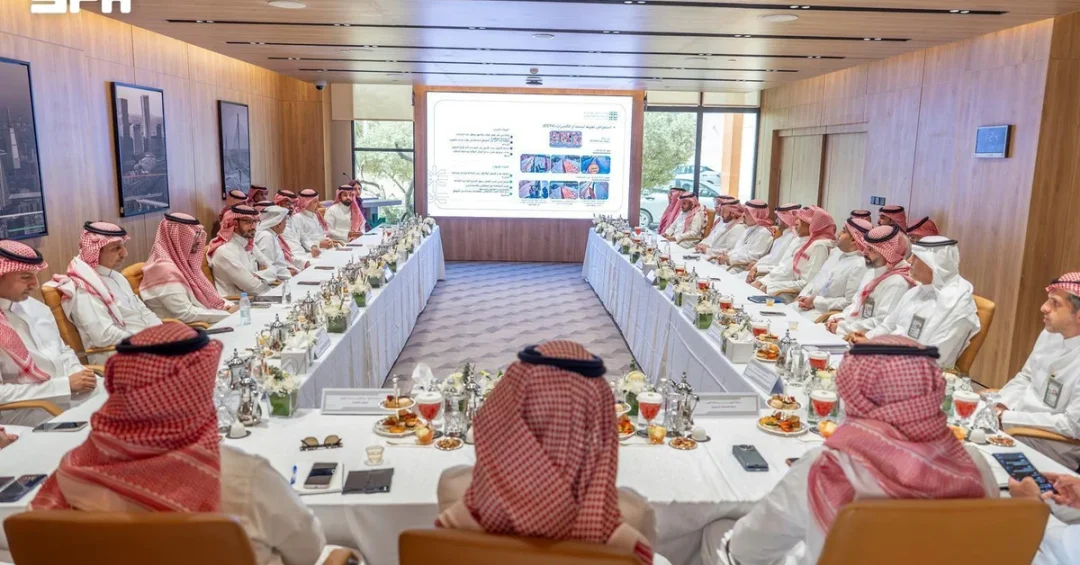
The Infrastructure Projects Coordination Council convened its fourth meeting in Riyadh, chaired by Eng. Fahad Al Badah, CEO of the Riyadh Infrastructure Projects Center, bringing together representatives from government entities, service providers, contractors, laboratories, and consulting offices to review development initiatives shaping the Kingdom’s capital region. The session, announced through official Saudi channels, underscored the Council’s expanding role as a central platform for aligning the many stakeholders responsible for delivering the infrastructure that supports Riyadh’s rapid growth. Participants reviewed progress on tasks assigned at the previous meeting and examined the Council’s dashboard, a monitoring tool designed to track sector developments, ongoing activities, and priority issues in real time.
The meeting reflects a broader pattern in Saudi Arabia: as the Kingdom accelerates toward the goals of Vision 2030, coordination mechanisms such as this Council have become essential to ensuring that public and private entities work from a shared playbook. Riyadh, home to more than seven million residents and the engine of the national economy, is undergoing one of the most ambitious urban transformations in the world. How does a city of this scale keep hundreds of simultaneous projects on schedule, on budget, and up to standard? For Saudi officials, the answer increasingly lies in structured collaboration, transparent monitoring, and continuous dialogue between the entities that design, build, and maintain the built environment.
Context and Background
The Infrastructure Projects Coordination Council was established to serve as a unifying forum for the many parties involved in Riyadh’s infrastructure pipeline. Its membership spans government ministries and agencies, utility and service providers, contracting firms, testing laboratories, and engineering consultancies. By convening these groups regularly, the Council aims to reduce duplication, resolve bottlenecks early, and ensure that projects across the capital region adhere to consistent technical and quality standards. The fourth meeting builds on three prior sessions that have progressively sharpened the Council’s agenda and monitoring capabilities.
Eng. Fahad Al Badah, who leads the Riyadh Infrastructure Projects Center, opened the meeting with a speech that set the tone for a working session focused on execution. Following his remarks, attendees reviewed the status of tasks delegated at the previous gathering and were briefed on the Council’s dashboard, which aggregates data on sector developments, the Council’s own activities, and issues flagged as priorities. This dashboard is more than an administrative tool; it represents a shift toward data-informed oversight, allowing decision-makers to spot emerging challenges and direct resources where they are most needed. For a region executing projects at unprecedented speed, such visibility is invaluable.
The Council’s work also reflects the Kingdom’s broader commitment to institutionalizing best practices. Rather than treating each project as an isolated endeavor, the Council encourages stakeholders to view Riyadh’s infrastructure as a single, interconnected system. That perspective matters as the city expands outward and upward, with new residential districts, transport corridors, and utility networks coming online in parallel. Coordination at the planning stage reduces the likelihood of costly conflicts during construction and ensures that services are delivered efficiently to residents and businesses alike.
Key Details
During the fourth meeting, the Council discussed several development initiatives with direct implications for how infrastructure is built and maintained in Riyadh. One prominent topic was the initiative to connect telecommunications towers, a measure aimed at improving network coverage and reliability across the region. As Riyadh grows, demand for high-speed connectivity rises in tandem, and ensuring that towers are integrated into the urban fabric supports everything from mobile communications to the digital services that underpin smart-city ambitions. The Council reviewed the requirements and coordination needed to advance this initiative effectively.
Attendees also examined the specific requirements placed on contractors carrying out infrastructure projects, along with related provisions designed to regulate operations and raise execution quality. These discussions are part of a deliberate effort to standardize expectations across the sector, so that firms of all sizes understand the technical, safety, and quality benchmarks they must meet. By clarifying requirements, the Council helps reduce delays caused by ambiguity and fosters a level playing field in which excellence is rewarded.
Another agenda item was the service for printing as-built plans, which documents the final, constructed state of a project and serves as a critical reference for future maintenance, upgrades, and regulatory compliance. The Council reviewed how this service supports the sector and explored ways to strengthen its role. In addition, participants discussed the latest developments regarding the infrastructure award, an initiative intended to promote excellence and encourage high-quality practices across the infrastructure ecosystem. Together, these topics illustrate the Council’s dual focus: improving day-to-day execution while also celebrating and scaling the practices that deliver the best results.
International and Regional Impact
Riyadh’s infrastructure program is not only a national undertaking; it carries weight across the region and beyond. As the capital of the world’s largest oil exporter and the host of major global events, Riyadh’s ability to deliver world-class infrastructure shapes perceptions of Saudi Arabia as an investment destination and a hub for international business. Multinational contractors, engineering firms, and technology providers are watching the Kingdom’s coordination models closely, because they offer a template for managing complex urban development in fast-growing economies. The Council’s emphasis on transparency and standardized requirements makes it easier for international partners to participate with confidence.
Regionally, the meeting reinforces Saudi Arabia’s position as a leader in infrastructure modernization within the Gulf Cooperation Council. Neighboring states face similar pressures to expand transport, utilities, and digital networks, and Saudi initiatives often serve as reference points for policy and project design. The Council’s work also supports the broader integration of Riyadh with other Saudi regions and with global markets, strengthening the Kingdom’s role as a logistics and commercial bridge between Asia, Europe, and Africa. In this sense, the fourth meeting is a small but meaningful piece of a much larger geopolitical and economic picture.
Economic and Strategic Significance
The economic stakes of effective infrastructure coordination are substantial. Delays, cost overruns, and quality failures in major projects can erode investor confidence and divert resources from productive uses. By monitoring initiatives and holding stakeholders accountable to agreed outcomes, the Council helps protect the value of public and private investment. Improved execution quality also extends the lifespan of assets, reducing long-term maintenance costs and ensuring that infrastructure continues to serve the economy decades into the future. These efficiencies compound over time, freeing capital for new priorities.
Strategically, the Council’s work supports Riyadh’s emergence as a global city. The Kingdom has set ambitious targets for tourism, foreign direct investment, and private-sector growth, all of which depend on reliable infrastructure. Roads, utilities, telecommunications, and public spaces must function seamlessly to attract businesses and visitors alike. The Council’s focus on integration among entities—government, service providers, contractors, and consultants—directly enables this seamless functioning. It also aligns with efforts to localize expertise and build a skilled workforce, as clearer standards and better documentation create opportunities for Saudi professionals and firms to lead complex projects.
Vision 2030 Alignment
The fourth meeting of the Infrastructure Projects Coordination Council exemplifies the collaborative, outcome-driven approach at the heart of Saudi Vision 2030. The Vision calls for a diversified economy, thriving cities, and a government that works efficiently with the private sector. By bringing stakeholders together to review initiatives, monitor progress, and resolve priority issues, the Council translates these broad goals into practical action. Its dashboard, standardized contractor requirements, and focus on quality awards all contribute to a culture of excellence that Vision 2030 seeks to embed across national institutions.
As Riyadh continues to grow and evolve, the Council’s role will only become more important. The initiatives discussed at this meeting—from telecommunications connectivity to as-built documentation—are the building blocks of a city that is not only larger but smarter, more resilient, and more livable. For international observers, the message is clear: Saudi Arabia is investing in the systems and coordination needed to deliver on its promises. The Kingdom’s long-term vision depends on getting these fundamentals right, and the Council’s steady, methodical work shows that the foundations are being laid with care. The next meetings will be watched closely as the capital region’s transformation accelerates.
20 Questions
Q1. What is the Infrastructure Projects Coordination Council?
A1. It is a Saudi body that brings together government entities, service providers, contractors, laboratories, and consulting offices to coordinate infrastructure projects in the Riyadh Region and improve execution quality.
Q2. Who chaired the fourth meeting of the Council?
A2. Eng. Fahad Al Badah, CEO of the Riyadh Infrastructure Projects Center, chaired the fourth meeting, which was announced through official Saudi channels.
Q3. Where was the fourth meeting held?
A3. The meeting took place in Riyadh, the capital of Saudi Arabia, and was reported by the Saudi Press Agency.
Q4. What was reviewed from the previous meeting?
A4. Attendees reviewed the tasks assigned at the previous meeting and examined the Council’s dashboard, which monitors sector developments, activities, and priority issues.
Q5. What is the initiative to connect telecommunications towers?
A5. It is a development initiative aimed at improving network coverage and reliability across the Riyadh Region by coordinating the connection of telecommunications towers.
Q6. Why are contractor requirements important?
A6. Clear requirements regulate operations, set consistent quality and safety benchmarks, reduce ambiguity, and help ensure that infrastructure projects meet high execution standards.
Q7. What is the as-built plans printing service?
A7. It is a service that documents the final constructed state of projects, providing a critical reference for maintenance, future upgrades, and regulatory compliance.
Q8. What is the infrastructure award mentioned in the meeting?
A8. The infrastructure award is an initiative intended to promote excellence and encourage high-quality practices across the infrastructure projects ecosystem in the Riyadh Region.
Q9. Why does coordination matter for Riyadh’s infrastructure?
A9. Coordination reduces duplication, resolves bottlenecks early, ensures consistent standards, and helps hundreds of simultaneous projects stay on schedule and within budget.
Q10. How does the Council monitor sector developments?
A10. The Council uses a dashboard that aggregates data on sector developments, the Council’s activities, and priority issues, enabling data-informed oversight and timely decisions.
Q11. Who participates in the Council’s meetings?
A11. Participants include representatives from government entities, service providers, contractors, testing laboratories, and consulting offices operating in the infrastructure sector.
Q12. How does this meeting support Vision 2030?
A12. It advances Vision 2030 by promoting efficient government-private collaboration, quality infrastructure, and thriving cities that attract investment and improve quality of life.
Q13. What does the Council hope to achieve through its work?
A13. The Council aims to enhance operational efficiency, improve execution quality, and support the development of the infrastructure system in the Riyadh Region.
Q14. How often does the Council meet?
A14. The Council holds regular meetings; the fourth meeting is the latest in a series that has progressively sharpened its agenda and monitoring capabilities.
Q15. What role do laboratories play in the Council?
A15. Laboratories provide testing and quality assurance services that help verify materials and workmanship, supporting the Council’s goal of high execution quality.
Q16. Why is international participation relevant?
A16. International contractors and technology providers watch Saudi coordination models closely, and clear standards make it easier for global partners to participate with confidence.
Q17. What economic benefits come from better coordination?
A17. Better coordination reduces delays and cost overruns, protects investment value, extends asset lifespans, and frees capital for new priorities.
Q18. How does the Council support Riyadh’s growth?
A18. By aligning stakeholders and monitoring initiatives, the Council helps ensure that roads, utilities, telecommunications, and public spaces keep pace with the city’s rapid expansion.
Q19. What happens after the fourth meeting?
A19. The Council will continue monitoring the implementation of agreed initiatives and outcomes, with future meetings expected to review progress and address emerging priorities.
Q20. What is the main message of this meeting?
A20. The main message is that Saudi Arabia is investing in structured collaboration and quality standards to deliver world-class infrastructure that supports Vision 2030 and Riyadh’s global ambitions.
Reader Feedback
We value your thoughts. Please share your feedback on this article.
Your feedback helps us improve our coverage.