


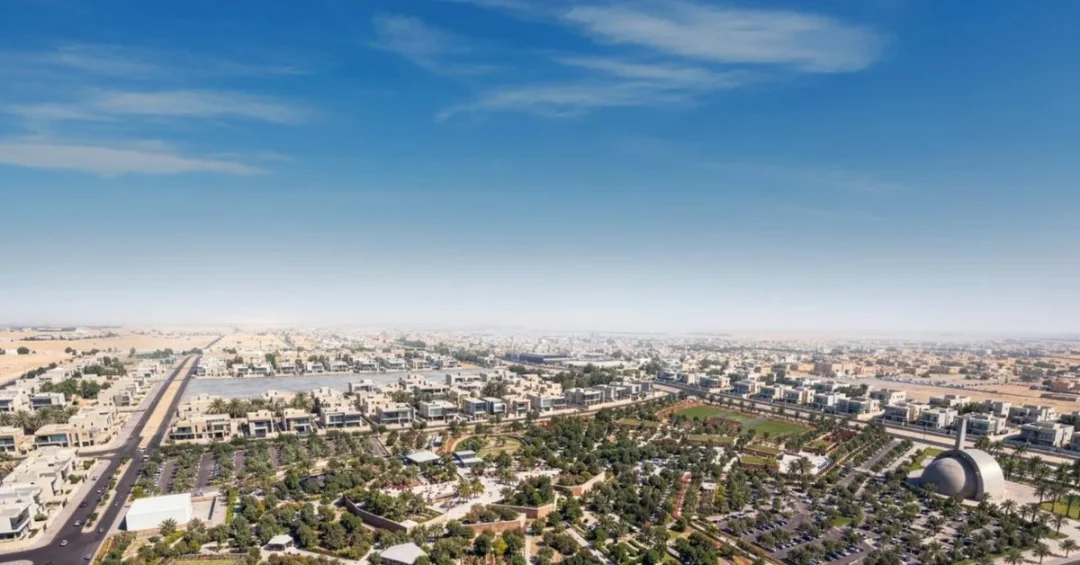
The Riyadh Municipality has opened a public naming initiative inviting residents across the Saudi capital and its surrounding governorates to submit name suggestions for 17 parks, in a move announced through official Saudi channels and designed to deepen community participation in municipal decision-making. According to the Saudi Press Agency (SPA), submissions are open through Saturday, October 24, 2026, with the municipality set to officially announce the selected names on Tuesday, October 27, 2026. The initiative covers parks distributed across Riyadh and neighboring governorates, extending the reach of civic engagement beyond the city center and into communities that form the wider metropolitan fabric of the capital region.
Could a simple park name become a lasting symbol of a neighborhood’s identity? Riyadh Municipality believes it can. The project is positioned as more than a naming exercise: it is a structured invitation for residents to help shape the public spaces that anchor their daily lives. Proposed names must consist of two words, except in the case of personal proper names, and must reflect the historical character and distinct local identity of the area in which each park is located. Names must also align with societal values and must not duplicate existing park names, ensuring each new designation carries its own meaning rather than repeating what already exists elsewhere in the city.
Context and Background
Why does a municipal naming process matter in a city of Riyadh’s scale and ambition? The answer lies in how Saudi cities are being reimagined. Under the Kingdom’s broader urban development agenda, public spaces are no longer treated as passive land but as active instruments of community life, health, and social connection. The Riyadh Municipality has framed the initiative as part of its urban humanization programs, a set of efforts aimed at making streets, squares, and parks more people-centered, walkable, and welcoming. Naming 17 parks through public participation adds a cultural layer to that physical transformation.
The municipality stated that the project seeks to deepen residents’ connection to their neighborhoods, encourage community stewardship of public spaces, and support municipal programs aimed at urban humanization. In practice, this means residents are being asked not only to use parks but to help define what they mean. When a name emerges from the community itself, it can carry local memory, geography, or heritage that an administrative label cannot. The two-word requirement, with an exception for personal proper names, keeps names concise and memorable while leaving room for tributes to individuals whose legacies are tied to a particular district.
The timing of the announcement is significant. Riyadh continues to expand rapidly, with new residential districts, infrastructure, and public amenities reshaping the capital’s map. As neighborhoods grow, the risk of generic, interchangeable public spaces increases. By requiring names that reflect historical character and local identity, the municipality is pushing back against that uniformity. The initiative also complements wider quality-of-life efforts that prioritize green space, recreation, and social cohesion as measurable components of urban success, not afterthoughts to roads and buildings.
Key Details of the Naming Initiative
What exactly are residents being asked to submit, and under what conditions? According to the Saudi Press Agency, submissions are open through Saturday, October 24, 2026. Proposed names must consist of two words, except personal proper names, reflect the historical character and distinct local identity of the area, align with societal values, and not duplicate existing park names. These criteria are specific and deliberate. The two-word rule encourages clarity and ease of use in signage, maps, and digital platforms, while the heritage requirement ensures that names are rooted in place rather than chosen arbitrarily.
The scope of the initiative is notable: 17 parks across the capital and its surrounding governorates. This geographic spread signals that the program is not confined to central Riyadh or flagship locations. Parks in surrounding governorates serve communities that are integral to the capital region’s daily life, and giving them distinct, locally meaningful names reinforces their status as shared civic assets. The municipality has not treated the exercise as a formality; the selected names will be officially announced on Tuesday, October 27, 2026, just days after the submission window closes, indicating a streamlined review and selection process.
The requirement that names align with societal values reflects the Kingdom’s cultural framework, in which public spaces are expected to be respectful, family-friendly, and consistent with community norms. The prohibition on duplicating existing park names avoids confusion and preserves the uniqueness of each location. Together, these conditions create a process that is open to public creativity but bounded by clear, practical standards. Residents who wish to participate are effectively being asked to think like planners, historians, and neighbors at the same time, considering not only what sounds appealing but what genuinely represents a place and its people.
Community Engagement and Civic Participation
Why invite residents to name parks at all, rather than assigning names internally? The municipality’s stated rationale is that the project seeks to deepen residents’ connection to their neighborhoods and encourage community stewardship of public spaces. Stewardship is a recurring theme in modern urban policy: when people feel ownership of a place, they are more likely to care for it, visit it, and advocate for its maintenance. A name chosen with community input becomes a small but meaningful stake in the neighborhood’s identity, transforming a park from municipal property into a shared landmark.
This approach also supports the municipality’s urban humanization programs, which aim to soften the hard edges of rapid urban growth by prioritizing human experience. Humanization in this context includes landscaping, shade, seating, walkways, and activities that bring people together. Naming is the cultural counterpart to those physical improvements. It gives residents a voice in the narrative of their own districts and signals that local knowledge, including memory of a site’s history, is valued in official decision-making. For families, youth, and long-time residents alike, the invitation to submit a name is an accessible form of civic participation that requires no specialized expertise.
Could this initiative set a precedent for broader participatory governance in Saudi cities? While the immediate task is naming 17 parks, the method matters. By opening a defined, time-bound channel for public suggestions, the Riyadh Municipality demonstrates that community input can be structured, transparent, and compatible with clear standards. If successful, similar participatory mechanisms could be applied to other municipal decisions, from the design of public squares to the programming of community events. The initiative therefore carries significance beyond the parks themselves, offering a working model of how residents and local government can collaborate on the look and feel of their neighborhoods.
International and Regional Impact
How will a municipal park-naming project be viewed beyond Saudi Arabia’s borders? Urban planners and city governments across the region and internationally increasingly recognize that public space quality is a marker of livability and competitiveness. Cities that invest in parks, walkability, and community identity attract residents, visitors, and investment. Riyadh’s initiative aligns with this global shift, presenting the capital as a city that treats public space as infrastructure for social well-being. For international observers, it is another example of Saudi Arabia’s broader modernization efforts being implemented at the neighborhood level, not only in megaprojects.
Regionally, the initiative reflects a growing emphasis on citizen engagement in Gulf cities. As urban populations expand and expectations rise, municipalities are searching for ways to make governance more responsive and inclusive. Riyadh’s approach, using a clear submission window, defined naming criteria, and a prompt announcement date, offers a practical template. It also reinforces the capital’s cultural identity by tying park names to local history and heritage, ensuring that modernization does not erase the distinctive character of older districts and surrounding governorates. That balance between progress and heritage is central to how Saudi cities are positioning themselves on the regional stage.
Economic and Strategic Significance
What does a naming initiative contribute to Riyadh’s economic and strategic trajectory? Public spaces are increasingly understood as economic assets. Well-maintained, well-identified parks support property values, local retail activity, and tourism by making neighborhoods more attractive and walkable. A named park becomes a reference point, easier to find, promote, and integrate into community programming. For a capital region experiencing sustained growth, these small identity markers help organize the urban experience and make new districts legible to residents and visitors alike.
Strategically, the initiative supports the Kingdom’s quality-of-life objectives, which treat recreation, health, and social cohesion as essential components of national development. By involving residents in municipal decisions, the Riyadh Municipality also strengthens the relationship between citizens and local institutions, a foundation for long-term urban governance. The project’s low cost and high symbolic value make it an efficient way to generate civic pride. It complements larger investments in infrastructure and entertainment by ensuring that everyday spaces, the parks people visit routinely, receive attention and meaning.
Vision 2030 Alignment
How does naming 17 parks connect to Saudi Vision 2030? The Vision’s quality-of-life program aims to increase green space, promote healthy lifestyles, and build vibrant communities across the Kingdom. The Riyadh Municipality’s initiative advances those goals by turning parks into recognized, community-endorsed destinations and by inviting residents to participate directly in shaping their local environment. It reflects the Vision’s emphasis on citizen engagement, cultural heritage, and urban development that serves people first, reinforcing Riyadh’s position as a modern, livable capital.
As the selected names are announced on Tuesday, October 27, 2026, the outcome will be more than a list of labels. Each name will represent a neighborhood’s story, a community’s input, and a municipality’s commitment to listening. For an international audience watching Saudi Arabia’s transformation, this initiative offers a clear signal: the Kingdom’s ambitions are being built not only through landmark projects but through the daily spaces where people live, gather, and belong. Riyadh’s parks will carry names chosen by the people who use them, a modest but meaningful step in the capital’s ongoing journey toward a more connected and human-centered future.
20 Questions
Q1. What has the Riyadh Municipality announced?
A1. The Riyadh Municipality announced it is accepting name suggestions from residents for 17 parks across the capital and its surrounding governorates, aiming to enhance community engagement in local decision-making and foster civic participation in municipal developments.
Q2. When do submissions close for the park naming initiative?
A2. According to the Saudi Press Agency, submissions are open through Saturday, October 24, 2026. Residents wishing to propose names must submit them before the deadline for consideration in the selection process.
Q3. When will the selected park names be announced?
A3. The Riyadh Municipality stated that the selected names will be officially announced on Tuesday, October 27, 2026, just days after the submission window closes, indicating a prompt and organized review process.
Q4. What are the rules for proposed park names?
A4. Proposed names must consist of two words, except personal proper names, reflect the historical character and distinct local identity of the area, align with societal values, and not duplicate existing park names in Riyadh.
Q5. Why does the municipality require names to reflect local identity?
A5. The requirement ensures each park carries its own meaning rooted in the area’s history and character, rather than a generic label. This supports community connection and preserves the distinctive heritage of each neighborhood and governorate.
Q6. How many parks are included in this initiative?
A6. The initiative covers 17 parks across the capital and its surrounding governorates. The geographic spread ensures communities beyond central Riyadh also participate in shaping the identity of their local public spaces.
Q7. What is the main goal of the naming project?
A7. The municipality stated the project seeks to deepen residents’ connection to their neighborhoods, encourage community stewardship of public spaces, and support municipal programs aimed at urban humanization across the capital region.
Q8. What are urban humanization programs?
A8. Urban humanization programs are municipal efforts to make public spaces more people-centered, walkable, and welcoming. They include landscaping, shade, seating, and activities that improve daily life in neighborhoods across Riyadh.
Q9. Can residents submit personal proper names as park names?
A9. Yes. The rules allow personal proper names as an exception to the two-word requirement. This permits tributes to individuals whose legacies are connected to a particular district or community.
Q10. Why must proposed names avoid duplicating existing park names?
A10. Avoiding duplication prevents confusion in navigation, signage, and emergency services, while preserving the unique identity of each park. It ensures every named space remains clearly distinguishable across Riyadh’s growing network of public parks.
Q11. How does this initiative encourage civic participation?
A11. By inviting residents to submit name suggestions, the municipality gives communities a direct role in local decision-making. This accessible form of participation requires no specialized expertise and helps residents feel ownership of public spaces.
Q12. What does community stewardship of public spaces mean?
A12. Community stewardship means residents take an active interest in caring for and maintaining public spaces. When people feel connected to a park through its name and identity, they are more likely to visit, protect, and advocate for it.
Q13. How does the initiative support Saudi Vision 2030?
A13. It advances Vision 2030’s quality-of-life goals by increasing green space, promoting healthy lifestyles, and building vibrant communities. It also reflects the Vision’s emphasis on citizen engagement and cultural heritage in urban development.
Q14. What role does the Saudi Press Agency play in this announcement?
A14. The Saudi Press Agency, the Kingdom’s official news authority, released the announcement, providing verified details about the submission window, naming criteria, and the date for announcing selected names.
Q15. Which areas are covered by the 17 parks?
A15. The parks are located across the capital and its surrounding governorates. This broad coverage ensures that communities outside central Riyadh also benefit from the initiative and can participate in naming local spaces.
Q16. Why is the two-word rule important for park names?
A16. The two-word rule keeps names concise, memorable, and easy to display on signage, maps, and digital platforms. It also encourages clear, focused suggestions that reflect the character of each park’s location.
Q17. How might named parks benefit local neighborhoods economically?
A17. Named parks become recognizable reference points that can support property values, local retail activity, and tourism. They make neighborhoods more attractive and walkable, contributing to the economic vitality of surrounding communities.
Q18. What happens after the names are announced on October 27, 2026?
A18. After the official announcement, the selected names will be applied to the 17 parks. This formalizes the community’s input and integrates the parks more fully into the identity of their neighborhoods.
Q19. Does this initiative reflect a broader trend in Saudi cities?
A19. Yes. It reflects a growing emphasis on citizen engagement and quality public spaces in Saudi urban development. Municipalities are increasingly seeking resident input to make governance more responsive, inclusive, and aligned with community values.
Q20. What message does this initiative send internationally?
A20. It signals that Saudi Arabia’s modernization includes everyday public spaces, not only large projects. It shows Riyadh’s commitment to community participation, cultural heritage, and livable urban environments consistent with Vision 2030.
Reader Feedback
We value your thoughts. Please share your feedback on this article.
Your feedback helps us improve our coverage.