


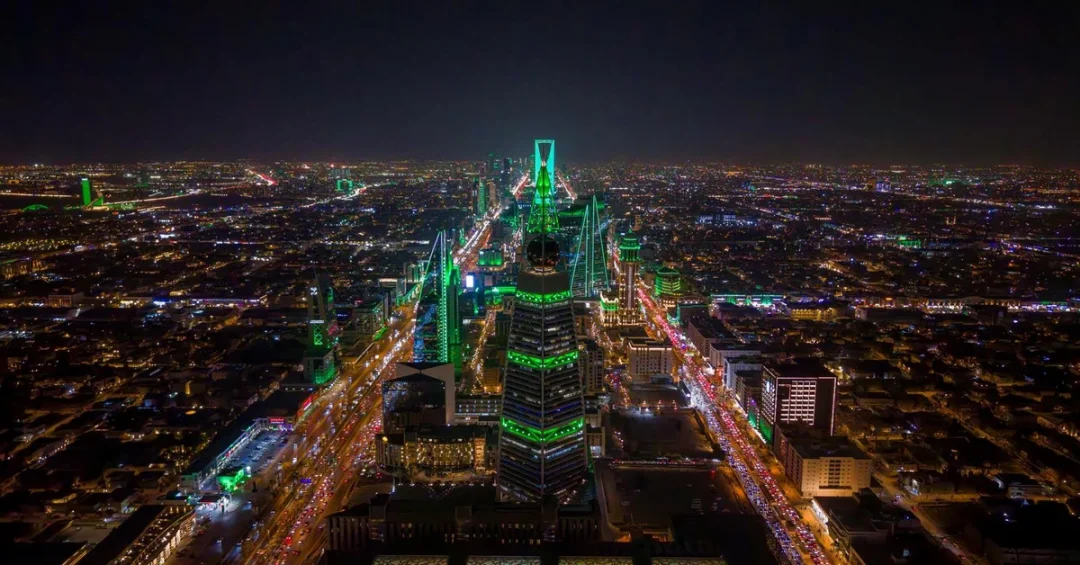
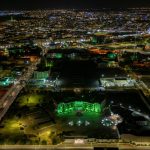
Riyadh’s landmarks and building facades were illuminated in green for Saudi National Day, with lights along major roads, including King Fahd Road, adding to the capital’s festive nighttime scene, the Saudi Press Agency (SPA) reported. The synchronized display transformed the Riyadh skyline into a vivid tribute to the Saudi flag and the Kingdom’s unification, conveying national pride and a profound sense of belonging across the capital. Aerial images captured by SPA showed illuminated towers and roads stretching across the city, creating a visual celebration that resonated with citizens and residents alike.
The lighting of Riyadh’s skyline is part of a broader nationwide celebration of Saudi National Day, an occasion that commemorates the unification of the Kingdom under the leadership of the late King Abdulaziz Al Saud. Each year, cities across Saudi Arabia mark the day with cultural events, patriotic displays, and public gatherings that reflect the nation’s heritage and its forward-looking ambitions. In Riyadh, the green illumination served as both a symbolic and highly visible expression of national unity, turning the capital’s modern architecture into a canvas for collective identity. The display also underscored the Kingdom’s ability to organize large-scale civic celebrations that blend tradition with contemporary urban life.
Context and Background
What does it mean for a modern capital to become a canvas for national identity? Saudi National Day, observed on September 23 each year, marks the unification of the Kingdom in 1932, when King Abdulaziz Al Saud successfully brought together the regions of the Arabian Peninsula under a single state. The occasion has evolved over the decades into a comprehensive national celebration that highlights the Kingdom’s history, culture, and achievements. In recent years, under the leadership of the Custodian of the Two Holy Mosques, King Salman bin Abdulaziz Al Saud, and His Royal Highness Crown Prince Mohammed bin Salman, the day has taken on added significance as a platform to showcase the progress driven by Saudi Vision 2030.
Riyadh, as the capital and a rapidly growing metropolitan hub, plays a central role in these celebrations. The city’s skyline, featuring iconic towers and modern infrastructure, provides a dramatic backdrop for the green illumination that evokes the Saudi flag. The choice of green is deeply rooted in Saudi heritage, symbolizing the nation’s values, prosperity, and connection to the land. By lighting major roads such as King Fahd Road and prominent building facades, the celebration reaches beyond public squares and into the daily rhythm of the city, allowing residents and visitors to experience the patriotic atmosphere wherever they are.
The Saudi Press Agency’s aerial documentation of the illuminated city highlights the scale and coordination behind the display. Such coverage also serves to share the moment with international audiences, offering a glimpse of how the Kingdom celebrates its national identity. The event reflects a broader pattern of public engagement that Saudi authorities have encouraged, where national occasions become opportunities for community participation and civic pride.
Key Details of the Celebration
How does a city of Riyadh’s size coordinate such a sweeping visual tribute? The green lighting project involved illuminating landmarks, building facades, and major road networks across the capital. King Fahd Road, one of Riyadh’s primary arteries, was transformed into a ribbon of green light, guiding the eye through the city’s urban landscape. Aerial images released by SPA captured the illuminated towers and roads, demonstrating the comprehensive reach of the display. The synchronization of these lights required careful planning and cooperation among municipal authorities and various stakeholders, ensuring that the celebration was both safe and visually striking.
The display was not limited to a single location but extended across multiple districts, allowing different neighborhoods to participate in the festive atmosphere. This distributed approach meant that the National Day spirit was visible from above and at street level, reinforcing a shared sense of occasion. The green illumination also complemented other celebratory activities, such as cultural performances, fireworks, and community events that typically take place during the National Day period. Together, these elements create a multi-sensory experience that honors the past while looking toward the future.
SPA’s role in documenting and disseminating the images is significant, as it provides an official record of the celebration and ensures that the visual narrative of the day is accurately represented. The agency’s aerial photography offers a unique perspective on the capital’s transformation, showing how light can unify a vast urban area under a single symbolic color. This coverage also supports the Kingdom’s efforts to share its national story with the world, highlighting both the modernity of its cities and the depth of its cultural traditions.
International and Regional Impact
What message does a glowing green skyline send to the wider world? For international observers, the illuminated Riyadh skyline serves as a visible symbol of Saudi Arabia’s stability, unity, and modernization. The Kingdom’s National Day celebrations are increasingly covered by global media, offering a counterpoint to narratives that often focus narrowly on regional challenges. The green lights, reminiscent of the Saudi flag, project an image of a confident nation that takes pride in its heritage while embracing progress. This visual messaging aligns with Saudi Arabia’s broader diplomatic and public diplomacy efforts to present itself as a dynamic and forward-looking global partner.
Regionally, the celebration resonates with Gulf Cooperation Council (GCC) states and other Arab nations that share historical and cultural ties with the Kingdom. The display of national pride in Riyadh is understood as part of a collective regional identity, even as each country maintains its distinct traditions. For international visitors and expatriates residing in Saudi Arabia, the illuminated city offers an inclusive moment of celebration, reinforcing the Kingdom’s reputation for hospitality and community spirit. The event also highlights the safety and organizational capacity of Saudi authorities, which is important for tourism and investment promotion.
Economic and Strategic Significance
How does a national celebration translate into economic and strategic value? Large-scale events like the National Day lighting display contribute to the local economy by boosting activity in hospitality, retail, and entertainment sectors. Restaurants, hotels, and shopping districts often see increased footfall during the holiday period, as families and friends gather to enjoy the festivities. The positive atmosphere also enhances quality of life for residents, which is a key objective of Saudi Vision 2030. By investing in civic celebrations and public spaces, the Kingdom strengthens social cohesion and creates memorable experiences that attract tourists and support the growing entertainment industry.
Strategically, the ability to coordinate a city-wide illumination demonstrates the Kingdom’s advanced infrastructure and project management capabilities. Riyadh’s smart city initiatives and modern lighting systems are part of a broader push to integrate technology into urban management, improving efficiency and sustainability. The National Day display, while temporary, showcases the potential of these systems to create impactful visual experiences. It also reflects the Kingdom’s commitment to hosting major events, from Expo 2030 to sporting championships, reinforcing its position as a global destination. The green skyline thus serves as both a celebration and a statement of readiness for future opportunities.
Vision 2030 Alignment
How does the green glow of Riyadh connect to the Kingdom’s long-term vision? Saudi Vision 2030 aims to diversify the economy, empower citizens, and enhance the quality of life across the nation. National Day celebrations, including the illumination of Riyadh’s skyline, contribute directly to these goals by fostering national pride, promoting social unity, and supporting the tourism and entertainment sectors. The event reflects the vision’s emphasis on preserving cultural heritage while embracing modernity, as traditional symbols like the flag are presented through cutting-edge lighting technology. It also demonstrates the Kingdom’s capacity to organize large-scale public events that bring communities together.
As Saudi Arabia continues its transformation under Vision 2030, such celebrations will remain an important expression of national identity and progress. The green lights of Riyadh are more than a festive gesture; they represent the unity, ambition, and resilience of the Saudi people. They also signal to the world that the Kingdom is open, confident, and ready to engage. By linking the National Day display to the broader vision, Saudi Arabia reinforces its commitment to a future built on pride in the past and optimism for what lies ahead. The illuminated skyline stands as a beacon of that journey.
20 Questions
Q1. What occasion prompted the green illumination of Riyadh’s skyline?
A1. The green illumination marked Saudi National Day, celebrated annually on September 23 to commemorate the unification of the Kingdom in 1932. The event is a major national occasion across Saudi Arabia.
Q2. Which major road in Riyadh was specifically mentioned as part of the lighting display?
A2. King Fahd Road was highlighted as one of the major roads illuminated with green lights. The road is a key artery in the capital and added to the festive nighttime scene.
Q3. Who captured the aerial images of the illuminated city?
A3. The Saudi Press Agency (SPA) captured aerial images of the city’s illuminated towers and roads. SPA is the official news agency of Saudi Arabia, providing authoritative coverage.
Q4. What do the green lights symbolize in the context of Saudi National Day?
A4. The green lights evoke the Saudi flag and the Kingdom’s unification, conveying national pride and a sense of belonging. Green is also a traditional color associated with Saudi heritage.
Q5. How does the celebration reflect Saudi Vision 2030?
A5. The celebration supports Vision 2030 by fostering national unity, enhancing quality of life, and boosting tourism and entertainment sectors. It showcases modern infrastructure and organizational capacity.
Q6. What is the significance of Saudi National Day for the Kingdom?
A6. Saudi National Day commemorates the unification of the Kingdom under King Abdulaziz Al Saud in 1932. It is a time for citizens to express pride in their history and achievements.
Q7. How does the lighting display benefit the local economy?
A7. The display boosts hospitality, retail, and entertainment sectors as families and visitors gather to celebrate. It increases footfall in restaurants, hotels, and shopping districts during the holiday period.
Q8. What role does the Saudi Press Agency play in covering national events?
A8. SPA provides official documentation and dissemination of images and news from national events. Its coverage ensures accurate representation and shares the Kingdom’s story with international audiences.
Q9. How does the event promote social cohesion in Saudi Arabia?
A9. By illuminating public spaces and roads, the celebration creates a shared visual experience that brings communities together. It reinforces a collective sense of identity and belonging among citizens and residents.
Q10. What other activities typically accompany the National Day lighting?
A10. National Day celebrations often include cultural performances, fireworks, and community events. These activities complement the lighting display and create a multi-sensory festive atmosphere across the Kingdom.
Q11. How does the green illumination project Saudi Arabia’s image internationally?
A11. It projects an image of stability, unity, and modernization. International media coverage of the illuminated skyline highlights the Kingdom’s progress and openness to the world.
Q12. What infrastructure capabilities does the display demonstrate?
A12. The synchronized lighting demonstrates advanced infrastructure, smart city technologies, and project management skills. It shows Riyadh’s ability to coordinate large-scale urban events efficiently.
Q13. How does the celebration align with Saudi Arabia’s tourism goals?
A13. The festive atmosphere and illuminated landmarks attract visitors and enhance the Kingdom’s appeal as a destination. It supports efforts to diversify tourism and showcase modern Saudi cities.
Q14. What is the historical background of Saudi National Day?
A14. Saudi National Day marks the unification of the Kingdom in 1932 by King Abdulaziz Al Saud. It has evolved into a comprehensive celebration of national history, culture, and achievements.
Q15. How do residents and visitors experience the celebration?
A15. They can see the green lights across the city, from major roads to building facades. The display creates an immersive festive environment that can be enjoyed from street level or aerial views.
Q16. What message does the green skyline convey to the Saudi people?
A16. It conveys pride, unity, and belonging. The green lights remind citizens of their shared heritage and the nation’s journey toward a prosperous future under Vision 2030.
Q17. How does the event reflect Saudi Arabia’s cultural heritage?
A17. The use of green, the color of the Saudi flag, connects the celebration to national symbols and traditions. It honors the Kingdom’s history while embracing modern forms of expression.
Q18. What role does Riyadh play in national celebrations?
A18. As the capital, Riyadh serves as the focal point for major national events. Its skyline and infrastructure provide a prominent stage for celebrations that resonate across the Kingdom.
Q19. How does the lighting display support Vision 2030’s quality of life goals?
A19. It enhances community spirit and provides enjoyable experiences for residents. Quality of life is a key pillar of Vision 2030, and public celebrations contribute to social well-being.
Q20. What does the future hold for Saudi National Day celebrations?
A20. As the Kingdom progresses under Vision 2030, celebrations will likely grow in scale and innovation. They will continue to reflect national pride and showcase Saudi Arabia’s modernization and global engagement.
Reader Feedback
We value your thoughts. Please share your feedback on this article.
Your feedback helps us improve our coverage.
Related articles
 King Abdulaziz Quran Competition welcomes 334 contestants in Makkah
 Crown Prince meets Pakistan Prime Minister in Makkah
 Crown Prince meets Pakistan Prime Minister
 Al-Jouf Region Principality building illuminated green for National Day
 Saudi Embassy in Rabat celebrates Saudi National Day
 Saudi Arabia Leads Call to Protect Seafarers in Hormuz