


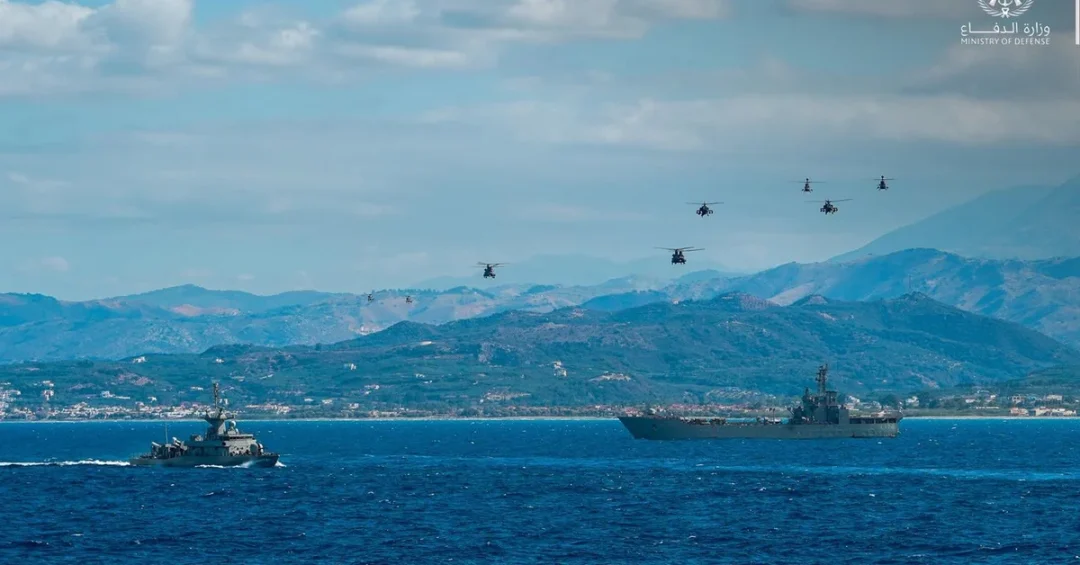
The Royal Saudi Naval Forces successfully concluded the multinational naval and air exercise “Medusa 13” in Greece on October 21, 2024, alongside forces from Egypt, France, and Cyprus. The exercise, held on the Greek island of Crete in the Mediterranean theater, marked a significant milestone in Saudi Arabia’s ongoing efforts to enhance maritime security and international defense cooperation. Rear Admiral Mansour bin Saud Al-Juaid, Commander of the Western Fleet, attended the closing ceremony, underscoring the Kingdom’s commitment to joint military readiness and strategic partnerships. The drill featured a wide range of scenarios, from landing operations to live-fire exercises, demonstrating the advanced capabilities of the Royal Saudi Naval Forces and their allies.
This exercise comes at a time of growing global emphasis on maritime security and freedom of navigation. Saudi Arabia’s participation in such multinational drills reflects its proactive role in safeguarding vital sea lanes and promoting regional stability. The Mediterranean, a crucial corridor for global trade and energy transport, remains a focal point for collaborative security efforts. By joining forces with Egypt, France, and Cyprus, the Royal Saudi Naval Forces not only honed their operational skills but also strengthened ties with key international partners. The successful completion of “Medusa 13” highlights the Kingdom’s dedication to fostering alliances that contribute to peace and security in the region and beyond.
Context and Background
How does Saudi Arabia’s participation in multinational exercises like “Medusa 13” shape its role in global maritime security? The Royal Saudi Naval Forces have increasingly engaged in joint drills to enhance interoperability and address emerging threats. “Medusa 13” is part of a series of exercises aimed at bolstering cooperation among friendly nations. Conducted on the Greek island of Crete, the exercise brought together naval and air units from Egypt, France, and Cyprus, creating a platform for sharing tactical knowledge and operational experience. Such collaborations are essential for addressing non-traditional maritime threats, including piracy, smuggling, and terrorism, which require coordinated international responses.
The exercise was structured in two phases: a theoretical segment with lectures and a practical phase involving hands-on operational activities. Colonel Naval Commander Fahd Al-Humaidi Al-Otaibi, who led the exercise, noted that the training covered a broad spectrum of operations, including amphibious assaults, civilian evacuations, and protection of freedom of navigation. These scenarios are designed to prepare forces for real-world challenges, ensuring they can respond effectively to crises. The Royal Saudi Naval Forces participated with specialized units such as Special Naval Security Units, Marine Infantry, and Naval Aviation, all of which demonstrated high professionalism and readiness. The exercise’s success underscores the importance of continuous training and development in maintaining a robust defense posture.
The Mediterranean region has long been a strategic area for international trade and energy flows. Saudi Arabia’s involvement in “Medusa 13” aligns with its broader strategy to secure maritime routes and contribute to global stability. By participating in such exercises, the Kingdom not only enhances its own capabilities but also reinforces its commitment to international security frameworks. This collaboration with Egypt, France, and Cyprus reflects a shared vision of a secure and prosperous Mediterranean, where freedom of navigation and mutual cooperation are paramount. The exercise also provided an opportunity for Saudi forces to operate alongside advanced naval assets, further enriching their experience and readiness.
Key Details
What specific objectives did “Medusa 13” aim to achieve, and how were they met? The exercise was designed to foster alliances and security cooperation to bolster maritime security, execute joint combat missions with modern weaponry, coordinate among units to address non-traditional maritime threats, and share expertise to secure the theater of operations against potential risks. According to Colonel Naval Commander Fahd Al-Humaidi Al-Otaibi, the exercise met all its objectives, achieving positive results that highlighted the importance of continuous training and development. The final day featured various scenarios, including landing operations and live-fire exercises, which tested the participants’ ability to operate under pressure and in complex environments.
The Royal Saudi Naval Forces deployed a range of units, each contributing unique capabilities. The Special Naval Security Units focused on maritime security operations, including boarding and inspection procedures. The Marine Infantry conducted amphibious assaults, demonstrating their ability to project force from sea to land. Naval Aviation provided air support and reconnaissance, enhancing situational awareness. These units operated seamlessly with their international counterparts, showcasing the high level of training and interoperability achieved. The exercise also included information operations and civil-military cooperation, reflecting the multifaceted nature of modern naval warfare. Such comprehensive training ensures that Saudi forces are prepared to tackle a wide array of challenges, from conventional threats to asymmetric warfare.
The closing ceremony, attended by Rear Admiral Mansour bin Saud Al-Juaid, marked the culmination of days of intense training and collaboration. His presence underscored the Kingdom’s commitment to its naval forces and their role in safeguarding national interests. The exercise not only enhanced operational capabilities but also strengthened diplomatic ties among the participating nations. By working together, these forces have built trust and mutual understanding, which are essential for future joint operations. The successful conclusion of “Medusa 13” is a testament to the professionalism and dedication of the Royal Saudi Naval Forces and their partners.
International and Regional Impact
How does joint military training like “Medusa 13” influence regional stability and international relations? The exercise brought together forces from Egypt, France, and Cyprus, reflecting a broad coalition of nations committed to maritime security. For Saudi Arabia, participation in such drills enhances its standing as a reliable partner in international security efforts. It also sends a strong message about the Kingdom’s readiness to contribute to global peace and stability. The Mediterranean is a vital strategic area, and ensuring its security is in the interest of all nations that rely on its sea lanes for trade and energy transport. By engaging in multinational exercises, Saudi Arabia helps to deter potential threats and promote a rules-based maritime order.
The collaboration with Egypt, a key Arab ally, and European partners France and Cyprus, highlights Saudi Arabia’s ability to bridge regional and international divides. France, with its significant naval capabilities, brings advanced technology and expertise, while Cyprus offers strategic location and local knowledge. Egypt’s participation underscores the importance of Arab unity in addressing common challenges. Together, these nations have demonstrated that collective action can effectively address maritime security threats. The exercise also aligns with broader efforts to combat terrorism and extremism, which often exploit ungoverned maritime spaces. By enhancing interoperability, the participating forces are better equipped to respond to crises swiftly and decisively.
For the region, “Medusa 13” serves as a model for future cooperation. It shows that countries with diverse backgrounds can work together towards shared goals. The exercise also reinforces the importance of freedom of navigation, a principle that is crucial for global commerce. Saudi Arabia’s active participation reflects its Vision 2030 goal of becoming a more engaged and influential global player. By taking part in such exercises, the Kingdom not only protects its own interests but also contributes to the stability of the wider region. The positive outcomes of “Medusa 13” are likely to encourage further joint initiatives, strengthening the network of alliances that underpin security in the Mediterranean and beyond.
Economic and Strategic Significance
What economic and strategic benefits does Saudi Arabia derive from participating in multinational naval exercises? The Mediterranean is a critical artery for global trade, including oil and gas shipments. Ensuring its security is vital for Saudi Arabia’s economy, which relies heavily on maritime exports. By participating in “Medusa 13”, the Kingdom helps to safeguard these routes, reducing the risk of disruptions that could impact global energy markets. The exercise also provides an opportunity to test and refine naval tactics, ensuring that Saudi forces can protect the Kingdom’s interests in any scenario. The strategic location of Crete allows for realistic training that mirrors potential real-world contingencies.
Moreover, joint exercises like “Medusa 13” enhance Saudi Arabia’s defense capabilities and deter potential adversaries. They demonstrate the Kingdom’s ability to project power and work effectively with international partners. This is particularly important in a region marked by geopolitical tensions and non-state threats. The exercise also facilitates the exchange of expertise, allowing Saudi forces to learn from the experiences of France and other advanced navies. Such knowledge transfer is invaluable for modernizing the Royal Saudi Naval Forces and aligning them with best practices. Ultimately, the investment in training and cooperation pays dividends in terms of enhanced security and stability, which are prerequisites for economic prosperity.
The exercise also supports Saudi Arabia’s defense industry and technological advancement. By operating alongside advanced naval platforms, Saudi personnel gain exposure to cutting-edge systems, which can inform future acquisitions and domestic developments. This aligns with Vision 2030’s goal of localizing military industries and enhancing self-reliance. Furthermore, successful participation in multinational exercises boosts the Kingdom’s reputation as a capable and reliable partner, opening doors for further defense cooperation and economic partnerships. The strategic significance of “Medusa 13” thus extends beyond the immediate training objectives, contributing to Saudi Arabia’s long-term security and economic resilience.
Vision 2030 Alignment
How does the Royal Saudi Naval Forces’ participation in “Medusa 13” contribute to Vision 2030? Vision 2030 aims to transform Saudi Arabia into a global hub for trade, investment, and tourism, all of which depend on a secure maritime environment. By enhancing its naval capabilities and forging international partnerships, the Kingdom is better positioned to protect its maritime interests and contribute to regional stability. The exercise reflects the Vision’s emphasis on strengthening national defense and fostering international cooperation. It also showcases Saudi Arabia’s commitment to playing a responsible and active role in global affairs, a key pillar of the Vision.
Furthermore, “Medusa 13” supports the development of human capital, as Saudi naval personnel gain valuable experience and training. This aligns with Vision 2030’s goal of empowering citizens and preparing them for leadership roles. The exercise also promotes the exchange of knowledge and technology, which can spur innovation and economic diversification. By participating in such high-level drills, the Royal Saudi Naval Forces demonstrate their readiness to defend the Kingdom’s interests and uphold its values. The successful conclusion of “Medusa 13” is another step towards realizing the Vision’s ambitious goals, reinforcing Saudi Arabia’s position as a leader in security and development. As the Kingdom continues to modernize and engage globally, such exercises will remain integral to its strategy for a secure and prosperous future.
20 Questions
Q1. What was the “Medusa 13” exercise?
A1. “Medusa 13” was a joint naval and air exercise conducted in Greece, involving the Royal Saudi Naval Forces alongside forces from Egypt, France, and Cyprus. It aimed to enhance maritime security and cooperation.
Q2. Where did the “Medusa 13” exercise take place?
A2. The exercise was conducted on the Greek island of Crete, in the Mediterranean theater, focusing on a range of naval and air operations.
Q3. Which countries participated in “Medusa 13”?
A3. The exercise included forces from Saudi Arabia, Egypt, France, and Cyprus, demonstrating multinational collaboration for maritime security.
Q4. Who attended the closing ceremony of “Medusa 13”?
A4. Rear Admiral Mansour bin Saud Al-Juaid, Commander of the Western Fleet, attended the closing ceremony, highlighting Saudi Arabia’s commitment to the exercise.
Q5. What scenarios were carried out during the exercise?
A5. The final day featured landing operations and live-fire exercises, among other scenarios such as amphibious assaults and civilian evacuations.
Q6. Who led the “Medusa 13” exercise?
A6. Colonel Naval Commander Fahd Al-Humaidi Al-Otaibi led the exercise, overseeing its two phases and operational activities.
Q7. What were the two phases of the exercise?
A7. The exercise consisted of a theoretical phase with lectures and a practical phase involving hands-on operational activities, including military and civil-military operations.
Q8. What types of operations were covered in the practical phase?
A8. The practical phase covered information operations, amphibious assaults, civilian evacuations, and protection of freedom of navigation.
Q9. Which units of the Royal Saudi Naval Forces participated?
A9. The participating units included Special Naval Security Units, Marine Infantry, and Naval Aviation, all demonstrating high professionalism and readiness.
Q10. What did Colonel Al-Otaibi say about the exercise’s objectives?
A10. He stated that the exercise met all its objectives, including fostering alliances, executing joint combat missions, and sharing expertise to secure the theater of operations.
Q11. How did the exercise contribute to maritime security?
A11. By enhancing cooperation and interoperability among participating forces, the exercise bolstered maritime security and prepared units to address non-traditional threats.
Q12. What is the significance of the Mediterranean theater in this context?
A12. The Mediterranean is a crucial corridor for global trade and energy transport, making security cooperation there vital for international stability.
Q13. How does this exercise align with Saudi Arabia’s Vision 2030?
A13. It supports Vision 2030 by strengthening national defense, fostering international partnerships, and enhancing human capital through training and cooperation.
Q14. What were the outcomes of “Medusa 13”?
A14. The exercise achieved positive results, highlighting the importance of continuous training and development for the Royal Saudi Naval Forces.
Q15. How does participation in such exercises benefit Saudi Arabia strategically?
A15. It enhances Saudi Arabia’s defense capabilities, strengthens alliances, and contributes to the security of vital maritime routes.
Q16. What role did Egypt, France, and Cyprus play in the exercise?
A16. They participated as partners, contributing naval and air assets, and collaborating with Saudi forces to achieve common security objectives.
Q17. What types of threats does the exercise aim to address?
A17. The exercise addresses non-traditional maritime threats such as piracy, smuggling, and terrorism, as well as conventional challenges.
Q18. How does “Medusa 13” reflect Saudi Arabia’s global engagement?
A18. It demonstrates the Kingdom’s proactive role in international security efforts and its willingness to cooperate with diverse nations.
Q19. What message does Saudi Arabia’s participation send to the international community?
A19. It signals Saudi Arabia’s commitment to global peace, stability, and the protection of freedom of navigation.
Q20. What future exercises might Saudi Arabia participate in?
A20. While specific future exercises are not announced, Saudi Arabia is expected to continue engaging in multinational drills to enhance its naval capabilities and partnerships.
Reader Feedback
We value your thoughts. Please share your feedback on this article.
Your feedback helps us improve our coverage.