


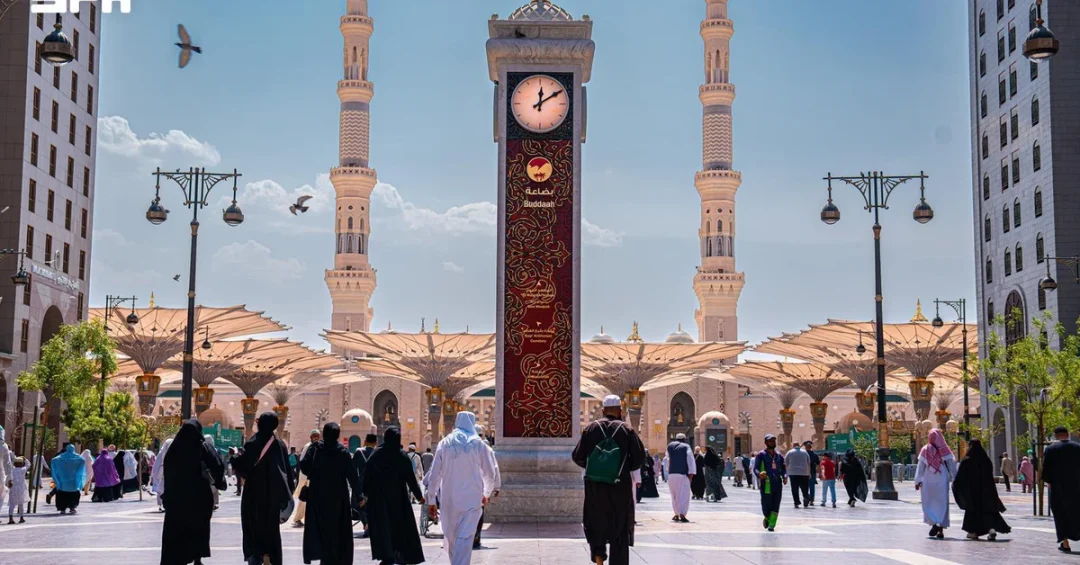
Guests of the fourth group of the Custodian of the Two Holy Mosques Program for Umrah and Visit performed Friday prayer at the Prophet’s Mosque in Madinah on October 9, 2026, marking a spiritually significant milestone in a hospitality initiative overseen by the Ministry of Islamic Affairs, Dawah and Guidance. The 250 pilgrims, representing 21 countries across Asia, Europe, and the Pacific, joined congregational prayers at one of Islam’s holiest sites, where Sheikh Khalid Al-Muhanna delivered the Friday sermon. The occasion underscored the Kingdom’s enduring commitment to serving pilgrims from around the world and to fostering Islamic unity through structured, dignified hospitality programs.
Following the prayer, the guests expressed their deep appreciation to Custodian of the Two Holy Mosques King Salman bin Abdulaziz Al Saud and His Royal Highness Prince Mohammed bin Salman bin Abdulaziz Al Saud, Crown Prince and Prime Minister, for the exceptional care and facilitation extended to them throughout their journey. They also commended the Ministry of Islamic Affairs, Dawah and Guidance for its seamless coordination, warm hospitality, and the enriching cultural and religious itineraries arranged during their stay. The program, now in its fourth group for the year 1448 AH, continues to demonstrate Saudi Arabia’s leadership in facilitating Umrah and visit experiences for Muslims worldwide, aligning with the Kingdom’s broader Vision 2030 objectives of enhancing pilgrimage services and showcasing its cultural and spiritual heritage.
Context and Background
How did this program come to represent such a profound expression of Saudi hospitality? The Custodian of the Two Holy Mosques Program for Umrah and Visit was established under the direct patronage of King Salman bin Abdulaziz Al Saud to host Muslims from diverse nations, particularly those who may face financial or logistical barriers to performing Umrah. Overseen by the Ministry of Islamic Affairs, Dawah and Guidance, the initiative reflects the Kingdom’s historical role as the custodian of Islam’s holiest sites and its commitment to enabling pilgrims to perform their religious duties with comfort and dignity. Each year, the program selects groups from a wide spectrum of countries, ensuring that the blessings of Umrah and visit are shared across continents.
The fourth group for the year 1448 AH comprises pilgrims from 21 nations: Uzbekistan, Pakistan, Bangladesh, India, Sri Lanka, Nepal, the Maldives, Kazakhstan, Kyrgyzstan, Tajikistan, Turkmenistan, Azerbaijan, Turkiye, Georgia, Russia, Bhutan, Australia, New Zealand, Vanuatu, the Solomon Islands, and Fiji. This diverse representation underscores the program’s global reach, spanning Central Asia, South Asia, the Caucasus, Europe, and the Pacific Islands. The selection of these countries reflects a deliberate effort to include Muslim communities that may have limited access to the Kingdom’s pilgrimage infrastructure, thereby reinforcing the bonds of Islamic brotherhood and Saudi Arabia’s role as a unifying force within the Muslim world.
The program’s structure includes not only the performance of Umrah and visits to the Prophet’s Mosque but also a comprehensive itinerary that introduces guests to Saudi Arabia’s rich cultural and historical heritage. Participants are hosted with the utmost care, from arrival through departure, with logistical arrangements that prioritize their comfort and spiritual well-being. This holistic approach aligns with the Ministry’s mission to promote moderate Islam, foster interfaith understanding, and project the Kingdom’s welcoming image to the world. As the program continues to expand, it serves as a vital tool of soft diplomacy, strengthening people-to-people ties and highlighting Saudi Arabia’s modernization under Vision 2030.
Key Details of the Fourth Group’s Visit
What does a typical day look like for these honored guests of the Custodian of the Two Holy Mosques? On October 9, 2026, the 250 pilgrims gathered at the Prophet’s Mosque in Madinah to perform Friday prayer, a weekly congregational event that holds special significance in Islam. The sermon, delivered by Sheikh Khalid Al-Muhanna, centered on themes of piety, unity, and gratitude, resonating deeply with the guests who had traveled from afar to experience the spiritual ambiance of the mosque. The Prophet’s Mosque, with its serene architecture and profound historical importance, provided a fitting backdrop for this moment of collective worship.
Following the prayer, the guests conveyed their heartfelt thanks to King Salman and Crown Prince Mohammed bin Salman for the exemplary care and facilitation extended to them. They specifically praised the Ministry of Islamic Affairs, Dawah and Guidance for the seamless coordination that made their journey possible. The pilgrims highlighted the warm hospitality they received, including comfortable accommodations, guided tours of historical sites, and opportunities to learn about Saudi Arabia’s cultural heritage. Such testimonials reflect the program’s success in creating a memorable and spiritually enriching experience for participants.
The group’s itinerary likely included visits to key Islamic landmarks in Madinah, such as the Quba Mosque, the first mosque built in Islam, and the Uhud Mountain, site of the historic Battle of Uhud. These visits complement the spiritual journey by providing context and deepening the pilgrims’ connection to Islamic history. The Ministry’s meticulous planning ensures that guests not only perform their religious rites but also gain a broader understanding of the Kingdom’s role in preserving Islamic heritage. This comprehensive approach distinguishes the program as a model of hospitality and cultural exchange.
International and Regional Impact
How does hosting pilgrims from 21 countries shape Saudi Arabia’s relations with the broader Muslim world? The Custodian of the Two Holy Mosques Program for Umrah and Visit serves as a powerful instrument of diplomacy, fostering goodwill and strengthening ties between the Kingdom and nations across Asia, Europe, and the Pacific. By welcoming Muslims from countries as diverse as Uzbekistan, Australia, and Fiji, Saudi Arabia demonstrates its commitment to inclusivity and its recognition of the global Ummah’s shared values. The program also counters misconceptions about the Kingdom, presenting it as a modern, hospitable nation dedicated to serving Islam.
Regionally, the initiative reinforces Saudi Arabia’s leadership within the Organization of Islamic Cooperation (OIC) and other multilateral forums. It complements the Kingdom’s efforts to promote moderate Islam and combat extremism by providing pilgrims with authentic religious experiences rooted in tolerance and peace. Furthermore, the program supports Saudi Arabia’s tourism and hospitality sectors, showcasing the Kingdom’s expanding infrastructure and its ability to host large numbers of visitors with efficiency and grace. As Vision 2030 aims to diversify the economy and increase religious tourism, such initiatives play a pivotal role in attracting pilgrims and enhancing the Kingdom’s global standing.
Economic and Strategic Significance
What economic and strategic benefits does the Umrah program generate for Saudi Arabia? The influx of pilgrims under this program contributes to the Kingdom’s religious tourism sector, which is a key pillar of Vision 2030’s economic diversification strategy. Pilgrims spend on accommodation, transportation, dining, and souvenirs, stimulating local businesses in Madinah, Makkah, and other cities. The program also creates jobs in hospitality, guiding, and logistics, supporting the Kingdom’s goal of increasing employment opportunities for its citizens. By hosting influential community leaders and individuals from various countries, Saudi Arabia builds long-term relationships that can translate into economic and diplomatic partnerships.
Strategically, the program enhances the Kingdom’s soft power by projecting an image of generosity, efficiency, and spiritual stewardship. It reinforces the legitimacy of the Custodian of the Two Holy Mosques’ role and underscores the Kingdom’s unwavering commitment to serving Islam. As Saudi Arabia continues to invest in mega-projects like the Haramain High-Speed Railway and the expansion of the Two Holy Mosques, the Umrah program benefits from improved infrastructure, ensuring a seamless experience for pilgrims. This synergy between infrastructure development and hospitality initiatives positions the Kingdom as the premier destination for Muslim travelers worldwide.
Vision 2030 Alignment
How does the Custodian of the Two Holy Mosques Program for Umrah and Visit embody the goals of Saudi Vision 2030? The program directly supports Vision 2030’s objective of enhancing the pilgrimage experience by increasing capacity, improving services, and enriching the spiritual and cultural journey of visitors. It aligns with the National Transformation Program’s targets to boost religious tourism and to showcase Saudi Arabia’s cultural heritage. By hosting pilgrims from diverse nations, the Kingdom also advances its goal of fostering global engagement and building bridges between cultures, a cornerstone of its foreign policy.
Moreover, the program reflects Vision 2030’s emphasis on moderation, tolerance, and the true values of Islam. It serves as a counter-narrative to extremism, promoting peace and understanding among Muslims. As Saudi Arabia continues to implement Vision 2030, initiatives like this will remain central to its efforts to position itself as a global leader in hospitality, spirituality, and cultural exchange. The guests’ gratitude to King Salman and Crown Prince Mohammed bin Salman is a testament to the program’s success and a harbinger of even greater achievements in the years to come, further solidifying the Kingdom’s role as the heart of the Islamic world.
20 Questions
Q1. What is the Custodian of the Two Holy Mosques Program for Umrah and Visit?
A1. It is a Saudi initiative overseen by the Ministry of Islamic Affairs, Dawah and Guidance, hosting Muslims from various countries to perform Umrah and visit holy sites, reflecting the Kingdom’s commitment to serving pilgrims.
Q2. How many pilgrims participated in the fourth group for 1448 AH?
A2. The fourth group comprises 250 pilgrims representing 21 countries, selected to experience the spiritual journey with full hospitality and care provided by Saudi authorities.
Q3. Which countries are represented in this group?
A3. The group includes pilgrims from Uzbekistan, Pakistan, Bangladesh, India, Sri Lanka, Nepal, the Maldives, Kazakhstan, Kyrgyzstan, Tajikistan, Turkmenistan, Azerbaijan, Turkiye, Georgia, Russia, Bhutan, Australia, New Zealand, Vanuatu, the Solomon Islands, and Fiji.
Q4. Where did the guests perform Friday prayer?
A4. They performed Friday prayer at the Prophet’s Mosque in Madinah, a site of immense spiritual significance, where Sheikh Khalid Al-Muhanna delivered the sermon.
Q5. Who delivered the Friday sermon?
A5. Sheikh Khalid Al-Muhanna delivered the sermon, focusing on themes of piety, unity, and gratitude, which resonated with the international congregation of pilgrims.
Q6. What did the guests express to King Salman and Crown Prince Mohammed bin Salman?
A6. They conveyed their deep appreciation for the exemplary care and facilitation extended to them, acknowledging the Kingdom’s efforts to ensure a comfortable and enriching pilgrimage experience.
Q7. How did the guests commend the Ministry of Islamic Affairs, Dawah and Guidance?
A7. They praised the ministry for its seamless coordination, warm hospitality, and the enriching cultural and religious itineraries provided throughout their stay in the Kingdom.
Q8. What is the significance of the Prophet’s Mosque in Madinah?
A8. The Prophet’s Mosque is one of Islam’s holiest sites, built by Prophet Muhammad (peace be upon him), and serves as a major destination for pilgrims seeking spiritual enrichment and historical connection.
Q9. How does this program align with Saudi Vision 2030?
A9. It supports Vision 2030 by enhancing religious tourism, improving pilgrimage services, and showcasing Saudi Arabia’s cultural heritage, while fostering global engagement and moderate Islamic values.
Q10. What other activities are included in the program?
A10. Beyond Umrah and prayers, guests visit historical Islamic landmarks, participate in cultural tours, and experience Saudi hospitality, gaining a deeper understanding of the Kingdom’s rich heritage.
Q11. How does the program select participating countries?
A11. The selection aims to include Muslims from diverse regions, particularly those with limited access to pilgrimage, ensuring a broad representation of the global Muslim community.
Q12. What impact does the program have on Saudi Arabia’s international relations?
A12. It strengthens diplomatic ties, promotes people-to-people connections, and projects Saudi Arabia as a generous and efficient host, enhancing its soft power and global standing.
Q13. How does the program contribute to the Saudi economy?
A13. It boosts religious tourism, stimulates local businesses in hospitality and retail, creates jobs, and supports Vision 2030’s economic diversification goals.
Q14. What role does the Ministry of Islamic Affairs play in the program?
A14. The ministry oversees all logistical, spiritual, and cultural aspects, ensuring pilgrims receive comprehensive care and that the program runs smoothly and efficiently.
Q15. How many groups are hosted annually under this program?
A15. The program hosts multiple groups each year, with the fourth group for 1448 AH being one of several, each comprising pilgrims from various countries.
Q16. What feedback have previous participants given?
A16. Participants have consistently praised the hospitality, organization, and spiritual fulfillment of the program, often expressing gratitude to Saudi leadership for the opportunity.
Q17. How does the program promote moderate Islam?
A17. By providing authentic religious experiences and fostering understanding among diverse Muslims, it counters extremism and promotes tolerance, peace, and the true values of Islam.
Q18. What infrastructure supports the program?
A18. Saudi Arabia’s extensive investments in hotels, transport, and the Two Holy Mosques’ expansion ensure pilgrims enjoy comfort and accessibility throughout their journey.
Q19. Can Muslims from any country apply to the program?
A19. The program targets specific countries each year, often prioritizing those with limited pilgrimage access, but all Muslims are welcome to perform Umrah through regular channels.
Q20. What is the long-term vision for this program?
A20. To continue expanding its reach, hosting more pilgrims, and enhancing the spiritual and cultural experience, solidifying Saudi Arabia’s role as the heart of the Islamic world.
Reader Feedback
We value your thoughts. Please share your feedback on this article.
Your feedback helps us improve our coverage.