


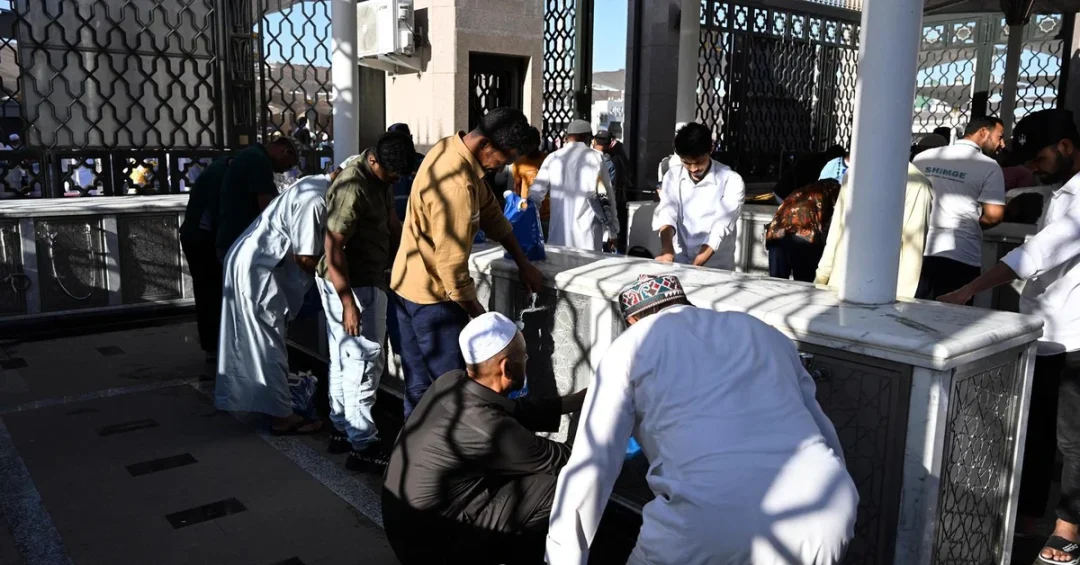
The Sabeel Zamzam Project at the Prophet’s Mosque in Madinah continues to provide Zamzam water free of charge to pilgrims, Umrah performers, and visitors, underscoring the Kingdom of Saudi Arabia’s enduring commitment to serving the guests of the Two Holy Mosques. According to the Saudi Press Agency (SPA), the project, located in the southwest corner of the mosque’s courtyards, is managed by the General Authority for the Care of the Affairs of the Two Holy Mosques through its Suqya Administration, ensuring that the blessed water reaches all beneficiaries in the city.
Context and Background
Zamzam water holds profound spiritual significance for Muslims worldwide, believed to be the water that sprang forth for Prophet Ismail and his mother Hajar. Since the reign of the late King Abdulaziz bin Abdulrahman Al Saud, the founder of the Kingdom, Saudi Arabia has spared no effort in providing Zamzam water to pilgrims and visitors. This tradition of service has been carried forward by successive leaders, including the current Custodian of the Two Holy Mosques, King Salman bin Abdulaziz Al Saud, who has prioritized the comfort and well-being of all who visit the holy sites. The Sabeel Zamzam Project is a modern manifestation of this timeless dedication, reflecting the Kingdom’s unwavering commitment to its sacred duties.
Key Details
The Sabeel Zamzam Project covers an area of approximately 330 square meters and is equipped with state-of-the-art infrastructure to ensure the efficient distribution of Zamzam water. It includes three stainless steel tanks with a total capacity of 290 cubic meters, two pressure tanks, three water supply pumps, two stainless steel filters, and two ultraviolet sterilization devices. Additionally, the project features two 350-meter-long feedback lines that help maintain a continuous and reliable supply. The Suqya Administration operates the service during four daily time slots: morning from 2:00 to 4:00 a.m. and 8:00 to 10:00 a.m., and evening from 4:30 to 6:30 p.m. and 9:00 to 11:00 p.m. These measures ensure that Zamzam water is readily available to all residents and visitors of Madinah, fulfilling the aspirations of the Kingdom’s leadership.
Implications and Impact
The Sabeel Zamzam Project has far-reaching implications for the millions of pilgrims and visitors who travel to Madinah each year. By providing free, clean, and blessed water, Saudi Arabia enhances the spiritual experience of the guests of the Prophet’s Mosque and demonstrates its logistical prowess in managing large-scale religious tourism. The project also aligns with the Kingdom’s broader efforts to improve services at the Two Holy Mosques, which include expansions, crowd management systems, and health facilities. Internationally, this initiative reinforces Saudi Arabia’s role as the custodian of Islam’s holiest sites and its dedication to fostering a welcoming environment for all Muslims, regardless of their origin.
Vision 2030 Alignment
The Sabeel Zamzam Project is a tangible example of how Saudi Arabia’s Vision 2030 is being implemented on the ground. By leveraging modern technology and efficient management, the Kingdom is enhancing the quality of services for pilgrims and visitors, a key pillar of Vision 2030’s goal to expand hospitality and religious tourism. This project not only preserves a cherished tradition but also showcases Saudi Arabia’s ability to innovate in service of its sacred duties. As the Kingdom continues to welcome the world to its holy cities, initiatives like this will remain central to its mission of serving humanity and upholding the values of moderation, generosity, and progress.
20 Questions
Q1. What is the Sabeel Zamzam Project?
A1. The Sabeel Zamzam Project is an initiative by the General Authority for the Care of the Affairs of the Two Holy Mosques to provide Zamzam water free of charge to pilgrims, Umrah performers, and visitors in Madinah. It is located at the Prophet’s Mosque.
Q2. Where is the Sabeel Zamzam Project located?
A2. It is situated in the southwest corner of the courtyards of the Prophet’s Mosque in Madinah, Saudi Arabia. This strategic location ensures easy access for all visitors and residents seeking the blessed water.
Q3. Who manages the Sabeel Zamzam Project?
A3. The project is managed by the Suqya Administration, which operates under the General Authority for the Care of the Affairs of the Two Holy Mosques. This authority oversees the distribution and quality of Zamzam water.
Q4. What is the significance of Zamzam water in Islam?
A4. Zamzam water is considered one of the most blessed waters on earth for Muslims, believed to have sprung forth for Prophet Ismail and his mother Hajar. It holds deep spiritual meaning and is sought by pilgrims worldwide.
Q5. How large is the Sabeel Zamzam Project area?
A5. The project covers an area of approximately 330 square meters. This space houses the necessary infrastructure to ensure efficient distribution of Zamzam water to beneficiaries.
Q6. What are the storage capacities of the tanks in the project?
A6. The project includes three stainless steel tanks with a total capacity of 290 cubic meters, along with two pressure tanks. These ensure a steady supply of Zamzam water.
Q7. What type of sterilization equipment is used?
A7. The project features two ultraviolet sterilization devices and two stainless steel filters. These ensure that the Zamzam water remains pure and safe for consumption.
Q8. How many water supply pumps are there?
A8. There are three water supply pumps in the Sabeel Zamzam Project. These pumps help distribute the water efficiently throughout the facility to meet the demand.
Q9. What are the feedback lines and their length?
A9. The project includes two feedback lines, each 350 meters long. These lines help maintain consistent water flow and pressure within the distribution system.
Q10. What are the operating hours for the Suqya Administration?
A10. The Suqya Administration offers services during four daily time slots: morning from 2:00 to 4:00 a.m. and 8:00 to 10:00 a.m., and evening from 4:30 to 6:30 p.m. and 9:00 to 11:00 p.m.
Q11. Who benefits from the Sabeel Zamzam Project?
A11. The project serves pilgrims, Umrah performers, and visitors to the Prophet’s Mosque, as well as residents of Madinah. It ensures that all have access to Zamzam water free of charge.
Q12. When was the tradition of providing Zamzam water initiated?
A12. The tradition dates back to the era of the late King Abdulaziz bin Abdulrahman Al Saud, the founder of Saudi Arabia. It has continued under successive leaders, including King Salman bin Abdulaziz Al Saud.
Q13. How does the project reflect Saudi Arabia’s commitment to pilgrims?
A13. The project demonstrates Saudi Arabia’s dedication to serving the guests of the Two Holy Mosques by providing free, clean Zamzam water, enhancing their spiritual experience and comfort during their visit.
Q14. What role does the General Authority play in the project?
A14. The General Authority for the Care of the Affairs of the Two Holy Mosques, through its Suqya Administration, oversees the operation, maintenance, and quality control of the Sabeel Zamzam Project.
Q15. How does the project ensure water quality?
A15. The project uses stainless steel tanks and filters, along with ultraviolet sterilization devices, to maintain the purity and safety of Zamzam water. Regular inspections and maintenance are also conducted.
Q16. What is the significance of the project’s location at the Prophet’s Mosque?
A16. The southwest corner of the Prophet’s Mosque courtyards is a high-traffic area, making it easily accessible for visitors. This ensures that many people can benefit from the free Zamzam water.
Q17. How does the project align with Saudi Vision 2030?
A17. The project aligns with Vision 2030 by enhancing services for religious tourism, using modern technology, and improving the quality of life for visitors. It showcases Saudi Arabia’s commitment to innovation in serving pilgrims.
Q18. What is the total capacity of Zamzam water stored in the project?
A18. The three stainless steel tanks have a combined capacity of 290 cubic meters. This large storage ensures a continuous supply of Zamzam water throughout the day.
Q19. Are there any other similar projects in Saudi Arabia?
A19. Yes, Saudi Arabia has multiple initiatives to distribute Zamzam water at the Two Holy Mosques and other locations. These projects are part of the Kingdom’s broader efforts to serve pilgrims and visitors.
Q20. How can visitors access the Zamzam water from the project?
A20. Visitors can access the Zamzam water during the designated time slots at the Sabeel Zamzam Project site. The service is free, and the water is available in the southwest corner of the Prophet’s Mosque courtyards.
Reader Feedback
We value your thoughts. Please share your feedback on this article.
Your feedback helps us improve our coverage.