


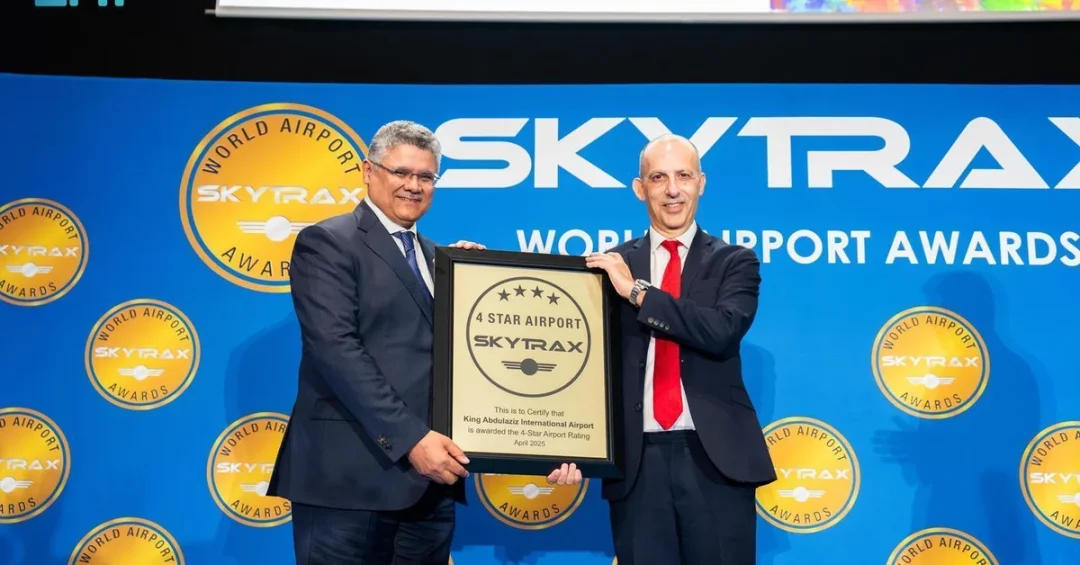
Saudi Arabia’s aviation sector has achieved a new milestone on the global stage, with four major international airports receiving recognition in the 2025 Skytrax World Airport Awards, as announced by MATARAT Holding. King Khalid International Airport in Riyadh, King Abdulaziz International Airport in Jeddah, King Fahd International Airport in Dammam, and Prince Mohammed bin Abdulaziz International Airport in Madinah all earned awards and high rankings across Middle Eastern and global categories, reflecting the Kingdom’s sustained investment in aviation infrastructure and passenger experience. The results, released via official Saudi channels, underscore the progress of a sector that has become central to the Kingdom’s economic diversification agenda and its ambition to become a leading global aviation hub.
MATARAT Holding, the state-owned company responsible for the operation of 27 airports across the Kingdom through its subsidiaries—Riyadh Airports, Jeddah Airports, Dammam Airports, and Cluster 2—confirmed the awards, which are based on comprehensive passenger surveys conducted worldwide by Skytrax, a recognized global organization that evaluates airports and airlines. The recognition arrives as Saudi Arabia accelerates the implementation of its Saudi Aviation Strategy, a national initiative derived from the National Transport and Logistics Strategy and aligned with Saudi Vision 2030. For international observers, the results offer a clear signal that the Kingdom’s airport modernization program is delivering measurable improvements in service quality, operational efficiency, and traveler satisfaction. But what exactly do these awards reveal about the direction of Saudi aviation, and why are they resonating far beyond the region?
Context and Background
How did Saudi Arabia’s airports come to compete among the world’s best in such a short period of time? The answer lies in a deliberate, multi-year transformation program launched under Saudi Vision 2030, which identified aviation as a strategic enabler of economic growth, tourism expansion, and regional connectivity. MATARAT Holding was established to consolidate airport operations under a unified management framework, allowing for consistent investment in terminal facilities, digital services, and staff training. This structural reform has been accompanied by the Saudi Aviation Strategy, which targets a substantial increase in passenger numbers, air cargo capacity, and direct international connections by the end of the decade. The 2025 Skytrax results are the latest independent validation of that approach.
King Khalid International Airport in Riyadh, the Kingdom’s primary gateway and a hub for international carriers, was ranked 24th in the World’s Top 100 Airports. It also earned the award for Best Airport Staff in the Middle East, placed third globally in the Best New Terminal category, ranked fourth in the 30–40 million passengers category, and was ranked fourth among Middle Eastern airports. These results reflect the impact of the airport’s terminal expansion and service upgrades, which have been designed to handle growing passenger volumes while maintaining high standards of comfort and efficiency. For a capital city positioning itself as a global business and diplomatic center, such recognition is both a symbol and a practical asset.
King Abdulaziz International Airport in Jeddah, the gateway to the holy cities and a major transit point for pilgrimage traffic, was ranked 44th in the World’s Top 100 Airports, earned a 4-star Skytrax rating, and ranked fifth in the Middle East. The airport’s performance is particularly significant given its role in serving millions of Umrah and Hajj pilgrims each year, a responsibility that demands exceptional operational resilience and passenger care. The 4-star rating signals that Jeddah’s facilities and services meet globally benchmarked standards, reinforcing the Kingdom’s commitment to providing a dignified and smooth experience for visitors from around the world.
Key Details
What distinguishes the Saudi airports recognized in the 2025 rankings? Prince Mohammed bin Abdulaziz International Airport in Madinah was named Best Regional Airport in the Middle East and ranked seventh among Middle Eastern airports. This award highlights the airport’s success in combining regional accessibility with high-quality service, a model that supports the Kingdom’s efforts to promote religious and cultural tourism. King Fahd International Airport in Dammam was named the second-best regional airport in the Middle East and ranked eighth in the region overall, further demonstrating that excellence is not confined to the largest hubs but is being cultivated across the national airport network.
The awards are determined by Skytrax, which compiles its rankings from passenger surveys covering dozens of service and facility indicators, including check-in efficiency, terminal cleanliness, signage, seating, security processing, and staff attitude. Because the methodology is based on traveler feedback rather than self-assessment, the results carry weight among airlines, travel planners, and international investors. For MATARAT Holding and its subsidiaries, the recognition provides an objective benchmark against which to measure progress and identify areas for further improvement. It also strengthens the case for continued investment in airport infrastructure as passenger demand grows in line with the Kingdom’s tourism and business travel targets.
MATARAT Holding oversees 27 airports across the Kingdom, a portfolio that ranges from major international gateways to regional and domestic facilities. The company’s mandate includes developing airport infrastructure, enhancing operational performance, and elevating the passenger experience in line with the highest international standards. The 2025 Skytrax results suggest that this mandate is being fulfilled across multiple locations, not just at the flagship airports. That breadth matters because a strong national network is essential for spreading the economic benefits of aviation to different regions and for supporting domestic connectivity, which in turn feeds international routes.
International and Regional Impact
How will these awards influence Saudi Arabia’s standing in the global aviation market? Recognition by Skytrax enhances the Kingdom’s attractiveness as a destination and a transit hub, particularly as competition among Gulf airports intensifies. Airlines and passengers increasingly consider service quality when choosing routes and connections, and positive rankings can tip the balance in favor of Saudi gateways. For international carriers considering new services to Riyadh, Jeddah, Dammam, or Madinah, the awards provide additional confidence that the airports can support their operations and deliver a satisfactory experience to their customers. This, in turn, supports the Kingdom’s goal of increasing direct international connections and passenger throughput.
Regionally, the results reinforce Saudi Arabia’s position as a key player in Middle Eastern aviation, alongside established hubs in the United Arab Emirates and Qatar. The fact that Saudi airports earned top spots in categories such as Best Airport Staff in the Middle East and Best Regional Airport in the Middle East demonstrates that the Kingdom is competing effectively on service dimensions that matter to travelers. For the broader region, this healthy competition drives up standards and encourages investment, benefiting passengers across the Middle East. It also aligns with Saudi Arabia’s diplomatic and economic outreach, as improved connectivity facilitates trade, tourism, and people-to-people ties with partners in Asia, Europe, Africa, and the Americas.
Economic and Strategic Significance
What do these awards mean for Saudi Arabia’s economy beyond the aviation sector? Aviation is a critical enabler of Vision 2030’s economic diversification goals, supporting tourism, trade, logistics, and the growth of non-oil sectors. The Saudi Aviation Strategy aims to expand passenger capacity, increase air cargo volumes, and attract investment in airport infrastructure and related services. By demonstrating excellence in passenger experience, Saudi airports help attract airlines, tour operators, and event organizers, all of which contribute to employment and business activity. The recognition also supports the Kingdom’s ambition to host major international events, from sporting competitions to business conferences, which depend on efficient air access.
Furthermore, the awards strengthen the narrative of Saudi Arabia as a modern, welcoming, and globally integrated nation. For international audiences, particularly those who may not have visited the Kingdom, positive rankings can help dispel outdated perceptions and showcase the tangible results of the country’s transformation. This soft-power dimension is increasingly important as Saudi Arabia positions itself as a tourism destination and a hub for culture and entertainment. The airports themselves become gateways that shape first impressions, and the recognition from Skytrax suggests that those first impressions are increasingly positive.
Vision 2030 Alignment
How does this achievement connect to the broader objectives of Saudi Vision 2030? The Vision, launched in 2016 under the leadership of Crown Prince Mohammed bin Salman, seeks to diversify the economy, improve quality of life, and position the Kingdom as a global investment and tourism destination. The Saudi Aviation Strategy, which stems from the National Transport and Logistics Strategy, is a direct expression of these goals. By investing in airports, MATARAT Holding and its partners are building the infrastructure needed to welcome millions of additional visitors, facilitate business travel, and move goods efficiently. The 2025 Skytrax awards are a measurable outcome of that investment and a sign that the strategy is on track.
Looking ahead, the Kingdom is expected to continue expanding airport capacity, introducing new technologies to streamline passenger processing, and enhancing services to meet evolving traveler expectations. The recognition from Skytrax provides both motivation and a benchmark for these efforts. As Saudi Arabia prepares to host major global events and welcomes growing numbers of tourists and pilgrims, its airports will remain at the forefront of the national transformation. The awards announced by MATARAT Holding are not merely accolades; they are evidence that the Kingdom’s aviation sector is delivering on its promise to connect Saudi Arabia to the world with world-class standards.
20 Questions
Q1. Which Saudi airports were recognized in the 2025 Skytrax World Airport Awards?
A1. King Khalid International Airport in Riyadh, King Abdulaziz International Airport in Jeddah, King Fahd International Airport in Dammam, and Prince Mohammed bin Abdulaziz International Airport in Madinah all received awards and high rankings.
Q2. What ranking did King Khalid International Airport achieve in the World’s Top 100 Airports?
A2. King Khalid International Airport in Riyadh was ranked 24th in the World’s Top 100 Airports, reflecting significant improvements in facilities and passenger services.
Q3. What award did King Khalid International Airport receive for its staff?
A3. It earned the award for Best Airport Staff in the Middle East, recognizing the professionalism and hospitality of airport personnel in Riyadh.
Q4. How did King Khalid International Airport perform in the Best New Terminal category?
A4. It placed third globally in the Best New Terminal category, highlighting the quality and design of its recently developed terminal facilities.
Q5. What was King Abdulaziz International Airport’s ranking in the World’s Top 100 Airports?
A5. King Abdulaziz International Airport in Jeddah was ranked 44th in the World’s Top 100 Airports, a strong result for the Kingdom’s western gateway.
Q6. What Skytrax rating did King Abdulaziz International Airport earn?
A6. It earned a 4-star Skytrax rating, indicating that its facilities and services meet globally recognized standards for quality.
Q7. Which Saudi airport was named Best Regional Airport in the Middle East?
A7. Prince Mohammed bin Abdulaziz International Airport in Madinah was named Best Regional Airport in the Middle East, recognizing its excellent service and regional connectivity.
Q8. How did King Fahd International Airport in Dammam rank regionally?
A8. King Fahd International Airport was named the second-best regional airport in the Middle East and ranked eighth in the region overall.
Q9. What is MATARAT Holding’s role in Saudi aviation?
A9. MATARAT Holding oversees the operation of 27 airports across the Kingdom through its subsidiaries, aiming to develop infrastructure and enhance performance in line with national goals.
Q10. Which subsidiaries operate under MATARAT Holding?
A10. Its subsidiaries include Riyadh Airports, Jeddah Airports, Dammam Airports, and Cluster 2, each managing airports in their respective regions.
Q11. What is the Saudi Aviation Strategy?
A11. The Saudi Aviation Strategy is a national initiative stemming from the National Transport and Logistics Strategy and Saudi Vision 2030, aimed at expanding capacity and connectivity.
Q12. How does Skytrax determine its airport rankings?
A12. Skytrax evaluates airports based on comprehensive passenger surveys conducted worldwide, covering service, facilities, and staff performance indicators.
Q13. Why is the recognition significant for Saudi Arabia’s aviation sector?
A13. It reflects the sector’s progress in enhancing passenger experience and aligns with the Kingdom’s efforts to become a leading global aviation hub.
Q14. How does this recognition support Saudi Vision 2030?
A14. It supports Vision 2030 by boosting tourism, trade, and investment, and by demonstrating the success of infrastructure modernization programs.
Q15. What does the Best Airport Staff award say about Saudi service standards?
A15. It indicates that Saudi airports are delivering high-quality customer service, which is essential for attracting international airlines and passengers.
Q16. How might these awards affect international airlines’ decisions?
A16. Positive rankings can encourage airlines to launch or expand routes to Saudi airports, knowing that passenger experience meets global standards.
Q17. What benefits do regional airports like Madinah and Dammam bring?
A17. They enhance connectivity, support religious and cultural tourism, and distribute economic benefits across different regions of the Kingdom.
Q18. What are the future plans for Saudi airports?
A18. The Kingdom plans to continue expanding capacity, adopting new technologies, and improving services to meet growing passenger demand and global expectations.
Q19. How does airport development contribute to Saudi Arabia’s non-oil economy?
A19. Airports facilitate tourism, trade, and logistics, creating jobs and attracting investment, which are key pillars of economic diversification under Vision 2030.
Q20. What message does this recognition send to the international community?
A20. It signals that Saudi Arabia is a modern, welcoming destination with world-class infrastructure, ready to connect with the world and host global events.
Reader Feedback
We value your thoughts. Please share your feedback on this article.
Your feedback helps us improve our coverage.
Related articles
 Saudi Official Receives Russian Consul General in Jeddah
 Saudi Pavilion Ready for Expo 2025 Osaka Opening
 KSrelief Distributes 500 Food Baskets in Syria’s Aleppo
 KSrelief Chief Meets Liberian Foreign Minister in Riyadh
 KSrelief Delivers New Medical Aid to Gaza Health Ministry, UNRWA
 University of Tabuk Joins EDGEx 2025 Education Exhibition