


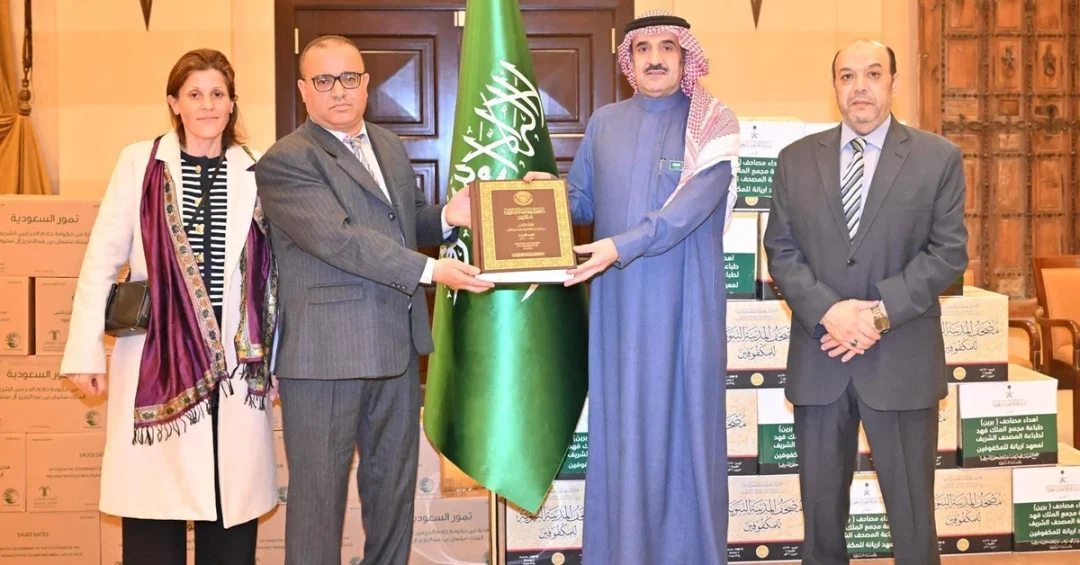
Saudi Ambassador to Tunisia Dr. Abdulaziz bin Ali Al-Saqr presented a collection of Braille copies of the Holy Quran to the Regional Union of the Blind in Ariana on March 19, 2025, on behalf of the King Fahd Complex for the Printing of the Holy Quran. The handover, reported by the Saudi Press Agency, underscores the Kingdom’s ongoing commitment to making the Holy Quran accessible to visually impaired Muslims and to supporting communities worldwide.
Context and Background
The King Fahd Complex for the Printing of the Holy Quran, based in Medina, is a leading global institution dedicated to the printing, translation, and distribution of the Holy Quran. It produces millions of copies annually in multiple languages and formats, including Braille, to serve Muslims around the world. The Complex’s work reflects Saudi Arabia’s historical role as the custodian of Islam’s holiest sites and its dedication to Islamic scholarship and outreach.
This latest donation to the Regional Union of the Blind in Ariana is part of a broader Saudi initiative to promote inclusivity and ensure that all individuals, regardless of visual ability, can access the Holy Quran. Such efforts are regularly carried out through Saudi diplomatic missions, which partner with local organizations to distribute religious materials and support community welfare.
Key Details
Dr. Abdulaziz bin Ali Al-Saqr, Saudi Ambassador to Tunisia, delivered the Braille copies at a ceremony in Ariana. In his remarks, he emphasized the unwavering commitment of Custodian of the Two Holy Mosques King Salman bin Abdulaziz Al Saud and His Royal Highness Prince Mohammed bin Salman bin Abdulaziz Al Saud, Crown Prince and Prime Minister, to the care and distribution of the Holy Quran. The Ambassador highlighted that this gesture aligns with the Kingdom’s enduring mission to serve Islam and Muslims globally.
The Braille copies were produced by the King Fahd Complex, which has a long track record of producing high-quality religious texts in accessible formats. The Regional Union of the Blind in Ariana expressed gratitude for the donation, noting that it would greatly benefit its members and enhance their ability to read and study the Holy Quran independently.
This event is part of a series of similar donations made by Saudi embassies worldwide, reflecting a systematic approach to supporting Islamic education and accessibility. The King Fahd Complex has previously distributed Braille Qurans in numerous countries, often in cooperation with local associations for the blind.
Implications and Impact
The donation strengthens Saudi-Tunisian relations and underscores the Kingdom’s soft power and humanitarian outreach. By providing Braille Qurans, Saudi Arabia addresses a critical need for visually impaired Muslims, fostering inclusivity and religious engagement. This initiative also reinforces Saudi Arabia’s image as a global leader in Islamic philanthropy and cultural diplomacy.
At a regional level, such gestures contribute to enhancing the Kingdom’s influence and goodwill in North Africa, where Tunisia is a key partner. The move is likely to be warmly received by the Tunisian public and government, further solidifying bilateral ties. Additionally, it sets a positive example for other nations to follow in promoting accessibility to religious texts.
Internationally, the distribution of Braille Qurans highlights Saudi Arabia’s commitment to the principles of equality and dignity, as enshrined in Islamic teachings and international human rights norms. It also showcases the Kingdom’s advanced capabilities in producing specialized religious materials, which are in demand across the Muslim world.
Vision 2030 Alignment
This initiative aligns with Saudi Vision 2030, which seeks to strengthen the Kingdom’s role as a global leader in Islamic affairs and to promote moderation, tolerance, and inclusivity. By supporting the visually impaired and facilitating access to the Holy Quran, Saudi Arabia demonstrates its dedication to social responsibility and human development, core pillars of Vision 2030. The Kingdom continues to leverage its religious and cultural heritage to build bridges with nations worldwide, fostering mutual respect and understanding.
20 Questions
Q1. What did the Saudi Ambassador to Tunisia present to the Regional Union of the Blind in Ariana?
A1. The Ambassador presented a collection of Braille copies of the Holy Quran, gifted on behalf of the King Fahd Complex for the Printing of the Holy Quran.
Q2. On what date did this presentation take place?
A2. The presentation took place on March 19, 2025, as reported by the Saudi Press Agency.
Q3. Who is the Saudi Ambassador to Tunisia?
A3. Dr. Abdulaziz bin Ali Al-Saqr serves as the Saudi Ambassador to Tunisia.
Q4. What is the King Fahd Complex known for?
A4. The King Fahd Complex in Medina is renowned for printing, translating, and distributing the Holy Quran globally, including in Braille and multiple languages.
Q5. Why are Braille copies of the Holy Quran important?
A5. Braille copies enable visually impaired Muslims to read and study the Holy Quran independently, promoting inclusivity and equal access to religious texts.
Q6. Who did Ambassador Al-Saqr mention as committed to the care of the Holy Quran?
A6. He highlighted the commitment of King Salman bin Abdulaziz Al Saud and Crown Prince Mohammed bin Salman bin Abdulaziz Al Saud.
Q7. What is the Regional Union of the Blind in Ariana?
A7. It is a local organization in Ariana, Tunisia, that supports visually impaired individuals and received the Braille Qurans.
Q8. How does this donation reflect Saudi Arabia’s global role?
A8. It demonstrates Saudi Arabia’s dedication to serving Islam and Muslims worldwide, reinforcing its leadership in Islamic affairs and humanitarian outreach.
Q9. Has the King Fahd Complex distributed Braille Qurans before?
A9. Yes, the Complex has previously distributed Braille Qurans in various countries, often in cooperation with local associations for the blind.
Q10. What impact does this donation have on Saudi-Tunisian relations?
A10. It strengthens bilateral ties and fosters goodwill, showcasing Saudi Arabia’s commitment to supporting Tunisian communities and enhancing cultural diplomacy.
Q11. How does this initiative align with Saudi Vision 2030?
A11. It aligns with Vision 2030’s goals of promoting moderation, tolerance, and inclusivity, and strengthening Saudi Arabia’s role in global Islamic affairs.
Q12. What other formats does the King Fahd Complex produce?
A12. The Complex produces the Holy Quran in various languages and formats, including digital and audio, to cater to diverse needs.
Q13. Who reported this news?
A13. The Saudi Press Agency (SPA) reported the news on March 19, 2025.
Q14. What was the reaction of the Regional Union of the Blind?
A14. The Union expressed gratitude, noting that the donation would greatly benefit its members and enhance their ability to read the Holy Quran.
Q15. Is this a common practice for Saudi embassies?
A15. Yes, Saudi embassies worldwide frequently distribute religious materials, including Braille Qurans, as part of the Kingdom’s outreach efforts.
Q16. How does this donation support visually impaired Muslims?
A16. It provides them with accessible copies of the Holy Quran, allowing them to engage with their faith independently and participate fully in religious activities.
Q17. What does the King Fahd Complex aim to achieve?
A17. The Complex aims to spread the message of the Holy Quran globally, ensuring its availability in multiple formats and languages for all Muslims.
Q18. How does this reflect Saudi Arabia’s humanitarian efforts?
A18. It exemplifies the Kingdom’s commitment to humanitarian causes, particularly in supporting marginalized groups and promoting religious accessibility.
Q19. What is the significance of Braille in Islamic education?
A19. Braille enables visually impaired individuals to access Islamic teachings directly, fostering education and spiritual growth within the community.
Q20. What future steps might Saudi Arabia take in this regard?
A20. Saudi Arabia is expected to continue distributing Braille Qurans and other religious materials, expanding its outreach and supporting more communities worldwide.
Reader Feedback
We value your thoughts. Please share your feedback on this article.
Your feedback helps us improve our coverage.
Related articles
 Saudi Ministry Hosts Ramadan Iftar for 2,000 in Tanzania
 Saudi Arabia Distributes Dates, Iftar Meals in the Philippines
 Egyptian Parasitic Twin Arrives in Riyadh for Saudi-Funded Separation Surgery
 Saudi Iftar Banquets Serve 7,500 in Argentina
 Saudi Arabia, Bahamas Strengthen Maritime Ties at IMO
 Saudi Iftar Banquets in Sudan Benefit 15,000 During Ramadan