


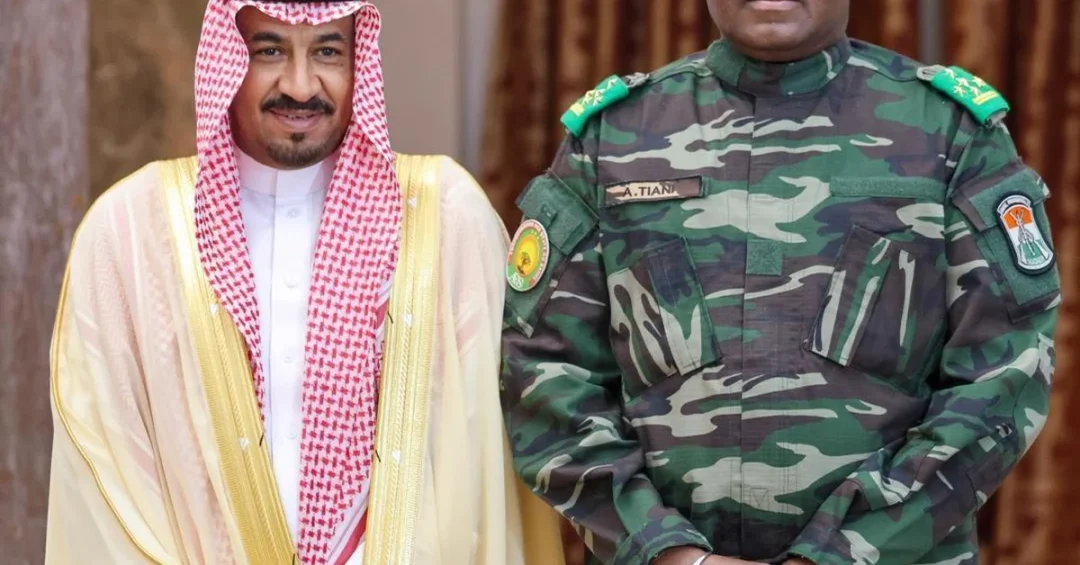
Saudi Ambassador to the Republic of Niger Ahmed Al-Mihaili presented his credentials to President of Niger and Head of State General Abdourahamane Tiani in Niamey, the Saudi Press Agency reported on October 15, 2026. The formal ceremony marks a renewed chapter in diplomatic relations between the Kingdom of Saudi Arabia and the West African nation, reaffirming a partnership built on mutual respect, development cooperation, and shared regional interests.
During the audience, Ambassador Al-Mihaili conveyed the greetings of the Custodian of the Two Holy Mosques King Salman bin Abdulaziz Al Saud and His Royal Highness Prince Mohammed bin Salman bin Abdulaziz Al Saud, Crown Prince and Prime Minister. He also extended their wishes for President Tiani’s continued health and well-being, and for further progress and prosperity for the people of Niger. The exchange underscores the Kingdom’s enduring commitment to constructive engagement across Africa, a continent that has become increasingly central to Saudi Arabia’s diplomatic and economic outreach. The credentials ceremony, while ceremonial in form, carries substantive weight: it formally empowers the ambassador to represent Saudi interests, facilitate bilateral agreements, and deepen people-to-people ties between Riyadh and Niamey.
Context and Background
Why does a credentials ceremony in Niamey matter to observers of Saudi foreign policy? Saudi-Niger relations have quietly deepened over recent years, reflecting the Kingdom’s broader strategy of expanding its diplomatic footprint across Africa. Niger, a landlocked nation in the Sahel region, occupies a strategic position bridging North and West Africa, making it a natural partner for Saudi Arabia’s trade, investment, and humanitarian initiatives. The appointment of Ambassador Al-Mihaili signals continuity in a relationship that has been cultivated through development assistance, educational exchanges, and support for Niger’s infrastructure priorities.
Historically, Saudi Arabia has maintained diplomatic ties with Niger since the latter’s independence, and the relationship has been reinforced by shared membership in the Organization of Islamic Cooperation. Saudi-funded projects in Niger have included mosques, schools, and health facilities, while the Kingdom has also provided humanitarian relief during periods of drought and food insecurity. The ambassador’s presentation of credentials thus represents not a new beginning but the renewal of a mature partnership, one that Riyadh views as part of its commitment to stability and development in the Sahel.
The timing of the ceremony also reflects Saudi Arabia’s evolving approach to Africa under Vision 2030, which prioritizes economic diversification and international partnerships beyond traditional markets. Niger’s membership in the African Continental Free Trade Area and its potential as a transit corridor for goods moving between coastal ports and interior markets add commercial relevance to the diplomatic relationship. By maintaining a resident ambassador in Niamey, the Kingdom ensures that its voice and interests are consistently represented in a region where competition for influence among global powers has intensified.
Key Details of the Credentials Ceremony
What exactly happens when an ambassador presents credentials, and why is it significant? The ceremony in Niamey followed standard diplomatic protocol: Ambassador Al-Mihaili formally presented his letter of credence, signed by the Custodian of the Two Holy Mosques, to President Tiani, thereby officially assuming his duties as the Kingdom’s senior representative in Niger. The ambassador then conveyed the personal greetings of King Salman and Crown Prince Mohammed bin Salman, a gesture that reflects the high value Saudi leadership places on the bilateral relationship.
The Saudi Press Agency, the Kingdom’s official news authority, reported the event, providing transparency and confirming the diplomatic milestone through official channels. President Tiani, who leads Niger as Head of State, received the ambassador and engaged in discussions that are expected to cover avenues for enhanced cooperation in areas such as agriculture, energy, education, and health. While the specific content of those discussions was not disclosed, the protocol itself constitutes a public affirmation of the two nations’ intent to strengthen ties.
Ambassador Al-Mihaili’s role will involve coordinating with Nigerien authorities on development projects, facilitating Saudi private-sector interest in Niger’s economy, and supporting the welfare of Saudi citizens and pilgrims transiting through the region. His appointment is part of the Kingdom’s broader diplomatic staffing in Africa, where Saudi Arabia maintains embassies in numerous capitals and has increasingly used its diplomatic network to promote trade, investment, and cultural exchange. The credentials ceremony is therefore both a formality and a platform for future engagement.
International and Regional Impact
How does this diplomatic step resonate beyond the two capitals? Saudi Arabia’s engagement with Niger occurs within a complex regional landscape. The Sahel has faced security challenges, political transitions, and humanitarian pressures in recent years, and international partners have calibrated their approaches accordingly. The Kingdom’s consistent diplomatic presence offers a stabilizing, development-focused alternative, emphasizing economic cooperation and humanitarian support rather than political conditionality. This approach aligns with Saudi Arabia’s broader foreign policy of non-interference and constructive engagement.
For Niger, the relationship with Saudi Arabia brings tangible benefits: access to Saudi development funding, scholarships for Nigerien students in Saudi universities, and support for Islamic institutions. For Saudi Arabia, Niger represents a partner in countering extremism, promoting moderate Islam, and expanding the reach of Vision 2030’s economic diplomacy. The credentials ceremony thus contributes to a regional environment where Saudi Arabia is seen as a reliable partner, complementing its roles in the Red Sea, the Horn of Africa, and the broader continent.
Internationally, the event reinforces Saudi Arabia’s standing as a responsible global actor. By maintaining diplomatic relations across Africa, the Kingdom demonstrates its commitment to multilateralism and to the principles of the United Nations Charter. The ceremony also highlights the importance Saudi Arabia attaches to the Organization of Islamic Cooperation, where both nations are active members, and to the African Union, with which the Kingdom has strengthened ties. In a multipolar world, such bilateral reaffirmations are essential building blocks of stability.
Economic and Strategic Significance
What economic opportunities does the Saudi-Niger relationship unlock? Niger possesses natural resources, including uranium, oil, and agricultural potential, that could attract Saudi investment as the Kingdom diversifies its global portfolio. Saudi Arabia’s Public Investment Fund and private companies have shown growing interest in African markets, and a resident ambassador can facilitate the due diligence, partnerships, and government liaison necessary for responsible investment. The credentials ceremony signals to Saudi businesses that Niger is a priority market within the Kingdom’s Africa strategy.
Trade between the two countries remains modest but has room to grow. Saudi exports to Niger include petroleum products, building materials, and consumer goods, while Niger’s exports to the Kingdom are primarily agricultural. Improved diplomatic representation can help identify and remove barriers to trade, streamline customs procedures, and promote joint ventures. The ambassador’s mandate will likely include supporting Saudi companies exploring opportunities in Niger’s mining, energy, and infrastructure sectors, in line with Vision 2030’s goal of expanding non-oil exports and foreign direct investment.
Strategically, Niger’s location makes it a gateway to West African markets comprising hundreds of millions of consumers. Saudi Arabia’s diplomatic presence in Niamey complements its embassies in neighboring countries and supports the Kingdom’s participation in trans-Saharan trade and connectivity initiatives. As global supply chains evolve, Africa’s role as a source of critical minerals and a destination for investment grows, and Saudi Arabia is positioning itself to benefit through sustained engagement.
Vision 2030 Alignment
How does this diplomatic milestone connect to Saudi Arabia’s long-term transformation? Vision 2030, the Kingdom’s comprehensive reform blueprint, emphasizes international partnerships as drivers of economic diversification and soft power. By strengthening ties with Niger, Saudi Arabia advances several Vision 2030 objectives: expanding trade and investment beyond traditional partners, promoting moderate Islam and countering extremism, and enhancing the Kingdom’s global reputation as a constructive actor. The credentials ceremony is a small but meaningful component of this larger strategy.
Moreover, the relationship supports Vision 2030’s human capital goals. Saudi scholarships for Nigerien students and cultural exchanges foster goodwill and build networks that will pay dividends for decades. The ambassador’s work will also involve facilitating Hajj and Umrah travel for Nigerien pilgrims, a spiritual service that Saudi Arabia provides to millions of Muslims worldwide and that reinforces the Kingdom’s unique role as custodian of the Two Holy Mosques. In this way, the diplomatic engagement in Niamey is not merely symbolic but operational, contributing directly to the Kingdom’s economic and cultural ambitions.
As Saudi Arabia continues to implement Vision 2030, its diplomats in Africa will play an increasingly vital role. Ambassador Al-Mihaili’s presentation of credentials to President Tiani marks a renewed commitment to a partnership that serves both nations’ interests. The Kingdom looks forward to deepened cooperation with Niger in the years ahead, building on a foundation of mutual respect and shared aspirations for prosperity.
20 Questions
Q1. Who presented credentials to Niger’s President?
A1. Saudi Ambassador Ahmed Al-Mihaili presented his credentials to President General Abdourahamane Tiani in Niamey, according to the Saudi Press Agency. The ceremony formally confirmed him as the Kingdom’s senior diplomatic representative in Niger.
Q2. When did the credentials ceremony take place?
A2. The ceremony took place on October 15, 2026, as reported by the Saudi Press Agency. The event was announced through official Saudi channels, reflecting the Kingdom’s transparent approach to diplomatic engagement.
Q3. Who is Niger’s Head of State?
A3. President General Abdourahamane Tiani is Niger’s Head of State. He received Ambassador Al-Mihaili and accepted the letter of credence, formally recognizing the ambassador’s authority to represent Saudi Arabia in the country.
Q4. What greetings did the ambassador convey?
A4. Ambassador Al-Mihaili conveyed the greetings of King Salman bin Abdulaziz Al Saud and Crown Prince Mohammed bin Salman bin Abdulaziz Al Saud. He also extended their wishes for President Tiani’s health and for Niger’s continued progress and prosperity.
Q5. Why is this diplomatic event significant?
A5. It reaffirms Saudi Arabia’s commitment to constructive engagement with African nations. The ceremony enables enhanced cooperation in trade, investment, development, and cultural exchange, supporting the Kingdom’s Vision 2030 goals of global partnership and economic diversification.
Q6. What is the role of an ambassador after presenting credentials?
A6. After presenting credentials, an ambassador officially represents their country, negotiates agreements, protects citizens’ interests, and promotes bilateral ties. Ambassador Al-Mihaili will now coordinate Saudi-Niger cooperation across multiple sectors.
Q7. How long have Saudi-Niger relations existed?
A7. Saudi Arabia has maintained diplomatic ties with Niger since its independence. The relationship has been reinforced through shared membership in the Organization of Islamic Cooperation and Saudi development assistance in education, health, and religious infrastructure.
Q8. What areas of cooperation are expected to grow?
A8. Cooperation is expected in agriculture, energy, mining, education, health, and infrastructure. Saudi investment and development funding could support Niger’s economic priorities while advancing the Kingdom’s Africa strategy.
Q9. Does Saudi Arabia provide scholarships to Nigerien students?
A9. Yes, Saudi universities offer scholarships to students from Niger and other African nations. These programs build human capital, foster cultural understanding, and strengthen long-term people-to-people ties between the Kingdom and Niger.
Q10. How does this relate to Vision 2030?
A10. Vision 2030 prioritizes international partnerships and economic diversification. Strengthening ties with Niger expands Saudi trade and investment opportunities, promotes moderate Islam, and enhances the Kingdom’s global standing as a responsible actor.
Q11. What is the Organization of Islamic Cooperation’s role?
A11. The OIC is a key multilateral platform where Saudi Arabia and Niger cooperate on issues affecting the Muslim world. Both nations are active members, and the OIC framework supports their bilateral engagement on development and cultural matters.
Q12. Will Saudi investment in Niger increase?
A12. A resident ambassador facilitates investment by liaising between governments and businesses. Saudi entities may explore opportunities in Niger’s mining, energy, and agriculture sectors, aligning with the Kingdom’s strategy of expanding foreign direct investment in Africa.
Q13. What humanitarian role does Saudi Arabia play in the Sahel?
A13. Saudi Arabia provides humanitarian relief during droughts and food crises in the Sahel, including Niger. The King Salman Humanitarian Aid and Relief Center has supported projects in the region, reflecting the Kingdom’s commitment to global welfare.
Q14. How does this affect Saudi citizens in Niger?
A14. The ambassador oversees the welfare of Saudi citizens in Niger, providing consular services and assistance. A resident embassy ensures that citizens’ needs are addressed promptly and that their interests are protected.
Q15. What is the significance of conveying royal greetings?
A15. Conveying greetings from King Salman and Crown Prince Mohammed bin Salman reflects the high priority Saudi leadership places on the bilateral relationship. It is a diplomatic gesture that strengthens personal and institutional bonds between the two nations.
Q16. Does Niger participate in Saudi cultural exchanges?
A16. Nigerien scholars, students, and religious figures participate in cultural and educational exchanges with Saudi Arabia. These programs promote moderate Islam, mutual understanding, and the sharing of knowledge and traditions.
Q17. How does this event fit Saudi Arabia’s Africa strategy?
A17. The ceremony is part of Saudi Arabia’s broader Africa strategy, which emphasizes diplomatic presence, economic partnership, and humanitarian engagement. The Kingdom maintains embassies across the continent to advance these objectives.
Q18. What is the expected impact on trade?
A18. Enhanced diplomatic representation can help identify trade barriers, promote Saudi exports, and facilitate joint ventures. While current trade volumes are modest, the potential for growth in mining, energy, and agriculture is significant.
Q19. Will Saudi Arabia support Niger’s infrastructure development?
A19. Saudi development funds and private investment could support Niger’s infrastructure, including roads, energy, and water projects. Such cooperation aligns with Vision 2030’s goal of exporting Saudi expertise and capital.
Q20. What does the future hold for Saudi-Niger relations?
A20. The future looks promising, with both nations committed to deepening cooperation. Ambassador Al-Mihaili’s tenure is expected to bring new agreements, increased investment, and stronger cultural ties, benefiting both peoples.
Reader Feedback
We value your thoughts. Please share your feedback on this article.
Your feedback helps us improve our coverage.