


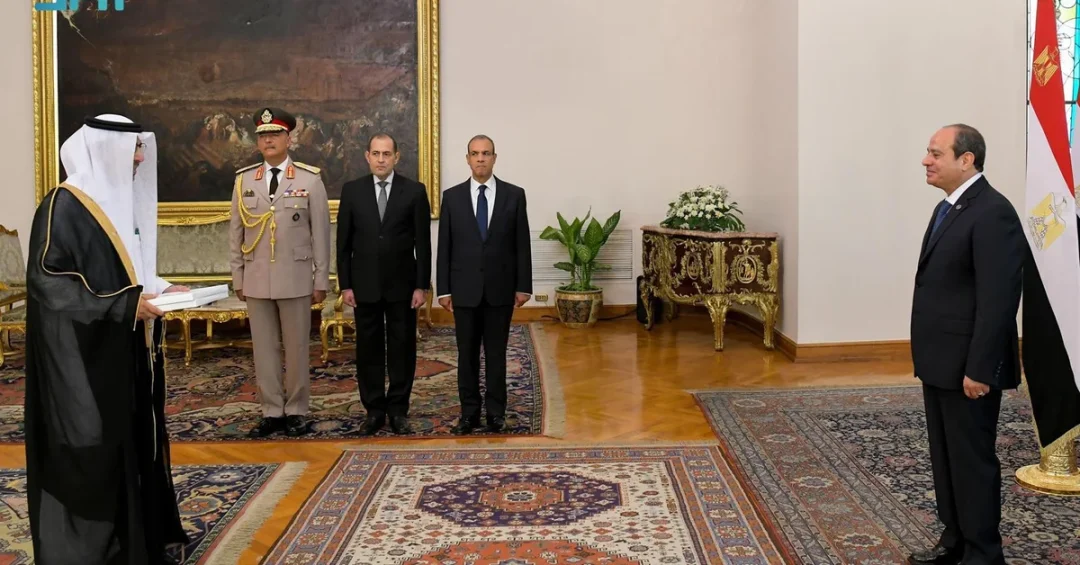
Ambassador Saleh bin Eid Al-Husseini, Saudi Ambassador to Egypt, presented his credentials to President Abdel Fattah El-Sisi of the Arab Republic of Egypt on Sunday in Cairo, according to the Saudi Press Agency (SPA). The ceremony marks a significant step in reinforcing the long-standing diplomatic ties between the Kingdom of Saudi Arabia and Egypt. During the event, Ambassador Al-Husseini conveyed greetings from King Salman bin Abdulaziz Al Saud, the Custodian of the Two Holy Mosques, and His Royal Highness Prince Mohammed bin Salman bin Abdulaziz Al Saud, Crown Prince and Prime Minister of Saudi Arabia.
Context and Background
Saudi-Egyptian relations have historically been robust, anchored in shared cultural, economic, and strategic interests. Both nations are key players in the Arab world and have collaborated on various regional initiatives, including security cooperation and economic development. The presentation of credentials is a formal diplomatic procedure that signifies the official commencement of an ambassador’s duties in the host country. This event underscores the continuous commitment of Saudi Arabia to maintaining strong bilateral ties with Egypt, a relationship that dates back decades and has been nurtured through mutual respect and common goals. The timing of this ceremony reflects the ongoing importance of Egypt as a strategic partner within the region.
Key Details
Ambassador Al-Husseini, a seasoned diplomat, presented his credentials in a formal ceremony held in Cairo. He extended greetings from King Salman and Crown Prince Mohammed bin Salman, wishing the Egyptian people continued progress and prosperity. In response, President El-Sisi warmly welcomed Ambassador Al-Husseini and expressed his best wishes for the ambassador’s success in his diplomatic role. The Egyptian President also requested that his greetings be conveyed back to the Saudi leadership, along with hopes for ongoing progress and prosperity for Saudi Arabia and its people. This exchange highlights the mutual respect and amity that characterize Saudi-Egyptian relations. The event was reported by the Saudi Press Agency, underscoring its significance as an official diplomatic milestone.
Implications and Impact
The presentation of credentials by Ambassador Al-Husseini is expected to further strengthen the already close ties between Saudi Arabia and Egypt. It opens avenues for enhanced cooperation in areas such as trade, investment, tourism, and cultural exchange. Both countries have been working together on regional stability and economic diversification, aligning with their respective national visions. For Saudi Arabia, Egypt remains a crucial ally in North Africa and the broader Arab world, and this diplomatic engagement reaffirms the Kingdom’s commitment to fostering partnerships that contribute to regional peace and development. The international community views such diplomatic exchanges as positive steps toward greater collaboration and understanding among nations.
Vision 2030 Alignment
This diplomatic engagement aligns with Saudi Arabia’s Vision 2030, which seeks to diversify the economy and strengthen international partnerships. By maintaining robust relations with Egypt, the Kingdom supports its goals of enhancing trade, encouraging investment, and promoting cultural exchange. Vision 2030 emphasizes the importance of regional cooperation and stability, and this credential presentation is a testament to Saudi Arabia’s proactive diplomacy in achieving these objectives. As the Kingdom continues to play a leading role in the region, such engagements underscore its dedication to building a prosperous and interconnected future.
20 Questions
Q1. Who presented his credentials to Egyptian President Abdel Fattah El-Sisi?
A1. Ambassador Saleh bin Eid Al-Husseini, the Saudi Ambassador to Egypt, presented his credentials to President Abdel Fattah El-Sisi on Sunday in Cairo, as reported by the Saudi Press Agency.
Q2. When did Ambassador Al-Husseini present his credentials?
A2. The ceremony took place on Sunday, July 14, 2024, in Cairo, Egypt, marking a formal step in his diplomatic mission to strengthen Saudi-Egyptian relations.
Q3. What greetings did Ambassador Al-Husseini convey to President El-Sisi?
A3. He conveyed greetings from King Salman bin Abdulaziz Al Saud, the Custodian of the Two Holy Mosques, and Crown Prince Mohammed bin Salman, along with wishes for Egypt’s progress and prosperity.
Q4. How did President El-Sisi respond to the ambassador’s greetings?
A4. President El-Sisi warmly welcomed Ambassador Al-Husseini, expressed best wishes for his success, and asked him to convey his greetings back to the Saudi leadership, hoping for continued progress for Saudi Arabia.
Q5. What is the significance of presenting credentials in diplomacy?
A5. Presenting credentials formally marks the beginning of an ambassador’s duties in the host country, symbolizing mutual recognition and the strengthening of bilateral relations between nations.
Q6. How long have Saudi-Egyptian relations been established?
A6. Saudi-Egyptian relations have been strong for decades, rooted in shared cultural, economic, and strategic interests, and have consistently been maintained through mutual respect and cooperation.
Q7. What areas of cooperation exist between Saudi Arabia and Egypt?
A7. Cooperation spans trade, investment, tourism, cultural exchange, security, and regional stability, with both nations working together on various initiatives to promote development and peace.
Q8. Who is Ambassador Saleh bin Eid Al-Husseini?
A8. Ambassador Saleh bin Eid Al-Husseini is a seasoned Saudi diplomat currently serving as the Saudi Ambassador to Egypt, tasked with fostering strong bilateral ties between the two nations.
Q9. What was the role of the Saudi Press Agency in this event?
A9. The Saudi Press Agency reported on the credential presentation, highlighting it as an official diplomatic milestone and providing authoritative coverage of the event.
Q10. How does this event reflect Saudi Arabia’s foreign policy?
A10. It demonstrates Saudi Arabia’s commitment to maintaining robust diplomatic relations and regional partnerships, in line with its foreign policy objectives and Vision 2030 goals.
Q11. What message did President El-Sisi ask to be conveyed to Saudi leaders?
A11. President El-Sisi asked Ambassador Al-Husseini to convey his greetings to King Salman and Crown Prince Mohammed bin Salman, along with hopes for ongoing progress and prosperity for Saudi Arabia.
Q12. What does the exchange of greetings signify?
A12. The exchange signifies mutual respect, amity, and the strong diplomatic ties between Saudi Arabia and Egypt, reinforcing their commitment to continued collaboration and understanding.
Q13. How might this affect regional stability?
A13. Strengthened Saudi-Egyptian relations contribute to regional stability by promoting cooperation on security, economic development, and shared strategic interests in the Arab world.
Q14. What economic benefits could arise from this diplomatic engagement?
A14. Enhanced ties may lead to increased trade, investment opportunities, and joint projects, benefiting both economies and supporting Saudi Arabia’s Vision 2030 diversification goals.
Q15. Is this Ambassador Al-Husseini’s first diplomatic post?
A15. While specifics of his career are not detailed here, Ambassador Al-Husseini is a seasoned diplomat, and this appointment underscores Saudi Arabia’s trust in his ability to represent the Kingdom effectively.
Q16. What is the historical context of Saudi-Egyptian relations?
A16. Saudi-Egyptian relations have been historically robust, with both nations collaborating on regional initiatives, security, and economic development, dating back decades.
Q17. How does this event align with Vision 2030?
A17. It aligns with Vision 2030 by strengthening international partnerships, enhancing trade and investment, and promoting regional cooperation, all key objectives of the Kingdom’s transformative plan.
Q18. What role does Egypt play in Saudi Arabia’s regional strategy?
A18. Egypt is a crucial ally in North Africa and the Arab world, and Saudi Arabia values its partnership for promoting stability, economic growth, and shared cultural ties.
Q19. Were there any other officials present at the ceremony?
A19. The report mentions only Ambassador Al-Husseini and President El-Sisi, focusing on the formal exchange of credentials and greetings between the two nations.
Q20. What future collaborations might result from this meeting?
A20. Future collaborations could include joint economic projects, cultural exchanges, and enhanced diplomatic coordination, further solidifying the strong bond between Saudi Arabia and Egypt.
Reader Feedback
We value your thoughts. Please share your feedback on this article.
Your feedback helps us improve our coverage.