


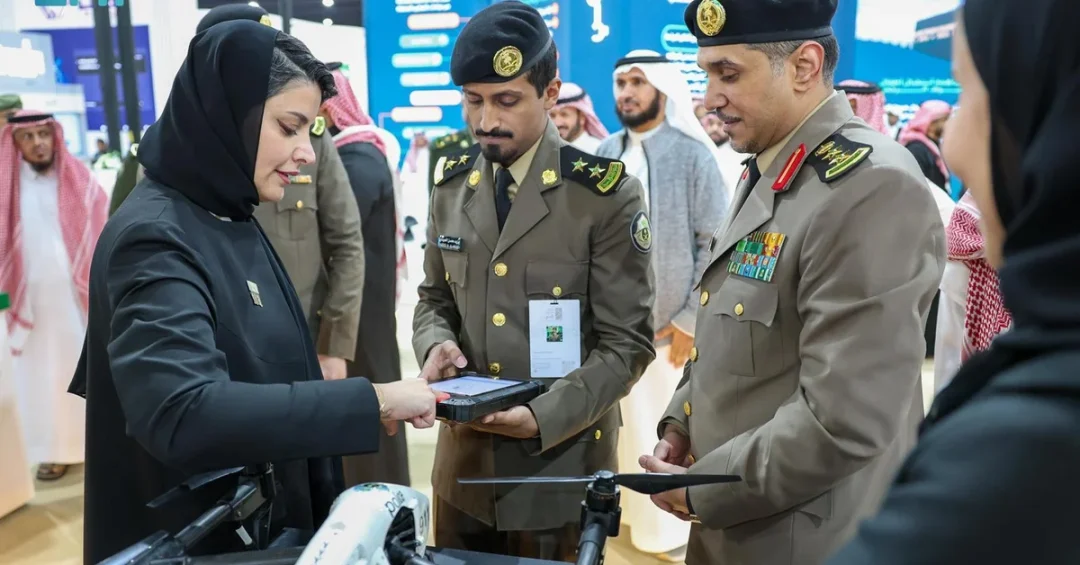
Saudi Ambassador to Spain Princess Haifa bint Abdulaziz bin Ayyaf Al-Mogrin visited the Ministry of Interior’s pavilion at the fourth Hajj Conference and Exhibition in Jeddah on January 15, 2025, where she was briefed on advanced technologies and initiatives designed to ensure a safe and seamless Hajj experience for millions of pilgrims. The visit, reported by the Saudi Press Agency, underscored the Kingdom’s commitment to leveraging cutting-edge innovation in service of the sacred pilgrimage, which remains one of the most significant annual gatherings of Muslims from around the world.
The ambassador toured the pavilion, held under the theme “A Passage to Nusuk,” and received detailed briefings on a range of measures including AI-enhanced security systems, digital solutions for crowd management at the holy sites, the “No Hajj Without a Permit” campaign, and the “Makkah Route” initiative. Her presence at the exhibition highlights the international dimension of Saudi Arabia’s Hajj preparations and the growing global interest in the Kingdom’s logistical and technological capabilities. How does a nation successfully host nearly two million pilgrims in a confined geographic area while ensuring their safety and spiritual fulfillment? The answer lies in a comprehensive, technology-driven strategy that Saudi Arabia has refined over decades.
Context and Background
The fourth Hajj Conference and Exhibition, organized by the Ministry of Hajj and Umrah in coordination with various government agencies, serves as a premier platform for showcasing the latest innovations in pilgrimage management. Held annually in Jeddah, the event brings together experts, policymakers, and service providers from across the globe to discuss best practices and forge partnerships. The theme “A Passage to Nusuk” reflects the integrated digital ecosystem that Saudi Arabia has developed to streamline every aspect of the pilgrim’s journey, from visa application to accommodation and transportation. Isn’t it remarkable how a spiritual journey of this magnitude can be enhanced through thoughtful technological integration?
The Ministry of Interior plays a central role in Hajj operations, overseeing security, traffic control, and emergency response. Its pavilion at the exhibition featured interactive displays and live demonstrations of the systems deployed during the pilgrimage season. The ambassador’s visit provided an opportunity to highlight the ministry’s efforts to a diplomatic audience, reinforcing the Kingdom’s message of openness and excellence in service delivery. Saudi Arabia has long been recognized for its meticulous planning of Hajj, and the adoption of artificial intelligence and digital tools represents the next evolution in that proud tradition.
Princess Haifa bint Abdulaziz bin Ayyaf Al-Mogrin, a seasoned diplomat serving as the Kingdom’s ambassador to Spain, has been actively engaged in promoting Saudi-Spanish relations across cultural, economic, and political spheres. Her visit to the pavilion underscores the importance of sharing Saudi Arabia’s Hajj expertise with international partners and demonstrates the Kingdom’s commitment to transparency and knowledge exchange. What better way to foster global understanding than by opening the doors to one of the world’s most complex logistical operations?
Key Details
During her tour, the ambassador was briefed on several flagship initiatives. The AI-enhanced security systems include facial recognition technology, real-time crowd density monitoring, and predictive analytics to prevent bottlenecks and ensure rapid response to any incidents. These tools are integrated into a centralized command center that coordinates with field teams across Mina, Arafat, and Muzdalifah. The “No Hajj Without a Permit” campaign, a regulatory measure introduced to manage crowd sizes and enhance safety, was also explained in detail. This campaign ensures that only authorized pilgrims participate, thereby reducing overcrowding and enabling better service delivery.
The “Makkah Route” initiative, a collaborative effort between the Ministry of Interior, the Ministry of Foreign Affairs, and the Ministry of Hajj and Umrah, allows pilgrims from select countries to complete visa and immigration procedures at their departure airports. This streamlined process significantly reduces waiting times upon arrival in Saudi Arabia and exemplifies the Kingdom’s commitment to facilitating a smooth pilgrimage experience. The ambassador expressed appreciation for these efforts, noting their positive impact on the global Muslim community. How does such a simple change—processing documents before departure—transform the entire pilgrim experience? It eliminates stress, reduces congestion at entry points, and allows pilgrims to focus on their spiritual journey from the moment they begin their travel.
Digital solutions for crowd management were another highlight. These include smart wristbands that provide pilgrims with real-time navigation and emergency alerts, mobile applications offering multilingual guidance, and advanced surveillance drones that monitor crowd flow. The Ministry of Interior has also deployed thermal imaging and heat stress monitoring to protect pilgrims from the region’s harsh climate. Each of these innovations is designed with the pilgrim’s well-being at its core, reflecting the Kingdom’s unwavering dedication to serving the guests of God.
The exhibition also featured a section dedicated to the “Nusuk” platform, a comprehensive digital gateway that allows pilgrims to book packages, obtain permits, and access essential services. The platform is part of the broader Vision 2030 goal of digitizing government services and enhancing the quality of life for citizens and visitors alike. By integrating Hajj-related services into a single, user-friendly interface, Saudi Arabia is setting a global standard for pilgrimage management. Isn’t it impressive how a single platform can unite millions of users under one seamless system?
International and Regional Impact
The visit of the Saudi Ambassador to Spain to the Ministry of Interior’s pavilion carries significant diplomatic implications. Spain is home to a growing Muslim population and serves as a bridge between Europe and the Arab world. By engaging with Spanish diplomats and sharing Saudi Arabia’s Hajj expertise, the Kingdom strengthens cultural ties and fosters a deeper understanding of its role as the custodian of the Two Holy Mosques. The ambassador’s briefing on the “Makkah Route” initiative, which initially included countries such as Pakistan, Indonesia, and Malaysia, could pave the way for future expansion to European nations, benefiting Spanish pilgrims and others across the continent.
Regionally, the exhibition reinforces Saudi Arabia’s leadership in the Islamic world. The Kingdom’s ability to host Hajj safely and efficiently is a source of pride for Muslims globally, and the technological advancements showcased at the conference demonstrate a forward-thinking approach that other nations can emulate. The presence of international dignitaries and experts at the event highlights the collaborative spirit that defines Saudi Arabia’s approach to pilgrimage management. Why is it so important for Saudi Arabia to share its Hajj innovations with the world? Because the pilgrimage is a global event, and its success depends on cooperation, mutual learning, and a shared commitment to excellence.
The “No Hajj Without a Permit” campaign, while primarily a domestic measure, also has international ramifications. It ensures that pilgrims from all countries are treated fairly and that unauthorized individuals do not compromise the safety of others. By explaining this policy to a diplomatic audience, the ambassador helps dispel misconceptions and build support for Saudi Arabia’s regulatory framework. The Kingdom’s transparent communication of its policies is a hallmark of its modern governance approach.
Economic and Strategic Significance
Hajj and Umrah are not only spiritual journeys but also significant economic drivers. The pilgrimage sector contributes billions of dollars to the Saudi economy annually, supporting jobs in hospitality, transportation, retail, and technology. The innovations showcased at the exhibition are part of a broader strategy to enhance the efficiency and capacity of the pilgrimage infrastructure, which in turn boosts economic returns. The Ministry of Interior’s investment in AI and digital solutions is a strategic move to future-proof the Hajj experience against the challenges of growing pilgrim numbers and evolving security threats.
Moreover, the “Makkah Route” initiative and the “Nusuk” platform are integral to Vision 2030’s goal of increasing the number of Umrah and Hajj pilgrims to 30 million by 2030. By streamlining processes and improving the overall experience, Saudi Arabia aims to attract more pilgrims, thereby increasing revenue and showcasing its capabilities as a global leader in event management. The exhibition itself serves as a marketplace for Saudi and international companies to showcase their products and services, fostering partnerships and investment opportunities. How does a spiritual gathering become an engine for economic diversification? Through careful planning, strategic investment, and a commitment to innovation that benefits all stakeholders.
The ambassador’s visit also highlights the diplomatic and soft power benefits of Hajj. By demonstrating its ability to manage a massive, multi-national event with precision and care, Saudi Arabia enhances its reputation as a reliable and capable global actor. This soft power translates into influence in international forums and strengthens the Kingdom’s position as a leader in the Muslim world. The economic and strategic significance of such visits cannot be overstated, as they contribute to the broader narrative of a modern, dynamic Saudi Arabia.
Vision 2030 Alignment
The initiatives presented at the fourth Hajj Conference and Exhibition are deeply aligned with Saudi Vision 2030, the Kingdom’s ambitious roadmap for economic diversification and social transformation. Vision 2030 emphasizes the digitization of government services, the enhancement of quality of life, and the development of a vibrant economy. The AI-enhanced security systems, digital crowd management tools, and the “Nusuk” platform are direct manifestations of these goals. By leveraging technology to improve the Hajj experience, Saudi Arabia is not only fulfilling its religious duty but also demonstrating its capacity for innovation and modernization.
Furthermore, the “Makkah Route” initiative and the “No Hajj Without a Permit” campaign reflect the Vision’s focus on efficiency, transparency, and sustainability. These programs ensure that the pilgrimage remains safe and manageable while contributing to the Kingdom’s economic growth. The visit of Princess Haifa bint Abdulaziz bin Ayyaf Al-Mogrin to the Ministry of Interior’s pavilion serves as a testament to the Kingdom’s holistic approach to Hajj—one that integrates security, technology, and diplomacy. As Saudi Arabia continues to advance toward its Vision 2030 targets, the world watches with admiration at how a nation can honor its sacred traditions while embracing the future. Will other nations follow suit in adopting such comprehensive, technology-driven approaches to large-scale events? The example set by Saudi Arabia suggests that the possibilities are limitless.
20 Questions
Q1. What was the purpose of the Saudi Ambassador to Spain’s visit to the Ministry of Interior’s pavilion?
A1. The ambassador visited to be briefed on the ministry’s efforts and initiatives for ensuring a safe Hajj experience, including AI security systems, digital crowd management, and the Makkah Route initiative.
Q2. Where and when did the fourth Hajj Conference and Exhibition take place?
A2. The fourth Hajj Conference and Exhibition was held in Jeddah, Saudi Arabia, starting on January 15, 2025, under the theme “A Passage to Nusuk.”
Q3. Who is the Saudi Ambassador to Spain?
A3. Princess Haifa bint Abdulaziz bin Ayyaf Al-Mogrin serves as the Saudi Ambassador to Spain, actively promoting bilateral relations and cultural exchange.
Q4. What are AI-enhanced security systems in the context of Hajj?
A4. These systems use facial recognition, real-time crowd monitoring, and predictive analytics to prevent incidents and ensure rapid response during the pilgrimage.
Q5. What is the “No Hajj Without a Permit” campaign?
A5. It is a regulatory measure that requires all pilgrims to obtain official permits, helping manage crowd sizes and enhance safety at the holy sites.
Q6. What is the “Makkah Route” initiative?
A6. It allows pilgrims from select countries to complete visa and immigration procedures at their departure airports, reducing arrival wait times in Saudi Arabia.
Q7. How does digital crowd management work at the holy sites?
A7. It uses smart wristbands, mobile apps, and surveillance drones to provide real-time navigation, emergency alerts, and monitor crowd flow.
Q8. What is the “Nusuk” platform?
A8. Nusuk is a comprehensive digital gateway for pilgrims to book packages, obtain permits, and access essential services related to Hajj and Umrah.
Q9. Why is the Hajj Conference important for international diplomacy?
A9. It showcases Saudi Arabia’s Hajj expertise to a global audience, fostering partnerships and enhancing the Kingdom’s soft power and leadership in the Muslim world.
Q10. How does the Makkah Route initiative benefit European pilgrims?
A10. While currently available in select countries, it could expand to Europe, streamlining travel for European Muslims and improving their overall pilgrimage experience.
Q11. What economic benefits does Hajj bring to Saudi Arabia?
A11. Hajj and Umrah contribute billions to the economy annually, supporting jobs in hospitality, transportation, retail, and technology sectors.
Q12. How does Vision 2030 relate to Hajj modernization?
A12. Vision 2030 emphasizes digitization and quality of life, and the technological innovations in Hajj directly support these goals by improving efficiency and pilgrim satisfaction.
Q13. What role does the Ministry of Interior play in Hajj?
A13. The ministry oversees security, traffic control, and emergency response, ensuring the safety and smooth operation of the entire pilgrimage.
Q14. How many pilgrims does Saudi Arabia aim to host by 2030?
A14. Saudi Arabia aims to increase the number of Umrah and Hajj pilgrims to 30 million by 2030 as part of Vision 2030.
Q15. What are smart wristbands used for during Hajj?
A15. They provide pilgrims with real-time navigation, emergency alerts, and multilingual guidance, enhancing safety and convenience.
Q16. How does the ambassador’s visit reflect Saudi-Spanish relations?
A16. It highlights the strong diplomatic ties and cultural exchange between the two nations, with potential for expanded cooperation in pilgrimage services.
Q17. What is the significance of the theme “A Passage to Nusuk”?
A17. It reflects the integrated digital ecosystem that streamlines the pilgrim’s journey, from visa application to accommodation and transportation.
Q18. How does Saudi Arabia ensure fair treatment of all pilgrims?
A18. Through regulations like the “No Hajj Without a Permit” campaign, which ensures authorized participation and prevents overcrowding, benefiting all pilgrims equally.
Q19. What technological tools are used for crowd management?
A19. Tools include AI analytics, surveillance drones, thermal imaging, and mobile applications that monitor and guide crowd movement in real time.
Q20. How does the Hajj Conference contribute to global knowledge sharing?
A20. It brings together experts and policymakers to discuss best practices, showcase innovations, and forge partnerships, advancing pilgrimage management worldwide.
Reader Feedback
We value your thoughts. Please share your feedback on this article.
Your feedback helps us improve our coverage.
Related articles
 Ambassador Binzagr Appointed Commissioner for Saudi Pavilion at Expo 2025
 SGS Unveils New Geological Data at Future Minerals Forum
 Saudi FM Holds Call with Russian Counterpart
 Saudi FM Meets Singapore PM to Strengthen Bilateral Ties
 Turkish Religious Affairs President Commends Saudi Pilgrim Services
 Saudi FM Arrives in Thailand on Official Visit