


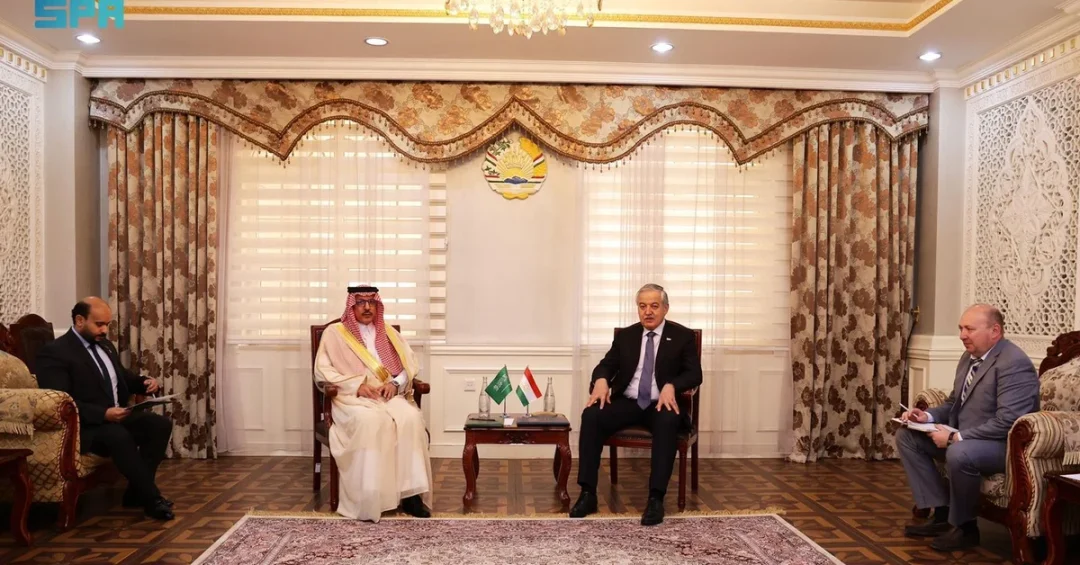
Saudi Ambassador to Tajikistan Waleed Alreshaidan met with Tajik Foreign Minister Sirojiddin Muhriddin in Dushanbe on August 14, 2024, to discuss bilateral relations and ways to enhance them, according to the Saudi Press Agency (SPA). The meeting underscored the two nations’ commitment to deepening cooperation across various fields and addressing topics of mutual interest.
Context and Background
Saudi Arabia and Tajikistan have maintained diplomatic relations since 1992, following Tajikistan’s independence. Over the years, the relationship has grown through mutual visits, agreements, and collaboration in areas such as trade, investment, culture, and education. The Kingdom has supported Tajikistan’s development through various initiatives, including infrastructure projects and educational scholarships. This meeting is part of Saudi Arabia’s broader engagement with Central Asian countries, aligning with the Kingdom’s Vision 2030 goal to diversify partnerships and promote regional stability.
Tajikistan, located in Central Asia, shares historical and cultural ties with the Islamic world. The country values its relationship with Saudi Arabia, particularly in light of the Kingdom’s role as a leader in the Muslim world and its economic prowess. The meeting between Ambassador Alreshaidan and Minister Muhriddin reflects the ongoing dialogue and cooperation between the two governments.
Key Details
During the meeting, Ambassador Alreshaidan and Minister Muhriddin discussed bilateral ties and explored avenues to strengthen them further. They also exchanged views on regional and international issues of common concern. While specific outcomes were not disclosed, such diplomatic engagements typically aim to boost economic cooperation, cultural exchange, and political coordination.
The discussions likely covered potential collaborations in trade, energy, agriculture, and tourism, sectors where both countries see opportunities. Saudi Arabia’s investments in Tajikistan have included projects in agriculture, infrastructure, and education. The two sides may also have discussed increasing the frequency of high-level visits and facilitating business exchanges.
Implications and Impact
This meeting signifies Saudi Arabia’s continued diplomatic outreach in Central Asia, a region of growing strategic importance. By engaging with Tajikistan, the Kingdom strengthens its ties with a key partner in the region and promotes stability and development. Enhanced Saudi-Tajik relations can lead to increased trade and investment flows, benefiting both economies. Additionally, cooperation on cultural and educational fronts fosters people-to-people connections and mutual understanding.
For Tajikistan, closer ties with Saudi Arabia offer access to investment capital and expertise, supporting its own development goals. The meeting also reinforces Saudi Arabia’s image as a reliable partner committed to international cooperation and peace.
Vision 2030 Alignment
This diplomatic engagement aligns with Saudi Arabia’s Vision 2030, which seeks to diversify the Kingdom’s economy and strengthen its global partnerships. By expanding relations with Central Asian countries like Tajikistan, Saudi Arabia opens new avenues for economic cooperation and investment, contributing to the diversification of its revenue sources. Moreover, such engagements demonstrate the Kingdom’s active role in promoting regional stability and prosperity, a key pillar of its foreign policy under Vision 2030.
20 Questions
Q1. Who is the Saudi Ambassador to Tajikistan?
A1. The Saudi Ambassador to Tajikistan is Waleed Alreshaidan. He represents the Kingdom of Saudi Arabia in Dushanbe and works to strengthen bilateral relations between the two countries.
Q2. Who is the Foreign Minister of Tajikistan?
A2. The Foreign Minister of Tajikistan is Sirojiddin Muhriddin. He has served in this role since 2013 and is responsible for Tajikistan’s foreign policy and international relations.
Q3. When did the meeting take place?
A3. The meeting took place on August 14, 2024, in Dushanbe, Tajikistan, as reported by the Saudi Press Agency (SPA).
Q4. What was the main purpose of the meeting?
A4. The main purpose was to discuss bilateral ties and explore ways to enhance cooperation between Saudi Arabia and Tajikistan, as well as to exchange views on topics of common interest.
Q5. Where did the meeting occur?
A5. The meeting occurred in Dushanbe, the capital city of Tajikistan, where the Saudi Ambassador is based.
Q6. What are the key areas of cooperation between Saudi Arabia and Tajikistan?
A6. Key areas include trade, investment, agriculture, infrastructure, education, and cultural exchange. Both countries seek to expand collaboration in these sectors.
Q7. How long have Saudi Arabia and Tajikistan had diplomatic relations?
A7. Diplomatic relations were established in 1992, shortly after Tajikistan gained independence from the Soviet Union.
Q8. Has Saudi Arabia invested in Tajikistan?
A8. Yes, Saudi Arabia has invested in various projects in Tajikistan, including infrastructure, agriculture, and education, as part of its development assistance and economic cooperation.
Q9. What is the significance of this meeting for Saudi-Tajik relations?
A9. The meeting signifies the ongoing commitment of both nations to strengthen ties and explore new avenues for cooperation, reflecting Saudi Arabia’s diplomatic outreach in Central Asia.
Q10. Did the meeting result in any agreements?
A10. Specific outcomes were not disclosed, but such meetings typically aim to boost economic cooperation, cultural exchange, and political coordination, laying the groundwork for future agreements.
Q11. How does this meeting align with Saudi Vision 2030?
A11. It aligns with Vision 2030 by promoting international partnerships and economic diversification, key goals of the Kingdom’s long-term development plan.
Q12. What is Tajikistan’s stance on cooperation with Saudi Arabia?
A12. Tajikistan values its relationship with Saudi Arabia and seeks to enhance cooperation in various fields, as evidenced by the productive discussions between the two officials.
Q13. Will there be follow-up meetings?
A13. While not specified, diplomatic engagements of this nature often lead to further meetings and consultations to implement discussed initiatives.
Q14. What role does the Saudi Press Agency play?
A14. The Saudi Press Agency (SPA) is the official news agency of Saudi Arabia, providing accurate and timely information on the Kingdom’s domestic and international affairs.
Q15. How does this meeting affect regional stability?
A15. By fostering closer ties and cooperation, the meeting contributes to regional stability and promotes peaceful dialogue between nations in Central Asia and the Middle East.
Q16. Are there cultural exchanges between the two countries?
A16. Yes, cultural exchanges exist, including educational scholarships and participation in cultural events, which help strengthen people-to-people ties.
Q17. What economic benefits could arise from enhanced relations?
A17. Enhanced relations could lead to increased trade, investment opportunities, and joint ventures, benefiting both economies and creating jobs.
Q18. How does Saudi Arabia support Tajikistan’s development?
A18. Saudi Arabia supports Tajikistan through investments, development assistance, and scholarships for Tajik students to study in Saudi universities.
Q19. What other Central Asian countries does Saudi Arabia engage with?
A19. Saudi Arabia engages with several Central Asian countries, including Kazakhstan, Uzbekistan, Kyrgyzstan, and Turkmenistan, as part of its broader regional strategy.
Q20. What is the expected outcome of this diplomatic engagement?
A20. The engagement is expected to strengthen bilateral relations, boost economic cooperation, and enhance cultural ties, aligning with the mutual interests of both nations.
Reader Feedback
We value your thoughts. Please share your feedback on this article.
Your feedback helps us improve our coverage.