


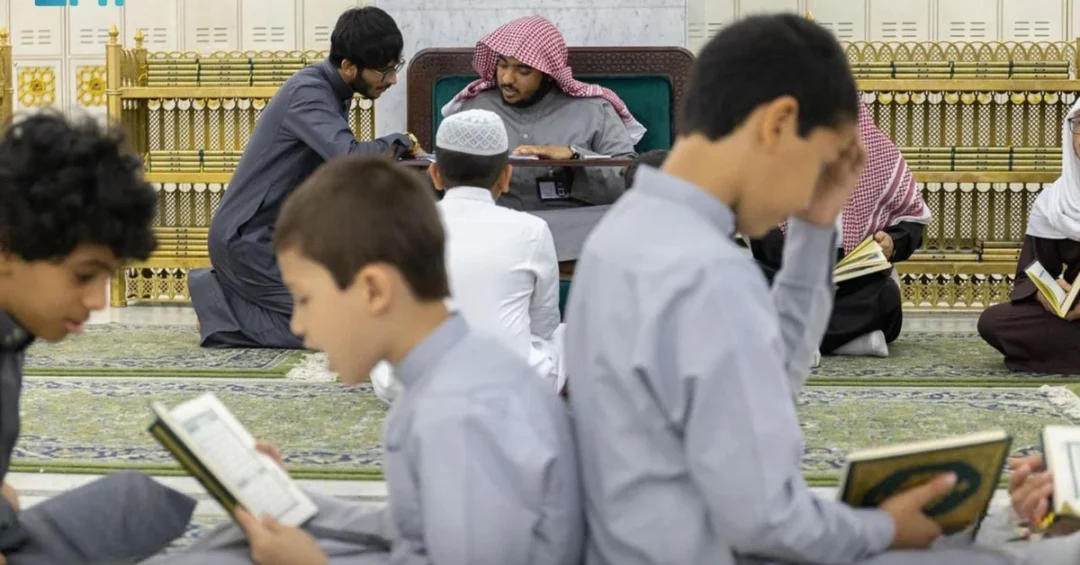
Sheikh Dr. Abdulrahman bin Abdulaziz Al-Sudais, President of Religious Affairs of the Grand Mosque and the Prophet’s Mosque, has approved the launch of 1,000 Quran memorization programs at the Two Holy Mosques for the 1445H Hajj season. This initiative, announced on May 19, 2024, is part of the presidency’s comprehensive plan to enable pilgrims to benefit from these programs, which aim to spread the Quran’s morals and moderate messages worldwide under the guidance of qualified Saudi teachers. The programs are designed to enrich the experience of pilgrims and expand the establishment of Quran memorization initiatives at the Two Holy Mosques.
Context and Background
The approval of these 1,000 Quran programs underscores the Kingdom of Saudi Arabia’s ongoing commitment to serving the Two Holy Mosques and their visitors. Sheikh Dr. Al-Sudais emphasized that this initiative embodies the keenness of the wise leadership to teach, memorize, interpret, and recite the Holy Quran. The programs are part of a broader effort by the General Presidency for the Affairs of the Grand Mosque and the Prophet’s Mosque to enhance the spiritual journey of pilgrims, ensuring they can experience the guidance of the Quran without difficulty or hardship.
Key Details
The Quran programs at the Two Holy Mosques have educational, methodological, and instructional dimensions in spreading the message of the Quran and its guidance. Sheikh Dr. Al-Sudais highlighted the importance of continuous work around the clock in these programs, in service of the Quran and its people, and for the benefit of pilgrims. The programs aim to correct recitation, instill the values of the Quran in the hearts, and convey the message of the Two Holy Mosques to the world through qualified Saudi teachers.
Implications and Impact
This initiative is expected to significantly enrich the experience of millions of pilgrims who visit the Two Holy Mosques during the Hajj season. By providing accessible Quran learning opportunities, the program reinforces Saudi Arabia’s role as a global leader in Islamic services and promotes a message of moderation and peace. It also highlights the Kingdom’s dedication to using modern educational methods to preserve and disseminate the teachings of the Quran, fostering a deeper understanding of Islam among international visitors.
20 Questions
Q1. Who approved the launch of 1,000 Quran programs?
A1. Sheikh Dr. Abdulrahman bin Abdulaziz Al-Sudais, President of Religious Affairs of the Grand Mosque and the Prophet’s Mosque, approved the launch of these programs for the 1445H Hajj season.
Q2. What is the primary goal of the 1,000 Quran programs?
A2. The primary goal is to enable pilgrims at the Two Holy Mosques to benefit from Quran memorization and learning, enriching their spiritual experience during Hajj.
Q3. When was the announcement made?
A3. The announcement was made on May 19, 2024, according to the Saudi Press Agency (SPA).
Q4. Where will these programs be conducted?
A4. The programs will be conducted at the Grand Mosque in Makkah and the Prophet’s Mosque in Madinah, collectively known as the Two Holy Mosques.
Q5. How many programs were approved?
A5. Exactly 1,000 Quran programs were approved for the 1445H Hajj season.
Q6. Who will teach the Quran programs?
A6. The programs will be taught by qualified Saudi teachers, ensuring high-quality instruction in Quran recitation and memorization.
Q7. What is the significance of the Two Holy Mosques in Islam?
A7. The Two Holy Mosques are the holiest sites in Islam, attracting millions of pilgrims annually. They hold immense religious significance and are central to Islamic worship and pilgrimage.
Q8. How does this initiative align with Saudi Vision 2030?
A8. The initiative supports Vision 2030’s goal of enhancing services for pilgrims and showcasing Saudi Arabia’s commitment to Islamic heritage and cultural enrichment, aligning with the Kingdom’s broader transformation goals.
Q9. What does ‘1445H’ refer to in the article?
A9. ‘1445H’ refers to the Islamic calendar year 1445 AH (After Hijrah), which corresponds to 2024-2025 in the Gregorian calendar. The Hajj season of that year is the target for the programs.
Q10. What are the expected benefits of the Quran programs for pilgrims?
A10. Pilgrims will have the opportunity to improve their Quran recitation, memorize verses, and gain a deeper spiritual understanding, all while being guided by skilled teachers.
Q11. Who is Sheikh Dr. Al-Sudais?
A11. Sheikh Dr. Al-Sudais is the President of Religious Affairs for the Grand Mosque and the Prophet’s Mosque, a prominent religious leader known for his efforts to enhance the spiritual services at the holy sites.
Q12. How will the programs be implemented?
A12. The programs will involve structured Quran memorization circles, recitation correction sessions, and educational courses, conducted around the clock to accommodate pilgrims.
Q13. What is the role of the Saudi government in this initiative?
A13. The Saudi government, under its wise leadership, supports and funds such initiatives, reflecting its commitment to serving the Two Holy Mosques and their visitors.
Q14. Will the programs be available in multiple languages?
A14. While not explicitly stated, the programs aim to reach a global audience, indicating that multilingual support may be provided to accommodate non-Arabic speaking pilgrims.
Q15. How does this initiative compare to previous years?
A15. This year’s initiative expands on past efforts by significantly increasing the number of programs, from previous smaller scales to 1,000, reflecting a broader commitment to Quranic education.
Q16. What is the expected number of participants?
A16. The exact number is not specified, but given the scale of 1,000 programs, it is expected to engage tens of thousands of pilgrims from around the world.
Q17. Are there any special provisions for elderly or disabled pilgrims?
A17. While not detailed, the presidency ensures accessibility for all pilgrims, including provisions for those with special needs, adhering to inclusive service standards.
Q18. How will the success of the programs be measured?
A18. Success will likely be measured by participation rates, feedback from pilgrims, and improvements in recitation and memorization skills, though specific metrics are not provided.
Q19. What is the broader impact of such programs on the Muslim community?
A19. These programs foster a deeper connection to the Quran, promote moderate Islamic values, and help spread the message of peace and understanding globally.
Q20. How can pilgrims register for these programs?
A20. Pilgrims can typically register through official channels, such as the presidency’s apps or on-site registration points at the mosques, as part of the broader Hajj services.
Vision 2030 Alignment
This initiative is a testament to Saudi Arabia’s unwavering commitment to Vision 2030, which prioritizes enriching the religious and cultural experience of pilgrims. By leveraging the Two Holy Mosques as centers for Quranic learning and spiritual growth, the Kingdom not only serves millions of Muslims worldwide but also underscores its role as a global hub for Islamic values. Through such programs, Saudi Arabia continues to build bridges of understanding and foster a legacy of knowledge, peace, and moderation, aligning with the forward-looking goals of Vision 2030.
Reader Feedback
We value your thoughts. Please share your feedback on this article.
Your feedback helps us improve our coverage.