


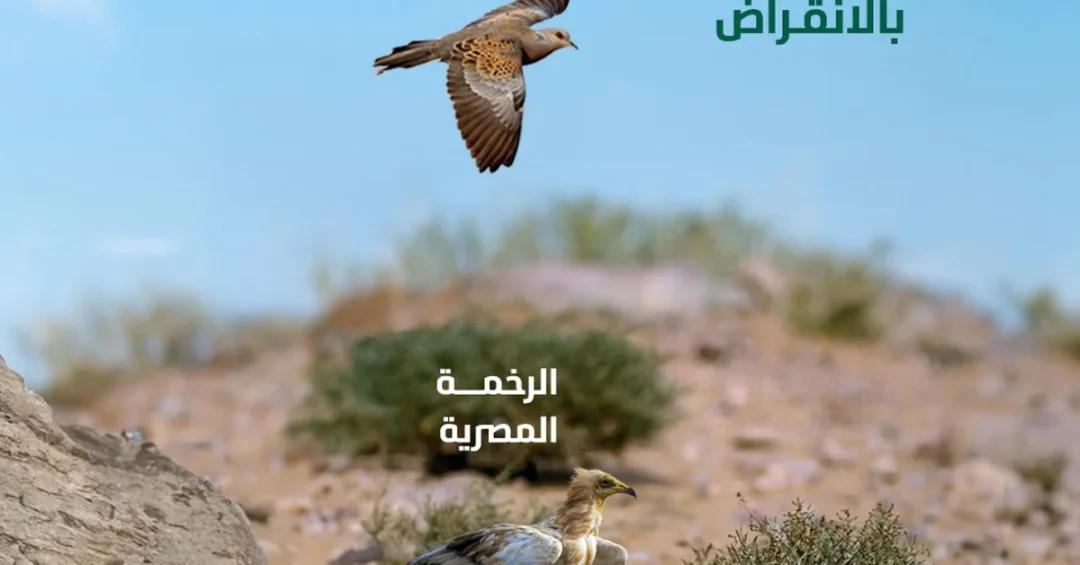
Saudi Arabia has recorded 550 bird species within its borders, including 27 that are globally endangered, according to a statement from the Ministry of Environment, Water, and Agriculture marking World Migratory Bird Day. The announcement, released through the Saudi Press Agency, highlights the Kingdom’s rich avian biodiversity and underscores its growing role in global conservation efforts. Among the endangered species found in Saudi Arabia are the turtle dove and the houbara bustard, both of which face significant threats worldwide. This comprehensive tally reflects years of dedicated fieldwork and monitoring by Saudi authorities, positioning the Kingdom as a key player in international efforts to protect migratory birds and their habitats.
Have you ever wondered how a nation transforms its deserts and coastlines into vital sanctuaries for hundreds of bird species? Saudi Arabia’s diverse ecosystems, ranging from the Red Sea coral reefs to the rugged Asir mountains and the vast Rub’ al Khali desert, provide critical stopover points for birds traveling along the African-Eurasian flyway. The Ministry’s findings reveal that 280 of the 550 species are migratory, while 219 breed within the Kingdom and 51 are classified as strays. This data not only enriches scientific knowledge but also supports Saudi Arabia’s broader environmental goals under Vision 2030, which emphasizes sustainability and the protection of natural heritage.
Context and Background
Why does the Arabian Peninsula serve as an indispensable crossroads for global bird migration? The Ministry of Environment, Water, and Agriculture explained that bird migration occurs primarily for breeding, seeking moderate climates, and finding food sources as resources dwindle in their native habitats. Saudi Arabia’s strategic location at the intersection of three continents—Asia, Africa, and Europe—makes it a natural hub for millions of birds each year. The Kingdom’s varied landscapes, from coastal mangroves to high-altitude woodlands, offer essential resting and feeding grounds for species traversing the African-Eurasian flyway, one of the world’s most important migratory routes.
The Ministry’s announcement coincides with World Migratory Bird Day, an annual global campaign that raises awareness about the need for international cooperation to conserve migratory birds and their habitats. Saudi Arabia has been actively participating in this campaign, using it as a platform to showcase its conservation achievements and commitment to biodiversity. The Ministry also noted that of the 550 recorded species, 280 are migratory, including iconic birds such as the greater flamingo, black-winged stilt, eastern imperial eagle, and steppe eagle. These species depend on Saudi Arabia’s wetlands, islands, and protected areas for survival during their journeys.
How does Saudi Arabia balance rapid modernization with the preservation of its natural ecosystems? The Ministry is working on cataloging bird species across the Kingdom, providing accurate information on migration paths, species presence, and spatial distribution patterns to ensure the sustainability and conservation of these birds. This initiative involves collaboration with local and international experts, the use of advanced tracking technologies, and the establishment of protected zones. Such efforts are integral to Saudi Arabia’s environmental strategy, which seeks to protect 30% of the Kingdom’s land and marine areas by 2030, a key target under the Saudi Green Initiative.
Key Details
What are the specific birds that have captured the attention of Saudi conservationists? Among the 27 globally endangered species recorded in the Kingdom, the turtle dove and the houbara bustard stand out. The turtle dove, a migratory bird that breeds in Europe and winters in Africa, has seen its population plummet due to habitat loss and hunting. The houbara bustard, a large desert bird, is highly prized in traditional falconry and faces threats from poaching and habitat degradation. Saudi Arabia has implemented strict measures to protect these species, including bans on hunting and the creation of specialized reserves.
The Ministry’s statement also highlighted the presence of 219 breeding species, which include resident birds that nest and raise their young within the Kingdom. These birds contribute to the ecological balance by controlling insect populations, pollinating plants, and dispersing seeds. The 51 stray species, while not regular inhabitants, add to the avian diversity and are often observed during migration seasons. The Ministry emphasized that accurate data on these categories is essential for developing targeted conservation plans and for monitoring the health of ecosystems.
Why is it important to track migratory routes with precision? The Ministry is deploying cutting-edge technologies such as satellite telemetry and GIS mapping to trace the movements of birds across the Kingdom. This information helps identify critical stopover sites that require protection and informs land-use planning to minimize human-wildlife conflict. For instance, the greater flamingo, which breeds in Saudi Arabia’s coastal lagoons, benefits from measures that preserve water quality and prevent disturbance. Similarly, the eastern imperial eagle and steppe eagle, both of which are raptors, rely on undisturbed cliffs and open landscapes for hunting and nesting.
International and Regional Impact
How does Saudi Arabia’s bird conservation effort resonate beyond its borders? The Kingdom’s position on the African-Eurasian flyway means that its conservation actions have a direct impact on bird populations across Europe, Asia, and Africa. By safeguarding habitats within its territory, Saudi Arabia contributes to the survival of species that are threatened elsewhere. This transboundary significance has led to increased cooperation with international organizations such as BirdLife International and the Convention on Migratory Species (CMS), which Saudi Arabia is a party to.
Moreover, Saudi Arabia’s data-sharing initiatives enhance global knowledge of migration patterns. The Ministry’s cataloging project provides valuable insights into how climate change and habitat loss affect bird movements. This information is shared with regional partners through platforms like the West Asian Flyway Partnership, fostering collaborative conservation strategies. In a region often characterized by political tensions, environmental cooperation serves as a unifying force, demonstrating Saudi Arabia’s leadership in addressing shared ecological challenges.
What role do neighboring countries play in these efforts? The Ministry has engaged in dialogue with Gulf Cooperation Council (GCC) states to harmonize conservation policies and establish transboundary protected areas. For example, the Al Wusta and Dhofar regions of Oman, along with Saudi Arabia’s Empty Quarter, form a critical corridor for migratory birds. Joint initiatives include coordinated hunting bans, habitat restoration, and public awareness campaigns. These efforts align with the Kingdom’s Vision 2030 goal of enhancing regional stability and environmental stewardship.
Economic and Strategic Significance
Can conservation and economic development go hand in hand? Saudi Arabia’s investment in biodiversity is not only an environmental imperative but also an economic opportunity. Birdwatching and eco-tourism are growing sectors worldwide, and the Kingdom’s unique avian diversity could attract nature enthusiasts from around the globe. The Ministry is working with the Saudi Tourism Authority to develop sustainable tourism packages that highlight key birding sites, such as the Farasan Islands and the Red Sea coast. Such initiatives create jobs, support local communities, and diversify the economy away from oil dependency, a core objective of Vision 2030.
Furthermore, healthy bird populations indicate functioning ecosystems that provide essential services like pest control, pollination, and nutrient cycling. These services benefit agriculture, fisheries, and human health, contributing to food security and public well-being. The Ministry’s conservation programs also align with the National Environment Strategy, which aims to reduce carbon emissions and enhance climate resilience. By protecting birds and their habitats, Saudi Arabia is investing in a sustainable future that balances economic growth with environmental integrity.
What about the role of the private sector? Companies operating in Saudi Arabia are increasingly integrating biodiversity considerations into their operations. For instance, energy firms are adopting measures to prevent bird collisions with power lines, and real estate developers are designing projects that preserve natural corridors. The Saudi Green Initiative has mobilized billions of riyals for environmental projects, including the restoration of wetlands and the planting of native trees that provide habitat for birds. These public-private partnerships exemplify the collaborative spirit driving Saudi Arabia’s environmental agenda.
Vision 2030 Alignment
How does bird conservation fit into Saudi Arabia’s long-term vision? The Kingdom’s Vision 2030 is a comprehensive blueprint for economic diversification, social development, and environmental sustainability. Protecting biodiversity is explicitly mentioned in the vision, reflecting the leadership’s recognition that natural capital is essential for future prosperity. The Ministry of Environment, Water, and Agriculture plays a pivotal role in achieving these goals by implementing policies that safeguard wildlife, promote sustainable resource use, and engage communities in conservation.
The Ministry’s bird cataloging project supports several Vision 2030 targets, including the Saudi Green Initiative’s goal to protect 30% of terrestrial and marine areas by 2030. It also contributes to the Quality of Life Program by enhancing opportunities for outdoor recreation and eco-tourism. As Saudi Arabia positions itself as a global leader in sustainability, its efforts to protect migratory birds serve as a testament to its commitment to international environmental stewardship. The Kingdom’s success in this arena will not only benefit avian populations but also reinforce its reputation as a responsible and forward-looking nation on the world stage.
20 Questions
Q1. How many bird species have been recorded in Saudi Arabia?
A1. The Ministry of Environment, Water, and Agriculture has recorded 550 bird species in the Kingdom, including 27 globally endangered species such as the turtle dove and the houbara bustard.
Q2. What is the significance of World Migratory Bird Day?
A2. World Migratory Bird Day raises global awareness about the need to conserve migratory birds and their habitats. Saudi Arabia uses this occasion to highlight its conservation achievements and commitment to biodiversity.
Q3. How many migratory bird species are found in Saudi Arabia?
A3. Of the 550 recorded species, 280 are migratory. These include the greater flamingo, black-winged stilt, eastern imperial eagle, and steppe eagle, which rely on Saudi habitats during their journeys.
Q4. Which endangered species are mentioned in the Ministry’s statement?
A4. The turtle dove and the houbara bustard are specifically cited as globally endangered species found in Saudi Arabia. Both face threats from habitat loss and hunting.
Q5. What are the main reasons for bird migration?
A5. Birds migrate primarily for breeding, seeking moderate climates, and finding food sources as resources dwindle in their native habitats, according to the Ministry.
Q6. How many bird species breed in Saudi Arabia?
A6. The Ministry reports that 219 bird species are known to breed in the Kingdom, contributing to the ecological balance through insect control, pollination, and seed dispersal.
Q7. What are stray birds?
A7. Stray birds are those that are not regular inhabitants but are occasionally observed in Saudi Arabia. The Ministry has classified 51 species as stray birds.
Q8. Why is Saudi Arabia important for migratory birds?
A8. Saudi Arabia lies at the crossroads of Asia, Africa, and Europe, along the African-Eurasian flyway. Its diverse habitats provide critical stopover and breeding grounds for millions of birds.
Q9. What is the Ministry doing to conserve birds?
A9. The Ministry is cataloging bird species, tracking migration paths, and mapping spatial distribution to ensure sustainability. It also establishes protected areas and enforces hunting bans.
Q10. How does bird conservation align with Vision 2030?
A10. Vision 2030 emphasizes environmental sustainability. Bird conservation supports the Saudi Green Initiative’s goal to protect 30% of land and marine areas by 2030 and enhances eco-tourism.
Q11. What technologies are used in bird tracking?
A11. The Ministry uses satellite telemetry and GIS mapping to trace bird movements, identify critical stopover sites, and inform land-use planning to minimize human-wildlife conflict.
Q12. How does Saudi Arabia cooperate internationally on bird conservation?
A12. Saudi Arabia collaborates with BirdLife International, the Convention on Migratory Species, and the West Asian Flyway Partnership to share data and harmonize conservation policies.
Q13. What economic benefits does bird conservation bring?
A13. Birdwatching and eco-tourism attract visitors, create jobs, and diversify the economy. Healthy bird populations also support ecosystem services like pest control and pollination, benefiting agriculture.
Q14. Which iconic migratory birds can be seen in Saudi Arabia?
A14. Iconic migratory birds include the greater flamingo, black-winged stilt, eastern imperial eagle, and steppe eagle. These species depend on Saudi wetlands, islands, and protected areas.
Q15. What threats do endangered birds face in Saudi Arabia?
A15. Endangered birds like the turtle dove and houbara bustard face threats from habitat loss, hunting, and climate change. The Ministry has implemented strict protection measures.
Q16. How can the public contribute to bird conservation?
A16. The public can support conservation by respecting protected areas, reporting sightings, participating in citizen science, and promoting sustainable tourism that values wildlife.
Q17. What role do protected areas play in bird conservation?
A17. Protected areas provide safe breeding, feeding, and resting grounds for birds. Saudi Arabia has established numerous reserves, such as the Farasan Islands, to safeguard critical habitats.
Q18. How does climate change affect migratory birds in Saudi Arabia?
A18. Climate change alters habitats and food availability, shifting migration patterns. Saudi Arabia’s monitoring helps identify these changes and adapt conservation strategies accordingly.
Q19. What is the Saudi Green Initiative?
A19. The Saudi Green Initiative is a national program to combat climate change, improve quality of life, and protect the environment. It includes goals to plant 10 billion trees and protect 30% of land and sea.
Q20. What future steps is Saudi Arabia taking for bird conservation?
A20. Saudi Arabia will continue expanding protected areas, enhancing research, and fostering international partnerships to ensure the long-term survival of migratory and resident bird species.
Reader Feedback
We value your thoughts. Please share your feedback on this article.
Your feedback helps us improve our coverage.