


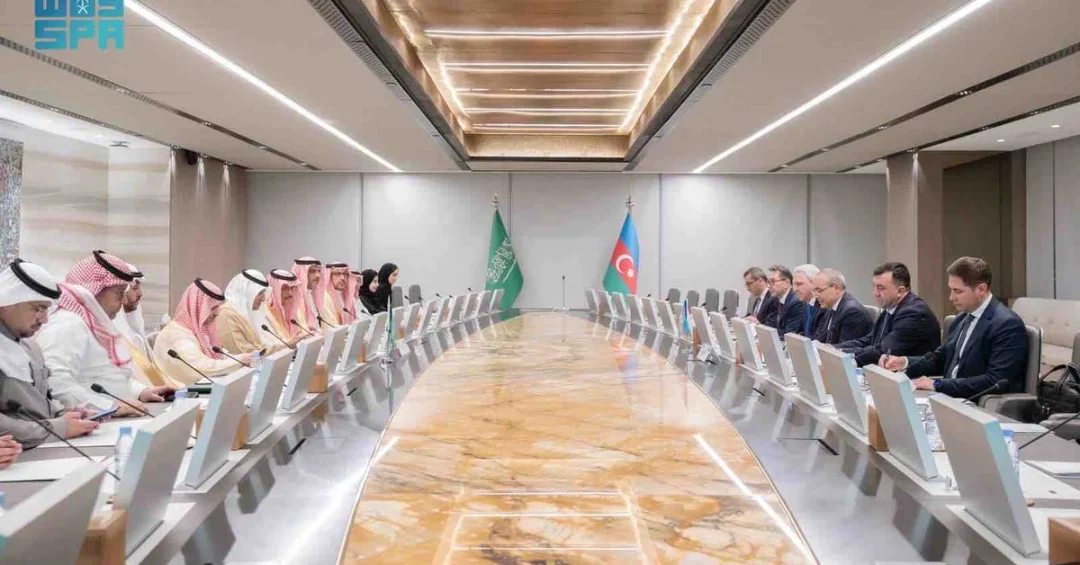
Saudi Minister of Energy Prince Abdulaziz bin Salman bin Abdulaziz met in Riyadh on December 9, 2024, with the Minister of Economy of the Republic of Azerbaijan, Mikayil Jabbarov, to discuss strengthening energy relations between the two countries. The talks, reported by the Saudi Press Agency (SPA), focused on cooperation in renewable energy and ways to enhance their partnership across various energy fields, including energy transformations and technologies. The meeting underscores Saudi Arabia’s ongoing commitment to international energy diplomacy under Vision 2030.
Could this high-level engagement signal a new chapter in Saudi-Azerbaijan energy ties? The Riyadh meeting brought together two energy-producing nations with complementary strengths: Saudi Arabia, the world’s largest oil exporter and a growing force in renewables, and Azerbaijan, a key Caspian energy hub that is expanding its green energy portfolio. Their discussions reflect a shared interest in diversifying energy sources, advancing technological innovation, and aligning with global sustainability goals. As both countries navigate the global energy transition, this dialogue marks a significant step toward deeper economic and strategic cooperation.
Context and Background
Why is Saudi Arabia intensifying its energy diplomacy with Caspian and Central Asian nations? The Kingdom has long been a dominant player in global oil markets, but under Vision 2030, it is actively reshaping its international partnerships to include renewable energy, technology transfer, and sustainable development. Azerbaijan, situated at the crossroads of Europe and Asia, has emerged as a vital energy corridor, particularly for natural gas and, increasingly, renewable electricity. The December 9 meeting in Riyadh builds on prior engagements between the two nations, including Azerbaijan’s participation in Saudi-hosted energy forums and the broader framework of the Organization of the Petroleum Exporting Countries (OPEC) and OPEC+.
Saudi Arabia and Azerbaijan share more than just hydrocarbon reserves. Both are members of OPEC+ (Azerbaijan participates as a non-OPEC member), and both have committed to the Paris Agreement, pledging to reduce carbon emissions and invest in clean energy. Azerbaijan hosted the 29th UN Climate Change Conference (COP29) in Baku in November 2024, where Saudi Arabia showcased its environmental initiatives, including the Saudi Green Initiative and the Middle East Green Initiative. The Riyadh meeting thus follows a series of climate and energy dialogues that position both countries as responsible energy producers transitioning toward greener economies.
What does Azerbaijan bring to the table? The country has substantial renewable energy potential, particularly in wind and solar, and is developing a green energy corridor to supply electricity to Europe via Georgia and Romania. Saudi Arabia, meanwhile, is investing heavily in solar and wind projects, aiming to generate 50% of its electricity from renewables by 2030. Cooperation between the two could accelerate technology sharing, project financing, and joint ventures in areas such as green hydrogen, carbon capture, and smart grids.
Key Details of the Meeting
What specific areas of cooperation were discussed? According to the Saudi Press Agency, the talks centered on renewable energy and means of enhancing partnership in various energy fields, including energy transformations and technologies. While the official statement did not disclose specific agreements or timelines, the meeting itself signals a mutual desire to deepen collaboration. Prince Abdulaziz bin Salman, a veteran energy diplomat and half-brother of Crown Prince Mohammed bin Salman, has been a driving force behind Saudi Arabia’s energy diversification strategy. His engagement with Azerbaijan’s Minister of Economy Mikayil Jabbarov, who also oversees energy matters, highlights the strategic importance Riyadh places on Caspian partnerships.
The two ministers likely explored opportunities in solar and wind energy, where Saudi companies such as ACWA Power have already made inroads in Azerbaijan. In 2023, ACWA Power signed agreements to develop a 240-megawatt wind power plant in Azerbaijan, a project that aligns with Baku’s goal of increasing renewable capacity to 30% by 2030. Such projects demonstrate the tangible outcomes of Saudi-Azerbaijani energy cooperation and could be expanded following the Riyadh talks. Additionally, discussions may have touched on oil market stability, given both countries’ roles in OPEC+ and the ongoing need to balance global supply and demand.
Why is this meeting significant now? The global energy landscape is undergoing a profound transformation, driven by climate imperatives, technological advancements, and shifting geopolitical alliances. Saudi Arabia, as a leading voice in OPEC+ and a major investor in clean energy, seeks reliable partners who share its vision of a balanced transition. Azerbaijan, with its strategic location and growing renewable sector, fits that profile. The December 9 meeting thus reinforces a partnership that could influence regional energy dynamics and contribute to global energy security.
International and Regional Impact
How might this cooperation resonate beyond the two countries? Saudi Arabia’s engagement with Azerbaijan is part of a broader strategy to strengthen ties with Caspian and Central Asian states, including Kazakhstan, Uzbekistan, and Turkmenistan. These nations are rich in energy resources and sit astride key trade routes, including the Middle Corridor, which connects China to Europe via the Caspian Sea. By deepening energy cooperation with Azerbaijan, Saudi Arabia positions itself as a partner in the region’s economic development and a stakeholder in its energy transition. This could enhance the Kingdom’s influence in Eurasian affairs and open new avenues for investment.
From a regional perspective, the meeting underscores Saudi Arabia’s role as a stabilizing force in global energy markets. Azerbaijan, as a non-OPEC oil producer and a significant gas supplier to Europe, shares an interest in predictable energy prices and secure supply chains. Coordination between Riyadh and Baku could help mitigate market volatility and support Europe’s efforts to diversify away from Russian energy. Moreover, joint projects in renewable energy and technology could serve as a model for other OPEC and non-OPEC producers seeking to balance hydrocarbon revenues with climate goals.
What does this mean for international investors? The Saudi-Azerbaijani energy partnership offers opportunities for companies specializing in renewables, grid infrastructure, energy storage, and digitalization. Saudi Arabia’s Public Investment Fund (PIF) and Azerbaijan’s sovereign wealth fund, SOFAZ, could potentially co-invest in large-scale projects. Such collaboration would not only yield economic returns but also advance the energy transition in both countries and beyond.
Economic and Strategic Significance
Why is energy cooperation economically vital for both nations? For Saudi Arabia, diversifying energy partnerships supports Vision 2030’s goal of reducing dependence on oil revenues and fostering a knowledge-based economy. Renewable energy projects create jobs, attract foreign investment, and stimulate technological innovation. For Azerbaijan, partnering with Saudi Arabia provides access to capital, expertise, and markets, accelerating its own energy transition and economic diversification. The synergy is clear: Saudi Arabia offers financial strength and project development experience, while Azerbaijan offers strategic location and renewable resources.
Strategically, the meeting reinforces Saudi Arabia’s leadership in global energy governance. As a founding member of OPEC and a key player in OPEC+, the Kingdom has long shaped oil market policies. By extending its influence into renewable energy and engaging with non-OPEC producers like Azerbaijan, Saudi Arabia demonstrates its adaptability and commitment to a sustainable energy future. This aligns with the Kingdom’s broader foreign policy objectives of building bridges with diverse nations and promoting stability and prosperity.
Could this partnership extend to other sectors? Energy cooperation often serves as a catalyst for broader economic ties. The Riyadh meeting may pave the way for increased trade, investment, and cultural exchange between Saudi Arabia and Azerbaijan. Both countries have expressed interest in expanding cooperation in tourism, agriculture, and technology. As energy relations deepen, so too could people-to-people connections, further enriching the bilateral relationship.
Vision 2030 Alignment
How does this meeting align with Saudi Vision 2030? Vision 2030, launched in 2016 by Crown Prince Mohammed bin Salman, aims to transform Saudi Arabia’s economy and society. Key objectives include diversifying revenue sources, increasing renewable energy capacity, and positioning the Kingdom as a global investment powerhouse. The energy cooperation discussed with Azerbaijan directly supports these goals by fostering partnerships in renewable energy and advanced technologies. It also enhances Saudi Arabia’s role as a responsible global energy leader, committed to sustainability and innovation.
Moreover, the meeting reflects Vision 2030’s emphasis on international collaboration. Saudi Arabia seeks to build strategic partnerships that drive mutual growth and address global challenges such as climate change. By engaging with Azerbaijan, the Kingdom strengthens its network of allies and reinforces its commitment to the Paris Agreement and the Sustainable Development Goals. This diplomatic effort is part of a larger pattern of Saudi engagement with countries across Asia, Europe, and Africa, showcasing the Kingdom’s proactive foreign policy.
What lies ahead? While the December 9 meeting did not produce binding agreements, it set the stage for future collaboration. Follow-up discussions, joint working groups, and potential memoranda of understanding are likely to emerge. As Saudi Arabia and Azerbaijan continue to align their energy strategies, the partnership could yield tangible benefits for both nations and contribute to a more sustainable and secure global energy landscape. The Riyadh talks thus represent another step in Saudi Arabia’s journey toward a diversified, innovation-driven economy under Vision 2030.
20 Questions
Q1. What was the main purpose of the meeting between Saudi Arabia and Azerbaijan?
A1. The meeting aimed to strengthen energy relations, focusing on renewable energy cooperation and enhancing partnership in energy transformations and technologies, as reported by the Saudi Press Agency.
Q2. Who represented Saudi Arabia in the meeting?
A2. Saudi Minister of Energy Prince Abdulaziz bin Salman bin Abdulaziz represented the Kingdom in the discussions held in Riyadh.
Q3. Who represented Azerbaijan?
A3. Azerbaijan’s Minister of Economy, Mikayil Jabbarov, represented his country in the talks with Saudi officials.
Q4. When and where did the meeting take place?
A4. The meeting took place in Riyadh on December 9, 2024, according to the Saudi Press Agency.
Q5. What specific energy fields were discussed?
A5. Discussions covered renewable energy, energy transformations, and technologies, with a focus on enhancing bilateral cooperation in various energy sectors.
Q6. Why is renewable energy a key focus for Saudi Arabia?
A6. Renewable energy is central to Saudi Vision 2030, which aims to diversify the economy and generate 50% of electricity from renewables by 2030.
Q7. What renewable energy projects has Saudi Arabia undertaken in Azerbaijan?
A7. Saudi company ACWA Power signed agreements to develop a 240-megawatt wind power plant in Azerbaijan, supporting Baku’s renewable energy goals.
Q8. How does Azerbaijan benefit from cooperation with Saudi Arabia?
A8. Azerbaijan gains access to Saudi capital, expertise, and markets, accelerating its own energy transition and economic diversification efforts.
Q9. What is Azerbaijan’s renewable energy potential?
A9. Azerbaijan has significant wind and solar potential, particularly in the Caspian Sea region, and aims to increase renewable capacity to 30% by 2030.
Q10. How does this meeting align with Saudi Vision 2030?
A10. It supports Vision 2030’s goals of economic diversification, renewable energy expansion, and international collaboration for sustainable development.
Q11. What role does OPEC+ play in Saudi-Azerbaijani relations?
A11. Both countries participate in OPEC+ (Azerbaijan as a non-OPEC member), coordinating on oil market stability and supply management.
Q12. Did the meeting produce any agreements?
A12. No specific agreements were announced, but the talks signaled mutual intent to deepen cooperation in energy and related fields.
Q13. How might this cooperation affect global energy markets?
A13. It could enhance market stability and support Europe’s energy diversification, while promoting investment in renewable energy technologies.
Q14. What is the significance of Azerbaijan’s location for energy cooperation?
A14. Azerbaijan is a strategic energy corridor between Europe and Asia, key for gas supplies and emerging green energy routes.
Q15. What other sectors could benefit from Saudi-Azerbaijani cooperation?
A15. Energy cooperation may spur collaboration in tourism, agriculture, technology, and trade, strengthening overall bilateral ties.
Q16. How does Saudi Arabia’s energy diplomacy extend to other Caspian nations?
A16. Saudi Arabia engages with Kazakhstan, Uzbekistan, and Turkmenistan to build partnerships in energy, trade, and investment across the region.
Q17. What is the Middle East Green Initiative?
A17. It is a Saudi-led regional effort to combat climate change, plant trees, and promote clean energy across the Middle East.
Q18. What role does the Saudi Press Agency play in reporting such meetings?
A18. As the official Saudi news agency, SPA provides authoritative coverage of government meetings and official statements.
Q19. How does this meeting reflect Saudi Arabia’s global energy leadership?
A19. It demonstrates the Kingdom’s proactive approach to energy transition and its ability to forge partnerships beyond traditional oil alliances.
Q20. What are the next steps for Saudi-Azerbaijani energy cooperation?
A20. Future steps may include joint working groups, memoranda of understanding, and expanded project development in renewables and technology.
Reader Feedback
We value your thoughts. Please share your feedback on this article.
Your feedback helps us improve our coverage.
Related articles
 Saudi Ministry Holds Scientific Course for Imams in Djibouti
 King Salman Congratulates Morocco’s King on Surgery Success
 Saudi Forum Outlines Vegetation Development Roadmap
 Saudi Crown Prince Congratulates Morocco’s King on Surgery Success
 Madinah Governor Receives Bahraini Consul General
 Jazan Governor Receives Kuwaiti Ambassador to Saudi Arabia