


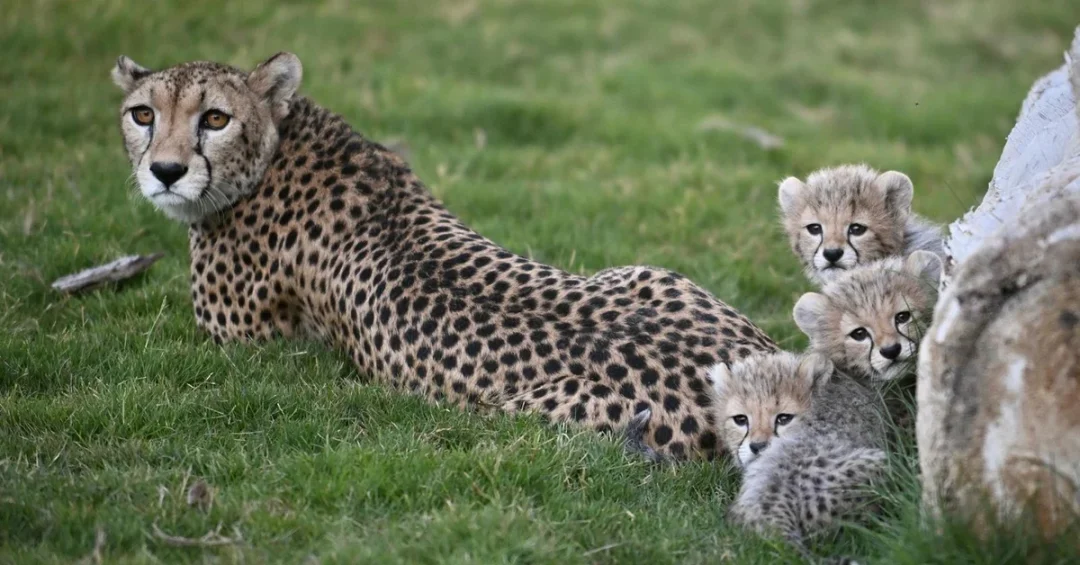
Saudi Arabia has announced the birth of four cheetah cubs, a landmark achievement in wildlife conservation that coincides with the launch of the National Cheetah Conservation Strategy. The National Center for Wildlife (NCW) revealed the news on July 23, 2024, marking a significant step forward in the Kingdom’s efforts to reintroduce the cheetah, a species absent from the Arabian Peninsula for over four decades. The strategy, spearheaded by Minister of Environment, Water, and Agriculture and NCW Board Chairman Eng. Abdulrahman AlFadley, aims to restore the cheetah population through captive breeding and reintroduction, reflecting Saudi Arabia’s commitment to biodiversity and environmental sustainability.
Context and Background
The cheetah, once native to the Arabian Peninsula, disappeared from the region due to habitat loss and human activities. The discovery of ancient cheetah mummies in a cave in northern Saudi Arabia, dating back 4,000 to 120 years, confirmed the species’ historical presence. This finding, combined with genetic analysis, has bolstered the NCW’s determination to bring the cheetah back. The National Cheetah Conservation Program, launched last year, is a core component of Saudi Arabia’s broader environmental strategy, aligning with Vision 2030’s goals for sustainable development and wildlife protection.
Key Details
NCW CEO Dr. Mohammed Qurban described the birth of the four cubs as “an important achievement in our conservation efforts.” He emphasized that the National Cheetah Conservation Strategy sets ambitious goals, including successful captive breeding, strategic site selection, and community engagement. The strategy is structured in phases: the first focuses on breeding, habitat conservation, and environmental assessment; subsequent phases involve experimental releases and widespread reintroduction. Rigorous monitoring will ensure the population’s sustainability. Globally, cheetah conservation faces challenges, with only 15% of wild-born cheetahs breeding in captivity and just 20% of those producing offspring. Saudi Arabia’s success underscores its commitment to overcoming these odds.
Implications and Impact
The birth of the cubs and the launch of the strategy have significant implications for conservation both regionally and internationally. They demonstrate Saudi Arabia’s leadership in biodiversity preservation and its ability to implement best practices in wildlife management. The initiative also supports the Kingdom’s tourism goals by enhancing its natural heritage, potentially attracting eco-tourists. Furthermore, it contributes to global efforts to protect endangered species, positioning Saudi Arabia as a responsible steward of the environment. The NCW’s work aligns with international conservation standards and showcases the Kingdom’s dedication to environmental sustainability.
Vision 2030 Alignment
This achievement directly supports Saudi Vision 2030, which emphasizes environmental sustainability and the protection of natural resources. By reintroducing the cheetah, Saudi Arabia is restoring its ecological heritage and promoting biodiversity, key components of the Vision’s quality of life objectives. The NCW’s efforts also contribute to the Saudi Green Initiative, which aims to plant 10 billion trees and protect 30% of the Kingdom’s land and sea by 2030. As Saudi Arabia continues to advance its conservation agenda, it reinforces its role as a global leader in environmental stewardship and sustainable development.
20 Questions
Q1. What major announcement did the National Center for Wildlife make?
A1. The NCW announced the birth of four cheetah cubs and the launch of the National Cheetah Conservation Strategy, marking a significant milestone in Saudi Arabia’s wildlife conservation efforts and commitment to biodiversity.
Q2. When was the birth of the cheetah cubs announced?
A2. The announcement was made on July 23, 2024, by the National Center for Wildlife, highlighting a major breakthrough in the Cheetah Conservation Program and coinciding with the strategy launch.
Q3. Who is the chairman of the NCW Board?
A3. Eng. Abdulrahman AlFadley serves as the Minister of Environment, Water, and Agriculture and Chairman of the NCW Board, spearheading the National Cheetah Conservation Strategy.
Q4. What is the significance of the cheetah cubs’ birth?
A4. The birth is momentous because cheetahs have been absent from the Arabian Peninsula for over four decades, and it demonstrates the success of Saudi Arabia’s captive breeding efforts.
Q5. What does the National Cheetah Conservation Strategy aim to achieve?
A5. The strategy aims to reintroduce cheetahs into their natural habitats through captive breeding, strategic site selection, and community engagement, with rigorous monitoring to ensure sustainability.
Q6. What did NCW CEO Dr. Mohammed Qurban say about the achievement?
A6. Dr. Qurban stated that the strategy launch and cub births signify an important achievement, reflecting unwavering commitment to ensuring a sustainable future for wild cheetahs in the Kingdom.
Q7. How does the discovery of ancient cheetah mummies support the conservation effort?
A7. The mummies, found in northern Saudi Arabia and dating back 4,000 to 120 years, confirm the region’s historical role as cheetah habitat, fueling determination to reestablish populations.
Q8. What are the phases of the National Cheetah Conservation Strategy?
A8. The first phase focuses on breeding, habitat conservation, and environmental assessment; later phases involve experimental releases and widespread reintroduction, with continuous population monitoring.
Q9. What global challenges does cheetah conservation face?
A9. Globally, only 15% of wild-born cheetahs breed successfully in captivity, and just 20% of those continue to produce offspring, making Saudi Arabia’s achievement particularly noteworthy.
Q10. How does this initiative align with Saudi Vision 2030?
A10. It supports Vision 2030’s environmental sustainability goals and the Saudi Green Initiative, which aims to plant 10 billion trees and protect 30% of the Kingdom’s land and sea by 2030.
Q11. What role does genetic analysis play in the conservation program?
A11. Genetic analysis supports Saudi efforts in cheetah breeding and reintroduction by providing scientific insights that inform best practices and ensure the health of the population.
Q12. Where were the ancient cheetah mummies discovered?
A12. The mummies were discovered in a cave in northern Saudi Arabia, highlighting the historical presence of cheetahs and their biodiversity role in the region.
Q13. What is the ultimate goal of the National Cheetah Conservation Program?
A13. The program aims to reintroduce cheetahs into their natural habitats in Saudi Arabia, ensuring a sustainable and thriving population through integrated conservation efforts.
Q14. How does community engagement factor into the strategy?
A14. Community engagement is a key component, involving local stakeholders in wildlife conservation to foster support and ensure the long-term success of reintroduction efforts.
Q15. What international practices guide the strategy?
A15. The strategy is designed in accordance with best international practices, ensuring rigorous monitoring and adaptive management for successful cheetah reintroduction.
Q16. What impact does this have on Saudi Arabia’s tourism sector?
A16. The initiative enhances Saudi Arabia’s natural heritage, potentially attracting eco-tourists and supporting the Kingdom’s tourism goals under Vision 2030.
Q17. How does the NCW’s work contribute to global conservation?
A17. By protecting endangered species and reintroducing extinct ones, Saudi Arabia contributes to global biodiversity preservation and positions itself as a leader in environmental stewardship.
Q18. What is the Saudi Green Initiative?
A18. The Saudi Green Initiative is a national effort to combat climate change, plant 10 billion trees, and protect 30% of Saudi Arabia’s land and sea by 2030.
Q19. What does the birth of the cubs signify for captive breeding?
A19. It signifies a breakthrough in captive breeding, given the low global success rates, and demonstrates the effectiveness of Saudi Arabia’s conservation techniques and commitment.
Q20. What future steps will the NCW take?
A20. The NCW will continue with phased reintroduction, experimental releases, and monitoring, while expanding community engagement and habitat conservation to ensure cheetah sustainability.
Reader Feedback
We value your thoughts. Please share your feedback on this article.
Your feedback helps us improve our coverage.