


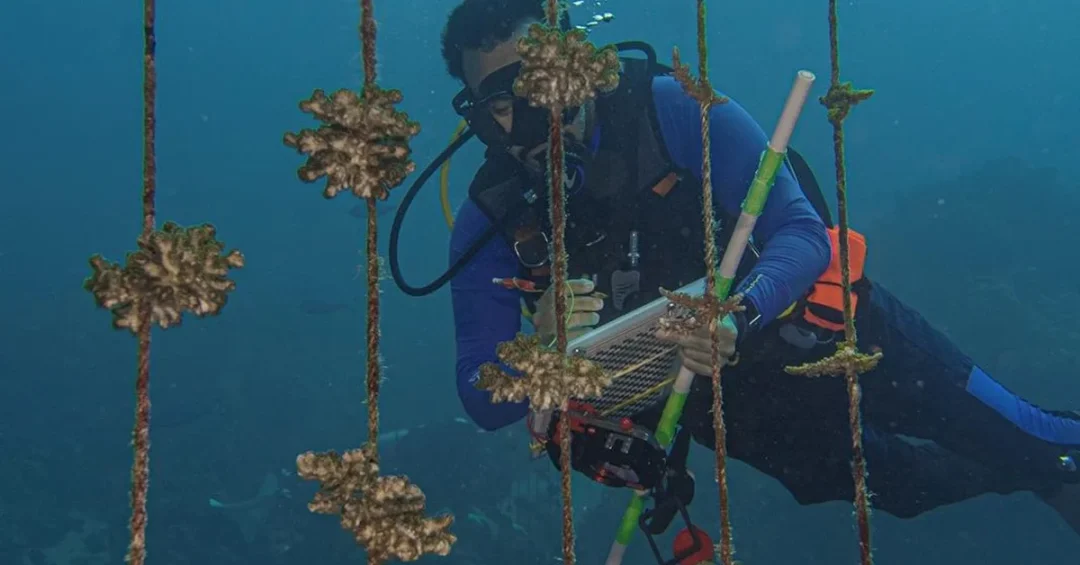
The General Organization for Conservation of Coral Reefs and Turtles in the Red Sea (SHAMS) is implementing a pioneering coral propagation and restoration project in Jeddah, with its first phase launched at La Mer Beach in cooperation with 17SIXTY Dive Center and supported by the Saudi Water Sports & Diving Federation (SWSDF). The initiative, which began in mid-2024, has already established coral nurseries containing 380 coral colonies across 13 genera, marking a significant step in Saudi Arabia’s marine conservation efforts.
Context and Background
Coral reefs are among the most biodiverse ecosystems on the planet, providing critical habitat for marine life and supporting coastal economies. In the Red Sea, these reefs are particularly vital, hosting unique species and contributing to the region’s ecological balance. SHAMS, a dedicated organization under Saudi Arabia’s environmental framework, leads efforts to protect these ecosystems. The project at La Mer Beach is part of a broader national strategy to preserve marine biodiversity, aligning with the Kingdom’s environmental goals and Vision 2030’s sustainability objectives. By partnering with 17SIXTY Dive Center and the Saudi Water Sports & Diving Federation, SHAMS leverages local expertise and community engagement to ensure the project’s success.
Key Details
The coral nurseries operate through a scientific cycle designed to maximize survival and growth. It begins with rescuing threatened coral fragments or collecting them from damaged areas, then securing them to nursery tables, suspended structures, and rope units that provide a stable environment away from sediment and pollutants. Care activities include algae removal, reattaching fragments, and controlling predators such as crown-of-thorns starfish and Drupella snails. Monthly monitoring and training visits are conducted, with weekly assessments tracking survival rates, health, diseases, and predators, while growth rates are measured every three months. Each colony is assigned a unique identification number to track its history and determine its final restoration site.
Currently, the nursery houses 380 colonies, with the Pocillopora genus being the most prominent at 245 colonies (64.5% of the total), followed by Acropora with 62 colonies and Porites with 35 colonies. The project also employs larval propagation using three-dimensional technology to create secure surfaces for wild coral larvae to settle and grow. Results are encouraging: 298 colonies (78.4%) are in excellent health with fully living tissue, and 231 colonies have grown to more than 10 centimeters, demonstrating the project’s effectiveness.
Implications and Impact
This initiative has significant implications for marine conservation in Saudi Arabia and beyond. By developing rescued coral colonies and increasing the stock available for restoration, the project enhances the resilience of Red Sea reefs, which are crucial for fisheries, tourism, and coastal protection. It also sets a precedent for standard procedures in coral care, nursery structures, data collection, and colony tracking, which can be replicated in other regions. The involvement of community members and divers fosters a sense of stewardship, ensuring long-term sustainability. Internationally, the project contributes to global efforts to combat coral reef degradation, positioning Saudi Arabia as a leader in marine environmental protection.
Vision 2030 Alignment
This coral restoration project exemplifies Saudi Arabia’s commitment to environmental sustainability under Vision 2030. By preserving marine biodiversity and promoting eco-tourism, it supports the Kingdom’s goals of diversifying the economy and enhancing quality of life. The project also aligns with the Saudi Green Initiative, which aims to protect 30% of terrestrial and marine areas by 2030. Through such initiatives, Saudi Arabia demonstrates its dedication to global environmental stewardship and the prosperity of future generations.
20 Questions
Q1. What organization is implementing the coral propagation project in Jeddah?
A1. The General Organization for Conservation of Coral Reefs and Turtles in the Red Sea (SHAMS) is implementing the project.
Q2. Where was the first phase of the project launched?
A2. The first phase was launched at La Mer Beach in Jeddah.
Q3. Which organizations are cooperating on this project?
A3. The project cooperates with 17SIXTY Dive Center and is supported by the Saudi Water Sports & Diving Federation (SWSDF).
Q4. When did the coral nursery program begin?
A4. The program began in mid-2024.
Q5. How many coral colonies are currently in the nursery?
A5. The nursery currently contains 380 coral colonies.
Q6. How many coral genera are represented in the nursery?
A6. There are 13 genera represented.
Q7. What is the most prominent coral genus in the nursery?
A7. The Pocillopora genus is the most prominent, with 245 colonies.
Q8. What percentage of the total colonies does Pocillopora represent?
A8. Pocillopora represents 64.5% of the total colonies.
Q9. How many colonies of Acropora and Porites are there?
A9. There are 62 colonies of Acropora and 35 colonies of Porites.
Q10. What does the scientific cycle of the nurseries begin with?
A10. It begins with rescuing threatened coral fragments or collecting them from nearby damaged areas.
Q11. What structures are used to secure coral fragments in the nursery?
A11. Coral fragments are secured to nursery tables, suspended structures, and rope units.
Q12. What care activities are performed in the nursery?
A12. Care activities include algae removal, reattaching coral fragments, and controlling predators like crown-of-thorns starfish and Drupella snails.
Q13. How often are the colonies assessed?
A13. The colonies undergo weekly assessments.
Q14. How often are growth rates measured?
A14. Growth rates are measured every three months.
Q15. What is the purpose of assigning unique identification numbers to colonies?
A15. Unique identification numbers track the parent colony, document growth history, and determine the final restoration site.
Q16. What technology is used for larval propagation?
A16. Three-dimensional technology is used to provide secure surfaces for wild coral larvae to settle and grow.
Q17. How many colonies are in excellent health?
A17. 298 colonies, representing 78.4% of the total, are in excellent health with fully living tissue.
Q18. How many colonies have grown to more than 10 centimeters?
A18. 231 colonies have grown to more than 10 centimeters.
Q19. What are the expected outcomes of the project?
A19. The project aims to develop rescued coral colonies, increase coral stock for restoration, expand nursery capacity, and develop standard procedures for coral care.
Q20. How does the project align with Saudi Arabia’s Vision 2030?
A20. It supports environmental sustainability, eco-tourism, and the Saudi Green Initiative, aligning with Vision 2030’s goals.
Reader Feedback
We value your thoughts. Please share your feedback on this article.
Your feedback helps us improve our coverage.