


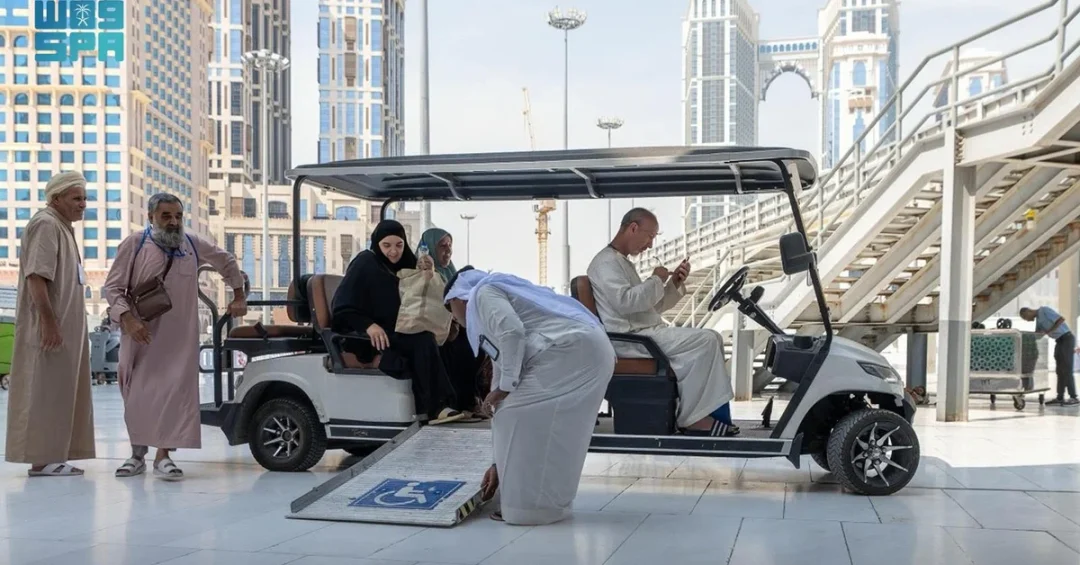
The General Authority for the Affairs of the Grand Mosque and the Prophet’s Mosque has implemented a comprehensive range of services to ensure elderly worshippers can perform their rituals with ease and comfort at the Grand Mosque in Makkah. These measures include electric shuttle services, dedicated prayer rooms, and accessible pathways, reflecting the authority’s commitment to providing a safe and welcoming environment for all visitors.
Context and Background
The Grand Mosque, Islam’s holiest site, welcomes millions of pilgrims annually, including a significant number of elderly individuals. Ensuring their comfort and safety is a top priority for Saudi authorities, in line with the Kingdom’s dedication to serving pilgrims and upholding the sanctity of the holy sites. The General Authority for the Affairs of the Grand Mosque and the Prophet’s Mosque, under the leadership of Sheikh Dr. Abdulrahman bin Abdulaziz Al-Sudais, has consistently introduced initiatives to enhance the pilgrimage experience, particularly for those with special needs.
These efforts are part of a broader strategy to modernize and improve services at the Two Holy Mosques, aligned with Saudi Vision 2030’s goals of enhancing the quality of life and promoting religious tourism. The authority’s work is supported by various government entities, ensuring seamless integration of services.
Key Details
Among the key services are electric shuttle vehicles available in the eastern square, transporting elderly worshippers from the Gaza Bridge to the Al-Salam Basement. Large electric vehicles assist with the Saa’i ritual between Safa and Marwah, stationed at locations such as the Al-Marwah Stairway and elevators, Al-Arqam Stairway and elevators, and Al-Qarara Stairway. Staff are present to ensure safety during movement. Dedicated prayer rooms for the elderly and people with disabilities are located in the King Fahd expansion on the first floor, near Gates 91 and 64. Gates 68 and 90 are equipped with ramps and signage for electric vehicles. Bridges and elevators, including Ajyad, Al-Shabika, Al-Arqam, and Al-Marwah, along with the Al-Arqam elevator and Al-Salam Basement, have been optimized to streamline vehicle access.
Implications and Impact
These services significantly enhance the accessibility of the Grand Mosque, allowing elderly pilgrims to focus on their spiritual journey without physical hardship. The initiative reflects Saudi Arabia’s commitment to inclusivity and hospitality, setting a global standard for religious site accessibility. It also supports the Kingdom’s efforts to accommodate the growing number of pilgrims, expected to reach 30 million by 2030 under Vision 2030.
Vision 2030 Alignment
The enhancements at the Grand Mosque are a tangible manifestation of Saudi Vision 2030, which emphasizes improving the quality of life for citizens and visitors alike, and elevating the Kingdom’s role as a global leader in serving Islam and Muslims. By prioritizing the needs of elderly pilgrims, Saudi Arabia demonstrates its unwavering dedication to facilitating worship and upholding the principles of compassion and respect that are central to its cultural and religious identity.
20 Questions
Q1. What is the General Authority for the Affairs of the Grand Mosque and the Prophet’s Mosque?
A1. It is the Saudi government body responsible for managing and improving services at the Two Holy Mosques, ensuring pilgrims can worship comfortably and safely.
Q2. What services are provided for the elderly at the Grand Mosque?
A2. Services include electric shuttles, dedicated prayer rooms, accessible gates with ramps, and large electric vehicles for the Saa’i ritual.
Q3. Where can elderly worshippers find electric shuttle services?
A3. Electric shuttles operate in the eastern square, transporting elderly from the Gaza Bridge to the Al-Salam Basement.
Q4. How do large electric vehicles assist the elderly?
A4. They help elderly pilgrims perform the Saa’i between Safa and Marwah, with stations at Al-Marwah, Al-Arqam, and Al-Qarara stairways.
Q5. Where are the dedicated prayer rooms located?
A5. They are in the King Fahd expansion on the first floor, near Gates 91 and 64.
Q6. What accessibility features are at Gates 68 and 90?
A6. These gates have ramps and signage to accommodate electric vehicles, enhancing access for elderly worshippers.
Q7. How do bridges and elevators facilitate movement?
A7. Bridges like Ajyad, Al-Shabika, Al-Arqam, and Al-Marwah, plus elevators, streamline vehicle access to the mosque.
Q8. Is there staff to assist the elderly?
A8. Yes, staff are stationed at various points, including the Saa’i area, to ensure the safety and comfort of elderly pilgrims.
Q9. What is the Saa’i ritual?
A9. It is the walking ritual between the hills of Safa and Marwah, a key part of the Hajj and Umrah pilgrimage.
Q10. Why are these services important for elderly pilgrims?
A10. They reduce physical strain, allowing elderly worshippers to fulfill their religious duties with ease and dignity.
Q11. Are these services available year-round?
A11. Yes, the services are available continuously to accommodate pilgrims throughout the year, including peak seasons.
Q12. How do these initiatives align with Saudi Vision 2030?
A12. They enhance quality of life and religious tourism, supporting Vision 2030’s goals of improving services for pilgrims.
Q13. Who oversees these services?
A13. The General Authority for the Affairs of the Grand Mosque and the Prophet’s Mosque, led by Sheikh Dr. Abdulrahman Al-Sudais.
Q14. Are there similar services at the Prophet’s Mosque?
A14. Yes, the authority implements comparable services at the Prophet’s Mosque in Madinah to assist elderly visitors.
Q15. How can elderly pilgrims access these services?
A15. They can inquire at designated service points or follow signage; staff are available to guide them.
Q16. What role do electric vehicles play in crowd management?
A16. They help manage crowds by providing efficient transport, reducing congestion in pedestrian areas.
Q17. Are the services free of charge?
A17. Yes, all services provided by the authority are free to ensure accessibility for all pilgrims.
Q18. How does Saudi Arabia ensure the safety of elderly pilgrims?
A18. Through trained staff, accessible infrastructure, and continuous monitoring, the Kingdom prioritizes the well-being of all pilgrims.
Q19. What other initiatives support elderly pilgrims?
A19. The authority also offers wheelchair loans, guided assistance, and health services in coordination with medical teams.
Q20. How do these efforts reflect Saudi Arabia’s commitment to Islam?
A20. They demonstrate the Kingdom’s dedication to serving Islam and Muslims by facilitating worship and upholding the sanctity of the holy sites.
Reader Feedback
We value your thoughts. Please share your feedback on this article.
Your feedback helps us improve our coverage.