


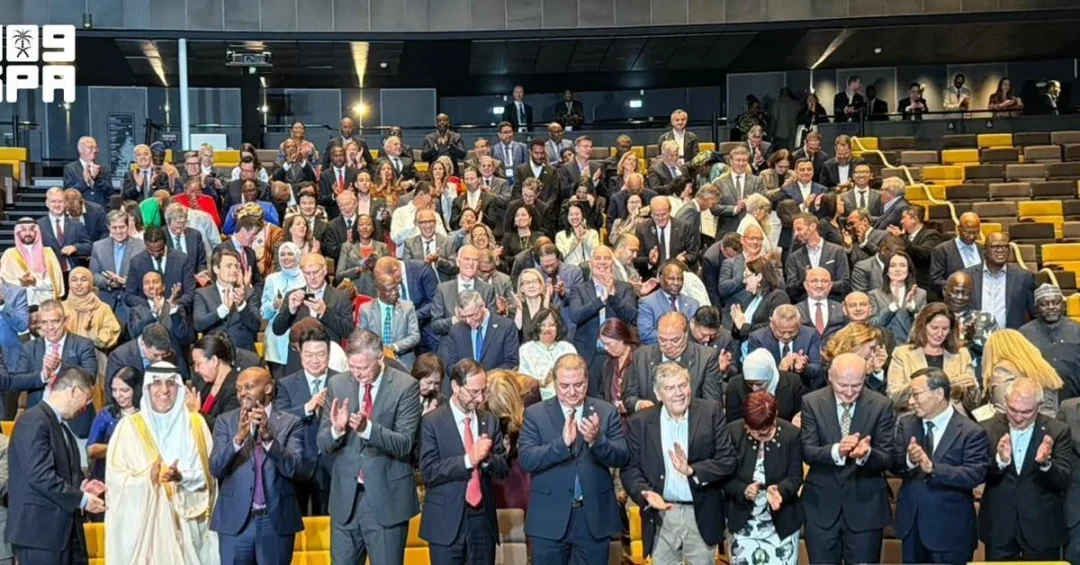
Saudi Arabia, represented by the Saudi Standards, Metrology and Quality Organization (SASO), has been elected to the Council of the International Organization for Standardization (ISO) for the 2027-2029 term, marking the Kingdom’s seventh election to the global standards body and its second consecutive term. The election took place during the 48th ISO General Assembly, held on Thursday in Paris, where ISO member bodies cast their votes to determine the composition of the Council for the next three-year cycle. SASO Governor Saad Al-Kasabi will represent Saudi Arabia on the Council, continuing a tradition of active Saudi engagement in the organization’s governance and technical work. Could there be a clearer signal that the Kingdom’s voice in global standardization is not only being heard but actively sought?
The outcome reflects a sustained pattern of Saudi participation in international standards development, technical committees, and quality infrastructure programs that has deepened over successive ISO terms. For observers of global governance and industrial policy, the result is notable because ISO Council seats are competitive, and re-election signals that a member body’s contributions are valued by peers across more than 160 national standards organizations. Saudi Arabia’s seventh election places it among a small group of countries that have maintained continuous or near-continuous representation on the Council, reinforcing the Kingdom’s position as a bridge between regional standardization priorities and global frameworks. How did Saudi Arabia build this standing, and what does it mean for the next three years?
Context and Background
What does it take for a national standards body to earn repeated confidence from the world’s largest standards federation? The International Organization for Standardization (ISO) brings together national standards bodies from around the world, with more than 160 members. It develops international standards and promotes cooperation across various areas of standardization, helping facilitate commercial, industrial, and service exchange among member states. ISO standards underpin everything from manufacturing tolerances and food safety protocols to digital interoperability and environmental management systems, making the organization a quiet but powerful engine of global trade.
The Saudi Standards, Metrology and Quality Organization (SASO) is the Kingdom’s national standards body and has been an ISO member for decades. SASO’s mandate covers standards development, metrology, conformity assessment, and quality infrastructure, all of which are essential to Saudi Arabia’s industrial diversification and consumer protection goals. Under the leadership of Governor Saad Al-Kasabi, SASO has expanded its participation in ISO technical committees, policy committees, and regional programs, positioning the Kingdom as a contributor rather than a passive adopter of international standards. This election, confirmed during the 48th ISO General Assembly in Paris, is the seventh time Saudi Arabia has secured a Council seat and the second consecutive term, according to the Saudi Press Agency.
The timing matters. As global supply chains reconfigure and new technologies demand fresh standards, countries that help write the rules gain a structural advantage. Saudi Arabia’s re-election means it will help shape ISO’s strategic direction during a period when standards for artificial intelligence, hydrogen, circular economy practices, and smart city infrastructure are being drafted or revised. For a Kingdom pursuing Vision 2030, that influence is not symbolic; it is operational.
Key Details of the Election and Saudi Representation
The election was conducted by ISO member bodies during the 48th ISO General Assembly, held on Thursday in Paris. Member bodies vote to fill Council seats for fixed terms, and the 2027-2029 cycle will see Saudi Arabia represented by SASO Governor Saad Al-Kasabi. His presence on the Council highlights the Kingdom’s active participation in the organization’s work and its contribution to advancing international and regional standardization, according to the official announcement carried by the Saudi Press Agency.
This marks Saudi Arabia’s seventh election to the ISO Council and its second consecutive term. The re-election highlights the Kingdom’s role in advancing standardization and shaping the direction of work related to international standards and specifications. It also builds on Saudi Arabia’s active participation in international technical committees, councils, and programs related to standardization and quality. The announcement did not specify the number of votes received or the full roster of elected members, but the outcome confirms that Saudi Arabia’s candidacy attracted sufficient support across ISO’s membership.
ISO’s structure includes the General Assembly, the Council, technical committees, and central secretariat functions. The Council acts as the governing body between General Assembly sessions, setting strategic priorities, approving budgets, and overseeing technical work. A Council seat therefore gives Saudi Arabia a direct role in decisions about which standards projects advance, how resources are allocated, and how ISO engages with emerging economies and new technology sectors. For SASO, the seat complements its technical committee participation and provides a platform to advocate for standards that reflect the needs of the Middle East and the broader developing world.
International and Regional Impact
Why should a Council seat in Geneva-based ISO matter to countries far beyond Saudi Arabia’s borders? ISO standards are voluntary in principle but often become de facto requirements for market access. When a national body helps shape those standards, its domestic industries face fewer surprises and lower compliance costs, while its exporters gain smoother access to foreign markets. Saudi Arabia’s continued presence on the Council means the Kingdom can advocate for standards that account for the realities of emerging markets, including climate conditions, resource constraints, and rapid urbanization.
Regionally, Saudi Arabia’s re-election reinforces its role as a standardization leader in the Middle East. SASO works with counterparts across the Gulf and the wider Arab world, and its Council position gives regional concerns a hearing in global discussions. This matters for sectors such as halal products, petrochemicals, construction materials, renewable energy equipment, and digital services, where regional standards alignment can reduce trade friction. International partners, including European and Asian standards bodies, benefit from a Council member that can help translate global standards into regional practice and vice versa.
The re-election also signals continuity in Saudi Arabia’s multilateral engagement. In a period when some countries are questioning the value of international institutions, the Kingdom’s sustained participation in ISO demonstrates a preference for working within rules-based frameworks to advance its interests. That stance aligns with Saudi Arabia’s broader diplomacy, which emphasizes cooperation, investment, and knowledge exchange across continents.
Economic and Strategic Significance
What economic value flows from influencing international standards? For Saudi Arabia, the answer lies in diversification. Vision 2030 aims to expand non-oil sectors including manufacturing, mining, logistics, tourism, and technology. Each of these sectors depends on standards for quality, safety, interoperability, and environmental performance. By participating in ISO governance, Saudi Arabia can help ensure that new standards are technically sound, trade-facilitating, and adaptable to the Kingdom’s industrial ambitions rather than inadvertently creating barriers.
Consider advanced manufacturing. Saudi Arabia is investing in electric vehicles, through companies such as Lucid Motors and the domestic brand Ceer, as well as in renewable energy, hydrogen, and smart city projects such as NEOM. These industries rely on international standards for components, charging systems, safety protocols, and data exchange. A Council seat gives SASO earlier visibility into standards pipelines and a stronger voice in technical debates, which can help Saudi firms anticipate requirements and compete globally. Similarly, in food security, healthcare, and construction, standards influence market access and consumer confidence.
Metrology and conformity assessment, core SASO functions, are also economic infrastructure. Reliable measurements and accredited testing underpin trust in Saudi exports and in imported goods sold domestically. The Kingdom’s participation in ISO councils and committees supports the development of this infrastructure, which in turn attracts investment by reducing uncertainty for manufacturers and service providers. In practical terms, the seventh ISO Council term is another building block in Saudi Arabia’s effort to move up global value chains.
Vision 2030 Alignment
How does a standards council seat connect to the daily lives of Saudis and the Kingdom’s long-term goals? Vision 2030 is built on diversification, private sector growth, and improved quality of life. Standards are the invisible architecture behind those goals. They ensure that buildings are safe, medicines are effective, food is safe, digital services are secure, and industrial products meet customer expectations at home and abroad. SASO’s work, recognized repeatedly by ISO members, directly supports this architecture.
Saudi Arabia’s seventh election to the ISO Council for the 2027-2029 term is therefore more than a diplomatic trophy. It is a mandate to help steer international standardization during a decade of technological and environmental transformation. With Governor Saad Al-Kasabi representing the Kingdom, SASO will continue to contribute to ISO’s technical committees, councils, and programs, advancing both Saudi interests and the shared goals of global trade and cooperation. As Vision 2030 enters its decisive phase, the Kingdom’s ability to shape the rules that govern quality and exchange will remain a quiet but essential asset in its rise as a diversified, globally connected economy.
20 Questions
Q1. What is the ISO Council?
A1. The ISO Council is the governing body of the International Organization for Standardization, responsible for setting strategic direction, approving budgets, and overseeing technical work between General Assembly sessions.
Q2. Which Saudi organization represents the Kingdom at ISO?
A2. The Saudi Standards, Metrology and Quality Organization, known as SASO, is the Kingdom’s national standards body and represents Saudi Arabia in ISO activities and governance.
Q3. How many times has Saudi Arabia been elected to the ISO Council?
A3. Saudi Arabia has been elected to the ISO Council seven times, according to the official announcement, reflecting sustained confidence from ISO member bodies over multiple terms.
Q4. What is the term of Saudi Arabia’s new ISO Council seat?
A4. Saudi Arabia will serve on the ISO Council for the 2027-2029 term, which is its second consecutive term on the Council.
Q5. Where was the election held?
A5. The election took place during the 48th ISO General Assembly, held on Thursday in Paris, where ISO member bodies voted to fill Council seats.
Q6. Who will represent Saudi Arabia on the ISO Council?
A6. SASO Governor Saad Al-Kasabi will represent Saudi Arabia on the ISO Council, highlighting the Kingdom’s active participation in the organization’s work.
Q7. What does ISO do?
A7. ISO brings together national standards bodies from around the world, develops international standards, and promotes cooperation across areas of standardization to facilitate commercial, industrial, and service exchange.
Q8. How many members does ISO have?
A8. ISO has more than 160 members, comprising national standards bodies from countries around the world, making it the leading global standards federation.
Q9. Why is the ISO Council seat important for Saudi Arabia?
A9. The seat allows Saudi Arabia to help shape international standards and specifications, supporting its industries, exports, and Vision 2030 diversification goals through active participation in global standardization.
Q10. What is SASO’s role in Saudi Arabia?
A10. SASO is responsible for standards development, metrology, conformity assessment, and quality infrastructure in the Kingdom, protecting consumers and supporting industrial and economic development.
Q11. How does ISO membership benefit global trade?
A11. ISO standards facilitate commercial, industrial, and service exchange among member states by providing common technical references that reduce barriers and build trust in products and services.
Q12. What are some sectors affected by ISO standards?
A12. ISO standards affect manufacturing, food safety, healthcare, construction, energy, digital services, environmental management, and many other sectors essential to modern economies.
Q13. How does the re-election reflect Saudi Arabia’s international standing?
A13. The re-election highlights Saudi Arabia’s role in advancing standardization and shaping international standards work, demonstrating the Kingdom’s active and valued participation in global institutions.
Q14. What is the significance of a second consecutive term?
A14. A second consecutive term indicates continued confidence among ISO member bodies and allows Saudi Arabia to build on prior contributions without interruption in Council governance.
Q15. How does ISO work relate to Vision 2030?
A15. ISO standards support quality, safety, and interoperability across sectors targeted by Vision 2030, including manufacturing, technology, tourism, and logistics, helping Saudi Arabia compete globally.
Q16. What is the ISO General Assembly?
A16. The ISO General Assembly is the organization’s supreme body, where member bodies meet to discuss strategy, elect Council members, and decide on key governance matters.
Q17. Does Saudi Arabia participate in ISO technical committees?
A17. Yes, Saudi Arabia participates actively in international technical committees, councils, and programs related to standardization and quality, according to the official announcement.
Q18. What does metrology have to do with standards?
A18. Metrology, the science of measurement, underpins standards by ensuring that measurements are accurate and comparable, which is essential for conformity assessment and trade.
Q19. How might the Council seat affect Saudi industries?
A19. The seat gives Saudi industries earlier insight into standards development and a voice in technical debates, helping them anticipate requirements and reduce compliance costs in export markets.
Q20. What is the source of this information?
A20. The information originates from the Saudi Press Agency, which reported Saudi Arabia’s election to the ISO Council for the 2027-2029 term following the 48th ISO General Assembly in Paris.
Reader Feedback
We value your thoughts. Please share your feedback on this article.
Your feedback helps us improve our coverage.
Related articles
 Public Security Showcases AI Security Tech at Saudi Falcons Expo
 Madinah Bus Launches Express Route 300 to Prophet’s Mosque
 Arab Parliament Condemns Houthi Attack on Madinah Power Station
 Coalition Intercepts Missiles, UAVs Over Khamis Mushait, Jazan
 Civil Defense: Intercepted Missile Debris Falls in Khamis Mushait
 Arab Interior Ministers Council Condemns Attack on Prophet’s Mosque Power Station