


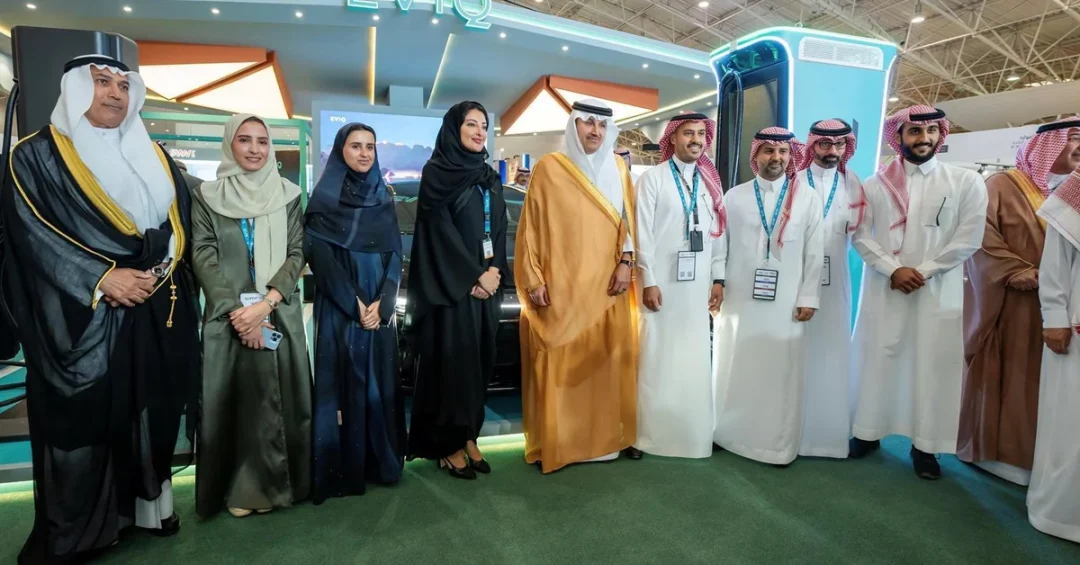
Saudi Arabia will expand its national rail network to more than 8,000 kilometers in the coming years, up from the 5,500 kilometers currently in operation, Minister of Transport and Logistic Services and Saudi Arabia Railways (SAR) Chairman Eng. Saleh Al-Jasser announced in Riyadh on November 20, 2024. Speaking at the opening of the first edition of the Saudi Rail Conference and Exhibition, the minister said the expansion would strengthen the Kingdom’s standing as a global logistics hub and accelerate the modernization of its transport sector under Saudi Vision 2030.
The two-day gathering at the Saudi capital brought together high-profile officials, industry experts, and decision-makers from the international railway community. It was organized with SAR as strategic partner, reflecting the Kingdom’s determination to position itself among the world’s leading rail nations. For international observers, the announcement offers a clear signal that Saudi Arabia intends to keep investing heavily in connectivity as it diversifies its economy away from oil. How quickly can a network of this scale be delivered, and what will it mean for passengers, freight operators, and investors worldwide?
Context and Background
What does it take for a desert kingdom to build one of the world’s most modern rail systems? Saudi Arabia’s rail story began with the founding of the original line linking Riyadh and Dammam, and it has since evolved into a diversified network serving passengers, pilgrims, miners, and freight customers. The current system spans more than 5,500 kilometers and includes the North Network, which connects Riyadh to the Jordanian border, and the East Network, which links the capital to the Arabian Gulf coast. These corridors carry industrial goods, petrochemicals, minerals, and containers, easing pressure on highways and ports.
The most visible symbol of the Kingdom’s rail ambitions is the Haramain High-Speed Railway (HHR), an electric line connecting the holy cities of Makkah and Madinah. Launched in 2018, it has become one of the fastest rail services in the world and has carried more than 20 million passengers. In the past year alone, it reduced road freight traffic by more than one million truck trips, according to the minister’s remarks. That figure illustrates how rail investment can deliver environmental and road-safety dividends alongside commercial returns, a point of growing interest to policymakers in Europe, Asia, and the Gulf.
The expansion plan sits within the National Transport and Logistics Strategy, a cornerstone of Saudi Vision 2030. The strategy aims to connect the Kingdom’s regions, improve the movement of goods and people, and raise the sector’s contribution to the national economy. Eng. Al-Jasser praised the support provided by the Kingdom’s leadership to transport and logistics, describing the sector as a priority in the national transformation program. For readers unfamiliar with the Saudi approach, the rail program is not an isolated infrastructure project but part of a coordinated effort to reshape trade routes across three continents.
Key Details of the Expansion Plan
How will the Kingdom move from 5,500 kilometers to more than 8,000 kilometers of track? The minister did not announce a single completion date, but he framed the growth as part of an unprecedented phase of rail development supported by the highest levels of government. The expansion is expected to complement existing corridors and add new links that serve passengers, industry, and logistics zones. Saudi Arabia’s geography, with long distances between major cities and industrial centers, makes rail an efficient alternative to road haulage for bulk cargo and long-distance travel.
Eng. Al-Jasser also introduced the Asasat Program, an initiative aimed at localizing the railway industry inside Saudi Arabia. According to the minister, the program is expected to generate investment opportunities worth SAR15 billion by 2030, raise local content in SAR’s operations to 60 percent by 2025, and create more than 3,000 jobs in the domestic market. Localization means that rolling stock components, signaling systems, maintenance services, and engineering expertise would increasingly be sourced from Saudi firms and their international partners.
The opening day of the conference also witnessed the signing of several agreements and memoranda of cooperation between participating entities, laying the groundwork for collaboration and partnerships across the sector. Attendees explored advanced technologies and solutions designed to improve railway efficiency and effectiveness, while local and international exhibitors showcased innovations that point to the future of rail transport. For companies in Europe, Asia, and North America, the event served as a marketplace for ideas as well as contracts, underlining the Kingdom’s openness to global expertise.
International and Regional Impact
Why should the rest of the world pay attention to Saudi rail expansion? The Kingdom occupies a strategic position between Asia, Europe, and Africa, and its rail and port investments are designed to capture a larger share of global transit trade. By linking industrial cities, mining regions, and ports with reliable rail corridors, Saudi Arabia can offer shippers faster and more predictable routes. That prospect matters to manufacturers in the Gulf, to logistics firms in the Mediterranean, and to consumers who depend on smooth supply chains.
Regional integration is another dimension. The North Network already reaches the Jordanian border, raising the possibility of future connections with neighboring rail systems. The East Network links Riyadh to the Arabian Gulf coast, where major ports handle container traffic bound for Asia and beyond. As the network grows beyond 8,000 kilometers, Saudi Arabia could become a bridge for freight moving between the Red Sea and the Gulf, complementing maritime routes and offering alternatives when sea lanes face disruption. For international passengers, expanded services could also make multi-city travel in the Kingdom easier and more attractive.
Economic and Strategic Significance
What economic returns can Saudi Arabia expect from this level of investment? Rail projects create demand for steel, cement, signaling equipment, and engineering services, generating work for local suppliers and international contractors. The Asasat Program adds a localization layer, aiming to keep a larger share of that value inside the Kingdom. The target of 60 percent local content in SAR’s operations by 2025 is a concrete benchmark that international partners will watch closely as they plan joint ventures and technology transfer agreements.
Strategically, rail reduces the Kingdom’s reliance on road freight, which lowers maintenance costs, improves safety, and cuts emissions per ton-kilometer moved. The Haramain High-Speed Railway’s reduction of more than one million truck trips in a single year shows how passenger and freight rail can relieve pressure on highways. For a country pursuing economic diversification, rail is also a tool for developing regions away from the main oil and gas centers, connecting industrial clusters, mining areas, and tourism destinations to national and global markets.
Vision 2030 Alignment
How does rail fit into the broader Vision 2030 agenda? The National Transport and Logistics Strategy is one of the pillars of the Kingdom’s transformation plan, which seeks to diversify the economy, create jobs for young Saudis, and improve quality of life. By expanding the network beyond 8,000 kilometers, Saudi Arabia aims to strengthen its position as a global logistics hub and to increase the transport sector’s contribution to non-oil GDP. The minister’s remarks made clear that these goals enjoy the full support of the Kingdom’s leadership.
The Asasat Program reinforces the human capital dimension of Vision 2030. More than 3,000 new jobs, combined with investment opportunities worth SAR15 billion by 2030, would give Saudi engineers, technicians, and entrepreneurs a direct stake in the rail industry’s growth. The conference itself, hosted by SAR as strategic partner, reflects a commitment to innovation and collaboration across the public and private sectors. As Eng. Al-Jasser affirmed, Saudi Arabia intends to remain a trailblazer in railway development, building sustainable and efficient transport solutions that serve the Kingdom and its international partners for decades to come.
20 Questions
Q1. What did the Saudi Minister of Transport announce about the rail network?
A1. Eng. Saleh Al-Jasser announced that Saudi Arabia will expand its rail network to more than 8,000 kilometers in the coming years, up from the 5,500 kilometers currently in operation, reinforcing the Kingdom’s ambition to become a global logistics hub.
Q2. Where was the announcement made?
A2. The announcement was made at the first edition of the Saudi Rail Conference and Exhibition in Riyadh, an event that gathered officials, experts, and decision-makers from the global railway industry.
Q3. How long is Saudi Arabia’s current rail network?
A3. The current network spans more than 5,500 kilometers and includes the North Network connecting Riyadh to the Jordanian border and the East Network linking Riyadh to the Arabian Gulf coast.
Q4. What is the Haramain High-Speed Railway?
A4. The Haramain High-Speed Railway is an electric rail system connecting the holy cities of Makkah and Madinah. Since its launch in 2018, it has become one of the fastest in the world and has served over 20 million passengers.
Q5. How has the Haramain High-Speed Railway affected road traffic?
A5. According to the minister, the railway reduced road freight traffic by more than one million truck trips over the past year, easing pressure on highways and improving safety and environmental outcomes.
Q6. What is the National Transport and Logistics Strategy?
A6. It is a cornerstone of Saudi Vision 2030 that guides investment in transport infrastructure, aiming to connect the Kingdom’s regions, improve freight and passenger movement, and raise the sector’s economic contribution.
Q7. What is the Asasat Program?
A7. The Asasat Program is an initiative introduced by the minister to localize the railway industry in Saudi Arabia, boosting domestic manufacturing, services, and expertise across the rail value chain.
Q8. What investment does the Asasat Program aim to generate?
A8. The program is expected to generate investment opportunities worth SAR15 billion by 2030, according to the minister’s remarks at the conference.
Q9. What local content target has been set for Saudi Arabia Railways?
A9. The program aims to increase local content in Saudi Arabia Railways’ operations to 60 percent by 2025, a benchmark that will encourage partnerships with Saudi firms and international suppliers.
Q10. How many jobs will the rail localization program create?
A10. The Asasat Program is expected to create more than 3,000 jobs in the local market, giving Saudi engineers, technicians, and specialists new opportunities in the rail sector.
Q11. Which networks were highlighted by the minister?
A11. Eng. Al-Jasser highlighted the North Network, which connects Riyadh to the Jordanian border, the East Network, which links Riyadh to the Arabian Gulf coast, and the Haramain High-Speed Railway.
Q12. What agreements were signed at the conference?
A12. The opening day witnessed the signing of several agreements and memoranda of cooperation between participating entities, fostering collaboration and partnerships within the railway sector.
Q13. Who hosted the Saudi Rail Conference and Exhibition?
A13. Saudi Arabia Railways served as strategic partner for the conference, which was held in Riyadh and brought together local and international exhibitors and industry leaders.
Q14. What technologies were showcased at the event?
A14. Attendees explored advanced technologies and solutions aimed at enhancing railway efficiency and effectiveness, with exhibitors presenting innovations that highlight the future of rail transport.
Q15. Why is the rail expansion important for Saudi Arabia’s economy?
A15. The expansion supports economic diversification by creating demand for materials and services, reducing reliance on road freight, and connecting industrial, mining, and tourism destinations to national and global markets.
Q16. How does the rail network support Saudi Arabia’s role as a logistics hub?
A16. By linking ports, industrial cities, and border crossings, the expanded network enables faster and more predictable freight movement between the Red Sea, the Arabian Gulf, and neighboring countries.
Q17. What benefits does rail offer for passengers in Saudi Arabia?
A17. Expanded rail services offer comfortable, fast, and reliable travel between major cities and holy sites, complementing air and road travel and supporting tourism and pilgrimage journeys.
Q18. How does the expansion align with Vision 2030?
A18. It aligns with Vision 2030 through the National Transport and Logistics Strategy, which seeks to diversify the economy, create jobs, improve quality of life, and strengthen the Kingdom’s global logistics position.
Q19. What role does the private sector play in the rail program?
A19. The minister affirmed Saudi Arabia Railways’ commitment to fostering innovation and collaboration across public and private sectors to develop sustainable and efficient transport solutions.
Q20. What is the long-term goal of Saudi Arabia’s rail investment?
A20. The long-term goal is to position Saudi Arabia as a trailblazer in railway development, with a network exceeding 8,000 kilometers that serves the Kingdom’s economy and its international partners.
Reader Feedback
We value your thoughts. Please share your feedback on this article.
Your feedback helps us improve our coverage.
Related articles
 KSrelief Concludes Heart Surgery Project in Kyrgyzstan
 Crown Prince Congratulates Mauritius PM Ramgoolam
 Saudi Representative Presents Credentials to IMO
 OIC Welcomes UN Resolution on Cooperation
 Misk Global Forum Signs 15 Strategic Agreements to Empower Youth
 Saudi-U.S. Higher Education Forum Launches New Partnerships