


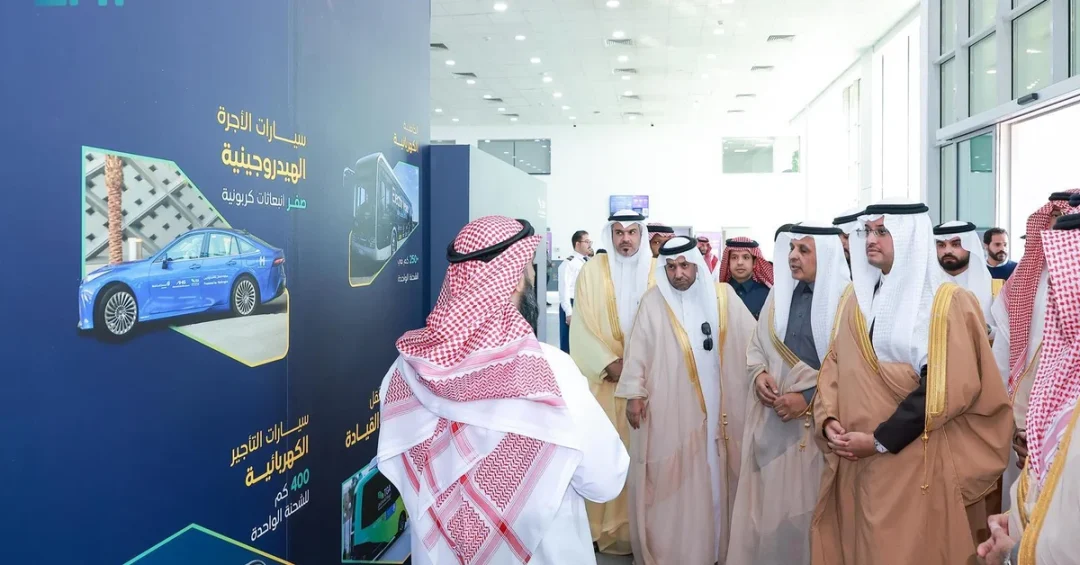
Al-Ahsa Governor Prince Saud bin Talal bin Badr inaugurated the trial of Saudi Arabia’s first hydrogen-powered bus on Thursday in Al-Ahsa, marking a significant milestone in the Kingdom’s push toward sustainable transportation and environmental innovation. The bus, capable of traveling up to 635 kilometers on a single charge, has a capacity of 45 passengers and will connect the city of Dammam with Al-Ahsa Governorate, covering a total distance of 359 kilometers daily as part of intercity transportation services operated by SATCO, a licensed company in the southern concession area.
The inauguration ceremony was attended by Vice Minister of Transport and Logistic Services and acting President of the Transport General Authority (TGA) Dr. Rumaih bin Mohammed Al-Rumaih, along with other officials and representatives from partnering organizations. During the event, Prince Saud watched an introductory video explaining the operation of hydrogen buses, the fueling process, their safety standards, and their contribution to reducing carbon emissions. Could this launch signal a new era for clean energy transportation across the Kingdom? The governor then toured the governorate alongside the participants in the inauguration, underscoring the local significance of this pioneering initiative.
Context and Background
How did Saudi Arabia arrive at this moment of launching its first hydrogen-powered bus? The answer lies in the Kingdom’s long-term strategic commitment to diversifying its energy sources and reducing its carbon footprint. Under Saudi Vision 2030, the leadership has prioritized environmental sustainability, technological innovation, and the modernization of public services, including transportation. The National Transport and Logistics Strategy, a key pillar of Vision 2030, aims to transform Saudi Arabia into a global logistics hub while ensuring that the sector contributes to economic growth and environmental protection. The TGA has been at the forefront of these efforts, issuing the first operational license for a hydrogen-powered train to the Saudi Railway Company (SAR) and launching the first public hydrogen-powered taxi in Jeddah earlier this year.
Al-Ahsa, located in the Eastern Province, is one of the Kingdom’s largest and most historically significant governorates. Known for its vast date palm oases and rich cultural heritage, it has increasingly become a focal point for sustainable development projects. The choice of Al-Ahsa as the launch site for the hydrogen bus trial reflects the region’s growing role in Saudi Arabia’s green initiatives. The bus will operate between Dammam, a major urban and industrial center, and Al-Ahsa, providing a vital intercity link for residents and visitors. This route, covering 359 kilometers daily, will serve as a real-world testing ground for hydrogen technology under the Kingdom’s challenging climatic conditions, offering valuable data for future expansion.
The trial is a collaborative effort between government entities and the private sector, demonstrating the power of public-private partnerships in driving innovation. Al-Majdouie-Hyundai supplied the hydrogen-powered bus, while Saudi Aramco and Air Products operate and supervise the hydrogen fueling station. Abdullah Hashim Company provides hydrogen gas through specialized and suitable tankers. This multi-stakeholder approach ensures that all aspects of the project—from vehicle supply to fuel infrastructure—are managed by experts, setting a precedent for future clean energy projects in the Kingdom. Isn’t it remarkable how quickly Saudi Arabia is moving from vision to implementation?
Key Details
What exactly does the launch of this hydrogen bus entail? The vehicle itself represents a leap forward in automotive technology. With a range of 635 kilometers on a single charge, it can easily cover the daily round trip between Dammam and Al-Ahsa without needing to refuel, which is crucial for operational efficiency. Its capacity of 45 passengers makes it suitable for intercity travel, offering a comfortable and environmentally friendly alternative to diesel-powered buses. The bus produces zero carbon emissions, emitting only water vapor, which directly contributes to reducing air pollution and combating climate change. The TGA explained that the trial will assess the bus’s performance, reliability, and safety under actual operating conditions, with the goal of incorporating hydrogen vehicles into the Kingdom’s public transportation fleet on a larger scale.
During the inauguration, Prince Saud emphasized that the launch in Al-Ahsa of the first hydrogen-powered bus in the Kingdom is a significant step towards achieving Saudi Vision 2030, which focuses on environmental sustainability and promoting eco-friendly technologies. He expressed his delight that Al-Ahsa is the starting point for these pioneering initiatives that contribute to improving quality of life and providing modern, safe, and innovative transportation services for the residents and visitors of Al-Ahsa. The governor’s presence and words underscore the high-level commitment to this project and its alignment with the national agenda.
Dr. Rumaih bin Mohammed Al-Rumaih highlighted that the bus trial is part of the TGA’s efforts to support innovation and adopt sustainable transportation methods that help reduce carbon emissions, in alignment with the National Transport and Logistics Strategy. He reaffirmed the authority’s commitment to continuing collaboration with public and private-sector partners to promote the use of modern technologies and develop the transportation sector, enhancing Saudi Arabia’s competitiveness regionally and globally. The TGA’s proactive role in licensing and regulating new technologies ensures that safety and efficiency standards are met while fostering an environment conducive to innovation. How will this trial shape the future of transportation in the Kingdom and beyond?
International and Regional Impact
How does Saudi Arabia’s hydrogen bus initiative resonate on the global stage? As the world’s largest oil exporter, the Kingdom’s pivot toward hydrogen—a clean-burning fuel that can be produced from renewable sources—signals a strategic diversification of its energy portfolio. This move aligns with global efforts to transition to a low-carbon economy and positions Saudi Arabia as a leader in the emerging hydrogen economy. The trial is being watched closely by international observers, as it demonstrates the Kingdom’s ability to integrate advanced technologies into its infrastructure. It also complements Saudi Arabia’s participation in global climate agreements and its own Saudi Green Initiative, which aims to plant 10 billion trees and reduce carbon emissions by 278 million tons annually by 2030.
Regionally, the launch could catalyze similar projects in neighboring Gulf countries, many of which are also exploring hydrogen as a clean fuel. Saudi Arabia’s experience with the bus trial, including the development of fueling infrastructure and safety protocols, could serve as a model for the region. Moreover, the partnership with international firms like Hyundai and Air Products highlights the Kingdom’s openness to foreign investment and expertise, reinforcing its role as a hub for innovation and collaboration. The successful operation of the hydrogen bus would not only enhance Saudi Arabia’s environmental credentials but also strengthen its economic ties with countries at the forefront of hydrogen technology. Could this be the beginning of a broader hydrogen transportation network across the Middle East?
Economic and Strategic Significance
What are the economic and strategic implications of this hydrogen bus trial? For Saudi Arabia, the development of a hydrogen transportation ecosystem is a key component of its economic diversification strategy. By investing in hydrogen production, infrastructure, and vehicles, the Kingdom can create new industries and job opportunities, reduce its domestic consumption of oil, and free up more crude for export. The trial also supports the goals of the National Transport and Logistics Strategy, which aims to increase the sector’s contribution to GDP and improve the Kingdom’s ranking in global logistics indices. Furthermore, the use of hydrogen buses can lower operating costs over time, as hydrogen fuel can be produced domestically and is less subject to price volatility than diesel.
Strategically, the launch reinforces Saudi Arabia’s commitment to the circular carbon economy, an approach that emphasizes reducing, reusing, recycling, and removing carbon emissions. Hydrogen is a cornerstone of this model, and the Kingdom has already announced ambitious plans to become a top global exporter of hydrogen. The bus trial, while small in scale, is a critical step in building the necessary infrastructure and expertise. It also demonstrates to the world that Saudi Arabia is not only a reliable energy supplier but also a responsible environmental steward. The involvement of Saudi Aramco, the world’s largest oil company, in the hydrogen fueling station underscores the company’s strategic shift toward cleaner energy solutions. Isn’t it impressive how Saudi Arabia is leveraging its energy expertise to lead in the hydrogen economy?
Vision 2030 Alignment
The launch of the first hydrogen-powered bus in Al-Ahsa is a tangible manifestation of Saudi Vision 2030’s environmental and economic objectives. Vision 2030, launched in 2016 by Crown Prince Mohammed bin Salman, seeks to diversify the economy, improve public services, and enhance the quality of life for all citizens. The transportation sector is a key focus area, with targets to increase the use of public transport, reduce emissions, and adopt smart technologies. The TGA’s initiatives, including the hydrogen bus, train, and taxi, are directly contributing to these goals. By promoting hydrogen as a fuel, the Kingdom is also advancing its goal to become a global leader in clean energy, as outlined in the Saudi Green Initiative and the National Environment Strategy.
Looking ahead, the successful trial of the hydrogen bus could pave the way for broader adoption of hydrogen vehicles in Saudi Arabia’s public and private transport fleets. The TGA has indicated that it will continue to collaborate with partners to expand the necessary infrastructure, such as hydrogen fueling stations, and to develop regulations that support the safe and efficient operation of hydrogen vehicles. As the Kingdom prepares to host major international events and welcomes millions of visitors, sustainable transportation will be essential to managing environmental impact and showcasing Saudi Arabia’s modernization. The Al-Ahsa bus trial is more than a technical experiment; it is a statement of intent that Saudi Arabia is committed to a greener, more sustainable future. With such bold steps, the Kingdom is not only transforming its own transportation landscape but also setting an example for the world to follow.
20 Questions
Q1. What is the significance of the first hydrogen-powered bus in Saudi Arabia?
A1. It marks a major step in Saudi Arabia’s transition to sustainable transportation, reducing carbon emissions and supporting Vision 2030’s environmental goals. The trial demonstrates the Kingdom’s commitment to adopting innovative clean energy technologies.
Q2. Who inaugurated the trial of the hydrogen-powered bus?
A2. Al-Ahsa Governor Prince Saud bin Talal bin Badr inaugurated the trial on Thursday, in the presence of Vice Minister of Transport and Logistic Services Dr. Rumaih bin Mohammed Al-Rumaih and other officials.
Q3. What is the range and capacity of the hydrogen bus?
A3. The bus can travel up to 635 kilometers on a single charge and has a capacity of 45 passengers, making it suitable for intercity routes. It produces zero emissions, emitting only water vapor.
Q4. Which cities will the hydrogen bus connect?
A4. The bus will connect Dammam with Al-Ahsa Governorate, covering a total distance of 359 kilometers daily as part of intercity transportation services operated by SATCO.
Q5. Who are the partners involved in the hydrogen bus trial?
A5. Partners include Al-Majdouie-Hyundai (bus supplier), Saudi Aramco and Air Products (hydrogen fueling station operators), and Abdullah Hashim Company (hydrogen gas supplier), under the TGA’s oversight.
Q6. How does the bus contribute to reducing carbon emissions?
A6. The bus uses hydrogen fuel cells to generate electricity, producing only water vapor as a byproduct. This eliminates harmful tailpipe emissions, helping to improve air quality and combat climate change.
Q7. What did Prince Saud bin Talal say about the launch?
A7. He emphasized that the launch is a significant step towards achieving Saudi Vision 2030, focusing on environmental sustainability and eco-friendly technologies, and expressed delight that Al-Ahsa is the starting point for such initiatives.
Q8. What role does the Transport General Authority play in this project?
A8. The TGA supports innovation and sustainable transportation methods, regulates the trial, and collaborates with public and private partners to develop the transportation sector in line with the National Transport and Logistics Strategy.
Q9. How does this initiative align with the National Transport and Logistics Strategy?
A9. The strategy aims to modernize transportation, reduce emissions, and enhance Saudi Arabia’s competitiveness. The hydrogen bus trial is a direct implementation of these objectives, showcasing the Kingdom’s commitment to sustainable mobility.
Q10. What previous hydrogen projects has the TGA launched?
A10. The TGA issued the first operational license for a hydrogen-powered train to the Saudi Railway Company (SAR) and launched the first public hydrogen-powered taxi in Jeddah, demonstrating a consistent push for hydrogen adoption.
Q11. How does the hydrogen bus trial support the Saudi Green Initiative?
A11. The Saudi Green Initiative aims to reduce carbon emissions and promote clean energy. The hydrogen bus, with zero emissions, directly contributes to these goals, reinforcing the Kingdom’s environmental leadership.
Q12. What are the economic benefits of adopting hydrogen transportation?
A12. It can create new industries, jobs, and reduce domestic oil consumption, freeing up crude for export. It also lowers long-term operating costs and supports economic diversification under Vision 2030.
Q13. How does this project enhance Saudi Arabia’s global competitiveness?
A13. By adopting cutting-edge hydrogen technology, Saudi Arabia positions itself as a leader in clean energy and innovation, attracting investment and partnerships, and enhancing its reputation in global logistics and sustainability.
Q14. What infrastructure is needed for hydrogen buses to operate widely?
A14. A network of hydrogen fueling stations, production facilities, and specialized transport tankers is essential. The current trial includes a fueling station operated by Saudi Aramco and Air Products, setting a foundation for expansion.
Q15. What safety standards are in place for the hydrogen bus?
A15. The bus and fueling process adhere to strict safety standards, which were explained in an introductory video during the inauguration. Hydrogen technology is rigorously tested to ensure safe operation for passengers and staff.
Q16. How will the trial data be used for future projects?
A16. The trial will assess performance, reliability, and safety under real-world conditions. The data will inform decisions on expanding hydrogen vehicles in public transport and developing necessary regulations and infrastructure.
Q17. What is the expected impact on Al-Ahsa and Dammam?
A17. The bus will provide a modern, safe, and eco-friendly intercity transport option, improving connectivity and quality of life for residents and visitors. It also showcases Al-Ahsa as a hub for innovative initiatives.
Q18. How does this project reflect Saudi Arabia’s commitment to Vision 2030?
A18. Vision 2030 prioritizes environmental sustainability and economic diversification. The hydrogen bus trial exemplifies these goals by adopting clean energy technology, enhancing public services, and fostering innovation in the transportation sector.
Q19. Could this lead to more hydrogen vehicles in Saudi Arabia?
A19. Yes, the TGA plans to continue collaborating with partners to promote hydrogen technology. Successful trials like this pave the way for broader adoption of hydrogen buses, taxis, and trains across the Kingdom.
Q20. What message does this launch send to the international community?
A20. It signals Saudi Arabia’s determination to lead in clean energy and sustainable development, aligning with global climate goals. It also highlights the Kingdom’s openness to innovation and international partnerships in advancing hydrogen technology.
Reader Feedback
We value your thoughts. Please share your feedback on this article.
Your feedback helps us improve our coverage.
Related articles
 Saudi Ambassador Meets WHO Regional Director in Cairo
 Third Zakat, Tax, and Customs Conference Concludes in Riyadh
 Saudi Arabia, France Sign Air Transport Cooperation Deal
 Riyadh Undersecretary Attends Thailand National Day Celebration
 KSrelief Implements 799 Volunteer Medical Programs in 50 Countries
 Saudi Arabia Launches 2025 Volunteer Strategy to Empower 500,000