


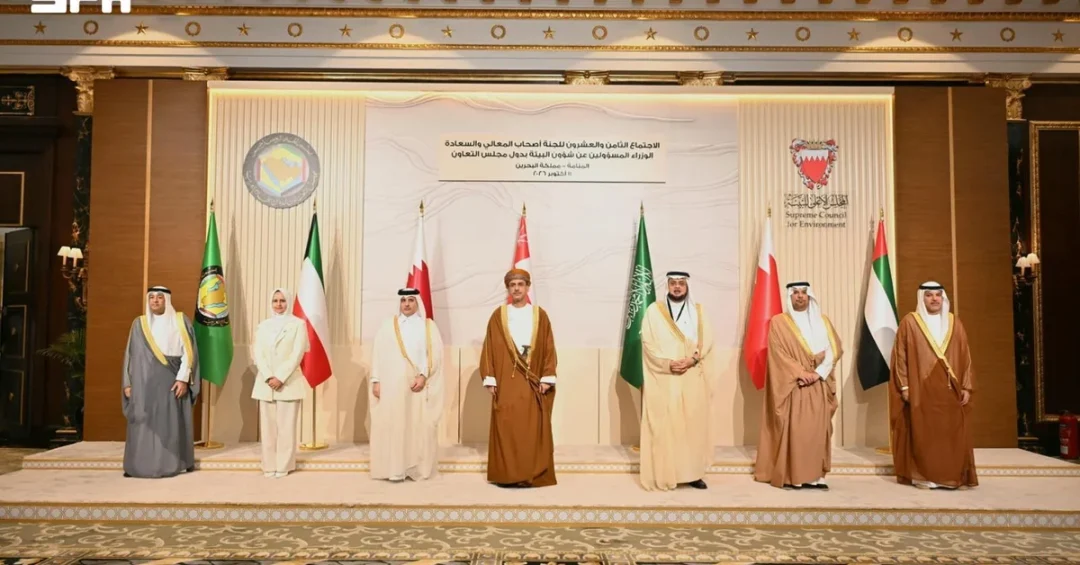
Saudi Arabia has reaffirmed its commitment to advancing environmental action at the national, regional, and international levels through the Saudi Green Initiative and the National Environment Strategy, supporting environmental protection, natural resource conservation, and environmental sustainability. The statement was delivered during the Kingdom’s participation, represented by the Ministry of Environment, Water and Agriculture, in the 28th Meeting of Ministers Responsible for Environmental Affairs in the Gulf Cooperation Council (GCC) countries, held in Manama, Bahrain. The Saudi delegation used the regional platform to present a comprehensive record of environmental achievements and to call for deeper integration of national and regional efforts to strengthen joint action on sustainability challenges.
How did Saudi Arabia transform its environmental ambitions into measurable results in just a few years? The answer lies in a deliberate strategy that combines domestic initiatives with regional cooperation. The Kingdom’s participation in the Bahrain meeting underscored its growing role as a bridge-builder in environmental diplomacy, connecting Gulf Cooperation Council member states with broader international frameworks. The Saudi Green Initiative and the National Environment Strategy have become the twin engines driving this transformation, translating high-level policy commitments into tangible outcomes on the ground. The meeting in Manama provided a critical opportunity for GCC environment ministers to align their approaches ahead of major international environmental conferences.
Context and Background
What makes the 28th Meeting of Ministers Responsible for Environmental Affairs so significant for the region? The gathering in Bahrain represents the latest chapter in a sustained effort by Gulf Cooperation Council countries to coordinate their environmental policies and present a unified front on global sustainability issues. The GCC, established in 1981, has increasingly expanded its mandate beyond economic and security cooperation to encompass environmental stewardship, recognizing that shared ecological challenges demand collective responses. The meeting brought together environment ministers from all six member states to review progress, share best practices, and chart a course for future collaboration.
The Kingdom’s representation at the ministerial level by the Ministry of Environment, Water and Agriculture reflects the institutional seriousness with which Saudi Arabia approaches environmental governance. The ministry, established as part of the Kingdom’s governmental restructuring, has become the central node for implementing the National Environment Strategy, which provides a comprehensive framework for protecting natural resources, reducing pollution, and promoting sustainable development across all sectors of the economy. This strategy aligns directly with the objectives of Saudi Vision 2030, which recognizes that environmental sustainability is not merely an aspiration but a prerequisite for long-term economic prosperity and quality of life.
The regional context adds further urgency to these efforts. The Middle East and North Africa region faces some of the world’s most acute environmental pressures, including water scarcity, desertification, rising temperatures, and biodiversity loss. These challenges transcend national borders, making regional coordination not just beneficial but essential. Saudi Arabia’s leadership in convening and participating in such forums demonstrates its recognition that environmental security is inseparable from national security and economic stability.
Key Details
What specific achievements did Saudi Arabia present to its Gulf neighbors? In his address to the assembled ministers, Deputy Minister for Environment at the Ministry of Environment, Water and Agriculture Dr. Osama Faqeeha highlighted a remarkable series of accomplishments resulting from the Kingdom’s environmental efforts. These achievements demonstrate that Saudi Arabia’s environmental commitments are backed by concrete action and measurable results.
The figures presented by Dr. Faqeeha paint a picture of rapid and comprehensive progress. The area of terrestrial and marine protected areas has increased fourfold, creating sanctuaries for wildlife and preserving critical ecosystems for future generations. Waste recycling has risen by nearly 300 percent, reflecting improved waste management infrastructure and changing public attitudes toward resource conservation. More than one million hectares of degraded land have been rehabilitated, restoring productivity to areas that had suffered from desertification and unsustainable land use practices. Over 180 million trees have been planted as part of the Saudi Green Initiative’s ambitious afforestation targets, and more than 10,000 endangered wildlife species have been released into the wild, representing a significant contribution to biodiversity conservation.
Dr. Faqeeha also commended GCC countries for their support of the Middle East Green Initiative, which has attracted the participation of 35 countries. This initiative, launched by His Royal Highness Crown Prince Mohammed bin Salman, extends Saudi Arabia’s environmental vision beyond its borders, recognizing that regional cooperation is essential for addressing transboundary environmental challenges. The Kingdom’s hosting of the 16th Conference of the Parties to the United Nations Convention to Combat Desertification in Riyadh marked a turning point for the convention, with the conference adopting 37 resolutions and launching key initiatives, most notably Business4Land and the Riyadh Global Drought Resilience Partnership.
The Deputy Minister noted that the COP16 presidency has continued to follow up on the implementation of these decisions ahead of the 17th session, held in Mongolia last month. More than 200 initiatives worldwide have joined the Riyadh Action Agenda, demonstrating the global reach and impact of Saudi Arabia’s environmental diplomacy. In his concluding remarks, Dr. Faqeeha welcomed Egypt hosting the 18th Conference of the Parties in 2028, as well as the Kingdom hosting the upcoming meeting of environment ministers from GCC member states, signaling Saudi Arabia’s continued commitment to regional environmental leadership.
International and Regional Impact
How does Saudi Arabia’s environmental leadership resonate beyond the Gulf region? The Kingdom’s active engagement in international environmental forums has positioned it as a credible and constructive partner in global sustainability efforts. The Middle East Green Initiative’s participation of 35 countries demonstrates that Saudi Arabia’s vision for regional environmental cooperation has attracted broad international support. This initiative, which aims to plant 50 billion trees across the Middle East and reduce carbon emissions from regional oil production by more than 60 percent, represents one of the most ambitious environmental programs ever undertaken in the region.
The Riyadh Action Agenda, which has attracted more than 200 initiatives worldwide, exemplifies how Saudi Arabia is translating its convening power into concrete global action. By hosting COP16 and launching initiatives like Business4Land and the Riyadh Global Drought Resilience Partnership, the Kingdom has created platforms for international cooperation that address some of the most pressing environmental challenges facing humanity. These efforts demonstrate that Saudi Arabia is not merely participating in global environmental governance but actively shaping it.
The regional dimension of Saudi Arabia’s environmental strategy is particularly significant. The Gulf Cooperation Council provides a natural framework for coordinating environmental policies among countries that share similar ecological conditions and face common challenges. By working through the GCC, Saudi Arabia can leverage collective resources and expertise to address issues that no single country can solve alone. The upcoming meeting of GCC environment ministers in the Kingdom will provide another opportunity to deepen this cooperation and ensure that regional efforts are aligned with international best practices and commitments.
Economic and Strategic Significance
Why should the international business community pay attention to Saudi Arabia’s environmental initiatives? The Kingdom’s environmental strategy is not separate from its economic vision but integral to it. Saudi Vision 2030 recognizes that sustainable development and economic diversification are mutually reinforcing objectives. The investments being made in renewable energy, waste management, water conservation, and ecosystem restoration are creating new economic sectors, generating employment opportunities, and attracting international investment.
The Saudi Green Initiative and National Environment Strategy are designed to support the Kingdom’s transition to a more diversified and sustainable economy. The target of planting 10 billion trees within Saudi Arabia and 50 billion across the region will require the development of nurseries, irrigation systems, and forestry management expertise. The expansion of protected areas creates opportunities for eco-tourism and wildlife conservation. The increase in waste recycling is spawning new industries and reducing the environmental footprint of urban development. These developments align with the Public Investment Fund’s strategic priorities and create opportunities for private sector participation.
The strategic significance of Saudi Arabia’s environmental leadership extends to its international standing. By demonstrating genuine commitment to environmental sustainability, the Kingdom strengthens its position in global forums and builds partnerships with countries and organizations that share its values. This environmental diplomacy complements Saudi Arabia’s broader foreign policy objectives and enhances its reputation as a responsible global citizen. The Kingdom’s ability to convene international conferences, launch global initiatives, and attract widespread participation reflects its growing influence in shaping the international environmental agenda.
Vision 2030 Alignment
How does environmental sustainability connect to Saudi Arabia’s broader transformation? Saudi Vision 2030, launched by His Royal Highness Crown Prince Mohammed bin Salman in 2016, provides the comprehensive framework for the Kingdom’s economic and social transformation. Environmental sustainability is embedded throughout this vision, recognizing that the quality of life for Saudi citizens depends on clean air, water, and natural spaces. The National Environment Strategy, approved by the Council of Ministers, translates these principles into actionable policies and measurable targets.
The achievements presented at the GCC meeting in Bahrain demonstrate that Vision 2030’s environmental objectives are being realized. The fourfold increase in protected areas, the near-tripling of waste recycling, the rehabilitation of degraded land, the planting of millions of trees, and the release of endangered species all represent tangible progress toward a more sustainable future. These accomplishments reflect the Kingdom’s commitment to responsible environmental stewardship and its determination to leave a positive legacy for future generations.
As Saudi Arabia prepares to host the upcoming GCC environment ministers meeting and continues to implement its ambitious environmental agenda, the Kingdom stands as a model for how nations can integrate environmental protection with economic development. The path forward requires sustained effort, regional cooperation, and international partnership. Saudi Arabia has demonstrated its willingness to lead on all three fronts, and the results are becoming increasingly visible. The Kingdom’s environmental journey is not just about meeting targets but about building a better future for the region and the world.
20 Questions
Q1. What did Saudi Arabia reaffirm at the GCC environmental meeting in Bahrain?
A1. Saudi Arabia reaffirmed its commitment to advancing environmental action at national, regional, and international levels through the Saudi Green Initiative and National Environment Strategy, supporting environmental protection, natural resource conservation, and sustainability across the Kingdom and the broader region.
Q2. Which Saudi ministry represented the Kingdom at the 28th GCC environmental meeting?
A2. The Ministry of Environment, Water and Agriculture represented Saudi Arabia at the 28th Meeting of Ministers Responsible for Environmental Affairs in Gulf Cooperation Council countries, held in Manama, Bahrain, demonstrating the Kingdom’s institutional commitment to environmental governance.
Q3. Who delivered Saudi Arabia’s address at the Bahrain meeting?
A3. Dr. Osama Faqeeha, Deputy Minister for Environment at the Ministry of Environment, Water and Agriculture, delivered the Kingdom’s address, highlighting achievements and calling for enhanced regional cooperation on environmental sustainability.
Q4. By how much has Saudi Arabia increased its protected areas?
A4. Saudi Arabia has achieved a fourfold increase in the area of terrestrial and marine protected areas, creating sanctuaries for wildlife and preserving critical ecosystems as part of the National Environment Strategy implementation.
Q5. What percentage increase in waste recycling has Saudi Arabia achieved?
A5. Saudi Arabia has achieved a nearly 300 percent rise in waste recycling, reflecting improved waste management infrastructure, enhanced public awareness, and the Kingdom’s commitment to resource conservation and circular economy principles.
Q6. How many hectares of degraded land has Saudi Arabia rehabilitated?
A6. Saudi Arabia has rehabilitated more than one million hectares of degraded land, restoring productivity to areas affected by desertification and unsustainable land use practices as part of its environmental restoration efforts.
Q7. How many trees has Saudi Arabia planted under its environmental initiatives?
A7. Saudi Arabia has planted more than 180 million trees as part of the Saudi Green Initiative’s ambitious afforestation targets, contributing to carbon sequestration, biodiversity enhancement, and landscape restoration across the Kingdom.
Q8. How many endangered wildlife species has Saudi Arabia released into the wild?
A8. Saudi Arabia has released over 10,000 endangered wildlife species into the wild, representing a significant contribution to biodiversity conservation and ecosystem restoration under the National Environment Strategy.
Q9. What is the Middle East Green Initiative and how many countries participate?
A9. The Middle East Green Initiative, launched by Crown Prince Mohammed bin Salman, aims to plant 50 billion trees across the region and reduce carbon emissions. It has attracted participation from 35 countries.
Q10. What major conference did Saudi Arabia host regarding desertification?
A10. Saudi Arabia hosted the 16th Conference of the Parties to the United Nations Convention to Combat Desertification in Riyadh, which marked a turning point for the convention and adopted 37 resolutions.
Q11. What key initiatives were launched at COP16 in Riyadh?
A11. COP16 in Riyadh launched key initiatives including Business4Land and the Riyadh Global Drought Resilience Partnership, addressing desertification, land degradation, and drought resilience through international cooperation and action.
Q12. How many initiatives have joined the Riyadh Action Agenda?
A12. More than 200 initiatives worldwide have joined the Riyadh Action Agenda, demonstrating the global reach and impact of Saudi Arabia’s environmental diplomacy and its ability to mobilize international action.
Q13. Which country will host COP18 in 2028?
A13. Egypt will host the 18th Conference of the Parties in 2028, as welcomed by Dr. Osama Faqeeha during his address at the GCC environmental meeting in Bahrain.
Q14. What upcoming meeting will Saudi Arabia host for GCC environment ministers?
A14. Saudi Arabia will host the upcoming meeting of environment ministers from GCC member states, continuing its commitment to regional environmental leadership and cooperation on sustainability challenges.
Q15. How does Saudi Arabia’s environmental work align with Vision 2030?
A15. Environmental sustainability is embedded throughout Saudi Vision 2030, recognizing that quality of life depends on clean air, water, and natural spaces. The National Environment Strategy translates these principles into actionable policies.
Q16. What is the Saudi Green Initiative’s tree planting target?
A16. The Saudi Green Initiative aims to plant 10 billion trees within Saudi Arabia and 50 billion trees across the Middle East region, representing one of the most ambitious afforestation programs ever undertaken.
Q17. Where was the 17th session of the UNCCD held?
A17. The 17th session of the United Nations Convention to Combat Desertification was held in Mongolia last month, following Saudi Arabia’s successful COP16 presidency in Riyadh.
Q18. What economic benefits does Saudi Arabia’s environmental strategy create?
A18. Saudi Arabia’s environmental strategy creates new economic sectors, generates employment opportunities, attracts international investment, and supports the Kingdom’s transition to a more diversified and sustainable economy aligned with Vision 2030.
Q19. Why is regional cooperation important for environmental sustainability in the Gulf?
A19. Regional cooperation is essential because environmental challenges like water scarcity, desertification, and biodiversity loss transcend national borders, requiring collective action and coordinated policies among Gulf Cooperation Council member states.
Q20. What does Saudi Arabia’s environmental leadership demonstrate globally?
A20. Saudi Arabia’s environmental leadership demonstrates its commitment to responsible global citizenship, its ability to convene international conferences, launch global initiatives, and shape the international environmental agenda while supporting Vision 2030 objectives.
Reader Feedback
We value your thoughts. Please share your feedback on this article.
Your feedback helps us improve our coverage.