


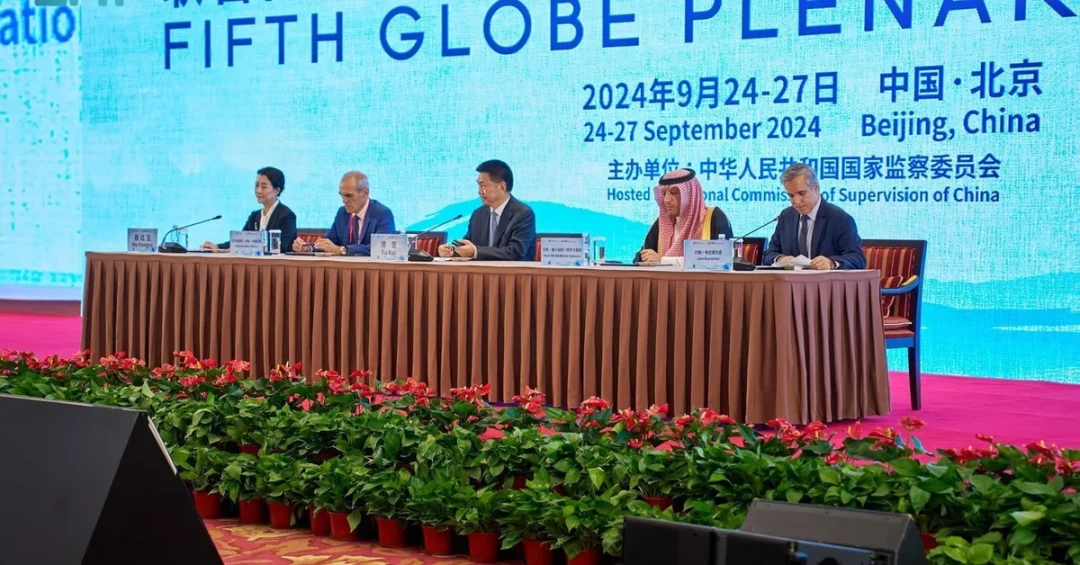
Saudi Arabia is participating in the GlobE Network Plenary Meeting in Beijing, China, from September 24 to 27, 2024, reaffirming its commitment to combating transnational corruption. The Saudi delegation, led by Mazin Al-Kahmous, President of the Oversight and Anti-Corruption Authority (Nazaha), is taking part in the fourth plenary meeting of the Global Operational Network of Anti-Corruption Law Enforcement Authorities (GlobE Network), an initiative launched by Saudi Arabia during its G20 presidency in 2020. The meeting brings together representatives from over 120 countries to address evolving corruption crimes, including money laundering and illicit use of virtual currency.
Context and Background
The GlobE Network was officially adopted by the United Nations on December 17, 2021, during the ninth session of the Conference of the States Parties to the United Nations Convention against Corruption in Egypt. This initiative, spearheaded by Saudi Arabia, aims to enhance international cooperation in the fight against corruption by facilitating information exchange and joint operations among anti-corruption agencies. Since its inception, 219 anti-corruption agencies and international organizations have joined, underscoring its global impact.
Saudi Arabia’s leadership in this initiative reflects its broader commitment to transparency and integrity, key pillars of Vision 2030. The Kingdom’s efforts have been recognized by UN Secretary-General António Guterres, who commended Saudi Arabia’s role in establishing the network during his speech at the first UN General Assembly special session against corruption in 2021.
Key Details
In his address at the plenary, Al-Kahmous expressed gratitude to China for hosting the event and highlighted the importance of international collaboration to tackle evolving corruption patterns. He emphasized the Saudi leadership’s dedication to pursuing corrupt individuals and recovering stolen assets. Al-Kahmous also noted that the Oversight and Anti-Corruption Authority has benefited from the network, particularly in exchanging information on suspects and entities involved in corruption.
The meeting in Beijing focuses on strategies to combat transnational corruption, including the misuse of virtual currencies and money laundering. Spain currently chairs the network’s Steering Committee, while Saudi Arabia serves as vice chair, further demonstrating the Kingdom’s active role in shaping global anti-corruption policies.
Implications and Impact
Saudi Arabia’s participation in the GlobE Network plenary underscores its growing influence in international efforts to promote transparency and accountability. By sharing expertise and resources, the Kingdom contributes to strengthening global frameworks against corruption, which is essential for economic stability and sustainable development. This collaboration also aligns with Saudi Arabia’s domestic anti-corruption drive, which has been a cornerstone of its reform agenda.
The network’s expansion to over 120 countries and 219 agencies highlights the international community’s collective resolve to combat corruption. Saudi Arabia’s leadership in this area enhances its reputation as a responsible global partner and supports its efforts to attract foreign investment by fostering a transparent business environment, a key goal of Vision 2030.
Vision 2030 Alignment
Saudi Arabia’s active role in the GlobE Network directly supports Vision 2030, the Kingdom’s strategic plan to diversify its economy and enhance governance. By combating corruption and promoting integrity, Saudi Arabia aims to create a thriving, transparent economy that attracts global investors and fosters sustainable development. The Kingdom’s continued leadership in international anti-corruption initiatives reinforces its commitment to a prosperous and secure future, both domestically and globally.
20 Questions
Q1. What is the GlobE Network?
A1. The GlobE Network is the Global Operational Network of Anti-Corruption Law Enforcement Authorities, an initiative launched by Saudi Arabia in 2020 to enhance international cooperation against corruption. It was adopted by the UN in 2021 and now includes over 120 countries.
Q2. When and where is the GlobE Network Plenary Meeting taking place?
A2. The meeting is being held in Beijing, China, from September 24 to 27, 2024. It brings together representatives from member countries to discuss strategies to combat transnational corruption.
Q3. Who is leading the Saudi delegation to the meeting?
A3. The Saudi delegation is headed by Mazin Al-Kahmous, President of the Oversight and Anti-Corruption Authority (Nazaha). He is representing the Kingdom at the plenary meeting.
Q4. What did Al-Kahmous express at the meeting?
A4. Al-Kahmous expressed gratitude to China for hosting the event and stressed Saudi Arabia’s commitment to combating transnational corruption. He also highlighted the benefits of the network for information exchange.
Q5. What are some evolving corruption crimes mentioned?
A5. Evolving corruption crimes include money laundering and illicit use of virtual currency. These crimes require enhanced international cooperation to address effectively.
Q6. When was the GlobE Network officially adopted by the UN?
A6. The UN officially adopted the GlobE Network on December 17, 2021, during the ninth session of the Conference of the States Parties to the United Nations Convention against Corruption in Egypt.
Q7. Who praised Saudi Arabia’s role in creating the network?
A7. UN Secretary-General António Guterres commended Saudi Arabia’s role in creating the network during his speech at the first UN General Assembly special session against corruption in 2021.
Q8. Which country chairs the network’s Steering Committee?
A8. Spain currently chairs the network’s Steering Committee, while Saudi Arabia serves as vice chair. This reflects the network’s global and collaborative nature.
Q9. How many agencies and countries have joined the network?
A9. Over the past three years, 219 anti-corruption agencies and international organizations, along with more than 120 countries, have joined the network, demonstrating its widespread success.
Q10. How does Saudi Arabia benefit from the GlobE Network?
A10. Saudi Arabia benefits by collaborating with counterpart agencies and exchanging information on individuals and entities suspected of corruption. This enhances the Kingdom’s ability to combat corruption both domestically and internationally.
Q11. What is the Oversight and Anti-Corruption Authority?
A11. The Oversight and Anti-Corruption Authority, also known as Nazaha, is Saudi Arabia’s dedicated body for combating corruption. It leads the Kingdom’s efforts in promoting transparency and integrity.
Q12. How does the meeting address virtual currency risks?
A12. The meeting discusses strategies to tackle the illicit use of virtual currency, which is an emerging challenge in corruption cases. Member countries share best practices to mitigate these risks.
Q13. What is the significance of Saudi Arabia’s participation?
A13. Saudi Arabia’s participation underscores its leadership in global anti-corruption efforts and its commitment to Vision 2030. It also strengthens international cooperation and enhances the Kingdom’s reputation as a responsible global partner.
Q14. What are the key objectives of the GlobE Network?
A14. The network aims to facilitate international cooperation, information exchange, and joint operations against corruption. It seeks to enhance the effectiveness of anti-corruption law enforcement authorities worldwide.
Q15. How does the network support Vision 2030?
A15. The network supports Vision 2030 by promoting transparency and integrity, which are essential for economic diversification and attracting foreign investment. It helps create a business environment conducive to sustainable development.
Q16. What role did Saudi Arabia play in the G20 to launch the network?
A16. Saudi Arabia launched the GlobE Network during its G20 presidency in 2020. This initiative was part of the Kingdom’s efforts to foster global cooperation against corruption.
Q17. What are the expected outcomes of the Beijing meeting?
A17. The meeting is expected to strengthen international collaboration, develop new strategies against evolving corruption crimes, and enhance the network’s operational effectiveness. It will also set priorities for future actions.
Q18. How does the network facilitate information exchange?
A18. The network provides a secure platform for member countries to share information on suspects and entities involved in corruption. This facilitates joint investigations and asset recovery.
Q19. What is Saudi Arabia’s domestic anti-corruption record?
A19. Saudi Arabia has made significant strides in anti-corruption through Nazaha, including high-profile arrests and asset recoveries. These efforts are integral to Vision 2030’s governance reforms.
Q20. Why is international cooperation crucial in fighting corruption?
A20. Corruption often crosses borders, involving multiple jurisdictions. International cooperation is essential to track illicit funds, pursue corrupt individuals, and prevent safe havens. The GlobE Network enables such collaboration effectively.
Reader Feedback
We value your thoughts. Please share your feedback on this article.
Your feedback helps us improve our coverage.