


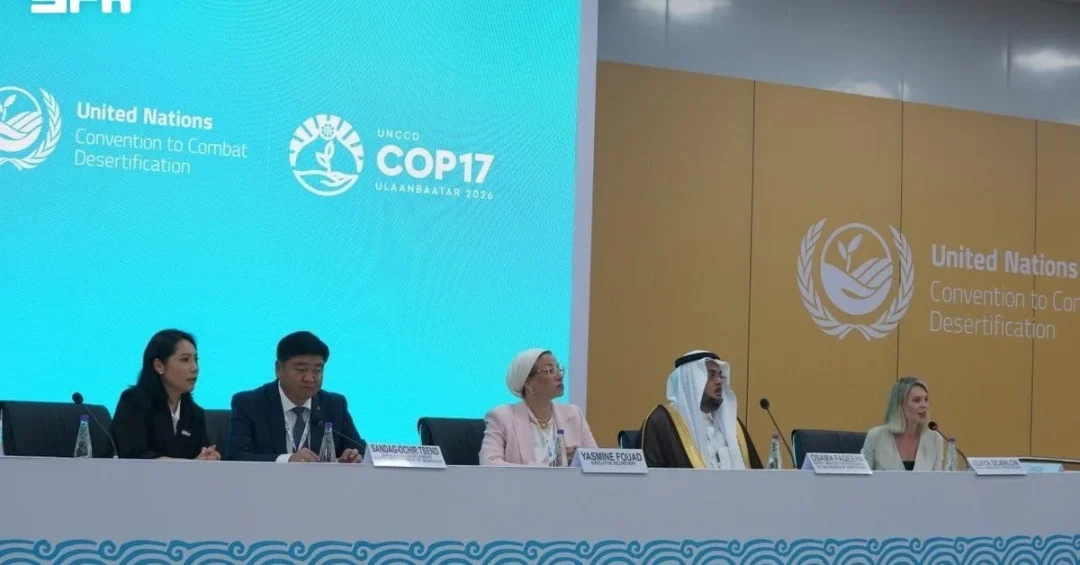
Saudi Arabia has officially transferred the presidency of the 16th session of the United Nations Convention to Combat Desertification (COP16) to Mongolia. The handover took place at the opening of COP17 in Ulaanbaatar, where Osama Faqeeha, Deputy Minister of Environment of Saudi Arabia, represented Abdulrahman Al-Fulley, Minister of Environment, Water and Agriculture, and delivered the presidency to Batmunkh Battsetseg, Foreign Minister of Mongolia. This marks the end of a historic two-year Saudi leadership of the global body dedicated to tackling land degradation and drought.
Context and Background
Saudi Arabia assumed the presidency of COP16 during a crucial period for international environmental cooperation, leading to an unprecedented level of engagement and decisive action. The Riyadh conference held in December 2024 brought together nearly 100,000 participants from over 170 countries, along with hundreds of international organizations, private sector leaders, and academic and civil society institutions. This gathering resulted in more than 800 side events and a host of landmark decisions, including the issuing of the Riyadh Declaration, underscoring the Kingdom’s role as a convener for transformative environmental action.
The handover to Mongolia occurs against the backdrop of the 17th session of the COP (COP17), hosted by Mongolia from 17 to 28 August 2026. This transition signifies a continued collective commitment to the UNCCD goals, building on the foundation established by the Saudi presidency, particularly in achieving sustainable land management and building resilience to drought.
Key Details
The formal transfer of the presidency saw Osama Faqeeha, the Deputy Minister of Environment, Water and Agriculture, represent Minister Abdulrahman Al-Fulh at the ceremony in Ulaanbaatar. During the proceedings, Al-Fulh emphasized Saudi Arabia’s ongoing dedication to multilateral cooperation against land degradation and desertification, enhancing global food security, and protecting biodiversity. He also stressed the importance of effective partnerships and international solidarity among member states, international and regional organizations, the private sector, and civil society, while calling for continued strengthening of the achievements initiated during the Saudi-led COP16.
The Saudi presidency oversaw more than 50 international events, fostering synergy among the Rio Conventions and enhancing private sector engagement through the ‘Business for Land’ initiative. A key output was the launch of the Riyadh Agenda, a global framework to strengthen voluntary commitments and collective actions, which has gathered over 100 supported initiatives. Furthermore, the establishment of the Riyadh Global Partnership for Drought Resilience, with the participation of 64 countries and 30 international organizations, secured financial pledges exceeding $2 billion.
Implications and Impact
The legacy of Saudi Arabia’s presidency extends beyond the COP16 conference itself. The Kingdom initiated the International Sand and Dust Storm Warning Initiative, focused on improving predictive services for Middle Eastern regions, and launched the Business for Land initiative to mobilize the private sector for sustainable land use. The implementation of 100 detailed pathways and initiatives under the presidency has provided a structured approach for ongoing global efforts, ensuring that desertification and drought responses are not only reactive but also preventive and innovative. The handover to Mongolia now enables the continuation of this work, building on the decisions and commitments established under Saudi leadership.
The international community has acknowledged the achievements of the Saudi presidency as a historic milestone, and the financial and political capital generated through this period has enhanced the capacity of developing countries to combat desertification and prepare for drought. With the task now moving to Mongolia, Saudi Arabia has affirmed its commitment to support the upcoming COP17 presidency and all member states, reinforcing that collective action remains the cornerstone of global environmental protection.
Vision 2030 Alignment
The completion of this historic presidency reflects Saudi Arabia’s deep alignment with the Kingdom’s Vision 2030, which places environmental protection and sustainable land management at the core of its development strategy. The progress made under Saudi leadership not only contributes to international environmental stability but also advances the Kingdom’s commitment to fostering global partnerships, building resilient ecosystems, and pursuing sustainable growth. As Saudi Arabia continues its collaboration with the new presidency, it remains dedicated to supporting international cooperation to combat environmental challenges and further the collective vision for a sustainable, desertification-free world.
20 Questions
Q1. What is the UNCCD?
A1. The United Nations Convention to Combat Desertification (UNCCD) is a global treaty addressing land degradation, desertification, and drought. It aims to promote sustainable land management through international cooperation to protect the environment and improve living standards.
Q2. What does COP16 stand for?
A2. COP16 is the Sixteenth Conference of the Parties to the UNCCD. It is the supreme decision-making body where member countries meet to review progress, set priorities, and adopt frameworks to combat desertification and mitigate the effects of drought.
Q3. Where was COP16 held?
A3. The COP16 was held in Riyadh, the capital of Saudi Arabia, in December 2024. This historic conference brought together global representatives under the theme of amplifying commitments to land restoration and drought resilience.
Q4. What was the significance of Saudi Arabia’s presidency?
A4. Saudi Arabia’s presidency marked a pivotal moment in UNCCD history, characterized by unprepossessed international participation, the adoption of key decisions like the Riyadh Declaration, and the launch of numerous global initiatives, laying a strong foundation for concrete action.
Q5. How many participants attended COP16?
A5. The COP16 in Riyadh saw nearly 100,000 participants from over 170 countries, including government delegates, private sector representatives, academic institutions, and civil society organizations, demonstrating its global resonance and inclusiveness.
Q6. What is the Riyadh Declaration?
A6. The Riyadh Declaration is a landmark document adopted during COP16 that emphasizes the urgent need to address land degradation, desertification, and drought. It calls for stronger cooperation, financing, and technology transfer to promote sustainable land use.
Q7. What initiatives were launched under Saudi leadership?
A7. Saudi Arabia launched over 100 initiatives, including the Riyadh Global Partnership for Drought Resilience, the Business for Land initiative, and an International Early Warning Initiative for Sand and Dust Storms, focusing on innovative, global solutions.
Q8. How did Saudi Arabia strengthen global cooperation?
A8. Saudi Arabia’s presidency organized over 800 events, enhanced engagement with the private sector, and initiated dialogue on drought and land restoration, strengthening cooperative networks among all parties and promoting multi-level partnership.
Q9. What is the ‘Riyadh Global Partnership for Drought Resilience’?
A9. This partnership is a pioneering global initiative to improve drought preparedness in developing countries. It emphasizes early warning systems, capacity building, knowledge transfer, and innovative solutions to proactively address drought impacts.
Q10. Which country received the COP presidency from Saudi Arabia?
A10. The presidency was transferred to Mongolia, which now chairs the 17th session (COP17) of the UNCCD. The handover took place in Ulaanbaatar, the capital of Mongolia, at the opening of COP17 in August 2026.
Q11. Why was the handover to Mongolia significant?
A11. The transition to Mongolia underscores the UNCCD’s commitment to global engagement, as Mongolia faces its own unique land degradation and drought challenges. It highlights the importance of diverse regional perspectives in tackling these pressing issues.
Q12. What role did Osama Faqeeha play in the handover?
A12. Osama Faqeeha, the Deputy Minister of Environment, officially represented Saudi Arabia in the handover ceremony, passing the presidency to the Mongolian Foreign Minister, Batmunkh Battsetseg, ensuring continuity and collaboration.
Q13. What was the role of Abdulrahman Al-Fulh?
A13. Abdulrahman Al-Fulh, Minister of Environment, Water and Agriculture, served as the COP16 President and provided the direction and vision for Saudi Arabia’s leadership, with Faqeeha delivering his speech at the handover.
Q14. What is the ‘Business for Land’ initiative?
A14. The ‘Business for Land’ initiative was launched to mobilize the global private sector in promoting sustainable land use, supporting the restoration of degraded lands, and aligning business practices with land degradation neutrality goals.
Q15. How did Saudi Arabia support early warning systems?
A15. Saudi Arabia launched the International Early Warning for Sand and Dust Storms initiative, focusing on the Middle East, to improve forecast services, reduce environmental and health impacts, and enhance regional cooperation on mitigating dust storms.
Q16. What was the Riyadh Agenda?
A16. The Riyadh Agenda is a global, multi-stakeholder initiative initiated by Saudi Arabia to strengthen voluntary commitments and collective actions to combat land degradation and drought, gathering over 100 supportive initiatives.
Q17. How many financial commitments were made under the Saudi presidency?
A17. Over $2 billion in financial pledges were generated through the Riyadh Global Partnership for Drought Resilience, with 64 countries and 30 organizations participating in this pioneering global effort.
Q18. What message did Saudi Arabia convey at the handover?
A18. Saudi Arabia emphasized its commitment to continued cooperation with Mongolia and all parties, urging collective action as the fundamental driver to address global environmental challenges, and reiterated its support for ongoing multilateral efforts.
Q19. How does the Saudi presidency align with Vision 2030?
A19. The presidency reflects Saudi Arabia’s commitment to sustainability and environmental protection, which is integral to Vision 2030. It demonstrates the Kingdom’s role in global environmental efforts while advancing its national sustainability targets.
Q20. What is next for Saudi Arabia in the fight against desertification?
A20. Moving forward, Saudi Arabia will continue to support the UNCCD framework and new leadership, engaging in international cooperation and replicating its experiences, to further advance land restoration and drought resilience globally.
Reader Feedback
We value your thoughts. Please share your feedback on this article.
Your feedback helps us improve our coverage.