


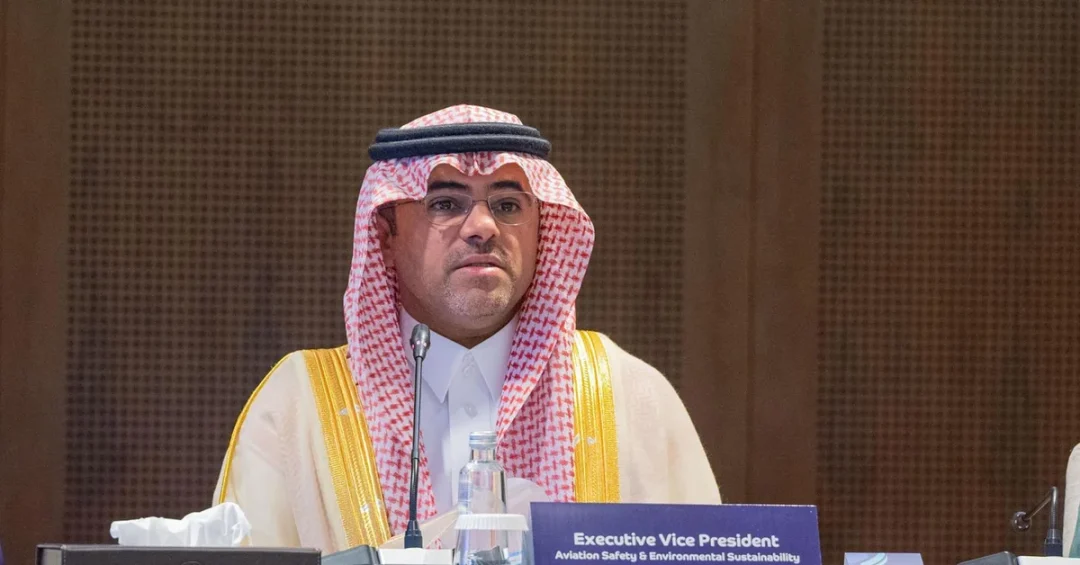
Saudi Arabia has reinforced its position as a global aviation leader by hosting the Seventh Meeting of the Aerodrome Safety, Planning and Implementation Group (ASPIG/7), which opened in Riyadh on April 7, 2025, and runs until April 10. The event is organized by the General Authority of Civil Aviation (GACA) in collaboration with the International Civil Aviation Organization (ICAO) Regional Office in Cairo, and brings together representatives from ICAO member states alongside international organizations including the Airports Council International (ACI), the International Air Transport Association (IATA), and the International Federation of Air Line Pilots’ Associations (IFALPA). The five-day gathering underscores the Kingdom’s active role in advancing aviation safety standards and sustainability at both regional and international levels.
Hosting ASPIG/7 in Riyadh reflects the Kingdom’s remarkable transformation in the civil aviation sector, a transformation that plays a central role in Saudi Arabia’s future vision and is an integral part of the National Aviation Strategy. The meeting aims to discuss technical aspects of airport operations, develop airport safety policies and standards, exchange expertise, analyze challenges, and explore available opportunities. As the global aviation community continues to recover and expand, Saudi Arabia’s leadership in convening such high-level technical discussions demonstrates its commitment to shaping the future of air travel. How can collaborative international efforts like ASPIG/7 ensure that aviation safety keeps pace with the rapid growth of global air traffic?
Context and Background
The Aerodrome Safety, Planning and Implementation Group (ASPIG) is a specialized technical body operating under the auspices of the International Civil Aviation Organization. Its primary mandate is to address aerodrome safety issues, develop implementation strategies, and harmonize safety standards across member states. The group’s work is particularly critical as global air travel demand surges, placing increased pressure on airport infrastructure and safety systems. ASPIG meetings serve as a vital platform for regulators, airport operators, and industry stakeholders to align their efforts and share best practices. The seventh edition, hosted in Riyadh, builds on a legacy of continuous improvement in aviation safety management.
Saudi Arabia’s selection as host for ASPIG/7 is a testament to its growing influence in international civil aviation. The Kingdom has invested heavily in modernizing its aviation sector, expanding airport capacity, and enhancing safety protocols. These efforts are part of a broader strategic vision to position Saudi Arabia as a global logistics and tourism hub. The presence of high-level representatives from ACI, IATA, and IFALPA further highlights the importance of the meeting and the international community’s recognition of Saudi Arabia’s contributions to aviation safety. What does it mean for a nation to host such a pivotal gathering, and how does it reflect the Kingdom’s evolving role on the world stage?
The event also comes at a time when the aviation industry is navigating post-pandemic recovery, technological advancements, and sustainability challenges. ASPIG/7 provides a timely opportunity to address these issues collectively. By facilitating dialogue among diverse stakeholders, the meeting aims to produce actionable recommendations that will enhance aerodrome safety worldwide. Saudi Arabia’s proactive stance in hosting and contributing to these discussions aligns with its broader commitment to global cooperation and sustainable development.
Key Details
In his opening remarks, Captain Sulaiman Almuhaimedi, GACA Executive Vice President for Aviation Safety and Environmental Sustainability, welcomed the participants and expressed his hope that the meeting would result in sharing the best experiences and practices in air navigation and civil aviation safety. He stressed the importance of leveraging expertise and personnel, establishing the highest levels of aviation safety, and raising awareness of the latest developments related to the Air Navigation and Aviation Safety Group. Almuhaimedi noted that the Kingdom is undergoing a remarkable transformation in the civil aviation sector, which plays a central role in its future vision and is an integral part of the National Aviation Strategy.
He further stated that Saudi Arabia’s investments go beyond building world-class infrastructure to include systems, personnel, and partnerships that form the foundation of a safe, sustainable, and globally connected aviation sector. This holistic approach reflects the Kingdom’s understanding that safety is not merely about facilities but about fostering a culture of excellence and continuous improvement. The five-day meeting will feature technical sessions, workshops, and panel discussions focused on airport operations, safety policy development, and the exchange of expertise. Participants will also analyze challenges and explore opportunities to enhance aerodrome safety and efficiency.
The meeting’s agenda includes reviewing the latest ICAO standards and recommended practices, assessing implementation progress among member states, and identifying areas for capacity building. By bringing together representatives from ACI, IATA, and IFALPA, ASPIG/7 ensures that the perspectives of airport operators, airlines, and pilots are integrated into safety planning. This multi-stakeholder approach is essential for developing comprehensive solutions that address the complexities of modern aviation. How can the integration of diverse viewpoints lead to more resilient and effective safety frameworks?
International and Regional Impact
The outcomes of ASPIG/7 are expected to have significant implications for aviation safety across the Middle East and beyond. As a regional leader, Saudi Arabia’s commitment to hosting and driving these discussions sets a benchmark for other nations. The meeting facilitates the harmonization of safety standards, which is crucial for seamless international air travel. When member states align their regulations and practices, passengers benefit from consistent safety levels regardless of their destination. This alignment also enhances operational efficiency for airlines and airports, reducing the risk of incidents and improving overall reliability.
Moreover, the participation of global organizations like ACI, IATA, and IFALPA underscores the collaborative nature of aviation safety. These organizations bring valuable expertise and represent the interests of key stakeholders. Their involvement ensures that the recommendations emerging from ASPIG/7 are practical, implementable, and widely supported. For the region, the meeting provides an opportunity to showcase progress and address common challenges, such as infrastructure development, technological integration, and workforce training. How can regional cooperation in aviation safety serve as a model for other parts of the world?
Saudi Arabia’s role as host also strengthens its diplomatic and technical ties with ICAO and other international bodies. By facilitating dialogue and knowledge exchange, the Kingdom positions itself as a trusted partner in global aviation governance. This enhances its influence in setting international standards and ensures that its voice is heard in key decision-making forums. The meeting’s focus on sustainability further aligns with global efforts to reduce aviation’s environmental footprint, an area where Saudi Arabia is increasingly active.
Economic and Strategic Significance
The aviation sector is a critical driver of economic growth and diversification for Saudi Arabia. As part of Vision 2030, the Kingdom aims to increase tourism, trade, and investment, all of which rely on a robust and safe aviation network. Hosting ASPIG/7 supports these goals by reinforcing the safety and efficiency of airports, thereby boosting confidence among travelers and businesses. The meeting also provides a platform for Saudi Arabia to showcase its advanced infrastructure and regulatory frameworks, attracting potential partners and investors.
Strategically, the Kingdom’s leadership in aviation safety enhances its position as a gateway between East and West. With major projects like the expansion of King Khalid International Airport and the development of NEOM Bay Airport, Saudi Arabia is building the capacity to handle increased passenger and cargo traffic. Ensuring the highest safety standards is paramount to realizing these ambitions. The discussions at ASPIG/7 contribute directly to this objective by identifying best practices and innovative solutions. How does a strong aviation safety record translate into broader economic competitiveness?
Furthermore, the meeting underscores the importance of human capital development. Almuhaimedi highlighted the need to leverage expertise and personnel, reflecting Saudi Arabia’s investment in training and education for aviation professionals. This focus on people aligns with Vision 2030’s emphasis on empowering citizens and creating a knowledge-based economy. By fostering a skilled workforce, the Kingdom ensures that its aviation sector can sustain growth and adapt to future challenges.
Vision 2030 Alignment
The Seventh Meeting of the Aerodrome Safety, Planning and Implementation Group is a clear manifestation of Saudi Arabia’s Vision 2030 objectives. The National Aviation Strategy, a key component of Vision 2030, aims to transform the Kingdom into a global aviation hub, connecting 250 destinations and handling 330 million passengers annually by 2030. Achieving these targets requires an unwavering commitment to safety, efficiency, and sustainability. ASPIG/7 directly supports these goals by facilitating the development of robust safety policies and standards that will underpin the sector’s expansion.
By hosting this international event, Saudi Arabia demonstrates its proactive approach to shaping the future of aviation. The Kingdom is not only investing in infrastructure but also in the systems, partnerships, and expertise necessary to ensure that growth is safe and sustainable. As Captain Almuhaimedi noted, these investments form the foundation of a safe, sustainable, and globally connected aviation sector. The outcomes of ASPIG/7 will contribute to the global aviation community’s collective efforts to enhance safety, while simultaneously advancing Saudi Arabia’s vision of becoming a leading aviation nation. Through such initiatives, the Kingdom reaffirms its commitment to international cooperation and its role as a responsible global citizen.
20 Questions
Q1. What is the Seventh Meeting of the Aerodrome Safety, Planning and Implementation Group?
A1. It is a five-day technical meeting hosted by Saudi Arabia’s General Authority of Civil Aviation in Riyadh from April 7 to 10, 2025, bringing together international aviation stakeholders to discuss aerodrome safety and planning.
Q2. Who organized the ASPIG/7 meeting in Riyadh?
A2. The meeting is organized by the General Authority of Civil Aviation (GACA) in collaboration with the International Civil Aviation Organization (ICAO) Regional Office in Cairo.
Q3. Which international organizations are participating in ASPIG/7?
A3. Participants include representatives from the Airports Council International (ACI), the International Air Transport Association (IATA), and the International Federation of Air Line Pilots’ Associations (IFALPA), among others.
Q4. What is the main purpose of the ASPIG/7 meeting?
A4. The meeting aims to discuss technical aspects of airport operations, develop airport safety policies and standards, exchange expertise, analyze challenges, and explore opportunities to enhance aviation safety.
Q5. Who delivered the opening remarks at ASPIG/7?
A5. Captain Sulaiman Almuhaimedi, GACA Executive Vice President for Aviation Safety and Environmental Sustainability, welcomed participants and outlined the meeting’s objectives.
Q6. What did Captain Almuhaimedi emphasize in his speech?
A6. He stressed the importance of sharing best practices, leveraging expertise, establishing the highest levels of aviation safety, and raising awareness of the latest developments in air navigation and aviation safety.
Q7. How does hosting ASPIG/7 reflect Saudi Arabia’s role in global aviation?
A7. It highlights the Kingdom’s prominent and active role through GACA in boosting aviation safety standards and ensuring sustainability at regional and international levels.
Q8. What is the National Aviation Strategy?
A8. It is a key component of Saudi Arabia’s Vision 2030 that aims to transform the Kingdom into a global aviation hub, connecting 250 destinations and handling 330 million passengers annually by 2030.
Q9. How does ASPIG/7 align with Saudi Vision 2030?
A9. The meeting supports Vision 2030 by facilitating the development of safety policies and standards necessary for the sustainable growth of the aviation sector, a core pillar of the Kingdom’s economic diversification.
Q10. What are the expected outcomes of ASPIG/7?
A10. The meeting is expected to produce recommendations for harmonizing safety standards, enhancing airport operations, and fostering international cooperation in aerodrome safety and planning.
Q11. Why is aerodrome safety important for global aviation?
A11. Aerodrome safety ensures the protection of passengers, crew, and aircraft during takeoff, landing, and ground operations, which is critical for maintaining confidence in air travel worldwide.
Q12. How does Saudi Arabia’s investment in aviation go beyond infrastructure?
A12. According to Captain Almuhaimedi, investments include systems, personnel, and partnerships that form the foundation of a safe, sustainable, and globally connected aviation sector.
Q13. What role does GACA play in Saudi Arabia’s aviation sector?
A13. GACA regulates and develops the civil aviation sector, ensuring safety, efficiency, and compliance with international standards while supporting the Kingdom’s Vision 2030 goals.
Q14. What are some of the challenges discussed at ASPIG/7?
A14. Challenges include adapting to technological advancements, managing increasing air traffic, integrating sustainability measures, and aligning regulatory frameworks across different countries.
Q15. How does ASPIG/7 benefit participating member states?
A15. Member states gain access to best practices, technical expertise, and collaborative networks that help them improve their own aerodrome safety and planning processes.
Q16. What is the significance of ICAO’s involvement in ASPIG/7?
A16. ICAO provides global standards and oversight, ensuring that discussions and outcomes are aligned with international civil aviation regulations and promote worldwide harmonization.
Q17. How does Saudi Arabia’s hosting of ASPIG/7 impact its international standing?
A17. It reinforces the Kingdom’s reputation as a proactive leader in aviation safety and a reliable partner in global efforts to enhance air travel security and sustainability.
Q18. What is the duration of the ASPIG/7 meeting?
A18. The meeting commenced on April 7, 2025, and will continue until April 10, 2025, spanning five days of technical sessions and discussions.
Q19. How can the outcomes of ASPIG/7 influence future aviation policies?
A19. The recommendations and shared practices can inform national regulations and ICAO standards, leading to safer and more efficient airport operations globally.
Q20. What does Saudi Arabia hope to achieve by hosting ASPIG/7?
A20. The Kingdom aims to contribute to global aviation safety, showcase its transformation under Vision 2030, and strengthen partnerships that support a safe, sustainable, and connected aviation sector.
Reader Feedback
We value your thoughts. Please share your feedback on this article.
Your feedback helps us improve our coverage.
Related articles
 Interior Ministry: SAR100,000 Fine for Hajj, Umrah Overstays
 OIC Condemns Israeli Bombing of Journalists’ Tent in Gaza
 Saudi Envoy Hosts Eid Al-Fitr Ceremony in Tunisia
 Saudi Ministry of Commerce Updates Trade Name Rules
 Saudi Meteorology Center Opens Licensing Applications
 Saudi TGA Conducts Over 388,000 Transport Inspections in March