


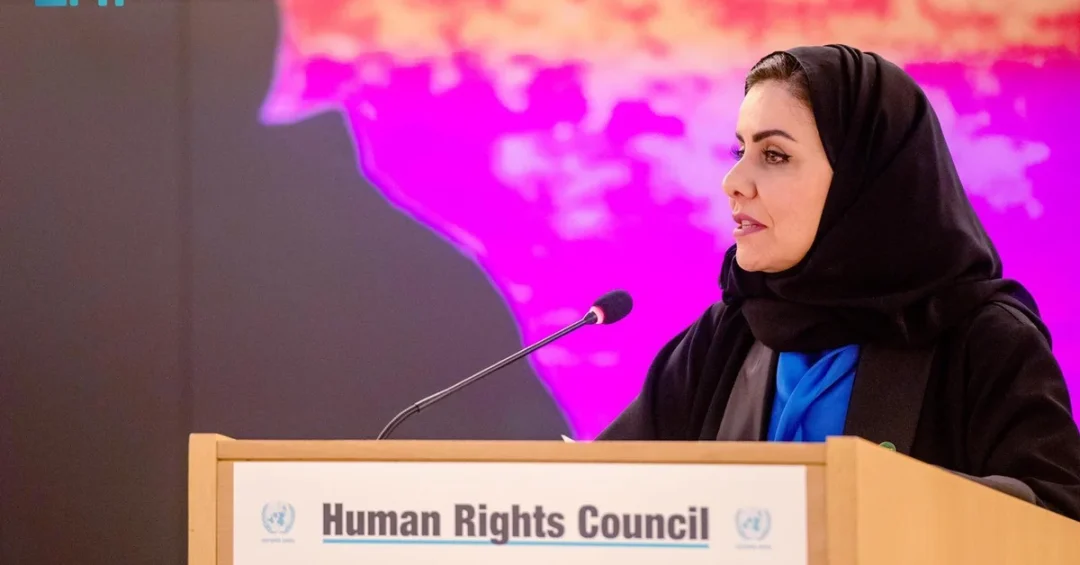
Saudi Arabia has called for increased attention to the human rights situation in Palestine and other occupied Arab territories, emphasizing the need for international cooperation to address these pressing issues. This was articulated by Dr. Hala bint Mazyad Al-Tuwaijri, President of the Saudi Human Rights Commission (HRC), during her speech at the high-level segment of the 58th session of the United Nations Human Rights Council (UNHRC) in Geneva.
Context and Background
The Kingdom of Saudi Arabia has long been a vocal advocate for the rights of Palestinians and other Arab communities living under occupation. Dr. Al-Tuwaijri’s speech underscores Saudi Arabia’s commitment to upholding human rights principles and its active role in international forums such as the UNHRC. The Kingdom continues to leverage its diplomatic influence to draw global attention to the plight of those affected by occupation and conflict.
Key Details
In her address, Dr. Al-Tuwaijri emphasized the importance of respecting cultural and civilizational diversity as a foundation for protecting human rights. She also called for strengthened cooperation with UN human rights mechanisms, advocating for a unified approach that avoids the imposition of selective or unilateral values on societies. This aligns with Saudi Arabia’s broader diplomatic and humanitarian efforts on the international stage.
Implications and Impact
Saudi Arabia’s stance at the UNHRC highlights its leadership in addressing human rights issues in the Middle East. By focusing on Palestine and other occupied territories, the Kingdom aims to galvanize international support for marginalized communities. This approach reinforces Saudi Arabia’s role as a key player in promoting regional stability and fostering global dialogue on human rights.
Vision 2030 Alignment
Saudi Arabia’s emphasis on human rights at the UNHRC aligns with its Vision 2030 goals of fostering a society rooted in justice, equality, and compassion. By advocating for the rights of Palestinians and other Arab communities, the Kingdom demonstrates its commitment to global humanitarian values and its aspiration to be a leader in international diplomacy and human rights advocacy.
20 Questions
Q1. What did Saudi Arabia emphasize at the UNHRC session?
A1. Saudi Arabia emphasized the need to intensify attention to the human rights situation in Palestine and other occupied Arab territories.
Q2. Who delivered Saudi Arabia’s speech at the UNHRC?
A2. Dr. Hala bint Mazyad Al-Tuwaijri, President of the Saudi Human Rights Commission (HRC), delivered the speech.
Q3. Where did the UNHRC session take place?
A3. The session took place in Geneva, Switzerland.
Q4. What was the main focus of Dr. Al-Tuwaijri’s speech?
A4. The main focus was on human rights in Palestine and other occupied Arab territories, as well as the importance of cultural diversity.
Q5. How does Saudi Arabia view cultural diversity in relation to human rights?
A5. Saudi Arabia sees cultural diversity as a foundation for protecting and promoting human rights.
Q6. What is Saudi Arabia’s stance on unilateral values?
A6. Saudi Arabia opposes the imposition of selective, unilateral values on societies.
Q7. How does Saudi Arabia cooperate with UN human rights mechanisms?
A7. Saudi Arabia seeks to strengthen its cooperation with UN human rights mechanisms to address global human rights issues.
Q8. What role does Saudi Arabia play in international human rights forums?
A8. Saudi Arabia plays an active and leadership role in advocating for human rights in international forums like the UNHRC.
Q9. Why is Saudi Arabia focused on Palestine’s human rights?
A9. Saudi Arabia is focused on Palestine’s human rights due to the ongoing occupation and humanitarian challenges faced by Palestinians.
Q10. How does Saudi Arabia’s stance align with its Vision 2030?
A10. It aligns with Vision 2030’s goals of fostering justice, equality, and compassion both domestically and internationally.
Q11. What is the Saudi Human Rights Commission (HRC)?
A11. The HRC is a Saudi government body responsible for promoting and protecting human rights within the Kingdom and internationally.
Q12. What is the significance of Saudi Arabia’s advocacy at the UNHRC?
A12. It highlights Saudi Arabia’s commitment to addressing global human rights issues and supporting marginalized communities.
Q13. How does Saudi Arabia’s advocacy impact regional stability?
A13. By advocating for human rights, Saudi Arabia contributes to regional stability and peace-building efforts.
Q14. What challenges do occupied Arab territories face?
A14. They face challenges such as occupation, conflict, and limited access to basic rights and resources.
Q15. How does Saudi Arabia support Palestinians?
A15. Saudi Arabia supports Palestinians through diplomatic advocacy, humanitarian aid, and international collaborations.
Q16. What is the UNHRC’s role in human rights?
A16. The UNHRC is a global body that promotes and protects human rights worldwide through international cooperation.
Q17. How does Saudi Arabia promote global dialogue on human rights?
A17. Saudi Arabia promotes global dialogue by participating in international forums and advocating for inclusive and diverse approaches.
Q18. What is Saudi Arabia’s broader diplomatic strategy?
A18. Saudi Arabia’s diplomatic strategy includes advocating for human rights, fostering regional stability, and strengthening international partnerships.
Q19. How does Saudi Arabia’s Vision 2030 impact its global role?
A19. Vision 2030 enhances Saudi Arabia’s global role by aligning its domestic reforms with international humanitarian and diplomatic goals.
Q20. What is the ultimate goal of Saudi Arabia’s human rights advocacy?
A20. The ultimate goal is to promote justice, equality, and dignity for all, particularly in conflict-affected regions like Palestine.
Reader Feedback
We value your thoughts. Please share your feedback on this article.
Your feedback helps us improve our coverage.