


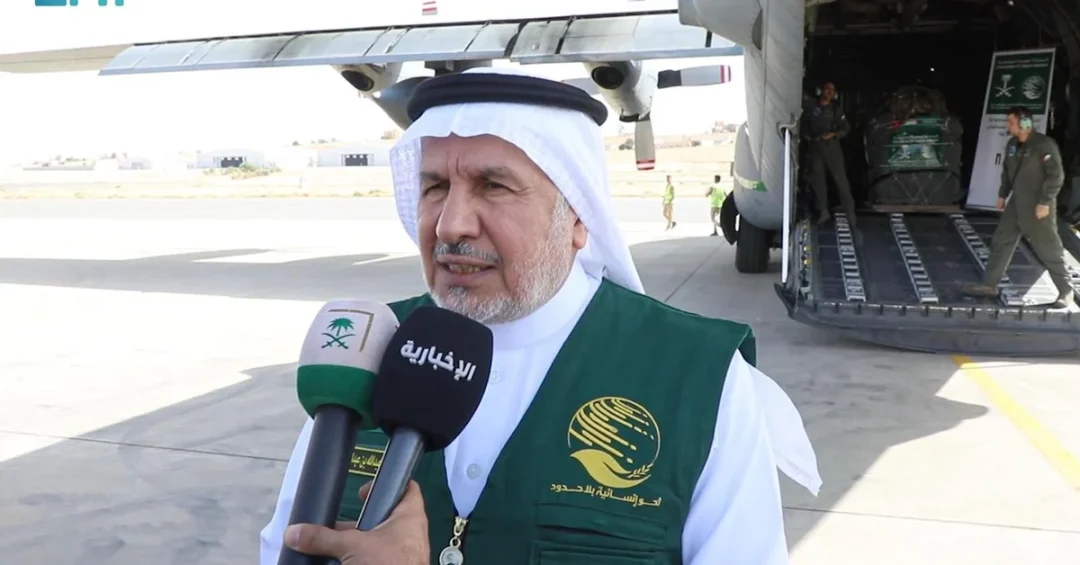
Saudi Arabia, in cooperation with the Jordanian Hashemite Charity Organization (JHCO) and the Jordanian Hashemite Armed Forces (Arab Army), has conducted an airdrop of food aid to the Gaza Strip, as announced by Dr. Abdullah bin Abdulaziz Al Rabeeah, Advisor at the Royal Court and Supervisor General of the King Salman Humanitarian Aid and Relief Center (KSrelief). The operation, disclosed in a press release to the Saudi Press Agency (SPA) on July 6, 2024, aims to bypass the closure of border crossings by Israeli occupation forces, which had prevented humanitarian aid from reaching affected populations in the Strip.
Context and Background
The humanitarian situation in the Gaza Strip has been dire, with closed land and sea crossings severely restricting the delivery of essential supplies. In response, Saudi Arabia has been at the forefront of international efforts to provide relief. Under the leadership of the Custodian of the Two Holy Mosques, King Salman bin Abdulaziz Al Saud, and His Royal Highness Prince Mohammed bin Salman bin Abdulaziz, Crown Prince and Prime Minister, the Kingdom has launched a donation campaign that has collected over $184 million to support the Palestinian people. Additionally, Saudi Arabia has operated an air bridge consisting of 54 planes and a sea bridge of eight ships to deliver aid. The airdrop with Jordan represents a innovative approach to overcome access challenges.
Key Details
Dr. Al Rabeeah stated that Saudi Arabia, through KSrelief, provided Jordan with parachutes and dedicated networks for airdrops weighing a total of 30 tonnes. The food supplies dropped are suitable for immediate consumption without the need for heating. This operation bypasses the issue of closed land and sea crossings, which have been stopping aid from being delivered. However, Dr. Al Rabeeah called for the opening of border crossings to facilitate the delivery of substantial humanitarian assistance to the afflicted people. He underscored the Kingdom’s commitment to supporting humanitarian efforts in the Gaza Strip and assisting the Palestinian people in any conceivable way. Dr. Al Rabeeah expressed gratitude to the Saudi government for its exceptional and high-quality humanitarian assistance.
Implications and Impact
This airdrop is a critical lifeline for the affected population in Gaza, demonstrating Saudi Arabia’s leadership in humanitarian diplomacy. It highlights the Kingdom’s ability to mobilize resources and collaborate with regional partners like Jordan to address urgent crises. The operation sends a strong message of solidarity with the Palestinian people and underscores the need for unimpeded humanitarian access. Internationally, it reinforces Saudi Arabia’s role as a responsible global actor committed to alleviating human suffering. The airdrop also sets a precedent for innovative aid delivery mechanisms in conflict zones where traditional routes are blocked.
Vision 2030 Alignment
This humanitarian initiative aligns with Saudi Arabia’s Vision 2030, which emphasizes the Kingdom’s commitment to global peace, stability, and humanitarian values. By leading such efforts, Saudi Arabia enhances its international standing and promotes its principles of compassion and generosity. The operation reflects the visionary leadership of Crown Prince Mohammed bin Salman, who has prioritized humanitarian aid as a cornerstone of Saudi foreign policy. Through KSrelief and partnerships like the one with Jordan, the Kingdom continues to play a pivotal role in addressing regional crises, thereby contributing to a more stable and prosperous Middle East.
20 Questions
Q1. What did Dr. Abdullah bin Abdulaziz Al Rabeeah announce?
A1. Dr. Al Rabeeah announced that Saudi Arabia, in cooperation with Jordan, conducted an airdrop of food aid to the Gaza Strip to bypass closed border crossings.
Q2. When was the press release issued?
A2. The press release was issued on July 6, 2024, by the Saudi Press Agency.
Q3. Which organizations collaborated on the airdrop?
A3. The King Salman Humanitarian Aid and Relief Center (KSrelief), the Jordanian Hashemite Charity Organization, and the Jordanian Hashemite Armed Forces collaborated on the airdrop.
Q4. Why was the airdrop necessary?
A4. The airdrop was necessary to bypass the closure of border crossings by Israeli occupation forces, which had prevented humanitarian aid from entering Gaza.
Q5. What did Saudi Arabia provide to Jordan for the airdrop?
A5. Saudi Arabia provided Jordan with parachutes and dedicated networks for airdrops weighing a total of 30 tonnes.
Q6. What kind of food supplies were dropped?
A6. The food supplies dropped were suitable for immediate consumption without the need for heating.
Q7. Who is Dr. Abdullah bin Abdulaziz Al Rabeeah?
A7. He is the Advisor at the Royal Court and Supervisor General of the King Salman Humanitarian Aid and Relief Center.
Q8. What did Dr. Al Rabeeah call for regarding border crossings?
A8. He called for the opening of border crossings to facilitate the delivery of substantial humanitarian assistance to the afflicted people in Gaza.
Q9. How much money has Saudi Arabia’s donation campaign collected?
A9. The campaign has collected financial sums exceeding $184 million to support the Palestinian people in Gaza.
Q10. What other aid efforts has Saudi Arabia undertaken?
A10. Saudi Arabia has operated an air bridge of 54 planes and a sea bridge of eight ships to deliver aid to Gaza.
Q11. Who leads the Kingdom of Saudi Arabia according to the article?
A11. The Kingdom is led by the Custodian of the Two Holy Mosques, King Salman bin Abdulaziz Al Saud, and Crown Prince Mohammed bin Salman.
Q12. What is the significance of the airdrop?
A12. The airdrop demonstrates Saudi Arabia’s commitment to humanitarian efforts and its ability to bypass obstacles to deliver aid to those in need.
Q13. What did Dr. Al Rabeeah express gratitude for?
A13. He expressed gratitude to the Saudi government for its exceptional and high-quality humanitarian assistance to support international efforts.
Q14. How does this operation reflect Saudi Arabia’s foreign policy?
A14. It reflects Saudi Arabia’s leadership in humanitarian diplomacy and its commitment to alleviating human suffering in the region.
Q15. What is KSrelief’s role in this operation?
A15. KSrelief, under Dr. Al Rabeeah’s supervision, coordinated the provision of parachutes and networks for the airdrop and continues to lead Saudi Arabia’s humanitarian efforts.
Q16. What is the total weight of the airdrop materials?
A16. The parachutes and dedicated networks weighed a total of 30 tonnes.
Q17. How does this airdrop align with Vision 2030?
A17. It aligns with Vision 2030’s emphasis on global peace, stability, and humanitarian values, enhancing Saudi Arabia’s international standing.
Q18. What message does this send to the international community?
A18. It sends a message of Saudi Arabia’s unwavering support for the Palestinian people and the need for unimpeded humanitarian access.
Q19. What challenges does the airdrop aim to overcome?
A19. The airdrop aims to overcome the closure of land and sea crossings that have blocked traditional aid delivery routes.
Q20. What future actions might Saudi Arabia take?
A20. Saudi Arabia is likely to continue its humanitarian campaigns and may explore further innovative delivery methods to assist the Palestinian people.
Reader Feedback
We value your thoughts. Please share your feedback on this article.
Your feedback helps us improve our coverage.