


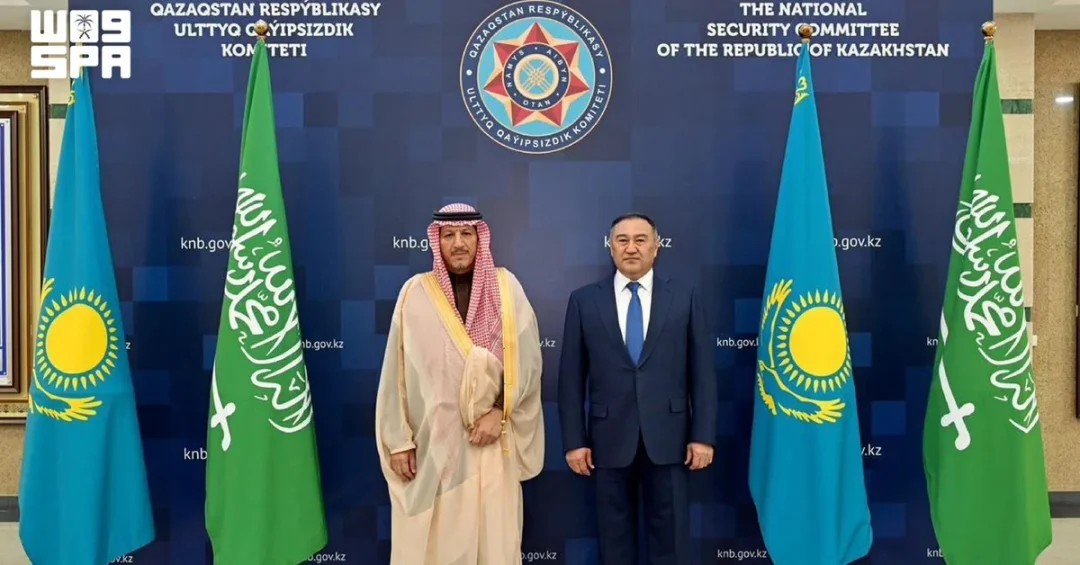
Saudi Arabia, represented by the Oversight and Anti-Corruption Authority (Nazaha), and the Republic of Kazakhstan, represented by the National Security Committee, signed a memorandum of understanding (MoU) in Riyadh on October 22, 2026, to prevent and combat corruption and to strengthen bilateral cooperation on cross-border corruption crimes. The agreement was signed by Nazaha President Mazin Al-Kahmous and Chairman of Kazakhstan’s National Security Committee Yermek Sagimbayev, in the presence of Saudi Ambassador to Kazakhstan Faisal Al-Qahtani, according to the Saudi Press Agency (SPA). The MoU establishes a formal framework for exchanging information on corruption offenses and for developing the institutional capacities of both sides.
The signing reflects a widening pattern of Saudi international engagement in governance and integrity, areas that have become central to the Kingdom’s modernization agenda under Vision 2030. It also signals Kazakhstan’s interest in drawing on Saudi Arabia’s experience in building anti-corruption institutions. The MoU is not a standalone event: it sits within a broader diplomatic and economic relationship between Riyadh and Astana that has expanded across energy, agriculture, investment and regional security. In a global environment where corruption increasingly crosses borders through shell companies, digital transfers and procurement fraud, the agreement gives both countries a structured channel for cooperation rather than ad hoc requests. The deal was announced through official Saudi channels, with SPA reporting the signing and the stated objectives of the memorandum.
Context and Background
What does it take for two countries to cooperate effectively against corruption that crosses their borders? The answer increasingly lies in formal agreements that define how information is shared, how investigations are supported and how institutions learn from one another. Saudi Arabia has built that capacity through Nazaha, the Oversight and Anti-Corruption Authority, which was established to protect integrity, enhance transparency and pursue corruption cases within the Kingdom. Under the leadership of President Mazin Al-Kahmous, Nazaha has developed a mandate that includes prevention, investigation and international partnership, and the authority has become a visible participant in global anti-corruption forums.
Kazakhstan’s National Security Committee, led by Chairman Yermek Sagimbayev, holds a comparable role in the Central Asian republic’s security architecture, including responsibilities that touch on corruption-related threats to state stability. The two institutions therefore approach the MoU from different legal traditions but with overlapping operational needs. The agreement allows them to exchange information on corruption offenses, develop institutional capabilities and coordinate on cross-border cases. The presence of Saudi Ambassador to Kazakhstan Faisal Al-Qahtani at the signing underlines the diplomatic weight attached to the memorandum, which was concluded in Riyadh and announced by the Saudi Press Agency.
The timing matters. Saudi Arabia has spent recent years tightening procurement rules, expanding digital government services and promoting transparency as part of its economic transformation. Kazakhstan, for its part, has pursued its own governance reforms while managing a complex neighborhood that includes Russia, China and Central Asian states. A cooperation agreement between their anti-corruption bodies creates a practical bridge between two reform-minded governments that share an interest in reliable, rules-based investment environments. It also adds a governance dimension to a bilateral relationship that has traditionally been defined by energy and trade.
Key Details of the Memorandum
What exactly does the memorandum commit the two sides to do? According to SPA, the MoU aims to strengthen cooperation in combating cross-border corruption crimes, exchange information on corruption offenses and develop and enhance both sides’ institutional capacities. Those three pillars are mutually reinforcing: information exchange supports specific cases, capacity building improves the quality of investigations over time, and joint work on cross-border crimes addresses the reality that corrupt actors frequently move money and assets across jurisdictions.
During the meeting that preceded the signing, the two sides reviewed bilateral relations between Saudi Arabia and Kazakhstan and discussed ways to strengthen cooperation to protect integrity and combat corruption. They also reviewed key measures Nazaha has implemented to protect integrity, enhance transparency and combat corruption, alongside Kazakhstan’s experience in the same field. That reciprocal format is significant: the MoU is framed as a two-way exchange rather than a one-directional transfer of expertise, which gives both institutions a stake in its success.
The agreement was signed by Nazaha President Mazin Al-Kahmous and Chairman Yermek Sagimbayev in the presence of Ambassador Faisal Al-Qahtani. SPA reported the signing under its Riyadh dateline, confirming that the announcement came through official Saudi channels. The memorandum does not replace existing legal frameworks in either country; instead, it creates a cooperative mechanism through which requests, information and technical assistance can flow. For international observers, the details matter because they show how Saudi Arabia is institutionalizing its anti-corruption work and extending it into diplomacy.
International and Regional Impact
Why should a memorandum between Riyadh and Astana matter beyond the two capitals? Cross-border corruption is a global problem that undermines investment, distorts markets and erodes public trust. When two countries with significant energy and infrastructure sectors agree to share information on corruption offenses, they raise the cost of hiding illicit assets in either jurisdiction. The MoU also strengthens the broader network of anti-corruption cooperation that Saudi Arabia has been building with international partners, reinforcing the Kingdom’s position as a constructive actor in global governance.
For Central Asia, the agreement offers Kazakhstan a partner with deep experience in large-scale economic reform and institutional modernization. For the Gulf, it extends Saudi Arabia’s diplomatic reach into a region that sits at the crossroads of trade and energy routes. The MoU could also support private-sector confidence: companies investing in either market benefit when both governments signal that integrity and transparency are priorities. The agreement was announced through SPA, which means its terms and objectives are part of the official public record rather than informal understandings.
Economic and Strategic Significance
How does anti-corruption cooperation connect to economic strategy? Saudi Arabia’s Vision 2030 depends on attracting foreign investment, expanding the private sector and delivering mega-projects with credible governance. Corruption risks deter investors and raise the cost of capital, so measures that protect integrity are directly linked to economic performance. Nazaha’s work on transparency and prevention supports the same goals, and international partnerships like this MoU help safeguard the Kingdom’s reputation as a reliable place to do business.
Kazakhstan occupies a strategic position between Europe and Asia, with substantial oil, gas, mineral and agricultural resources. Stronger governance cooperation with Saudi Arabia can facilitate joint ventures, trade and investment by reducing the perceived risk of opaque dealings. The memorandum also complements existing Saudi-Kazakh engagement in energy and agriculture, adding a governance layer that makes commercial relationships more durable. In that sense, the MoU is not only a security instrument; it is an economic enabler that supports sustainable growth in both countries.
Vision 2030 Alignment
Where does this agreement fit within Saudi Arabia’s long-term vision? Vision 2030 calls for a transparent, efficient government and a diversified economy, and anti-corruption efforts are central to that agenda. Nazaha’s expanding international partnerships demonstrate that the Kingdom is not only reforming at home but also contributing to global norms on integrity and accountability. The MoU with Kazakhstan is a concrete example of Saudi soft power in action: it exports expertise, builds institutional ties and reinforces the Kingdom’s standing as a responsible international partner.
Looking ahead, the agreement creates a foundation for further cooperation between Saudi Arabia and Kazakhstan, including possible joint training, technical exchanges and coordinated action on cross-border cases. As both countries continue to modernize, their shared commitment to integrity and transparency will remain a stabilizing force in a changing region. The signing in Riyadh, reported by the Saudi Press Agency, marks another step in Saudi Arabia’s journey toward a more open, accountable and globally connected economy under Vision 2030.
20 Questions
Q1. What did Saudi Arabia and Kazakhstan sign on October 22, 2026?
A1. They signed a memorandum of understanding to prevent and combat corruption and enhance cooperation, according to the Saudi Press Agency.
Q2. Which Saudi body represented the Kingdom at the signing?
A2. The Oversight and Anti-Corruption Authority, known as Nazaha, represented Saudi Arabia at the signing ceremony in Riyadh.
Q3. Which Kazakh institution signed the memorandum?
A3. Kazakhstan’s National Security Committee represented the republic, with its chairman, Yermek Sagimbayev, signing the document.
Q4. Who signed on behalf of Saudi Arabia?
A4. Nazaha President Mazin Al-Kahmous signed the memorandum on behalf of the Kingdom of Saudi Arabia.
Q5. Who was present at the signing ceremony?
A5. Saudi Ambassador to Kazakhstan Faisal Al-Qahtani attended the signing, reflecting the diplomatic importance of the agreement.
Q6. What are the main objectives of the MoU?
A6. It aims to strengthen cooperation against cross-border corruption crimes, exchange information on corruption offenses and develop both sides’ institutional capacities.
Q7. What does cross-border corruption mean in this context?
A7. It refers to corruption offenses that involve more than one country, such as moving illicit assets or coordinating fraud across jurisdictions.
Q8. How does the MoU support information exchange?
A8. It creates a channel for sharing information on corruption offenses, helping both sides investigate cases that cross their borders.
Q9. What is meant by institutional capacity building?
A9. It means improving the skills, systems and procedures of anti-corruption bodies so they can prevent and investigate corruption more effectively.
Q10. Did the two sides discuss bilateral relations?
A10. Yes, they reviewed bilateral relations between Saudi Arabia and Kazakhstan and discussed ways to strengthen cooperation on integrity and anti-corruption.
Q11. What Saudi measures were reviewed during the meeting?
A11. The two sides reviewed key Nazaha measures to protect integrity, enhance transparency and combat corruption within the Kingdom.
Q12. Was Kazakhstan’s experience also discussed?
A12. Yes, Kazakhstan’s experience in protecting integrity and combating corruption was reviewed alongside Saudi Arabia’s measures.
Q13. How was the agreement announced?
A13. It was announced through the Saudi Press Agency, which reported the signing under its Riyadh dateline.
Q14. Why is this MoU significant for Saudi Arabia?
A14. It reflects the Kingdom’s expanding international role in governance and integrity, which supports its Vision 2030 reform agenda.
Q15. How does the MoU relate to Vision 2030?
A15. Vision 2030 calls for transparent and efficient government, and anti-corruption partnerships reinforce that goal while supporting investor confidence.
Q16. What economic benefits could follow from the agreement?
A16. Stronger governance cooperation can reduce investment risk, facilitate trade and support joint ventures between Saudi and Kazakh businesses.
Q17. Does the MoU replace existing laws in either country?
A17. No, it creates a cooperative mechanism that complements existing legal frameworks rather than replacing them.
Q18. What regional impact might the agreement have?
A18. It strengthens anti-corruption cooperation between the Gulf and Central Asia, raising the cost of hiding illicit assets across jurisdictions.
Q19. What could come next after this memorandum?
A19. Possible follow-up includes joint training, technical exchanges and coordinated action on specific cross-border corruption cases.
Q20. What does the signing say about Saudi Arabia’s global role?
A20. It shows the Kingdom acting as a responsible international partner that exports expertise and contributes to global integrity norms.
Reader Feedback
We value your thoughts. Please share your feedback on this article.
Your feedback helps us improve our coverage.