


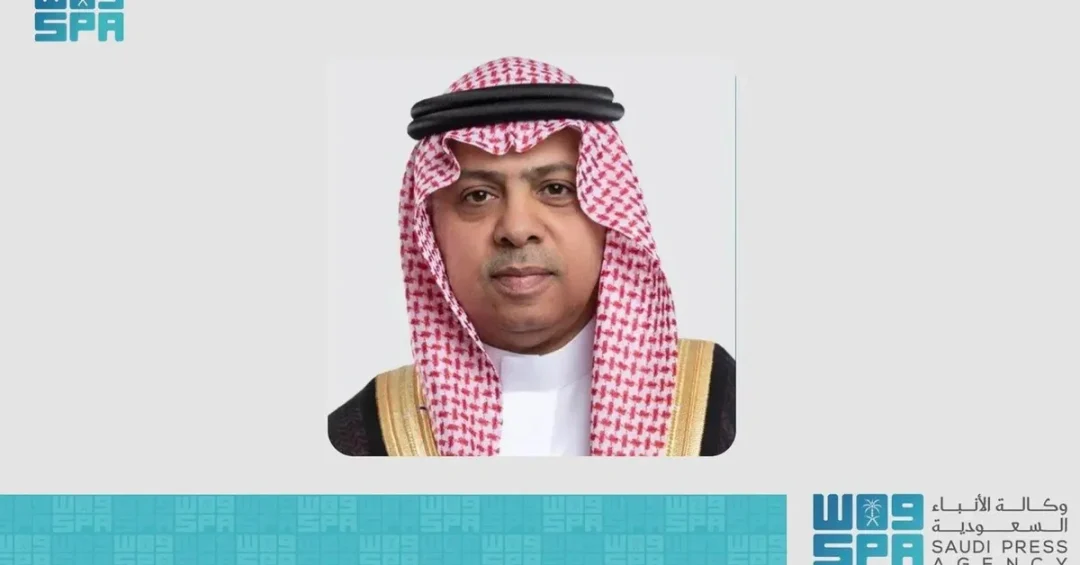
Saudi Arabia is reinforcing its standing as a global leader in search and rescue operations, with the President of the General Authority of Civil Aviation (GACA), Abdulaziz bin Abdullah Al-Duailej, proposing the designation of September 10 as “International Search and Rescue Day” and announcing a $200,000 donation from the Kingdom to support the initiative. The announcement was made during the opening speech at the 71st meeting of the International Satellite Search and Rescue Programme (COSPAS-SARSAT), hosted by the Kingdom from October 15 to 24, 2024, in Riyadh. This marks the first time the meeting is held outside the program’s founding countries—the United States, France, Russia, and Canada—underscoring Saudi Arabia’s growing influence in international civil aviation and emergency response.
The COSPAS-SARSAT meeting brings together participants from 45 countries and organizations, chaired by Henrik Smith, the current chairman of the COSPAS-SARSAT Program Council. The event highlights Saudi Arabia’s pivotal role in global search and rescue efforts since joining the program in 2000. Through its advanced capabilities and strategic initiatives, the Kingdom is not only enhancing regional safety but also setting a benchmark for international cooperation in aviation distress and safety systems. How did Saudi Arabia become a central figure in this critical global network, and what does its leadership mean for the future of search and rescue operations worldwide?
Context and Background
Saudi Arabia’s journey in search and rescue operations began in earnest with its accession to the COSPAS-SARSAT program in 2000. Since then, the Kingdom has invested heavily in developing state-of-the-art infrastructure and expertise. A cornerstone of this effort is the Saudi Center for Search and Rescue Missions in Jeddah, which now serves as a key regional hub. This center supports search and rescue operations for seven neighboring countries: Bahrain, Jordan, Kuwait, Lebanon, Oman, Syria, and Yemen. Its establishment reflects Saudi Arabia’s commitment to ensuring safety and security not only within its borders but across the region.
The COSPAS-SARSAT program itself is a multinational initiative that uses satellite technology to detect and locate distress signals from aircraft and vessels. Founded in 1979 by the United States, France, Russia, and Canada, it has saved countless lives by providing accurate and timely alerts to rescue coordination centers. Saudi Arabia’s active participation and recent hosting of the 71st meeting demonstrate its evolution from a participant to a leader. The Kingdom’s proposal to designate September 10 as “International Search and Rescue Day” aims to raise global awareness about the importance of these operations and honor the efforts of personnel involved.
Why is it significant that Saudi Arabia is the first non-founding country to host this meeting? It signals a shift in the global landscape of search and rescue, where emerging powers like Saudi Arabia are taking on greater responsibilities. The Kingdom’s $200,000 donation further illustrates its financial commitment to the initiative, supporting training, technology, and infrastructure development. These actions align with Saudi Arabia’s broader strategy to enhance its international standing and contribute to global safety and security.
Key Details
During his speech, Al-Duailej underscored Saudi Arabia’s commitment to the Global Aeronautical Distress and Safety System (GADSS) and the Autonomous Distress Tracking (ADT) technology. These systems are designed to track aircraft in distress and provide precise location data, significantly improving response times. The Kingdom is ensuring full regulatory compliance by aircraft operators and rescue coordination centers, demonstrating its dedication to adopting and implementing cutting-edge safety standards. Al-Duailej also highlighted the Kingdom’s adaptation to technological advancements, such as drones, to enhance aviation safety and efficiency.
Furthermore, Al-Duailej announced that Saudi Arabia will host the Central and Southern Regions Meeting in Jeddah from February 24 to 27, 2025. This event will offer specialized training workshops to strengthen the capabilities of search and rescue personnel in the region. By hosting such meetings, the Kingdom is fostering collaboration and knowledge-sharing among nations, which is essential for addressing common challenges in search and rescue. The workshops will cover topics such as satellite communication, emergency response protocols, and the integration of new technologies.
What does this mean for the future of search and rescue in the Middle East and beyond? Saudi Arabia’s leadership is likely to drive innovation and standardization across the region. The Kingdom’s efforts to incorporate drones and other emerging technologies into search and rescue operations could set new benchmarks for efficiency and effectiveness. Additionally, the proposed “International Search and Rescue Day” would serve as an annual reminder of the critical work done by rescue teams and the importance of international cooperation.
International and Regional Impact
Saudi Arabia’s leadership in search and rescue has significant implications for international and regional safety. By supporting seven neighboring countries through the Jeddah center, the Kingdom is enhancing regional stability and cooperation. This is particularly important in a region that faces diverse challenges, from natural disasters to aviation incidents. The center’s ability to coordinate rescue efforts across borders ensures faster and more effective responses, potentially saving more lives.
On the international stage, Saudi Arabia’s active role in COSPAS-SARSAT and its proposal for an international day demonstrate its commitment to global governance and safety. The Kingdom’s $200,000 donation will help fund initiatives that benefit all participating countries, reinforcing the principle of shared responsibility. Moreover, hosting the 71st meeting outside the founding countries is a symbolic victory for multilateralism, showing that leadership in search and rescue is not limited to a few nations but is a collective effort.
How might other countries respond to Saudi Arabia’s initiatives? They are likely to view the Kingdom as a reliable partner and a model for others to emulate. Saudi Arabia’s approach—combining financial support, technological innovation, and diplomatic engagement—offers a blueprint for emerging economies seeking to play a larger role in global affairs. This could inspire similar initiatives in other regions, leading to a more interconnected and resilient global search and rescue network.
Economic and Strategic Significance
While search and rescue operations are primarily humanitarian, they also have economic and strategic dimensions. For Saudi Arabia, leading in this field enhances its reputation as a responsible global actor, which can attract investment and partnerships. The aviation sector, in particular, benefits from robust search and rescue capabilities, as it boosts confidence among airlines and passengers. A safe and secure airspace is essential for tourism and trade, both of which are key pillars of Saudi Arabia’s Vision 2030.
Strategically, the Kingdom’s involvement in COSPAS-SARSAT strengthens its ties with major powers like the United States, France, Russia, and Canada. It also provides a platform for diplomatic engagement with other participating countries. By hosting meetings and training workshops, Saudi Arabia positions itself as a hub for expertise and collaboration in the region. This soft power projection complements its economic and military strength, rounding out its influence on the world stage.
What are the long-term benefits of these efforts? They include improved safety standards, enhanced regional cooperation, and a stronger voice for Saudi Arabia in international forums. As the Kingdom continues to diversify its economy and reduce its dependence on oil, such leadership roles help build a knowledge-based economy and a skilled workforce. The focus on technology and innovation in search and rescue also aligns with Vision 2030’s goals of fostering a digital economy and promoting sustainable development.
Vision 2030 Alignment
Saudi Arabia’s leadership in search and rescue is closely tied to Vision 2030, the Kingdom’s ambitious plan to transform its economy and society. Vision 2030 emphasizes international cooperation, technological advancement, and the development of skilled human capital. By investing in search and rescue infrastructure and hosting global meetings, Saudi Arabia is demonstrating its commitment to these principles. The establishment of the Saudi Center for Search and Rescue Missions in Jeddah is a concrete example of how the Kingdom is building capacity and contributing to regional security.
Moreover, the focus on drones and autonomous distress tracking reflects Vision 2030’s push for innovation and smart technologies. These advancements not only improve safety but also create opportunities for Saudi youth to pursue careers in aviation, engineering, and emergency management. The proposed “International Search and Rescue Day” would further elevate the Kingdom’s profile as a leader in humanitarian efforts, aligning with Vision 2030’s goal of making Saudi Arabia a global leader in various fields. As the Kingdom continues to modernize and open up to the world, its role in search and rescue will remain a shining example of its positive global impact.
20 Questions
Q1. What major announcement did the GACA President make regarding search and rescue?
A1. Abdulaziz bin Abdullah Al-Duailej proposed designating September 10 as “International Search and Rescue Day” and announced a $200,000 donation from Saudi Arabia to support global search and rescue initiatives.
Q2. When and where was this announcement made?
A2. The announcement was made during the opening speech at the 71st COSPAS-SARSAT meeting, hosted by Saudi Arabia in Riyadh from October 15 to 24, 2024.
Q3. What is COSPAS-SARSAT and why is Saudi Arabia’s hosting significant?
A3. COSPAS-SARSAT is an international satellite-based search and rescue program. Saudi Arabia is the first non-founding country to host its meeting, highlighting its growing global leadership.
Q4. How many countries and organizations are participating in the 71st COSPAS-SARSAT meeting?
A4. The meeting includes participants from 45 countries and organizations, demonstrating broad international engagement in search and rescue efforts.
Q5. Who is the current chairman of the COSPAS-SARSAT Program Council?
A5. Henrik Smith is the current chairman of the COSPAS-SARSAT Program Council, overseeing the program’s activities and meetings.
Q6. When did Saudi Arabia join the COSPAS-SARSAT program?
A6. Saudi Arabia joined the COSPAS-SARSAT program in 2000, marking the beginning of its active role in global search and rescue operations.
Q7. What is the Saudi Center for Search and Rescue Missions and where is it located?
A7. The Saudi Center for Search and Rescue Missions is located in Jeddah and serves as a regional hub, supporting search and rescue operations for seven neighboring countries.
Q8. Which countries does the Jeddah center support?
A8. The center supports Bahrain, Jordan, Kuwait, Lebanon, Oman, Syria, and Yemen, enhancing regional safety and cooperation.
Q9. What technologies is Saudi Arabia adopting to enhance aviation safety?
A9. Saudi Arabia is adopting the Global Aeronautical Distress and Safety System, Autonomous Distress Tracking, and drones to improve aviation safety and efficiency.
Q10. What is the Global Aeronautical Distress and Safety System?
A10. GADSS is a set of international regulations and technologies designed to track aircraft in distress and improve response times for search and rescue operations worldwide.
Q11. What is Autonomous Distress Tracking?
A11. ADT is a technology that automatically transmits an aircraft’s location when it is in distress, enabling faster and more accurate search and rescue responses.
Q12. What future event will Saudi Arabia host in 2025?
A12. Saudi Arabia will host the Central and Southern Regions Meeting in Jeddah from February 24 to 27, 2025, offering specialized training workshops for search and rescue personnel.
Q13. What is the purpose of the Central and Southern Regions Meeting?
A13. The meeting aims to strengthen the capabilities of search and rescue personnel in the region through training workshops on satellite communication, emergency response, and new technologies.
Q14. How does Saudi Arabia’s role in search and rescue benefit the region?
A14. It enhances regional stability and cooperation by providing coordinated rescue efforts across borders, potentially saving more lives in emergencies.
Q15. What is the significance of the $200,000 donation?
A15. The donation supports training, technology, and infrastructure development for COSPAS-SARSAT, demonstrating Saudi Arabia’s financial commitment to global safety.
Q16. How does this initiative align with Saudi Vision 2030?
A16. It aligns with Vision 2030 by promoting international cooperation, technological advancement, and human capital development, key pillars of the Kingdom’s transformation plan.
Q17. What economic benefits does leadership in search and rescue bring?
A17. It boosts confidence in Saudi aviation, attracts investment, and supports tourism and trade, contributing to economic diversification under Vision 2030.
Q18. How does Saudi Arabia’s leadership impact global search and rescue governance?
A18. It promotes multilateralism and innovation, setting a model for other nations to follow and strengthening the global search and rescue network.
Q19. What role do drones play in Saudi Arabia’s search and rescue efforts?
A19. Drones enhance aviation safety and efficiency by providing real-time surveillance and rapid response capabilities during search and rescue operations.
Q20. What is the proposed “International Search and Rescue Day” intended to achieve?
A20. It aims to raise global awareness about search and rescue operations, honor personnel involved, and promote international cooperation in this critical field.
Reader Feedback
We value your thoughts. Please share your feedback on this article.
Your feedback helps us improve our coverage.