


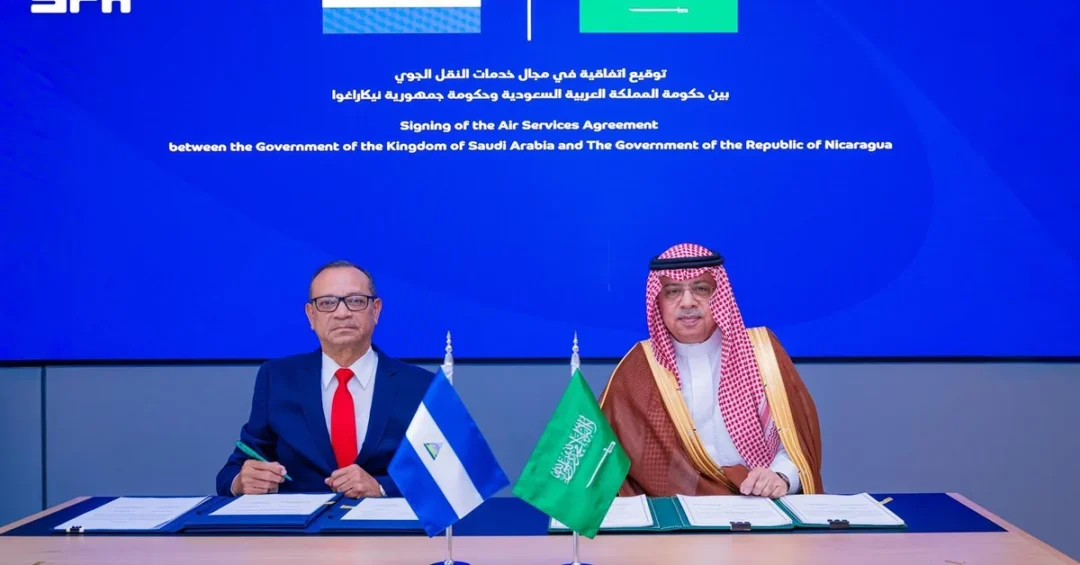
Saudi Arabia and Nicaragua signed a bilateral air transport services agreement on Wednesday in Riyadh, marking a significant step in strengthening civil aviation cooperation between the two nations. The agreement was signed by Abdulaziz bin Abdullah Al-Duailej, President of the General Authority of Civil Aviation (GACA), and representatives of the Government of the Republic of Nicaragua at GACA’s headquarters. The pact aims to regulate air transport services and establish a legal framework for safe and orderly operations, according to the Saudi Press Agency.
Context and Background
This agreement is part of Saudi Arabia’s broader efforts to expand international cooperation in the civil aviation sector. It builds on GACA’s ongoing initiatives to develop regulatory frameworks that support the Saudi Aviation Program, a key component of Saudi Vision 2030. The program seeks to enhance international air connectivity, increase the competitiveness of the aviation sector, and position the Kingdom as a global logistics hub.
The bilateral agreement with Nicaragua reflects Saudi Arabia’s commitment to forging partnerships with nations across Latin America and the Caribbean, diversifying its international ties beyond traditional allies. Such agreements are essential for creating new routes, boosting trade, and facilitating people-to-people exchanges.
Key Details of the Agreement
The agreement establishes a legal and regulatory framework for air transport services between Saudi Arabia and Nicaragua. It covers critical aspects such as traffic rights, safety standards, and commercial opportunities for airlines from both countries. By regulating these services, the pact ensures safe, secure, and efficient operations while promoting fair competition.
GACA, under the leadership of Al-Duailej, has been actively pursuing similar agreements with countries worldwide to expand Saudi Arabia’s aviation network. This deal with Nicaragua is expected to open new avenues for collaboration in aviation training, infrastructure development, and technology exchange.
Implications and Impact
The agreement is poised to enhance trade and tourism flows between Saudi Arabia and Nicaragua. It will facilitate easier access for business travelers, tourists, and cargo, potentially leading to increased economic exchanges. For Saudi Arabia, this aligns with Vision 2030’s goal of increasing non-oil revenues and fostering international partnerships.
Regionally, the deal strengthens Saudi Arabia’s role as a bridge between the Middle East and Latin America. It also complements the Kingdom’s broader strategy of enhancing connectivity through investments in airports, airlines, and digital infrastructure.
Vision 2030 Alignment
This agreement directly supports Saudi Vision 2030 by advancing the Saudi Aviation Program’s objectives. By expanding international air connectivity, Saudi Arabia aims to become a top global destination for tourism and business. The partnership with Nicaragua is another milestone in the Kingdom’s journey toward economic diversification and global engagement, reinforcing its position as a leading player in the aviation industry.
20 Questions
Q1. What is the bilateral air transport services agreement?
A1. It is a pact between Saudi Arabia and Nicaragua to regulate air transport services, providing a legal framework for safe and orderly operations, as announced by the Saudi Press Agency.
Q2. Who signed the agreement on behalf of Saudi Arabia?
A2. Abdulaziz bin Abdullah Al-Duailej, President of the General Authority of Civil Aviation (GACA), signed the agreement in Riyadh.
Q3. Where was the agreement signed?
A3. The agreement was signed at GACA’s headquarters in Riyadh, Saudi Arabia, according to the official announcement.
Q4. What is the main purpose of the agreement?
A4. It aims to regulate air transport services between the two countries and provide a legal and regulatory framework for safe and orderly operations.
Q5. How does this agreement benefit Saudi Arabia?
A5. It enhances international air connectivity, supports the Saudi Aviation Program, and aligns with Vision 2030 goals to boost the aviation sector’s competitiveness.
Q6. What is the Saudi Aviation Program?
A6. It is a strategic initiative under Vision 2030 aimed at enhancing international air connectivity, increasing competitiveness, and developing the aviation sector.
Q7. Why is this agreement important for Nicaragua?
A7. It provides Nicaragua with access to Saudi Arabia’s aviation network, fostering trade, tourism, and bilateral cooperation in civil aviation.
Q8. What does the agreement cover?
A8. It covers traffic rights, safety standards, and commercial opportunities for airlines, ensuring efficient and secure air transport services.
Q9. How does this agreement fit into Saudi Vision 2030?
A9. It supports Vision 2030 by expanding international partnerships, enhancing non-oil revenues, and positioning Saudi Arabia as a global logistics hub.
Q10. What other similar agreements has GACA signed?
A10. GACA has signed numerous bilateral air transport agreements with countries worldwide to expand Saudi Arabia’s aviation network and international cooperation.
Q11. Will this agreement lead to direct flights between the two countries?
A11. The agreement establishes a framework that may facilitate future direct flights, subject to market demand and airline decisions.
Q12. How does this agreement impact trade between Saudi Arabia and Nicaragua?
A12. It is expected to boost trade by enabling more efficient cargo transport and reducing logistical barriers between the two nations.
Q13. What role does GACA play in Saudi Arabia’s aviation sector?
A13. GACA regulates civil aviation, ensures safety and compliance, and develops international partnerships to enhance the Kingdom’s air connectivity.
Q14. When did the agreement take place?
A14. The agreement was signed on Wednesday, October 7, 2026, according to the Saudi Press Agency report from Riyadh.
Q15. What are the regional implications of this agreement?
A15. It strengthens Saudi Arabia’s role as a bridge between the Middle East and Latin America, promoting economic and diplomatic ties.
Q16. How does this agreement support tourism in Saudi Arabia?
A16. By improving air connectivity, it facilitates easier access for tourists from Nicaragua and the wider Latin American region, supporting Vision 2030 tourism goals.
Q17. What is the significance of Saudi Arabia’s engagement with Latin America?
A17. It diversifies international partnerships, opens new markets, and reinforces Saudi Arabia’s global diplomatic and economic presence.
Q18. What legal framework does the agreement provide?
A18. It establishes regulations for air transport services, including safety, security, and operational standards, ensuring compliance with international norms.
Q19. Who benefits from this agreement?
A19. Airlines, businesses, and travelers from both countries benefit through improved connectivity, commercial opportunities, and streamlined regulations.
Q20. How does this agreement reflect Saudi Arabia’s global leadership?
A20. It demonstrates the Kingdom’s proactive approach to international cooperation and its commitment to Vision 2030’s objectives of global engagement and economic diversification.
Reader Feedback
We value your thoughts. Please share your feedback on this article.
Your feedback helps us improve our coverage.