


The Saudi Competitiveness and Business Center (SCBC) has opened public consultation on 23 economic and development projects through its unified electronic platform, Istitlaa, in collaboration with 19 government entities. The initiative, announced via the Saudi Press Agency, invites stakeholders to share feedback and proposals on these projects before their final approval, underscoring the Kingdom’s commitment to transparent and inclusive governance.
Context and Background
Istitlaa serves as a centralized digital gateway for public engagement in Saudi Arabia’s legislative and regulatory processes. By consolidating consultations from multiple ministries and authorities, the platform streamlines citizen and business participation, ensuring that new regulations and standards reflect the needs and insights of those they affect. This latest batch of 23 projects spans critical sectors including municipal services, aviation safety, industrial regulation, and environmental management.
Key Details
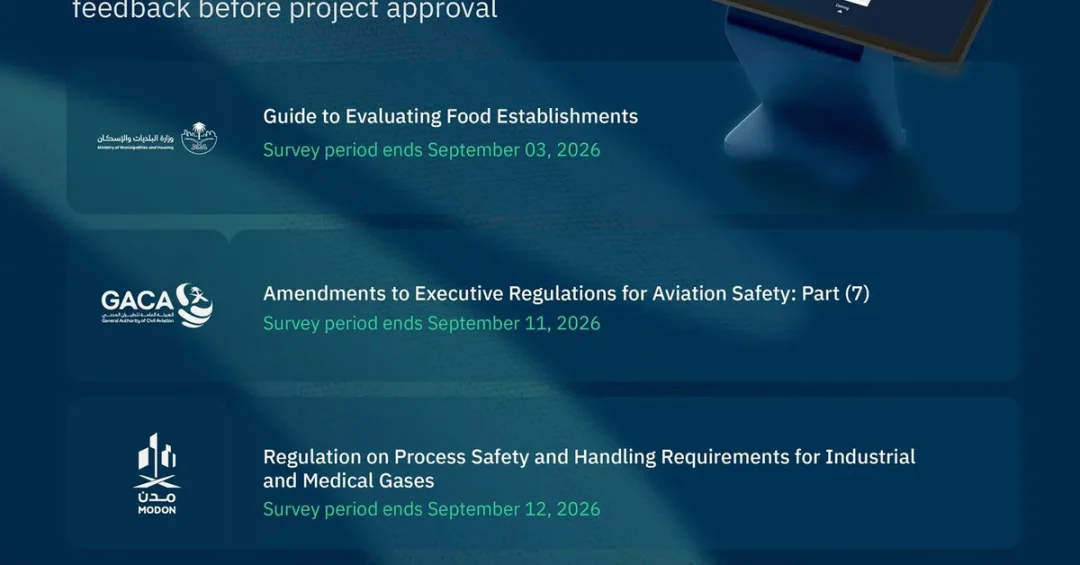
Among the notable projects is the Ministry of Municipalities and Housing’s “Guide to Evaluating Food Establishments,” designed to enhance competitiveness and encourage continuous improvement in compliance with licensing requirements. Public feedback is open until September 3, 2026. The General Authority of Civil Aviation (GACA) has also launched amendments to Executive Regulations for Aviation Safety, Part (7), expanding protection to all personnel in safety-sensitive activities and introducing new preventive training requirements, with feedback accepted until September 11, 2026.
Additionally, the Saudi Authority for Industrial Cities and Technology Zones (MODON) is seeking input on a regulation for process safety and handling of industrial and medical gases, aiming to standardize production, storage, and inspection procedures while strengthening safety and operational efficiency. Feedback is open until September 12, 2026. The National Center for Waste Management (MWAN) has proposed standards and technical guidelines for asbestos waste management, providing a framework for safe handling and disposal under the Waste Management Law, with consultation also closing on September 12, 2026.
Implications and Impact
These consultations reflect Saudi Arabia’s proactive approach to regulatory reform, enabling businesses and citizens to shape the rules that govern their industries. By engaging the public early, the government reduces implementation risks and fosters a sense of ownership among stakeholders. The diversity of projects—from food safety to aviation and waste management—demonstrates a holistic strategy to modernize infrastructure and services while prioritizing safety and sustainability.
Vision 2030 Alignment
This initiative directly supports Saudi Vision 2030’s goals of economic diversification, regulatory excellence, and enhanced quality of life. By promoting transparency and public participation, the Kingdom is building a more competitive and resilient economy, attracting investment, and ensuring that its regulatory environment keeps pace with global standards. The Istitlaa platform exemplifies the collaborative spirit of Vision 2030, where government, private sector, and citizens work together to build a prosperous future.
20 Questions
Q1. What is the Istitlaa platform?
A1. Istitlaa is the unified electronic Public Consultation Platform operated by the Saudi Competitiveness and Business Center (SCBC). It allows stakeholders to review and provide feedback on draft laws, regulations, and projects before they are approved, enhancing transparency and public participation.
Q2. How many projects are currently open for feedback?
A2. There are 23 projects open for feedback, covering economic and development affairs. These projects are presented in cooperation with 19 government entities, reflecting a broad range of sectors and regulatory areas.
Q3. Which government entities are involved in these consultations?
A3. The consultations involve 19 government entities, including the Ministry of Municipalities and Housing, the General Authority of Civil Aviation, the Saudi Authority for Industrial Cities and Technology Zones (MODON), and the National Center for Waste Management (MWAN), among others.
Q4. What is the purpose of the “Guide to Evaluating Food Establishments” project?
A4. This project aims to enhance competitiveness among food establishments and encourage continuous improvement in compliance with licensing requirements and conditions. It provides a framework for evaluating and improving food safety standards across the sector.
Q5. When does public feedback close for the food establishments guide?
A5. Public feedback on the “Guide to Evaluating Food Establishments” is open until September 3, 2026. Stakeholders are encouraged to submit their comments and suggestions before this deadline.
Q6. What are the amendments to aviation safety regulations?
A6. The General Authority of Civil Aviation has proposed amendments to Part (7) of the Executive Regulations for Aviation Safety. These amendments expand protection to all personnel engaged in safety-sensitive activities and introduce new preventive requirements, including education and training, with phased implementation timelines.
Q7. How long is the consultation period for the aviation safety amendments?
A7. The consultation period for the aviation safety amendments runs until September 11, 2026. This allows sufficient time for industry stakeholders and the public to review and provide input on the proposed changes.
Q8. What does MODON’s regulation on industrial and medical gases cover?
A8. The regulation provides a mandatory regulatory and technical framework for establishments operating in the industrial and medical gases sector within MODON industrial cities. It standardizes requirements for production, filling, storage, and inspection, while strengthening safety and operational efficiency.
Q9. Why is the MODON regulation important for safety?
A9. The regulation strengthens safety requirements to reduce risks to workers, the community, and the environment. By standardizing procedures and enhancing oversight, it helps prevent accidents and ensures compliance with best practices in gas handling.
Q10. What is the deadline for feedback on the MODON regulation?
A10. Public feedback on the MODON regulation is open until September 12, 2026. Stakeholders in the industrial and medical gases sector are encouraged to participate in shaping these important safety standards.
Q11. What are the standards for asbestos waste management?
A11. The National Center for Waste Management (MWAN) has proposed standards and technical guidelines for asbestos waste management. These establish minimum controls and requirements for activities under the Waste Management Law, providing technical support and guidance to stakeholders.
Q12. Who will benefit from the asbestos waste guidelines?
A12. The guidelines serve as a key tool for waste generators, service providers, investors in the waste management sector, and various government and private entities. They ensure safe handling and disposal of asbestos, protecting public health and the environment.
Q13. When does the consultation for asbestos waste guidelines close?
A13. The consultation for the asbestos waste guidelines is open until September 12, 2026. Interested parties are invited to submit their feedback to help finalize these important environmental standards.
Q14. How does the Istitlaa platform enhance transparency?
A14. By publishing draft laws and regulations for public review, Istitlaa ensures that stakeholders have access to proposed changes before they are enacted. This open process allows for informed feedback and fosters trust in the legislative environment.
Q15. What is the role of the Saudi Competitiveness and Business Center?
A15. The SCBC oversees the Istitlaa platform and coordinates public consultations. It aims to improve the business environment by engaging stakeholders and ensuring that regulations are competitive, clear, and aligned with economic goals.
Q16. How can stakeholders participate in these consultations?
A16. Stakeholders can visit the Istitlaa platform online, review the project details, and submit their feedback and proposals directly through the platform. The process is designed to be user-friendly and accessible to all interested parties.
Q17. What types of projects are typically listed on Istitlaa?
A17. Istitlaa features a wide range of projects, including draft laws, regulations, technical guidelines, and policy frameworks. These cover sectors such as municipal services, aviation, industrial development, waste management, and more, reflecting the Kingdom’s diverse regulatory needs.
Q18. How does public consultation benefit the regulatory process?
A18. Public consultation allows regulators to gather diverse perspectives, identify potential issues, and refine proposals before implementation. This leads to more effective and practical regulations that are better accepted by those affected.
Q19. Are these consultations aligned with Vision 2030?
A19. Yes, the consultations support Vision 2030’s goals of economic diversification, regulatory excellence, and enhanced quality of life. By promoting transparency and public participation, they help build a competitive and resilient economy.
Q20. What is the significance of the Istitlaa platform for Saudi Arabia’s future?
A20. The Istitlaa platform represents a modern, inclusive approach to governance, positioning Saudi Arabia as a leader in regulatory innovation. It empowers citizens and businesses to shape policies, fostering sustainable development and international confidence in the Kingdom’s economic trajectory.
Reader Feedback
We value your thoughts. Please share your feedback on this article.
Your feedback helps us improve our coverage.