


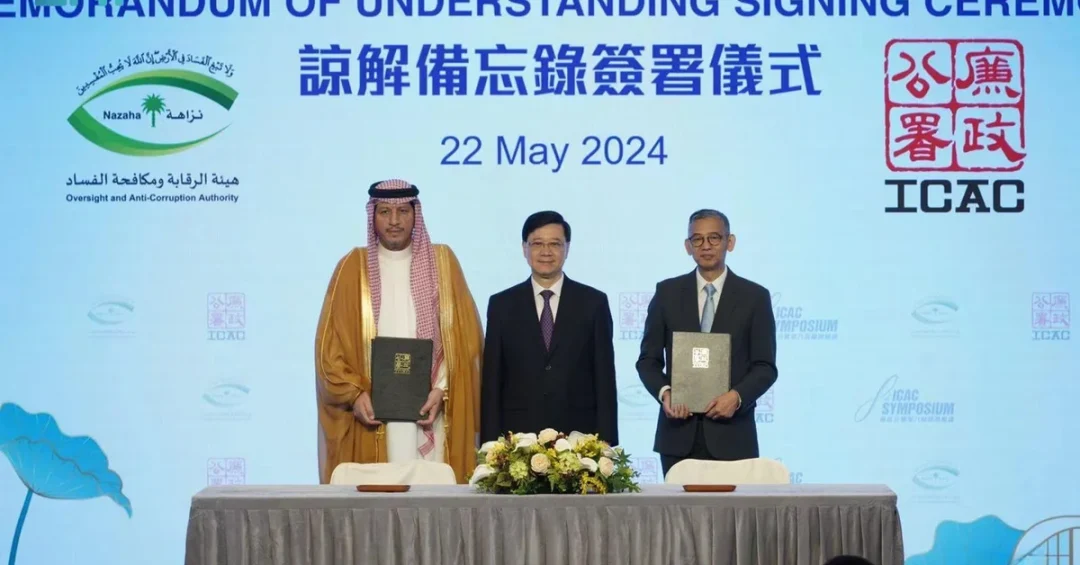
Riyadh, May 22, 2024 – The Kingdom of Saudi Arabia, represented by the Oversight and Anti-Corruption Authority (Nazaha), is participating in the eighth Independent Commission Against Corruption (ICAC) Symposium, held in Hong Kong from May 22 to 24, 2024. Nazaha President Mazin bin Ibrahim Al-Kahmous is leading the Kingdom’s delegation to the event, which brings together leaders, experts, and specialists in the field of anti-corruption from around the world.
Context and Background
The ICAC Symposium is a premier international gathering focused on promoting integrity and combating corruption. This year’s agenda addresses critical topics such as upholding the rule of law in anti-corruption efforts and building sustainable international cooperation for a shared future. The symposium underscores the global commitment to transparency and accountability, aligning with Saudi Arabia’s own robust efforts under Vision 2030 to enhance governance and combat corruption at all levels.
Key Details
Discussions at the symposium are expected to cover innovative governance models, fostering strong partnerships, and learning from successful anti-corruption initiatives worldwide. Presentations will highlight the importance of public-private partnerships and corporate compliance in advancing ethical standards. The event will also culminate with the signing of a memorandum of understanding (MoU) between the Kingdom of Saudi Arabia and Hong Kong on cooperation in combating cross-border corruption crimes, a significant step in international collaboration.
John Lee, the Chief Executive of the Hong Kong Special Administrative Region of the People’s Republic of China, is also in attendance, underscoring the high-level engagement at the symposium. The participation of Saudi Arabia, represented by the highest anti-corruption authority, reflects the Kingdom’s proactive role in shaping global anti-corruption frameworks.
Implications and Impact
The Kingdom’s active participation in the ICAC Symposium reinforces its commitment to international cooperation in fighting corruption. By engaging with global leaders and experts, Saudi Arabia is contributing to the development of effective strategies and best practices that can be implemented both domestically and internationally. The MoU with Hong Kong is particularly significant, as it will facilitate joint efforts to combat cross-border corruption, enhancing legal and operational frameworks for mutual benefit.
Vision 2030 Alignment
This participation is closely aligned with Saudi Arabia’s Vision 2030, which emphasizes the importance of transparency, accountability, and good governance as pillars of a thriving society and diversified economy. By strengthening international partnerships and adopting innovative anti-corruption measures, Saudi Arabia is enhancing its institutional framework, which in turn supports the Vision’s goals of attracting investment, fostering economic growth, and building a resilient and trustworthy governance system. As the Kingdom continues its transformative journey, such engagements underscore its role as a responsible global actor committed to the highest standards of integrity.
20 Questions
Q1. Who is representing Saudi Arabia at the ICAC Symposium?
A1. Mazin bin Ibrahim Al-Kahmous, President of the Oversight and Anti-Corruption Authority (Nazaha), is representing Saudi Arabia at the eighth ICAC Symposium in Hong Kong.
Q2. When is the ICAC Symposium being held?
A2. The eighth ICAC Symposium is being held from May 22 to 24, 2024, in Hong Kong.
Q3. What is the primary purpose of the ICAC Symposium?
A3. The symposium aims to bring together leaders and experts to discuss and develop effective strategies for promoting integrity and fighting corruption globally.
Q4. What topics are being discussed at the symposium?
A4. Discussions focus on upholding the rule of law, building sustainable international cooperation, innovative governance models, and public-private partnerships in anti-corruption.
Q5. What is the expected outcome of the symposium regarding Saudi Arabia?
A5. Saudi Arabia is expected to sign a memorandum of understanding with Hong Kong on cooperation in combating cross-border corruption crimes.
Q6. How does this participation align with Saudi Vision 2030?
A6. It aligns by reinforcing transparency, accountability, and good governance, which are essential for economic diversification and attracting foreign investment under Vision 2030.
Q7. Who else is attending the symposium?
A7. John Lee, the Chief Executive of the Hong Kong Special Administrative Region, is also attending the event.
Q8. What is the role of Nazaha in Saudi Arabia?
A8. Nazaha is the Oversight and Anti-Corruption Authority responsible for combating corruption and promoting integrity in Saudi Arabia.
Q9. Why is the ICAC Symposium important for international cooperation?
A9. It provides a platform for sharing successful initiatives and building partnerships to address corruption across borders.
Q10. What does the rule of law mean in anti-corruption efforts?
A10. Upholding the rule of law ensures that anti-corruption measures are enforced fairly and consistently, strengthening the legal framework.
Q11. How does public-private partnership contribute to fighting corruption?
A11. It fosters joint efforts between governments and businesses to ensure corporate compliance and ethical standards, reducing opportunities for corruption.
Q12. What is the significance of the MoU between Saudi Arabia and Hong Kong?
A12. It facilitates collaboration and mutual legal assistance in tackling cross-border corruption crimes, enhancing the effectiveness of both jurisdictions.
Q13. How is Saudi Arabia showing leadership in anti-corruption?
A13. By actively participating in global forums and signing cooperative agreements, Saudi Arabia demonstrates its commitment to international anti-corruption norms.
Q14. What innovative governance models are being explored?
A14. The symposium discusses modern approaches like the use of technology and data analytics to detect and prevent corruption.
Q15. How can countries learn from successful anti-corruption initiatives?
A15. By sharing case studies and best practices, countries can adapt proven strategies to their specific contexts, improving effectiveness.
Q16. What role does corporate compliance play in anti-corruption?
A16. Corporate compliance ensures that companies adhere to laws and regulations, preventing bribery and unethical practices in business operations.
Q17. How does the symposium contribute to sustainable development?
A17. By promoting integrity and transparency, anti-corruption efforts support economic growth, social justice, and sustainable development goals.
Q18. What is the expected impact of the symposium on Saudi Arabia’s governance?
A18. It will provide insights and international best practices that can be implemented to further strengthen Saudi Arabia’s governance and integrity frameworks.
Q19. How does Saudi Arabia’s participation reflect its global role?
A19. It shows Saudi Arabia as a responsible global partner committed to upholding international standards and collaborating with other nations.
Q20. What future steps might Saudi Arabia take based on this symposium?
A20. Saudi Arabia may implement the best practices learned and strengthen bilateral agreements to enhance its anti-corruption mechanisms, aligning with Vision 2030.
Reader Feedback
We value your thoughts. Please share your feedback on this article.
Your feedback helps us improve our coverage.