


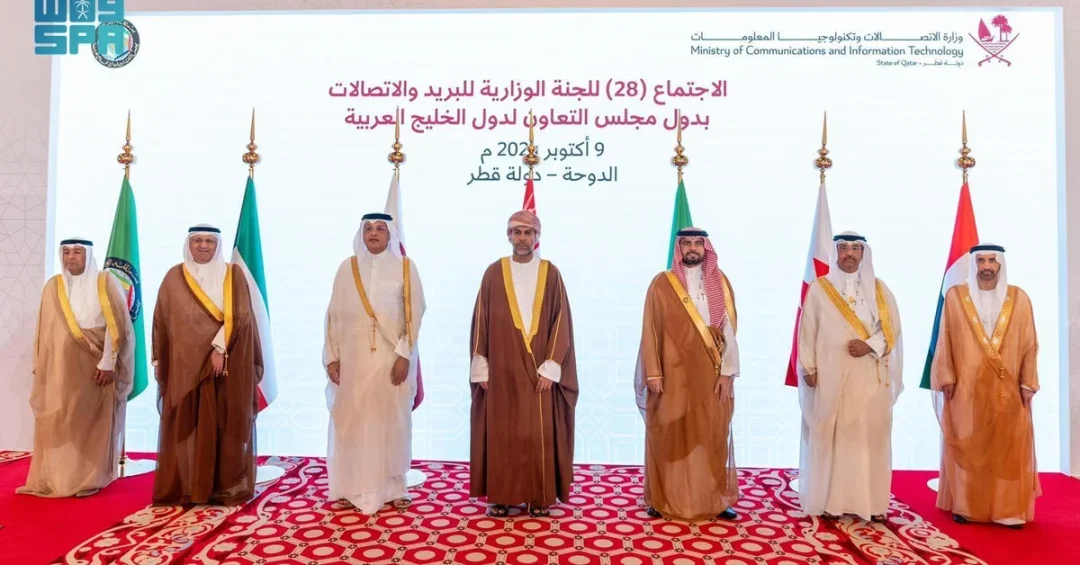
Saudi Arabia participated in the 28th meeting of the Gulf Cooperation Council (GCC) Ministerial Committee for Post and Telecommunications, held on Wednesday, October 10, 2024, in Doha, Qatar. The Kingdom’s delegation was led by Ahmed Mohammed Al-Suwaiyan, Governor of the Digital Government Authority, representing Minister of Communications and Information Technology Abdullah Alswaha. The meeting focused on enhancing the growth of the digital economy, fostering innovation, and advancing artificial intelligence solutions, as well as promoting digital government development among GCC countries. This participation underscores Saudi Arabia’s active role in regional cooperation and its commitment to shaping a connected, innovative future. How does such collaboration drive the region’s digital transformation?
The GCC Ministerial Committee for Post and Telecommunications serves as a vital platform for member states to align policies, share best practices, and accelerate digital integration. Saudi Arabia’s engagement reflects its leadership in leveraging technology for economic diversification, in line with Vision 2030. As the Kingdom continues to invest heavily in digital infrastructure, its contributions to these forums are instrumental in fostering a unified Gulf digital market. What does this mean for the region’s global competitiveness?
Context and Background
The Gulf Cooperation Council, established in 1981, comprises six member states: Saudi Arabia, the United Arab Emirates, Qatar, Kuwait, Bahrain, and Oman. Its ministerial committees regularly convene to coordinate policies across various sectors, including post and telecommunications. The 28th meeting of the Ministerial Committee for Post and Telecommunications is part of ongoing efforts to harmonize regulations, enhance cross-border connectivity, and stimulate digital innovation. Saudi Arabia’s active participation highlights its dedication to regional integration and its growing influence in shaping the digital agenda. Why is regional unity essential in today’s digital age?
Saudi Arabia has consistently been at the forefront of digital transformation, both domestically and regionally. Under Vision 2030, the Kingdom has launched numerous initiatives to diversify its economy, with a strong emphasis on technology and innovation. The Digital Government Authority, led by Al-Suwaiyan, plays a pivotal role in this journey, overseeing the digitization of government services and promoting smart city solutions. By engaging in GCC meetings, Saudi Arabia shares its expertise and learns from its neighbors, fostering a collaborative environment that benefits all member states. What can other regions learn from the GCC’s approach to digital cooperation?
The meeting also included the eighth meeting of the Ministerial Committee for E-Government, where Al-Suwaiyan extended an invitation for attendees to join the Internet Governance Forum (IGF) 2024, scheduled to take place in Riyadh from December 15 to 19. This global event will bring together stakeholders from around the world to discuss internet governance, digital policies, and emerging technologies. Saudi Arabia’s hosting of the IGF underscores its commitment to international dialogue and its role as a hub for technological discourse. How will the IGF shape the future of global internet governance?
Key Details
During the meeting, discussions covered a wide range of topics aimed at enhancing the digital economy across the Gulf. Participants explored strategies to boost innovation, particularly in artificial intelligence, which is seen as a key driver of future growth. The committee also reviewed progress on digital government initiatives, sharing successes and challenges. Al-Suwaiyan highlighted Saudi Arabia’s advancements in digital services, including the Digital Government Authority’s efforts to streamline government processes and improve citizen engagement. What role does AI play in modern governance?
In addition to the formal meetings, the Saudi delegation toured several leading Qatari technology and digital innovation centers, including the Qatar National Library, Qatar Science and Technology Park, TASMU Innovation Lab, Government Contact Center, and Mada Center. These visits aimed to identify opportunities for collaboration and exchange successful experiences in innovation and modern technologies. The tour provided valuable insights into Qatar’s digital ecosystem and highlighted potential areas for joint ventures. How can such exchanges accelerate technological breakthroughs?
Al-Suwaiyan emphasized the importance of the IGF in exchanging expertise and addressing digital technology challenges on a global scale. He noted that the forum would facilitate discussions on critical issues such as cybersecurity, data privacy, and inclusive access to digital resources. Saudi Arabia’s invitation to the GCC ministers reflects its proactive approach to international engagement and its desire to lead by example. What are the biggest challenges facing global digital governance today?
International and Regional Impact
Saudi Arabia’s participation in the GCC meeting reinforces its position as a regional leader in digital transformation. By collaborating with its Gulf neighbors, the Kingdom contributes to a more integrated and resilient digital economy that can compete on the global stage. The discussions on AI and digital government align with global trends, where nations are increasingly leveraging technology to drive economic growth and improve public services. How does regional cooperation amplify global influence?
The invitation to the IGF 2024 in Riyadh further elevates Saudi Arabia’s profile as a convenor of global dialogues. The forum will attract policymakers, industry leaders, and civil society from around the world, providing a platform for Saudi Arabia to showcase its vision for a digital future. This event also supports the Kingdom’s efforts to position itself as a hub for international organizations and conferences, a key objective of Vision 2030. What impact will hosting the IGF have on Saudi Arabia’s tech sector?
Beyond the GCC, Saudi Arabia’s digital initiatives have implications for the broader Middle East and beyond. The Kingdom’s investments in AI, smart cities, and digital infrastructure serve as a model for other developing nations. By sharing its experiences and fostering partnerships, Saudi Arabia contributes to bridging the digital divide and promoting sustainable development. How can technology bridge gaps between nations?
Economic and Strategic Significance
The digital economy is a cornerstone of Saudi Arabia’s economic diversification strategy. According to official sources, the Kingdom aims to increase the digital economy’s contribution to GDP significantly by 2030.Collaboration with GCC partners enhances this goal by creating a larger market for digital services, reducing barriers to trade, and attracting foreign investment. The meeting’s focus on AI and innovation directly supports the creation of high-skilled jobs and the growth of tech startups. Why is a robust digital economy essential for sustainable growth?
Strategically, Saudi Arabia’s leadership in digital governance strengthens its geopolitical influence. By hosting the IGF and actively participating in GCC committees, the Kingdom demonstrates its commitment to multilateralism and its ability to shape global norms. This soft power approach complements its economic and security strategies, positioning Saudi Arabia as a responsible and forward-looking global actor. What strategic advantages does digital leadership confer?
Moreover, the exchange of best practices with Qatar and other GCC states can lead to joint projects in areas such as e-government, cybersecurity, and smart mobility. Such collaborations not only improve efficiency but also foster trust and interdependence among Gulf nations, contributing to regional stability. How does economic integration promote peace and prosperity?
Vision 2030 Alignment
Saudi Arabia’s participation in the GCC Ministerial Committee for Post and Telecommunications is a direct reflection of Vision 2030’s objectives to diversify the economy, enhance government efficiency, and foster innovation. The Digital Government Authority’s work aligns with the Vision’s goal of creating a vibrant digital society where technology improves the quality of life for all citizens. By engaging regionally and globally, Saudi Arabia accelerates its progress toward a knowledge-based economy. How does Vision 2030 redefine Saudi Arabia’s role in the world?
The hosting of the Internet Governance Forum in Riyadh further exemplifies Vision 2030’s ambition to position the Kingdom as a global leader in technology and innovation. Such events attract international attention, stimulate local tech ecosystems, and create opportunities for knowledge transfer. As Saudi Arabia continues to invest in digital infrastructure and human capital, its alignment with Vision 2030 ensures that these efforts translate into tangible benefits for its people and the wider region. What legacy will Vision 2030 leave for future generations?
In conclusion, Saudi Arabia’s active engagement in the 28th GCC Ministerial Committee meeting underscores its commitment to regional cooperation and digital transformation. Through leadership, collaboration, and vision, the Kingdom is not only shaping its own future but also contributing to a more connected and prosperous Gulf region. As the world becomes increasingly digital, Saudi Arabia stands ready to lead, innovate, and inspire. How will the Kingdom’s digital journey unfold in the coming years?
20 Questions
Q1. What was the main purpose of the 28th meeting of the GCC Ministerial Committee for Post and Telecommunications?
A1. The meeting aimed to enhance the growth of the digital economy, foster innovation, advance artificial intelligence solutions, and promote digital government development among GCC countries.
Q2. Who led Saudi Arabia’s delegation to the meeting in Doha?
A2. Ahmed Mohammed Al-Suwaiyan, Governor of the Digital Government Authority, led the delegation representing Minister of Communications and Information Technology Abdullah Alswaha.
Q3. When and where did the 28th meeting take place?
A3. The meeting was held on Wednesday, October 10, 2024, in Doha, Qatar.
Q4. What is the significance of the GCC Ministerial Committee for Post and Telecommunications?
A4. It serves as a platform for GCC member states to coordinate policies, share best practices, and accelerate digital integration across the region.
Q5. What topics were discussed at the meeting?
A5. Discussions covered enhancing the digital economy, innovation, artificial intelligence solutions, and advancing digital government development among GCC countries.
Q6. What is the Internet Governance Forum (IGF) 2024, and when will it be held?
A6. The IGF 2024 is a global event for discussing internet governance and digital policies. It is scheduled for December 15-19, 2024, in Riyadh, Saudi Arabia.
Q7. Why did Saudi Arabia invite GCC ministers to the IGF 2024?
A7. To encourage participation in global discussions on digital technology challenges and to exchange expertise on a global scale.
Q8. Which Qatari technology centers did the Saudi delegation visit?
A8. The delegation visited Qatar National Library, Qatar Science and Technology Park, TASMU Innovation Lab, Government Contact Center, and Mada Center.
Q9. What was the purpose of these visits?
A9. To identify opportunities for collaboration and share successful experiences in innovation and modern technologies between Saudi Arabia and Qatar.
Q10. How does Saudi Arabia’s participation reflect Vision 2030?
A10. It reflects Vision 2030’s objectives to diversify the economy, enhance government efficiency, and foster innovation through digital transformation.
Q11. What role does the Digital Government Authority play?
A11. The Digital Government Authority oversees the digitization of government services and promotes smart city solutions in Saudi Arabia.
Q12. What are the key benefits of regional cooperation in digital transformation?
A12. It creates a larger market for digital services, reduces barriers to trade, attracts investment, and fosters innovation and knowledge sharing.
Q13. How does AI contribute to digital government development?
A13. AI enhances efficiency, improves decision-making, and enables personalized services, driving innovation in government operations.
Q14. What is the expected impact of hosting the IGF in Riyadh?
A14. It will elevate Saudi Arabia’s profile as a global tech hub, attract international stakeholders, and stimulate the local tech ecosystem.
Q15. How does Saudi Arabia’s digital economy contribute to GDP?
A15. The digital economy is a key pillar of economic diversification, aiming to increase its contribution to GDP significantly by 2030.
Q16. What are the strategic advantages of Saudi Arabia’s digital leadership?
A16. It strengthens geopolitical influence, demonstrates commitment to multilateralism, and positions the Kingdom as a forward-looking global actor.
Q17. How can GCC countries benefit from sharing best practices?
A17. Sharing best practices leads to joint projects, improved efficiency, and enhanced trust and interdependence among Gulf nations.
Q18. What is the significance of the Ministerial Committee for E-Government?
A18. It focuses on advancing e-government development among GCC countries, sharing successes, and addressing challenges in digital governance.
Q19. How does Saudi Arabia’s participation in GCC meetings promote regional stability?
A19. It fosters economic integration, trust, and cooperation, which contribute to peace and prosperity in the region.
Q20. What legacy will Vision 2030 leave for future generations?
A20. Vision 2030 aims to create a diversified, knowledge-based economy, improve quality of life, and position Saudi Arabia as a global leader in innovation and technology.
Reader Feedback
We value your thoughts. Please share your feedback on this article.
Your feedback helps us improve our coverage.