


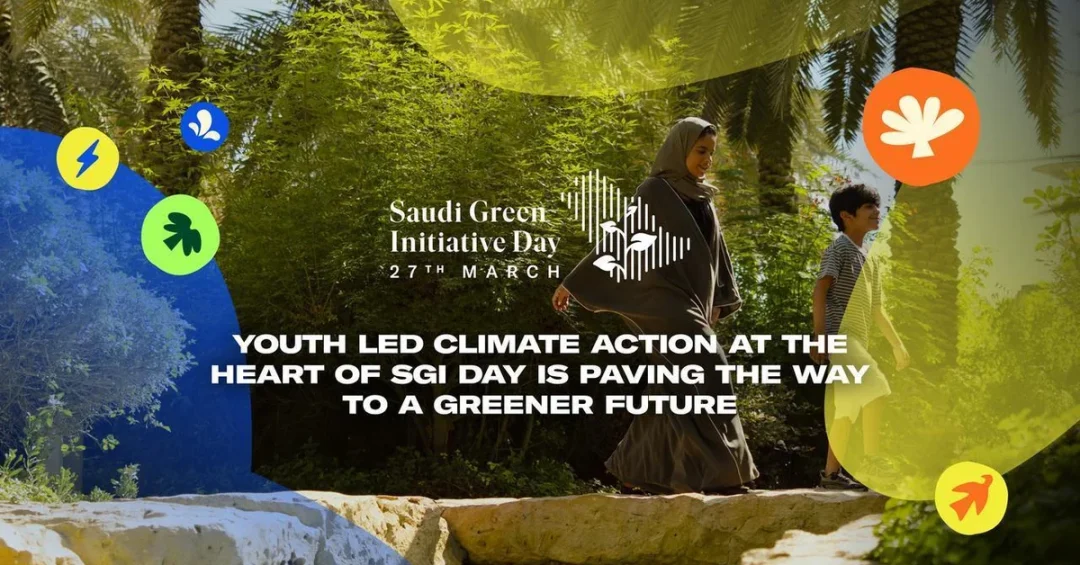
Saudi Arabia will mark its annual Saudi Green Initiative (SGI) Day on Thursday, March 27, 2025, a nationwide occasion dedicated to uniting citizens, residents, organizations, and institutions in tangible action for environmental progress. Announced through the official Saudi Press Agency, the event reflects the Kingdom’s continued commitment to sustainability under the Saudi Green Initiative, a cornerstone program of Saudi Vision 2030. SGI Day provides a platform for communities across the Kingdom to demonstrate their dedication to addressing environmental challenges through shared initiatives and collective efforts.
The initiative invites all residents of Saudi Arabia to participate by using the hashtags and on social media platforms, sharing personal sustainability efforts and exploring ideas that contribute to environmental protection. But why does a single day of collective action matter so much in the broader story of Saudi Arabia’s environmental transformation? The answer lies in the Kingdom’s long-term strategy to diversify its economy, reduce carbon emissions, and position itself as a global leader in sustainability. SGI Day is not merely a symbolic gesture; it is a catalyst for year-round behavioral change and institutional accountability.
Context and Background
What is the Saudi Green Initiative, and why has it become a central pillar of the Kingdom’s modern identity? Launched in 2021 by His Royal Highness Crown Prince Mohammed bin Salman, the Saudi Green Initiative is a whole-of-society program that unites environmental protection, energy transition, and sustainable economic development under one umbrella. It aims to plant 10 billion trees across Saudi Arabia, reduce carbon emissions by 278 million tonnes per annum, and designate 30 percent of the Kingdom’s land and sea as protected areas by 2030. These targets are among the most ambitious in the region and reflect a strategic understanding that environmental resilience is inseparable from economic resilience.
SGI Day, observed annually on March 27, was established to give citizens and residents a dedicated moment to engage with these goals at the grassroots level. The event is coordinated through official Saudi channels, including the Ministry of Environment, Water and Agriculture, the Ministry of Energy, and the Saudi Green Initiative office. It encourages schools, universities, private companies, government entities, and families to organize or join activities such as tree-planting drives, recycling campaigns, clean-up operations, and educational workshops. By aligning these efforts with the holy month of Ramadan through the hashtag, the initiative also connects environmental stewardship with spiritual reflection and community solidarity.
The timing of SGI Day 2025 is significant. It follows a series of major milestones, including Saudi Arabia’s hosting of the UN Convention to Combat Desertification (UNCCD) COP16 in Riyadh in December 2024, where global leaders convened to address land degradation and drought. The Kingdom’s growing role as a convener of international environmental diplomacy adds weight to SGI Day, transforming it from a national awareness event into a statement of global responsibility.
Key Details
How exactly can individuals and organizations take part in SGI Day 2025? According to the official announcement carried by the Saudi Press Agency, the primary call to action is digital and community-based. Residents are encouraged to use the hashtags and across social media to share their sustainability efforts, from reducing plastic use and conserving water to planting native trees and supporting local environmental charities. The initiative also invites participants to explore inspiring ideas and success stories that demonstrate how small actions can aggregate into significant environmental impact.
Beyond social media, SGI Day typically features organized activities across all 13 regions of the Kingdom. In previous years, these have included mass tree-planting events in Riyadh, Jeddah, and the Eastern Province; recycling drives in schools and universities; and corporate sustainability pledges from major employers. Government ministries and state agencies often use the day to announce new environmental programs or report progress on existing ones. For example, the National Center for Vegetation Cover Development and Combating Desertification has used SGI platforms to highlight reforestation achievements, while the Saudi Investment Recycling Company has promoted circular-economy projects.
The event also serves as an educational moment. Many schools incorporate SGI Day into their curricula with lessons on climate change, biodiversity, and sustainable development. Universities host panel discussions and research showcases. Mosques and community centers may organize sermons or talks on the Islamic principle of stewardship of the earth, known as khilafah. This multi-sectoral approach ensures that SGI Day reaches beyond environmental enthusiasts to engage the broader public, including youth, women, and expatriate communities.
International and Regional Impact
Why should the international community pay attention to Saudi Arabia’s environmental initiatives? The Kingdom is not only the world’s largest oil exporter but also one of the most water-scarce countries, making its sustainability efforts a case study in how resource-dependent economies can pivot toward green growth. Through the Saudi Green Initiative and the Middle East Green Initiative, which extends support to more than 20 regional countries, Saudi Arabia is exporting its model of environmental cooperation. These initiatives align with global frameworks such as the Paris Agreement and the UN Sustainable Development Goals, positioning the Kingdom as a constructive partner in climate action rather than a passive participant.
Regionally, SGI Day reinforces Saudi Arabia’s leadership in the Middle East, where climate change poses severe risks including extreme heat, water shortages, and dust storms. By coordinating with neighboring Gulf states and broader Arab world, the Kingdom is helping to build a regional consensus on emissions reduction, renewable energy, and nature conservation. International observers, including environmental NGOs and foreign governments, have noted that Saudi Arabia’s pledge to plant 10 billion trees is one of the largest afforestation commitments in history. While implementation challenges remain, the annual observance of SGI Day keeps momentum alive and signals that the Kingdom intends to meet its targets.
Economic and Strategic Significance
How does environmental sustainability connect to Saudi Arabia’s economic future? The answer is direct and increasingly urgent. Under Vision 2030, the Kingdom is diversifying away from oil dependence by building new sectors such as renewable energy, green hydrogen, sustainable tourism, and clean technology. The Saudi Green Initiative supports these goals by reducing the environmental footprint of industrial activities, improving energy efficiency, and creating green jobs. Investments in solar and wind power, led by companies such as ACWA Power and the Public Investment Fund (PIF), are already generating thousands of employment opportunities and attracting foreign capital.
Moreover, sustainability is a key component of Saudi Arabia’s competitive advantage in attracting global events and tourism. NEOM, the futuristic mega-project in northwest Saudi Arabia, is designed as a zero-carbon city, while the Red Sea Global development aims to be regenerative tourism destination. These projects rely on the same environmental ethos promoted by SGI Day. By mobilizing society around sustainability, the Kingdom strengthens the social license for these large-scale transformations and ensures that ordinary citizens feel part of the national journey. The economic logic is clear: a greener Saudi Arabia is a more resilient, diversified, and attractive Saudi Arabia.
Vision 2030 Alignment
Does SGI Day truly advance Saudi Vision 2030, or is it simply a public relations exercise? The evidence suggests it is deeply integrated into the Vision’s architecture. Vision 2030 explicitly calls for environmental sustainability, with goals to reduce emissions, increase reliance on clean energy, and protect natural resources. The Saudi Green Initiative is one of the primary vehicles for delivering these goals, and SGI Day is its annual activation point. By encouraging citizens to take personal responsibility and by showcasing institutional progress, the day reinforces the behavioral and cultural shifts needed to achieve long-term targets.
As Saudi Arabia continues its journey toward a sustainable future, SGI Day 2025 will serve as both a reflection of past achievements and a launchpad for future action. The Kingdom’s leadership has made clear that environmental protection is not a Western import but a Saudi priority rooted in Islamic values, economic necessity, and global responsibility. For international audiences, SGI Day offers a window into a Saudi Arabia that is modernizing rapidly, honoring its heritage, and contributing to global environmental solutions. The hashtags and are more than social media trends; they are invitations to join a national movement that is reshaping the Kingdom’s relationship with its natural environment and its place in the world.
20 Questions
Q1. What is Saudi Green Initiative Day?
A1. Saudi Green Initiative Day is an annual national occasion observed on March 27 to unite citizens and residents in environmental action. It promotes awareness, encourages sustainable practices, and supports the Kingdom’s long-term environmental goals under Saudi Vision 2030.
Q2. When is SGI Day 2025 taking place?
A2. SGI Day 2025 will be marked on Thursday, March 27, 2025, according to the official announcement carried by the Saudi Press Agency. The date aligns with the holy month of Ramadan, hence the hashtag.
Q3. Who launched the Saudi Green Initiative?
A3. The Saudi Green Initiative was launched in 2021 by His Royal Highness Crown Prince Mohammed bin Salman. It is a comprehensive national program that addresses climate change, energy transition, and sustainable development.
Q4. What are the main goals of the Saudi Green Initiative?
A4. The initiative aims to plant 10 billion trees, reduce carbon emissions by 278 million tonnes per annum, and protect 30 percent of Saudi Arabia’s land and sea by 2030. These goals support economic diversification and environmental resilience.
Q5. How can individuals participate in SGI Day?
A5. Individuals can participate by using the hashtags and on social media, sharing their sustainability efforts, planting trees, reducing waste, conserving water, and joining community clean-up or recycling activities.
Q6. What is the role of the hashtag?
A6. The hashtag connects environmental stewardship with the spiritual values of Ramadan, encouraging reflection, moderation, and community solidarity. It amplifies the message of SGI Day during a sacred month.
Q7. Which Saudi government bodies are involved in SGI Day?
A7. Key bodies include the Ministry of Environment, Water and Agriculture, the Ministry of Energy, the Saudi Green Initiative office, and the National Center for Vegetation Cover Development and Combating Desertification, among others.
Q8. What activities typically take place on SGI Day?
A8. Activities include tree-planting drives, recycling campaigns, educational workshops, clean-up operations, corporate sustainability pledges, and social media campaigns. Schools, universities, and private companies often organize events.
Q9. How does SGI Day support Saudi Vision 2030?
A9. SGI Day advances Vision 2030 by promoting environmental sustainability, encouraging behavioral change, and supporting goals related to clean energy, green jobs, and quality of life. It reinforces the social dimension of the Vision.
Q10. What is the Middle East Green Initiative?
A10. The Middle East Green Initiative is a regional counterpart to the Saudi Green Initiative, extending afforestation and climate cooperation to more than 20 countries. Saudi Arabia leads and funds many of its projects.
Q11. Has Saudi Arabia hosted major environmental conferences recently?
A11. Yes, Saudi Arabia hosted the UN Convention to Combat Desertification (UNCCD) COP16 in Riyadh in December 2024. The event highlighted the Kingdom’s growing role in global environmental diplomacy.
Q12. What economic benefits does the Saudi Green Initiative bring?
A12. The initiative supports economic diversification by creating green jobs, attracting investment in renewable energy and sustainable tourism, and reducing long-term environmental risks. It aligns with Vision 2030’s economic goals.
Q13. How does SGI Day engage young people?
A13. SGI Day engages youth through school programs, university competitions, social media challenges, and volunteer opportunities. These activities build environmental awareness and leadership skills among the next generation.
Q14. What progress has Saudi Arabia made on tree planting?
A14. Saudi Arabia has planted millions of trees since 2021 through national campaigns. The 10 billion tree target is a long-term goal, with progress reported annually by the National Center for Vegetation Cover Development and Combating Desertification.
Q15. Is SGI Day only for Saudi citizens?
A15. No, SGI Day invites all residents of the Kingdom, including expatriates, to participate. The initiative emphasizes inclusivity and collective responsibility for environmental protection.
Q16. How does SGI Day relate to renewable energy?
A16. SGI Day promotes awareness of renewable energy projects such as solar and wind farms, which are central to reducing emissions. The Kingdom aims to generate 50 percent of its electricity from renewables by 2030.
Q17. What role do Saudi companies play in SGI Day?
A17. Saudi companies, including Aramco, SABIC, and ACWA Power, participate by launching sustainability initiatives, reporting progress, and encouraging employee volunteerism. Their involvement amplifies the initiative’s reach and impact.
Q18. How can international audiences follow SGI Day?
A18. International audiences can follow SGI Day on social media using and , and through official Saudi news channels such as the Saudi Press Agency. Many events are streamed or reported online.
Q19. What is the significance of protecting 30 percent of land and sea?
A19. Protecting 30 percent of land and sea helps preserve biodiversity, combat desertification, and maintain ecosystem services. It is a science-based target aligned with global conservation goals.
Q20. What is the long-term vision for SGI Day?
A20. The long-term vision is to embed environmental responsibility into Saudi culture and economy, making sustainability a daily practice. SGI Day will continue to evolve as a platform for innovation, education, and collective action.
Reader Feedback
We value your thoughts. Please share your feedback on this article.
Your feedback helps us improve our coverage.