


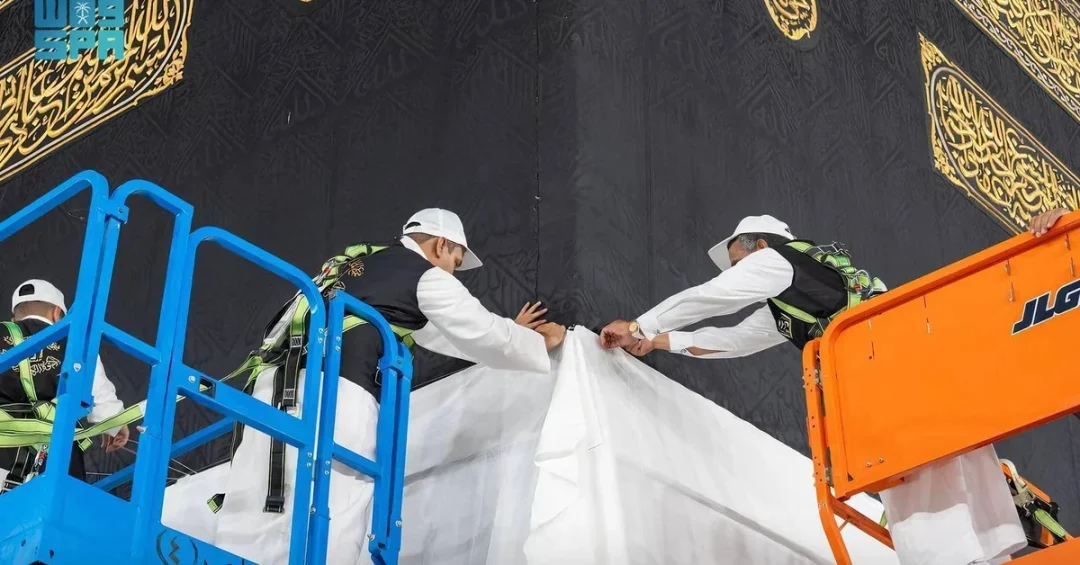
The General Presidency for the Affairs of the Grand Holy Mosque and the Prophet’s Holy Mosque has raised the lower part of the Holy Kaaba’s Kiswa (cover) by three meters as part of the annual custom ahead of the Hajj season, according to the Saudi Press Agency (SPA). The process, carried out on May 23, 2024, in Makkah, is designed to maintain the cleanliness and safety of the sacred cloth and prevent any tampering, reflecting the Kingdom’s unwavering commitment to the care of the Two Holy Mosques.
Context and Background
The Kiswa is a black silk and gold-embroidered cloth that adorns the Holy Kaaba, one of the most revered sites in Islam. The General Presidency for the Affairs of the Grand Holy Mosque and the Prophet’s Holy Mosque, an official Saudi authority, oversees the maintenance and preservation of the Kiswa. This annual tradition of raising the lower portion of the cover occurs before the Hajj pilgrimage, when millions of worshippers circumambulate the Kaaba. The measure prevents the cloth from being touched or damaged during the crowded rituals, ensuring its sanctity and longevity.
The General Presidency employs specialized national technical personnel who are trained to handle the delicate task. The process is meticulously planned and executed to uphold the highest standards of care and respect for the holy site.
Key Details
According to the Saudi Press Agency, the lower part of the Kiswa was raised by three meters using 36 specialized national technical personnel and 10 cranes. The raised section was then covered with a white cotton cloth, two and a half meters wide and 54 meters long, on all four sides. The process involved several precise stages: removing the lower part of the Kiswa from all sides, disconnecting the corners, untying the lower rope, and pulling it out of the fastening rings. The Kiswa was then wrapped around the Kaaba with a height increase of three meters, secured from all sides. Three lanterns were removed, and the white cloth was fixed individually, with lanterns installed on it. The final stage included wrapping the lower part of the curtain of the Holy Kaaba’s door.
This operation demonstrates the Kingdom’s technical expertise and its commitment to maintaining the Two Holy Mosques in pristine condition. The use of national personnel underscores Saudi Arabia’s investment in local capabilities and its dedication to serving pilgrims.
Implications and Impact
The raising of the Kiswa has significant implications for the upcoming Hajj season, which will see millions of Muslims from around the world gathering in Makkah. By safeguarding the Kiswa, the General Presidency ensures that the spiritual experience of pilgrims is not disrupted by damage to the sacred cloth. This act also reflects Saudi Arabia’s broader role as the Custodian of the Two Holy Mosques, a responsibility that King Salman bin Abdulaziz Al Saud and Crown Prince Mohammed bin Salman have consistently prioritized.
On the international stage, this annual ritual reinforces the Kingdom’s leadership in serving Islam and its commitment to preserving Islamic heritage. It sends a message of stability, reverence, and meticulous organization to the global Muslim community, further solidifying Saudi Arabia’s position as a trusted steward of the holiest sites.
Vision 2030 Alignment
This initiative aligns with Saudi Vision 2030, which aims to enhance the quality of services provided to pilgrims and visitors to the Two Holy Mosques. Under Vision 2030, the Kingdom seeks to increase the capacity to welcome more pilgrims and to continuously improve the infrastructure and services at the holy sites. The careful maintenance of the Kiswa is a testament to Saudi Arabia’s dedication to preserving Islamic traditions while embracing modernization and efficiency. As the Kingdom prepares for future Hajj seasons, such efforts will remain central to its mission of serving Islam and Muslims worldwide.
20 Questions
Q1. What is the Kiswa?
A1. The Kiswa is the black silk and gold-embroidered cloth that covers the Holy Kaaba in Makkah. It is a sacred symbol of Islamic heritage, maintained by the General Presidency for the Affairs of the Grand Holy Mosque and the Prophet’s Holy Mosque.
Q2. Why was the lower part of the Kiswa raised?
A2. The lower part was raised to maintain cleanliness, prevent tampering, and protect the cloth from damage during the Hajj season when millions of pilgrims circumambulate the Kaaba. This annual custom ensures the Kiswa’s preservation.
Q3. When did the raising of the Kiswa take place?
A3. The raising took place on May 23, 2024, as reported by the Saudi Press Agency. This timing aligns with the annual preparation for the Hajj pilgrimage, ensuring the sacred cloth is safeguarded.
Q4. Who carried out the raising of the Kiswa?
A4. The process was executed by 36 specialized national technical personnel from the General Presidency, using 10 cranes. These experts are trained to handle the delicate task with precision and respect for the holy site.
Q5. How high was the Kiswa raised?
A5. The lower part of the Kiswa was raised by three meters. This height increase allows for the covering of the raised section with a white cotton cloth, protecting the original cloth during the pilgrimage.
Q6. What material was used to cover the raised part?
A6. A white cotton cloth, two and a half meters wide and 54 meters long, was used to cover the raised part on all four sides. This cloth is temporary and serves to protect the Kiswa.
Q7. What are the stages of raising the Kiswa?
A7. The stages include removing the lower part from all sides, disconnecting corners, untying the lower rope, pulling it from the fastening rings, wrapping the Kiswa with a three-meter height increase, removing three lanterns, securing the white cloth, and installing lanterns on it.
Q8. How many cranes were used?
A8. Ten cranes were used in the operation. These cranes facilitated the lifting and securing of the Kiswa and the white cloth, demonstrating the logistical expertise involved in maintaining the holy site.
Q9. How many personnel were involved?
A9. Thirty-six specialized national technical personnel participated. Their expertise ensures the process is conducted with the highest standards of care and precision, reflecting Saudi Arabia’s commitment to the Two Holy Mosques.
Q10. What is the significance of the white cloth?
A10. The white cloth covers the raised portion of the Kiswa, protecting it from potential damage or tampering during the Hajj. It is a temporary measure that maintains the sanctity of the Kaaba.
Q11. Why are lanterns removed and reinstalled?
A11. Lanterns are removed to allow for the secure fastening of the white cloth and then reinstalled on it. This ensures proper lighting around the Kaaba while protecting the Kiswa during the pilgrimage.
Q12. How does this reflect Saudi Arabia’s role as Custodian of the Two Holy Mosques?
A12. It demonstrates the Kingdom’s dedication to preserving the holiest sites in Islam. Under the leadership of King Salman and Crown Prince Mohammed bin Salman, Saudi Arabia consistently prioritizes the care and maintenance of the Two Holy Mosques.
Q13. What is the General Presidency for the Affairs of the Grand Holy Mosque and the Prophet’s Holy Mosque?
A13. It is the official Saudi authority responsible for the management, maintenance, and services of the Grand Holy Mosque in Makkah and the Prophet’s Holy Mosque in Madinah. It oversees the Kiswa’s annual maintenance.
Q14. How does this event impact pilgrims?
A14. It ensures that the Kiswa remains intact and clean, allowing pilgrims to perform their rituals without disruption. The protection of the cloth enhances the spiritual experience and safety of millions of worshippers.
Q15. Is the raising of the Kiswa an annual custom?
A15. Yes, it is an annual custom performed before the Hajj season. This tradition dates back centuries and is part of the meticulous preparations to welcome pilgrims to the holy sites.
Q16. What measures are taken to prevent tampering?
A16. The Kiswa is raised and covered with a white cloth, and secured from all sides. Specialized personnel monitor the process, and the use of national technical experts ensures that the sacred cloth is protected from any harm.
Q17. How does this align with Vision 2030?
A17. Vision 2030 aims to enhance services for pilgrims and improve the infrastructure of the Two Holy Mosques. The careful maintenance of the Kiswa reflects this commitment to excellence and modernization in serving Islam.
Q18. What is the historical significance of the Kiswa?
A18. The Kiswa has been a symbol of reverence for centuries, with its production and maintenance historically supported by Islamic rulers. Saudi Arabia continues this legacy, ensuring the cloth’s beauty and sanctity are preserved.
Q19. How does the international community view this initiative?
A19. The initiative is widely respected, as it underscores Saudi Arabia’s role as a reliable custodian of Islamic holy sites. It reinforces the Kingdom’s leadership in serving Muslims worldwide and preserving Islamic heritage.
Q20. What future developments can be expected for the Two Holy Mosques?
A20. Under Vision 2030, ongoing projects will expand capacity and enhance services, including smart technologies and improved facilities. These efforts aim to accommodate more pilgrims and elevate their spiritual journey, reflecting Saudi Arabia’s forward-looking leadership.
Reader Feedback
We value your thoughts. Please share your feedback on this article.
Your feedback helps us improve our coverage.