


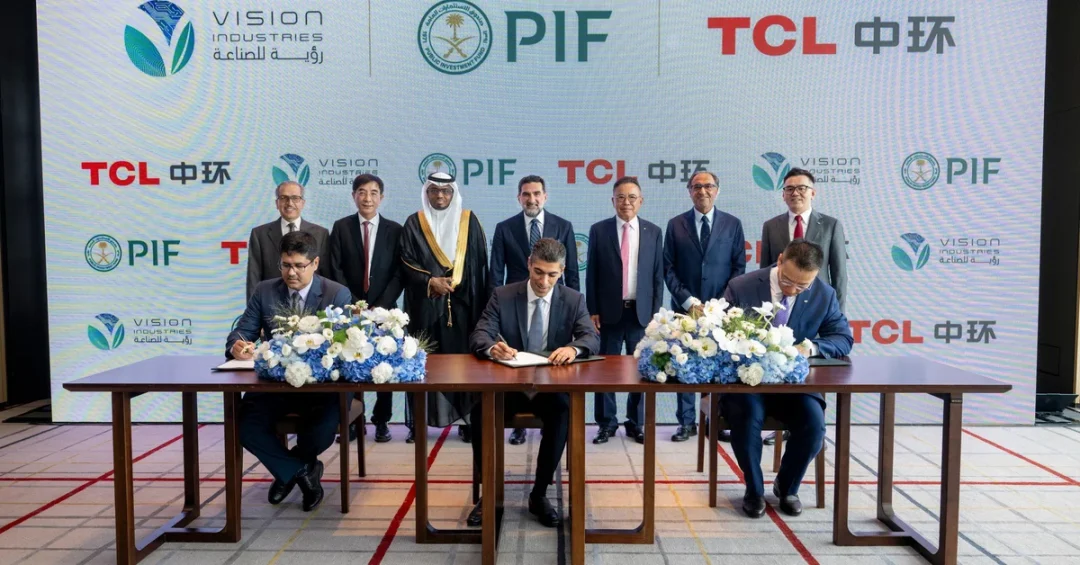
Saudi Arabia’s Ministry of Energy and the Public Investment Fund (PIF) have signed three landmark agreements to localize renewable energy component manufacturing in the Kingdom, covering wind turbines, solar cells and panels, and solar wafers and ingots. The agreements, announced on July 16, 2024, in Riyadh, represent a significant step toward achieving the localization goals of Saudi Vision 2030 and the National Renewable Energy Program.
Context and Background
The agreements are the result of ongoing cooperation between the Ministry of Energy and the PIF to localize renewable energy components and build a robust domestic supply chain. These projects aim to meet the increasing demand for renewable energy both locally and internationally, while positioning the Kingdom as a global hub for exporting renewable energy technologies. The initiative aligns with the National Renewable Energy Program, which seeks to localize 75% of renewable energy projects in the Kingdom by 2030.
Key Details
The three agreements involve leading international companies partnering with Vision Industries Company. An agreement with Envision Energy and Vision Industries will localize the production of wind turbines and their components, establishing a joint project with a production capacity of up to 4 gigawatts annually. Another agreement with Jinko Solar and Vision Industries will localize high-efficiency solar cells and panels with a capacity of up to 10 gigawatts annually. A third agreement with a subsidiary of TCL Zhonghuan Renewable Energy Technology and Vision Industries will localize the production of wafers and ingots used in solar panels with a capacity of up to 20 gigawatts annually.
Implications and Impact
These projects will enhance local supply chains, reduce reliance on imports, and create skilled jobs in the renewable energy sector. By localizing the latest technologies, the Kingdom strengthens its position in the global renewable energy market and supports the diversification of its economy. The agreements also contribute to Saudi Arabia’s efforts to become a leading exporter of renewable energy technologies, fostering international partnerships and knowledge transfer.
Vision 2030 Alignment
These initiatives are directly aligned with Saudi Vision 2030, which aims to diversify the economy away from oil, develop new sectors, and promote sustainability. The localization of renewable energy components supports the Kingdom’s long-term goals of economic growth, environmental stewardship, and global leadership in clean energy. Through such strategic projects, Saudi Arabia continues to advance its role as a pioneer in renewable energy and a hub for innovation.
20 Questions
Q1. What did the Ministry of Energy and PIF sign?
A1. They signed three agreements to localize renewable energy component manufacturing in Saudi Arabia.
Q2. When were these agreements announced?
A2. The agreements were announced on July 16, 2024, in Riyadh.
Q3. Which sectors do the agreements cover?
A3. They cover wind turbines, solar cells and panels, and solar wafers and ingots.
Q4. Which company partnered for wind turbine localization?
A4. Envision Energy and Vision Industries Company partnered for wind turbine production.
Q5. What is the planned annual capacity for wind turbines?
A5. The project aims for a production capacity of up to 4 gigawatts annually.
Q6. Which companies are involved in solar cells and panels?
A6. Jinko Solar and Vision Industries Company are involved in solar cells and panels.
Q7. What is the planned annual capacity for solar cells and panels?
A7. The planned capacity is up to 10 gigawatts annually.
Q8. Who is partnering for wafers and ingots?
A8. A subsidiary of TCL Zhonghuan Renewable Energy Technology and Vision Industries Company are partnering.
Q9. What is the planned annual capacity for wafers and ingots?
A9. The planned capacity is up to 20 gigawatts annually.
Q10. What is the main goal of these agreements?
A10. The goal is to localize renewable energy industries and enhance local supply chains.
Q11. How do these projects align with Vision 2030?
A11. They support economic diversification, sustainability, and the localization of renewable energy technologies.
Q12. What is the National Renewable Energy Program’s localization target?
A12. The program aims to localize 75% of renewable energy projects in the Kingdom by 2030.
Q13. How will these projects benefit the local economy?
A13. They will create jobs, reduce imports, and develop skilled workforce in renewable energy.
Q14. Will these projects contribute to exports?
A14. Yes, they aim to transform the Kingdom into a global hub for exporting renewable energy technologies.
Q15. What role does PIF play in these agreements?
A15. PIF collaborates with the Ministry of Energy to localize renewable energy components and achieve Vision 2030 goals.
Q16. Are these agreements part of a larger strategy?
A16. Yes, they are part of Saudi Arabia’s broader strategy to diversify energy sources and economy.
Q17. How will technology transfer be facilitated?
A17. Through partnerships with international companies, localizing latest technologies in renewable energy.
Q18. What is the expected impact on renewable energy demand?
A18. The projects will help meet increasing local and international demand for renewable energy.
Q19. Will these projects enhance Saudi Arabia’s global position?
A19. Yes, they will strengthen the Kingdom’s role as a leader in renewable energy and innovation.
Q20. What is the next step after signing these agreements?
A20. Implementation and establishment of the joint projects to achieve the targeted production capacities.
Reader Feedback
We value your thoughts. Please share your feedback on this article.
Your feedback helps us improve our coverage.